
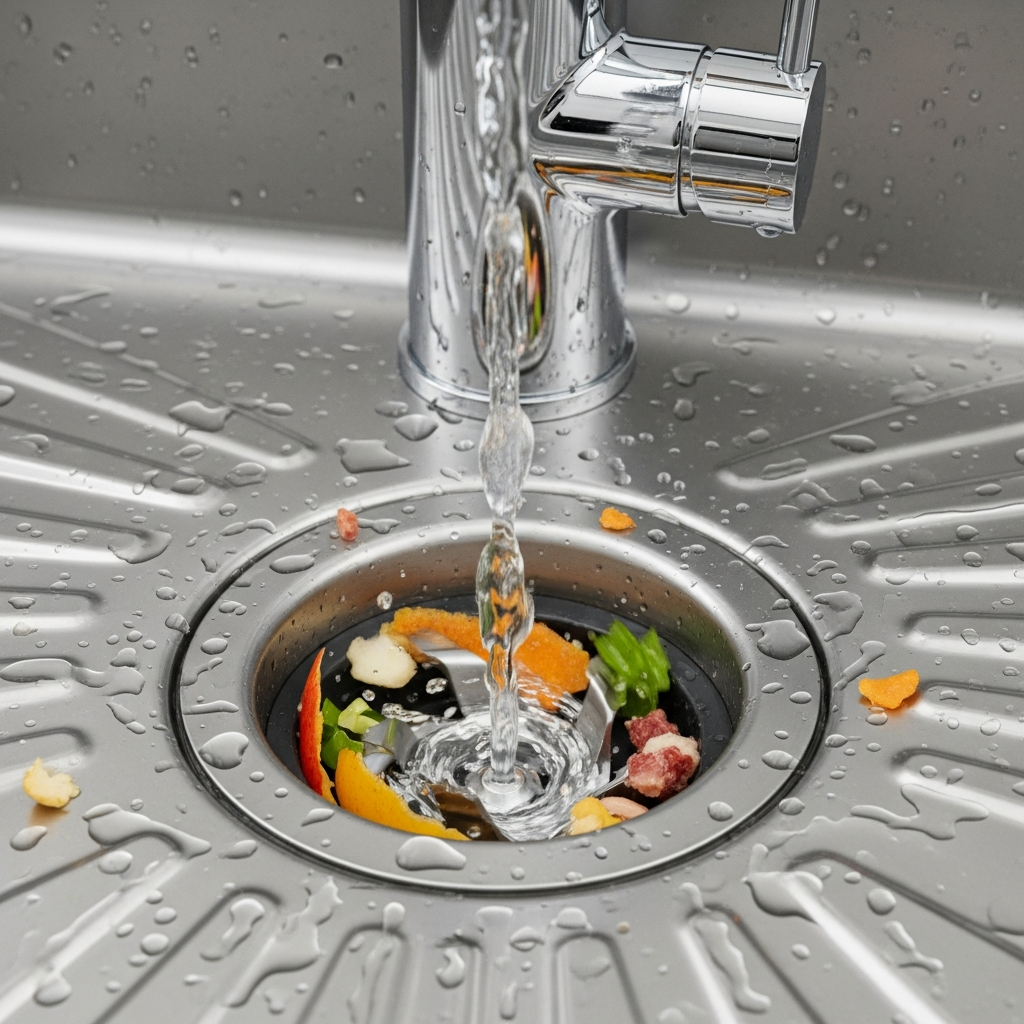
Why Your Garbage Disposal Keeps Jamming: 10 Habits to Break
The garbage disposal unit is arguably the most misunderstood, misused, and unfairly burdened appliance in the entire modern home. It sits unobtrusively beneath the kitchen sink, a dark, motorized chamber that many homeowners treat as a convenient, magical black hole capable of vanishing any organic waste that fits down the drain. This fundamental misconception—viewing the disposal as a trash can or a goat capable of digesting anything—is the primary driver of kitchen plumbing disasters, burnt-out motors, and foul, lingering odors that permeate the living space. To maintain a functional kitchen and avoid the immense inconvenience and cost of a backed-up sink, one must understand the precise mechanics of the machine and unlearn the convenient but destructive habits that compromise its integrity. A garbage disposal is a precision instrument designed for a very specific purpose: to grind small amounts of soft food residue into particles fine enough to pass through narrow plumbing pipes. It is not a landfill substitute. 1.How it Works To truly grasp why specific items cause such catastrophic damage, it is necessary to first understand how the unit actually operates, as the popular imagination is almost entirely wrong. There is a persistent myth that a garbage disposal works like a blender, utilizing spinning blades to chop food into pieces. This is false. If you were to look inside—with the power strictly turned off—you would see a metal turntable equipped with two blunt, swiveling metal lugs, known as impellers. When the unit is activated, the turntable spins at a high velocity. Centrifugal force pushes the food waste against the outer wall of the chamber, which is lined with a stationary grind ring that acts somewhat like a cheese grater. The impellers smash the food against this ring, shredding it into a liquid pulp. There are no knives. This distinction is crucial because it explains why fibrous and stringy materials are so destructive. Since nothing is being sliced, stringy items do not get cut; instead, they unravel. 2.Vegetable Fibers Vegetable fibers pose one of the most significant threats to this mechanism. Vegetables like celery, corn husks, artichokes, asparagus, and onion skins are composed of tough, stringy fibers. When these items enter the disposal, they are not severed by blades. As the turntable spins, these strands unravel and wrap tightly around the base of the impellers or the drive shaft. It is mechanically similar to hair getting caught in the brush roll of a vacuum cleaner. Initially, this might just slow the motor down or make it hum loudly, but eventually, the tension becomes so great that the motor jams completely. Corn husks are particularly notorious for this; their sheer tensile strength can bring a powerful motor to a dead halt. Removing these tangles often requires pliers and a flashlight, a dangerous and difficult task that is easily avoided by using the compost bin or the trash can. 3.Oil and Fat While fibrous materials cause mechanical jams, grease, oil, and fat cause plumbing catastrophes that extend far beyond the disposal unit itself. Pouring cooking grease down the drain is arguably the most damaging habit in the kitchen. When grease is hot, it is a liquid, leading people to believe it will flow harmlessly through the pipes like water. However, as soon as that grease enters the cold environment of the drainpipe, it solidifies. It turns into a thick, sticky, wax-like paste that coats the blades, the grind ring, and the lining of your plumbing. Over time, this layer thickens, narrowing the diameter of the pipe. It traps other food particles, coffee grounds, and debris that pass by, eventually closing off the pipe entirely. This creates a “fatberg” in your plumbing that a disposal cannot grind away. Even if the grease makes it past the disposal, it causes havoc in the municipal sewer system or your septic tank. All oils, butter, lard, and rendered animal fats should be collected in a container, allowed to cool, and thrown in the solid trash. 4.Starchy Food Starchy foods are another category that acts as a silent killer of disposal units and drain lines. Pasta, rice, potatoes, and even oats seem harmless because they are soft and easily mashed. However, starch has a unique chemical reaction to water: it expands and turns into a paste. When you put a large amount of cooked pasta or rice down the drain, the water flow continues to hydrate it, causing it to swell inside the pipes. Even if the disposal grinds it up, the resulting slurry transforms into a thick, glue-like substance. Potato peels are perhaps the worst offender in this category. When a large volume of peels is ground up, they form a thick, starchy mash similar to spackle, grout, or wallpaper paste. This mash moves slowly, filling the P-trap—the U-shaped pipe beneath the sink designed to hold water and block sewer gas—and hardens into a blockage that usually requires a plumber’s snake to dislodge. 5.Hard Materials Hard materials represent a more obvious physical danger to the machine’s components. Fruit pits, large bones, and seafood shells are simply too dense for most residential disposals to handle. While a high-end, high-horsepower unit might be able to crack a small chicken bone, it is generally a risk not worth taking. When a hard object like a peach pit hits the spinning metal turntable, it creates a violent racket, sounding like rocks in a blender. This impact can dent the turntable, break the impellers, or even crack the casing of the disposal itself, leading to leaks under the sink. Even if the unit manages to break the object, the resulting shards can settle in the drain line, acting as a net that catches other debris. Non-food items like glass, plastic, twist ties, pull tabs, and cigarette butts should absolutely never enter the unit. They will not break down and will simply rattle around until they cause mechanical failure or pass through to cause blockages downstream. 6.Hot Water The technique used to operate the disposal is just as important as the
Why Your Garbage Disposal Keeps Jamming: 10 Habits to Break Read More »