How to Get Rid of Spider Webs and Keep Them Gone
On this page
- How do you remove spider webs without leaving strands behind?
- What dissolves spider webs and the sticky residue?
- Can you vacuum spider webs?
- How often should you clear cobwebs?
- How do you keep spiders out of your house?
- What keeps spiders from settling indoors?
- When to call a professional cleaner
- Frequently asked questions
Spider webs come off cleanest when you capture them, not tear them: twist a duster into the centre so the silk winds on, wipe the sticky anchor residue with soapy water, vacuum the indoor corners and sacs, then seal the gaps spiders enter through.
How to Remove Spider Webs Without Leaving Strands (3 Steps)
Read the video transcript
Capture the web. Don’t just knock it down. A quick swipe leaves sticky anchors behind. Bring a duster, dish soap and a vacuum. Check overhead for wasp nests before reaching. Spot-test painted walls and let the patch dry. One. Press the duster into the centre and rotate. The silk winds onto the bristles. Two. Warm water and a little dish soap lift sticky residue. Work the anchor points with a sponge. The web is gone, and the anchors are clean too. Vacuum living-area corners weekly, and seal the gaps spiders come in through. For everyday upkeep, regular cleaning covers reachable surfaces and floors. Our cleaners are vetted and background-checked, with professional supplies and equipment included. Choose your clean. See your price, choose your time. We take it from there. Add your entry details when booking. You'll love your clean, or we'll make it right. See your price at torontoshinecleaning.ca.
How do you remove spider webs without leaving strands behind?
Start by telling fresh webs from old cobwebs. A fresh web is taut and slightly sticky, and the spider is resting at the edge or in a nearby crack; a cobweb is grey, floppy and dusty, and its owner has moved on. Fresh webs mark where spiders are active, so those corners get your attention first. Late summer is when this work piles up: spiders that hatched in spring mature through the season, so August arrives with more adult spiders building more webs at once.
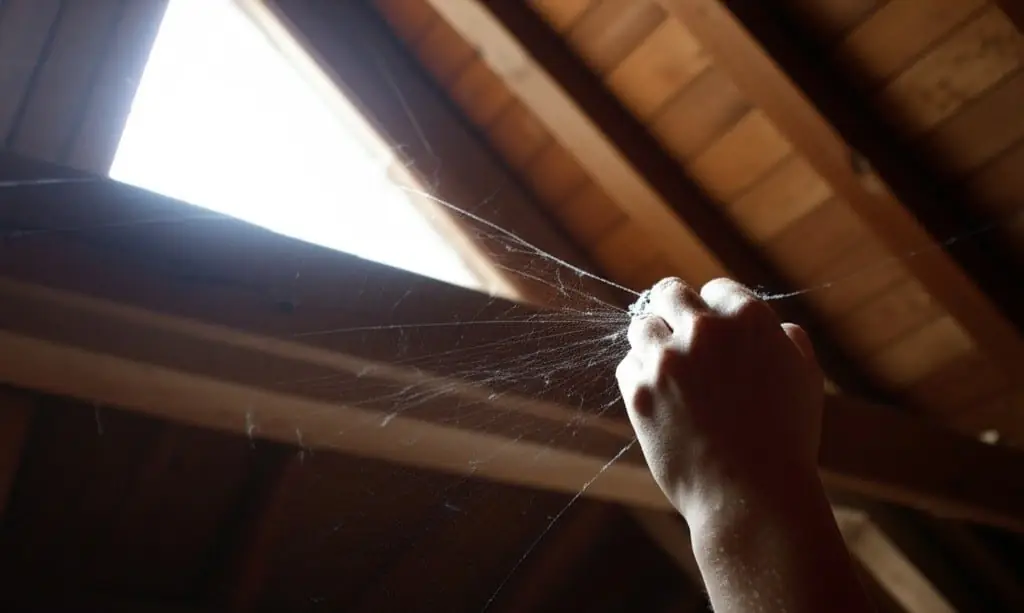
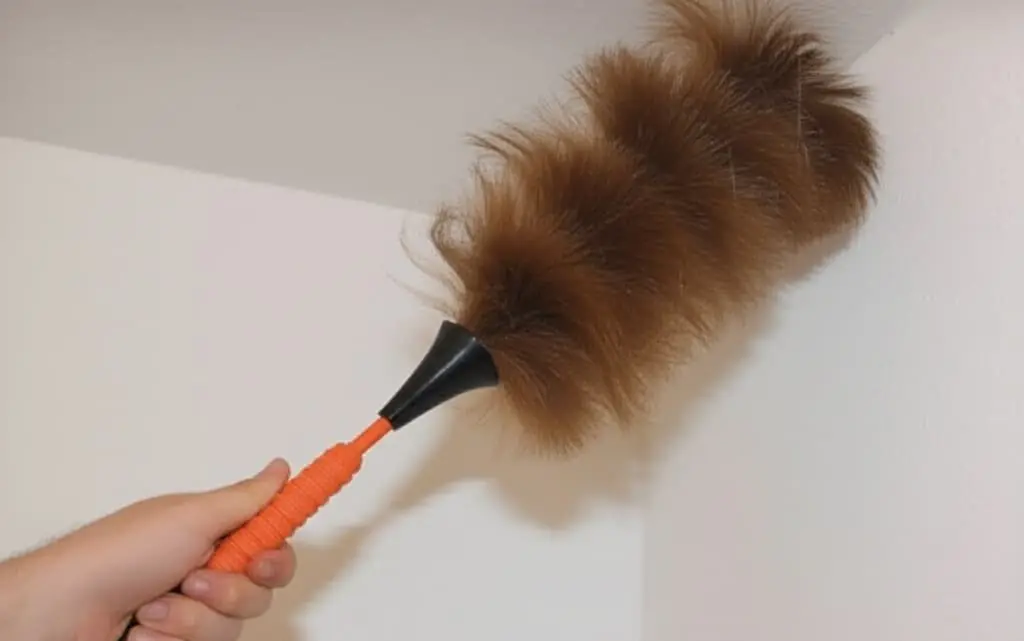
Your main tool is a long-handled duster or a broom with soft bristles, ideally on an extendable pole so you can reach eaves, porch ceilings and vaulted corners without a ladder. Press the head into the centre of the web and rotate it. The silk winds onto the bristles like cotton candy and the whole web comes away. A plain swipe tears the web, leaving sticky anchor strands that collect dust and give the next spider a ready foundation. Work the perimeter in one loop: under the eaves, around porch lights, along window and door frames, into corners and beneath deck railings.
Before you sweep any overhead spot, look at it first. Eaves and porch ceilings can also hold a wasp nest, and poking one with a pole is a bad afternoon. If you find the resident spider, catch it with a cup and a stiff piece of paper and carry it to the garden so it does not simply rebuild on the same spot. When you meet a spider in a Toronto row house or a brick Victorian semi, like the ones on the residential streets off Spadina Avenue in homes in Chinatown, the cup-and-paper move keeps it outside where it belongs.
A garden hose with a jet nozzle handles webs too high or stubborn for the pole, but it is imprecise and can push webs into another spot. Never spray into vents, under siding or at window seals. A pressure washer demands more caution still: lowest setting and a wide fan tip only, because high pressure or a narrow tip strips paint, damages wood and forces water behind siding. A standard hose is the safer choice for painted siding, wood and window seals. Whatever strands the duster misses, lift off textured walls and fabric with a lint roller or a barely damp cloth, and bag the collected webs and any egg sacs for the outdoor bin so nothing hatches indoors.
What dissolves spider webs and the sticky residue?
Once the bulk of the web is down, run a hand along the anchor points: you can feel a faint sticky residue there. That residue is what new spiders build on, so cleaning it off is the step that actually slows the return. The silk itself dissolves best with warm water and a small amount of dish soap, applied with a sponge or soft brush to painted surfaces, siding and window frames. On painted or wallpapered walls, spot-test the solution on a hidden patch first and let it dry, so a streak or a lifted edge never sits in the middle of the room.
For glass, use a standard window cleaner or equal parts water and white vinegar for a streak-free finish. Skip vinegar on marble, granite and other natural stone, because the acid can etch the surface; plain water with a drop of dish soap cleans those safely.
Can you vacuum spider webs?
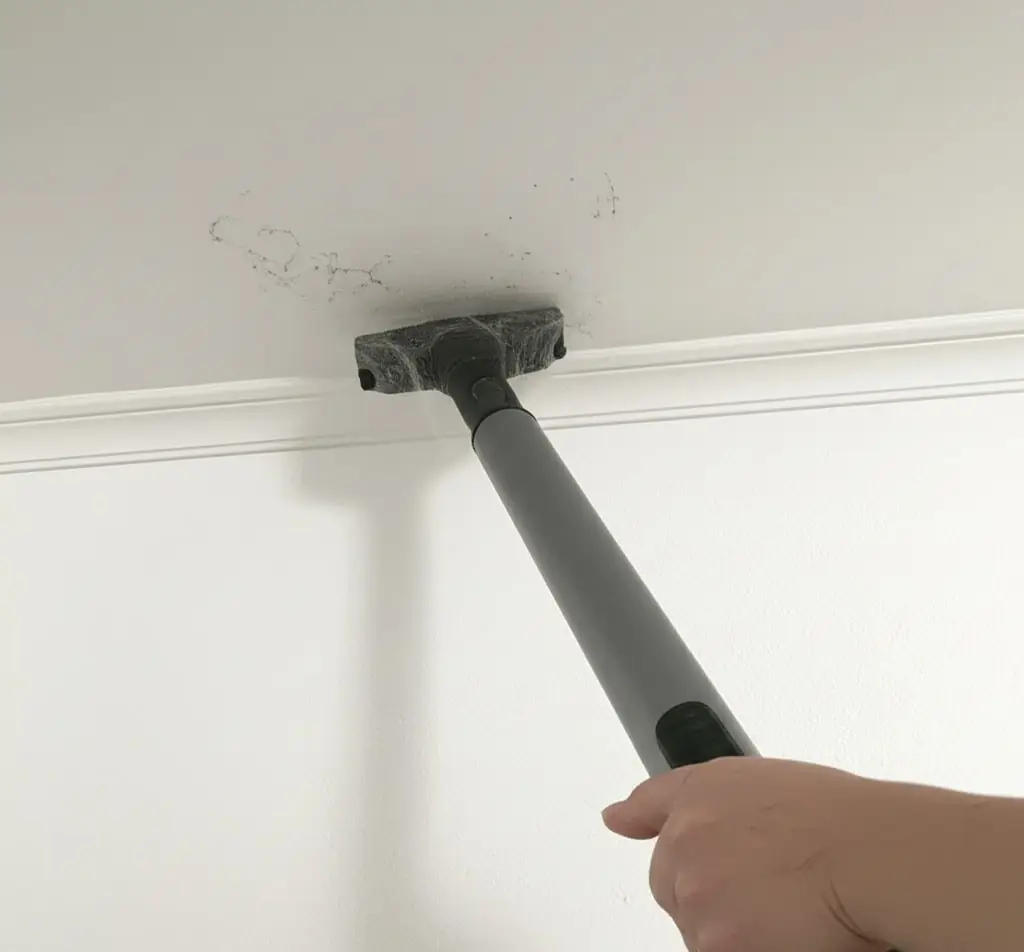
Yes, and indoors a vacuum with its hose is the single most effective tool. The crevice tool reaches the corners where walls meet the ceiling, plus baseboards and the gaps behind furniture. The brush attachment handles delicate surfaces like lampshades, curtains and bookshelves without dragging the fabric.
Vacuuming also removes the spider and any egg sacs, and this matters: one sac can hold hundreds of spiderlings, and dusting it can scatter them into the room, while the vacuum contains everything. Cover basements, garages and attics too, moving boxes and storage bins aside so the hose actually reaches the corners where webs anchor. Health Canada’s guide to a healthy home recommends weekly vacuuming, with a HEPA-filter vacuum if you can, and cleaning hard floors with a wet cloth or mop to remove dust and dirt. Take the bag or canister outdoors and empty it right after, before anything you collected finds its way back inside.
How often should you clear cobwebs?
A short routine on a schedule beats one big sweep a season. Use this as your baseline:
| Area | Best method | Frequency |
|---|---|---|
| Ceiling corners and cornices | Extendable duster | Weekly in living areas |
| Ceiling fans and light fixtures | Duster, then a microfibre cloth | Every two weeks |
| Baseboards and window frames | Vacuum with brush and crevice tools | Weekly |
| Behind appliances and under beds | Vacuum crevice tool | Monthly |
| Basements and storage rooms | Duster, plus a check for damp spots | Monthly |
Outdoors, a weekly walk around the house with the long-handled duster catches new webs before they anchor, and a monthly recheck of seals and entry points through the season keeps them closed. One signal is worth more than any schedule: a web rebuilt in the same corner means an active spider is sheltering nearby, so clear the web and then look for the resident behind furniture, in a crack or under a shelf before it spins a third.
How do you keep spiders out of your house?
Prevention starts with what attracts the prey. Swap white exterior bulbs for yellow bug lights or motion-activated lights: fewer moths and gnats at your doors and windows means less spider prey, and less reason to build there.
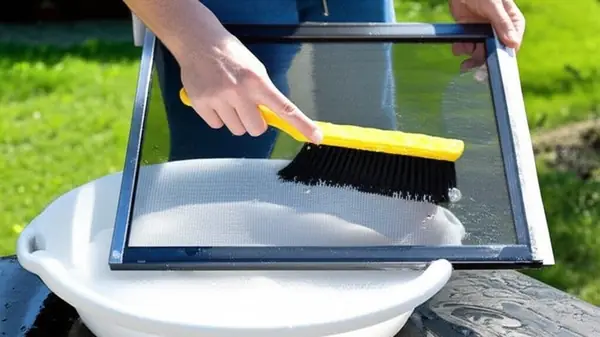
Then block the ways in. Caulk foundation cracks and the gaps around pipes and utility lines, add weatherstripping, and repair torn or loose window screens; the same upkeep that keeps screens tight is covered in our guide to cleaning window screens. Cover attic vents, weep holes and dryer vents with fine mesh screen so air moves but spiders do not. Check the door sweep on every exterior door: if you can see daylight underneath, it is an open invitation. Finally, inspect plants, bins and furniture before you carry them in from the garden or garage, since spiders and sacs hitchhike indoors on exactly those.
Landscaping matters too. Trim shrubs and tree branches back at least a foot from the walls so plants stop acting as bridges, and move firewood and compost piles away from the foundation, where they shelter both spiders and the insects they eat.
What keeps spiders from settling indoors?
Inside, make your home hard to settle in. Declutter basements, garages and closets, because quiet, undisturbed piles are prime habitat; store items in sealed plastic totes instead of cardboard boxes. Cut the food source indoors the same way you did outside, with sealed garbage bins and covered pet food, so the insects spiders follow stop showing up. Dry out damp basement corners with a dehumidifier and fix leaky taps, since moisture draws both spiders and their prey. Regular dusting and vacuuming of the quiet upper and lower corners disturbs anything trying to settle before a web ever gets built.
Traditional deterrent sprays have a place, with honest expectations. Peppermint oil spray, 15 to 20 drops in water with a drop of dish soap on frames, corners and baseboards, needs reapplying about weekly as the scent fades; our essential-oil cleaning recipes walk through mixing it. Cedar blocks in closets and citrus peels on sills are the same idea: traditional deterrents some households swear by, none of them proven, all of them needing regular renewal. A 50/50 white vinegar and water spray doubles as a residue cleaner and deterrent, but keep it off natural stone. The physical steps, decluttering, drying and vacuuming, do the heavy lifting across Toronto and the GTA.
When to call a professional cleaner
When the late-summer buildup spans eaves, windows, basements and storage rooms at once, help earns its keep. What a deep clean covers is a corner-to-corner reset: baseboards, vents, door frames, window sills and the spots behind furniture and appliances where webs and sacs hide. After that, folding web and residue clearing into regular cleaning visits keeps corners dusted so new webs never get established in the hard-to-reach spots. If webs and sacs keep returning despite a steady clearing routine, that is the point to call a pest control service about the source. To hand off the high corners, call (647) 424-0355 or book online.
Frequently asked questions
Are cobwebs and spider webs the same thing?
Not quite. A spider web is an active trap with a resident spider nearby, while a cobweb is what remains after the spider abandons it, collecting dust over weeks. That difference tells you where to work: a cobweb just wipes away, but a fresh web means you should look for the spider and the egg sacs hiding nearby.
Should I just knock the web down with a stick?
A swipe tears the silk and leaves the anchor strands stuck to the surface, and those sticky leftovers are exactly what the next spider builds on. Twisting a duster head into the centre of the web captures the whole thing instead. If a stick is all you have outdoors, follow up by wiping the anchor points with soapy water.
Will the spider come back after I remove its web?
It can, if the resident spider is still nearby, since rebuilding is what they do. Removing the sticky residue at the anchor points makes the spot far less useful, and checking a repeat web tells you where the spider is sheltering so you can vacuum it up or relocate it with a cup and paper.
Can I use the same method on a screened porch?
Yes, with one adjustment. Vacuum the screens gently with the brush attachment rather than pressing a duster into the mesh, which pushes strands through. Wipe the frame, not the screen, with your soap solution, and finish with a check of the screen edges and the track, where sacs and debris collect.