
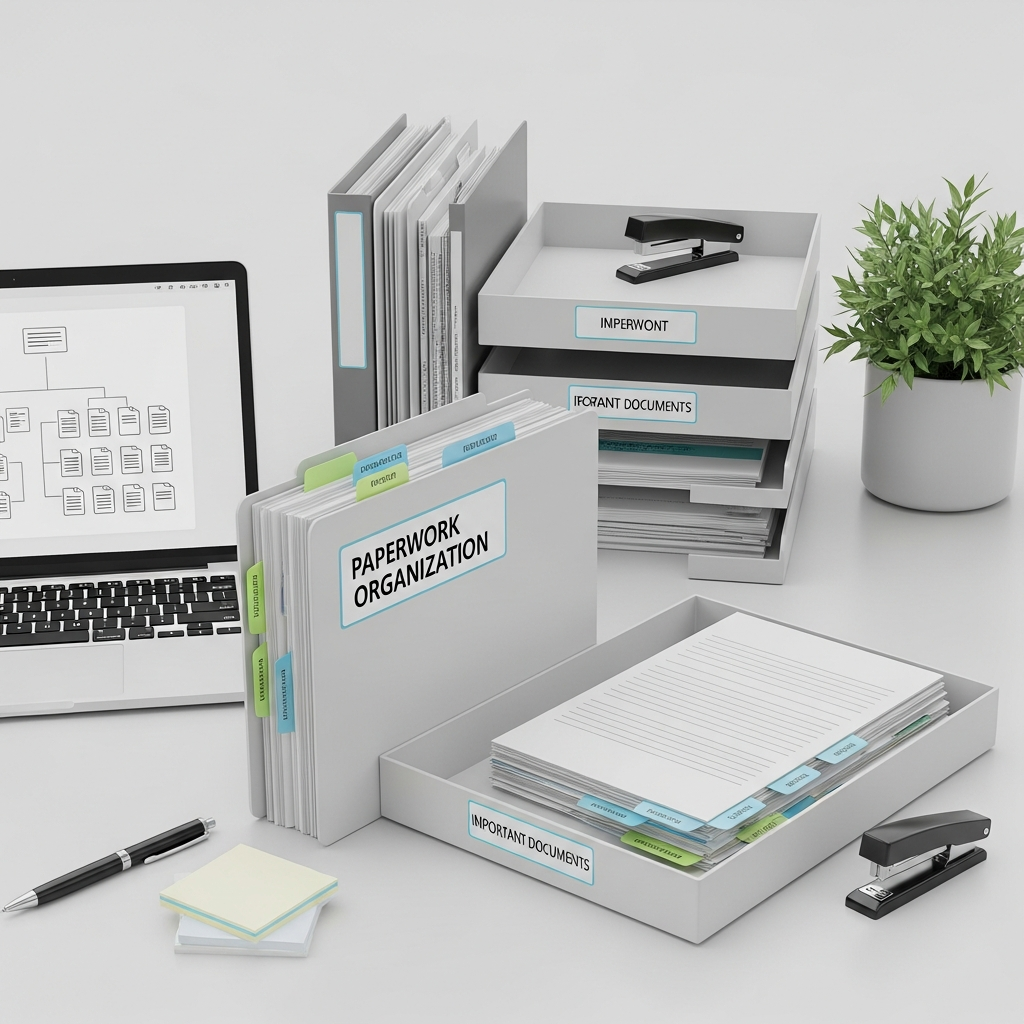
Paperwork Organization: 7 Steps to Organizing Your Important Documents
Accumulation of paperwork is arguably the most stressful type of disorder found in the modern home. Unlike a sink full of dishes or a basket of dirty laundry, which represent simple, repetitive chores, a pile of paperwork represents a stack of unmade decisions. Each envelope, receipt, and flyer carries a potential obligation, a deadline, or a piece of information that might be needed in some hypothetical future. This ambiguity is what makes paper so difficult to manage. We let it accumulate on kitchen counters, dining tables, and entry consoles not because we are lazy, but because we are afraid of making the wrong choice. We fear throwing away something vital, yet we lack the immediate energy to process it. Organizing your paperwork is therefore less about tidiness and more about establishing a workflow that allows you to manage your life with confidence and efficiency. It is about moving from a state of reactive anxiety to one of proactive control. 1.Look For All The Papers To begin the process of organizing your paperwork, you must first understand the scope of the problem. You cannot organize a clutter problem in piecemeal fashion; you must attack it in its entirety. This means gathering every scrap of loose paper from every corner of your house. You must look inside junk drawers, check the bottom of work bags, clear off the refrigerator door, and empty the glove compartment of your car. Bring everything to a large, central surface, such as a dining room table. This step is often visually overwhelming, but it is necessary. Seeing the sheer volume of paper in one location breaks the illusion that you can simply “tidy up” a little bit at a time. It forces you to confront the reality of the accumulation and provides the psychological leverage needed to be ruthless in your sorting. 2.Triage Once you have your mountain of paper, the next phase is the triage. This is a rapid-fire sorting process where you make quick decisions based on the immediate nature of the document. You are not filing yet; you are simply categorizing. Create three distinct piles: Trash, Action, and Archive. The Trash pile should be the largest. It includes junk mail, expired coupons, flyers for services you will never use, and envelopes from opened mail. Be aggressive here. If the information is readily available online, you generally do not need the physical paper. As you sort, keep a shredder or a dedicated bag for shredding nearby. Any document containing personal information like your name, address, social security number, or financial details that goes into the trash must be shredded to protect against identity theft. This includes credit card offers and old bank statements. The Action pile is for documents that require you to do something. This is your “active” paperwork. It includes bills that need to be paid, forms that need a signature, invitations that require an RSVP, or documents that you need to read or review. This pile represents your current to-do list. The mistake many people make is filing these items away too quickly, where they are forgotten until a deadline is missed. Action items need to remain visible but contained. The Archive pile is for documents that require no immediate action but must be kept for future reference. These are your tax returns, medical records, insurance policies, property deeds, and vehicle registration papers. This pile will eventually move to your filing cabinet or long-term storage solution. You may also encounter a category of sentimental items—cards, letters, children’s drawings. Do not let these derail your progress. Place them in a separate box to be dealt with later. Attempting to reminisce while organizing administrative papers is the fastest way to lose momentum. 3.Desk Organizers With the sorting complete and the trash removed, you can focus on setting up the Action system. Since these papers need to be accessed frequently, they should not be hidden in a drawer. A desktop sorter, a tiered wall file, or a dedicated tray system works best. The goal is to categorize the action required. You might have sections labeled “To Pay,” “To Read,” and “To File.” The “To File” section acts as a holding area for items you have processed—the bill has been paid, the form signed—but have not yet had time to move to the permanent archive. This system prevents active papers from being scattered across flat surfaces. However, a system is only as good as the habits that support it. You must designate a specific time each week to process the Action file. During this weekly session, you pay the bills, sign the forms, and move the completed items to the “To File” section. The Archive is the backbone of your home organization. This is where your permanent records live. Whether you choose a traditional metal filing cabinet, a series of plastic file boxes, or binders, the structure of your filing system should be intuitive. Avoid over-complicating your categories. If you create a folder for every single utility provider, you will end up with a drawer full of thin, floppy files that are hard to navigate. Instead, use broad categories such as “Home,” “Auto,” “Financial,” “Medical,” and “Personal.” Inside the “Auto” category, you can keep everything related to your vehicles—repair logs, insurance, and registration. Inside “Home,” you can store mortgage documents, renovation contracts, and appliance warranties. This broad approach reduces the mental friction of deciding where a document belongs. When you are looking for something later, you simply have to ask yourself the general category it falls under. 4.Labeling Labeling is a critical component of a functional archive. Handwritten scribbles on manila folder tabs are often illegible and discouraging. Use a label maker or write in large, bold block letters. A neat, clearly labeled file is more likely to be used correctly. Furthermore, consider the physical flow of your files. Arranging them alphabetically is the most standard method, but you might prefer arranging them by frequency of use, with the most accessed files at the front.
Paperwork Organization: 7 Steps to Organizing Your Important Documents Read More »