Moving Into a New-Build Home: What to Clean First
On this page
Cleaning a new build home before moving in starts with Tarion’s pre-delivery inspection, then one top-to-bottom clean while the house is still empty: dust from the ceiling down, vents and the furnace filter, and floors last.
Walk the home with your builder before you clean
Before you clean anything, tour the home with your builder at the pre-delivery inspection. Tarion describes the PDI as your chance to tour your new home and check for defects and unfinished work, with everything recorded on the PDI Form, the official record of your home’s condition before you moved in (Tarion’s guide to preparing your PDI).
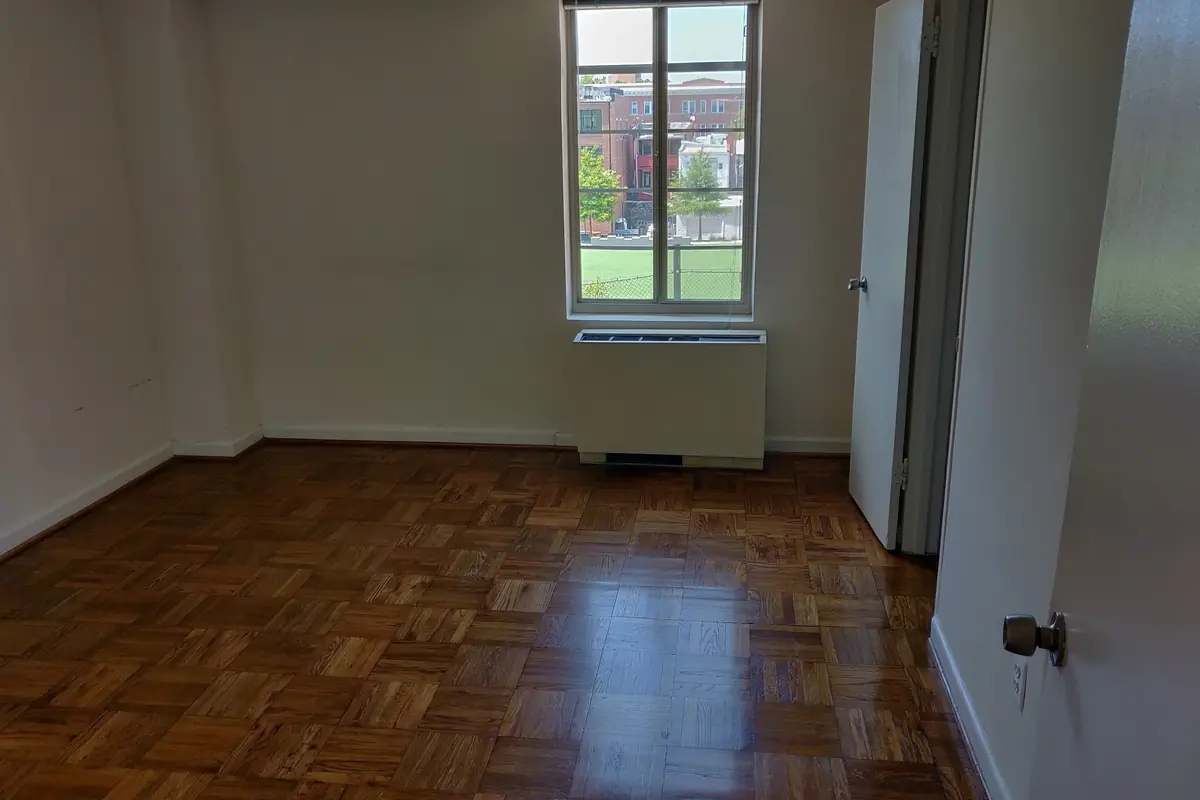
Photograph marks, chips and scratches before you clean them away. Tarion advises paying special attention to hard surfaces such as ceramic tiles and granite countertops, because once you’ve lived in the home it can be hard to tell whether a defect happened before or after you moved in. If the floors are hard to judge because they are still covered with paper or dust, note that on the PDI Form rather than peeling things back. And if you find damage after possession that isn’t on the form, document and report it to your builder right away, with photos and an email.
Clearing construction dust, top to bottom
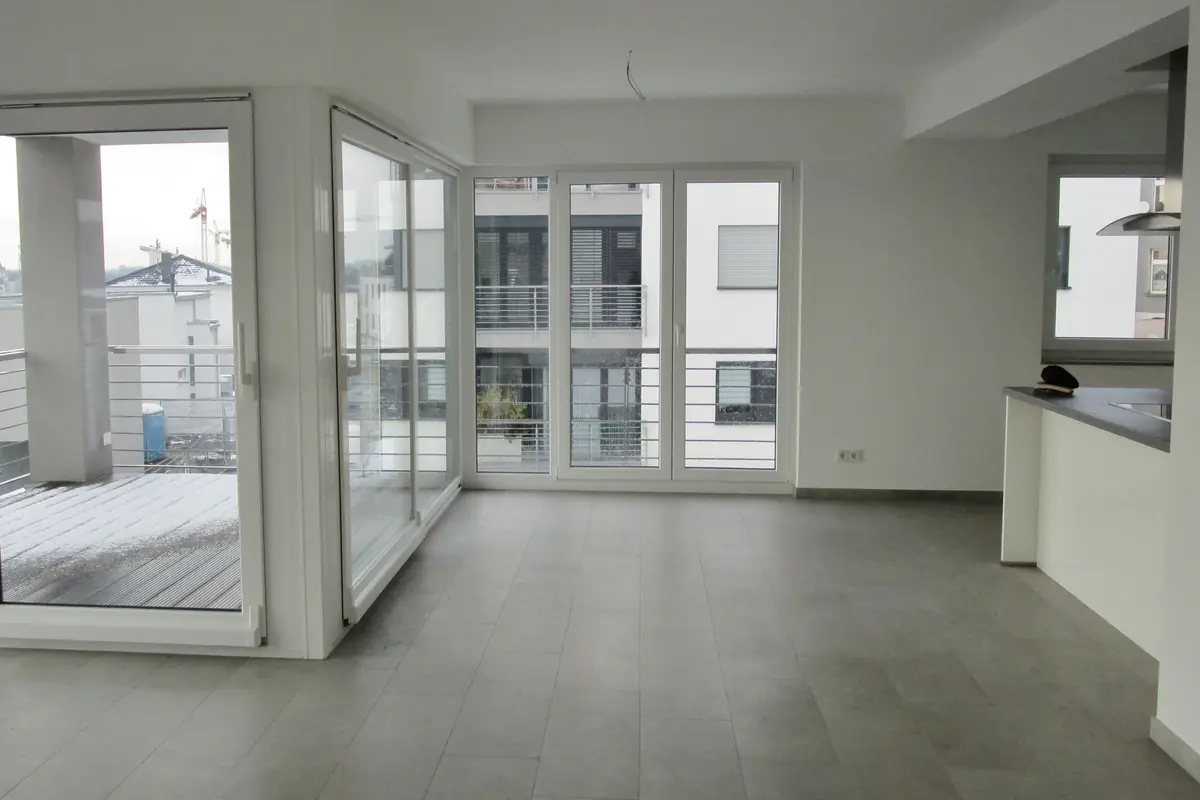
Do this clean while the home is empty, before the furniture and boxes arrive. Every surface you dust now is a surface you won’t have to unpack around later.
The order matters as much as the effort. Work through the home like this:
- Clear any leftover debris, offcuts and packaging first, so you’re not working around it.
- Dust high to low: ceiling fixtures, fans, ledges and sills first, then walls and trim.
- Vacuum before damp wiping, room by room, so you’re not smearing dust into wet surfaces.
- Save the floors for last, after everything above them is done.
Your kit: a HEPA vacuum with brush and crevice tools, microfibre cloths, a damp mop and a soft brush for fixtures and grilles. Health Canada suggests vacuuming with a HEPA filter to trap small particles, and cleaning floors with a damp mop or cloth rather than a dry one that sends dust back into the air.
Vacuum the floor registers, return grilles and fan covers throughout the home, and put a new furnace filter in once the dusty work is done. Plan one final touch-up wipe of the surfaces just before move-in day, because fine dust keeps settling.
What to clean first, room by room
Start with the kitchen and bathrooms: the rooms you need working on day one, and the ones where construction film, labels and dust collect most. Then work outward to the windows, walls, trim and floors.
Kitchen
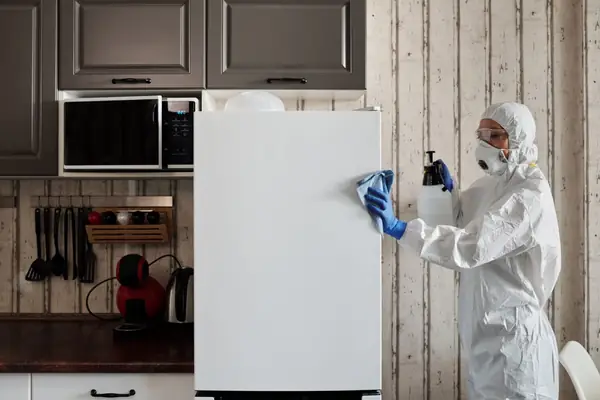
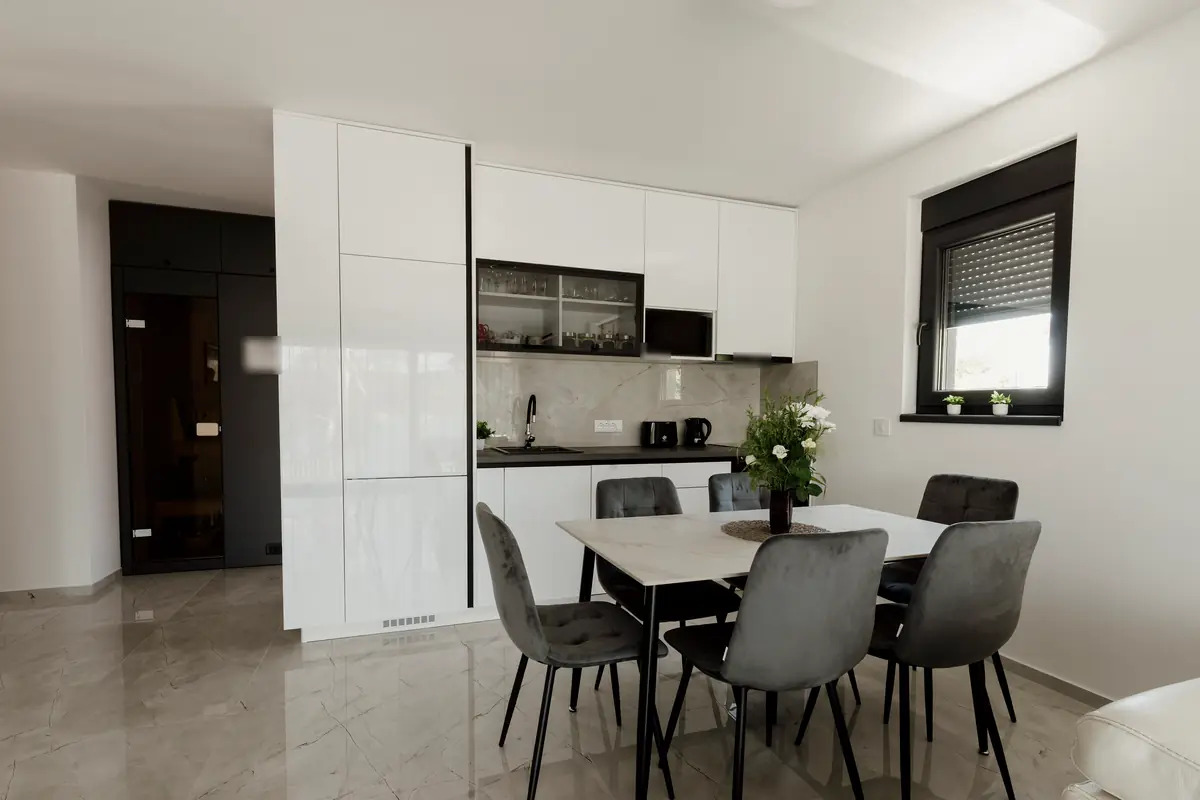
Vacuum then wipe the inside of every cabinet and drawer before a single dish goes in; construction dust settles inside them too, and once the shelves are full you won’t get the same access. Peel the protective film and labels off the appliances, then clean the inside of the fridge, the oven, the dishwasher and the range hood, including any film left from manufacturing.
Bathrooms
Work through the toilet base, tub, shower glass, vanity and grout lines. Wipe caulk gently rather than scraping it, since fresh caulk needs time to cure. Clean first, then disinfect: read the product label, wear gloves, and never mix cleaning products.
Windows and glass
Peel labels and film from the glass, vacuum the tracks and sills where dust collects, then wash the glass and the frames. A crevice tool gets into tracks a cloth can’t reach.
Stickers, paint drips and adhesive
Soften sticker glue and tape residue and lift it gently with a soft cloth or plastic scraper, never a blade, which can score glass, tile and finished wood. Paint drips on hardware and glass come off the same way. Before any product touches a new finish, check the manufacturer’s care guide and test it on a small hidden spot first.
Walls, trim, closets and fixtures
Dust walls and ceilings before you wipe them, working top to bottom. Spot-clean marks on fresh paint gently with a barely damp cloth, since new paint can be delicate. Then take in the baseboards, trim, door frames and door tops, closet shelves and rods, and finish with the light fixtures, fan blades, switch plates, outlet covers and door handles.
Floors, last
Floors go last so nothing drips on them. Vacuum thoroughly first, then clean by type: damp-mop hardwood and laminate rather than wet-mopping, wash tile and grout with a suitable cleaner, and vacuum carpet. Follow your flooring’s care instructions, and go easy on vinegar-based mixes on hardwood and grout, which can dull or break down finishes over time.
Fresh air in a new home
Open the windows and run the kitchen and bathroom fans while you clean, and for stretches in the weeks after. Health Canada notes that building materials such as glues, flooring, paints and varnishes can release gases into the air, and that ventilation removes pollutants and brings in fresh outdoor air, which matters when you’re cleaning or using chemical products (Health Canada on ventilation).
Keep interior doors open, and clean or replace the HVAC filter as the manufacturer instructs. If your home has a heat recovery ventilator, run it; it exchanges stale indoor air for fresh outdoor air without dumping your heat. For a deeper look at air quality after construction work, see our piece on purifying indoor air after a renovation. Not in a brand-new home but weighing the same choice after a reno? See post-construction clean vs deep clean before you book.
New condos and houses in the GTA
Condo buyers can find themselves cleaning earlier than they expected. Under interim occupancy, the builder lets you occupy the unit before the declaration is registered and title can transfer, so you may move in before you own, paying an interim occupancy fee in the meantime (the Condominium Authority of Ontario’s pre-construction guide). Your cleaning calendar follows your occupancy date, not your closing date.
The same wave of new homes runs through house cleaning across the GTA, from towers beside the Vaughan Metropolitan Centre to the new subdivisions north of Dundas in Oakville, where homes still carrying drywall dust call for post-construction cleaning rather than an ordinary move-in clean. If the builder has already cleaned and the house is empty, a move-in-level clean is enough to get it ready for furniture.
When to bring in help
If the dust is thick, the timeline is tight, or you’d simply rather not spend your possession week on a ladder with a crevice tool, a post-construction clean is worth booking for the empty home. Cleaning after construction clears the fine dust from every room, from ledges and vents to baseboards and floors, with add-ons for inside the oven, fridge and cabinets. Questions about what your home needs? Call us at (647) 424-0355.
Frequently asked questions
Should I clean before the pre-delivery inspection?
No, inspect first. The PDI is your chance to record every chip, scratch and unfinished item on the builder’s PDI Form while they are still visible, so wipe nothing away until it is documented. It doubles as an orientation: ask how to set the thermostat, when to change the furnace filter, and how to care for your hardwood floors.
When does Tarion coverage start for a new condo?
The builder’s warranty begins once your new home closes and you take possession, or once you gain occupancy of a new condo unit. From that date you can register for a MyHome account and submit warranty claims to your builder and Tarion, so note the date your interim occupancy starts.
What should I do with the leftover paint from the build?
Keep it and store it well. Label each can with the room it belongs to and keep it somewhere that stays above freezing, away from extreme heat, so it stays usable. A small jar of the exact batch makes future touch-ups on scuffs and chips far easier than trying to colour-match later.