How to Clean a Dishwasher With Vinegar: Step by Step
On this page
- How the vinegar method works
- How do you clean the filter before the vinegar cycle?
- Where does the vinegar go and which cycle should you run?
- What should you never mix with vinegar in a dishwasher?
- How do you clean the spray arms, door seals, and dispenser?
- How often should you clean a dishwasher with vinegar?
- When does a professional clean make sense?
- Frequently asked questions
Cleaning a dishwasher with vinegar takes one empty machine and a single hot cycle: rinse the filter by hand, place about 2 cups of white distilled vinegar in an open bowl on the top rack, run the hottest, longest cycle with empty dispensers, then wipe the door seals.
How the vinegar method works
Start with the machine completely empty: dishes, cutlery and racks out, so water and vinegar reach every surface. Hand-clean the filter first, then run the vinegar cycle, then wipe the seals. Gather your supplies before you begin:
- White vinegar, distilled, about 2 cups
- A glass or ceramic bowl or measuring cup
- An old toothbrush
- Microfibre cloths
- A little dish soap
Vinegar earns its place here because its mild acid dissolves limescale and hard-water film, cuts grease and soap scum, and removes odours. It does not replace scrubbing the filter or clearing blocked spray arms, and it does not remove rust. It also cannot tell you whether cloudy glasses are fixable: if the film wipes away when you rub a damp cloth over a glass, it is removable mineral deposit; if the surface stays dull when held to the light, the glass is etched and no cleaner will restore it. Once the cycle finishes, leave the door ajar for a while so the tub dries and any odours fade.
How to Clean a Dishwasher With Vinegar (5 Steps)
Read the video transcript
This is hiding in your dishwasher. It's why your glasses come out cloudy. And why it smells. Here's the fix. One empty machine, about two cups of vinegar, and one hot cycle. Step one. Empty it, racks too. Twist out the filter, rinse it under hot water, and scrub the mesh with an old toothbrush. Clear the drain pocket underneath, then lock it back in. Step two. About two cups of white distilled vinegar, in a glass or ceramic bowl, on the top rack. Step three. Nothing else goes in. No detergent, no rinse aid. And never mix vinegar with bleach. It creates toxic gases. Step four. Run the tap until it's hot, then pick the hottest, longest cycle. When it's done, surfaces should look visibly clearer, and the smell should be gone. Step five. Finish by hand. Clear the spray arm holes with a toothpick, and wipe the door seals and the bottom edge. Repeat every one to three months, monthly with hard water. Cloudy film or a smell is your cue. Rather leave the rest of the kitchen to us? A deep clean takes on the backsplash, range hood, and baseboards, even under the furniture. Add the inside of your oven or fridge when you book, and see your price upfront.
How do you clean the filter before the vinegar cycle?
With the machine completely empty, pull out the bottom rack and pick out any loose food debris from the tub floor before you start anything else. Then twist out the filter at the base. Designs vary between a single cylinder and a multi-part assembly, so check your manual if it does not lift out easily.
Rinse the filter under hot running water and scrub the mesh and crevices with the old toothbrush and a drop of dish soap. Expect trapped food scraps, labels from containers and occasionally glass shards. Before you lock the filter back in, reach into the drain recess underneath it and clear anything sitting there: seeds, food and small shards collect in that pocket where you cannot see them from above.
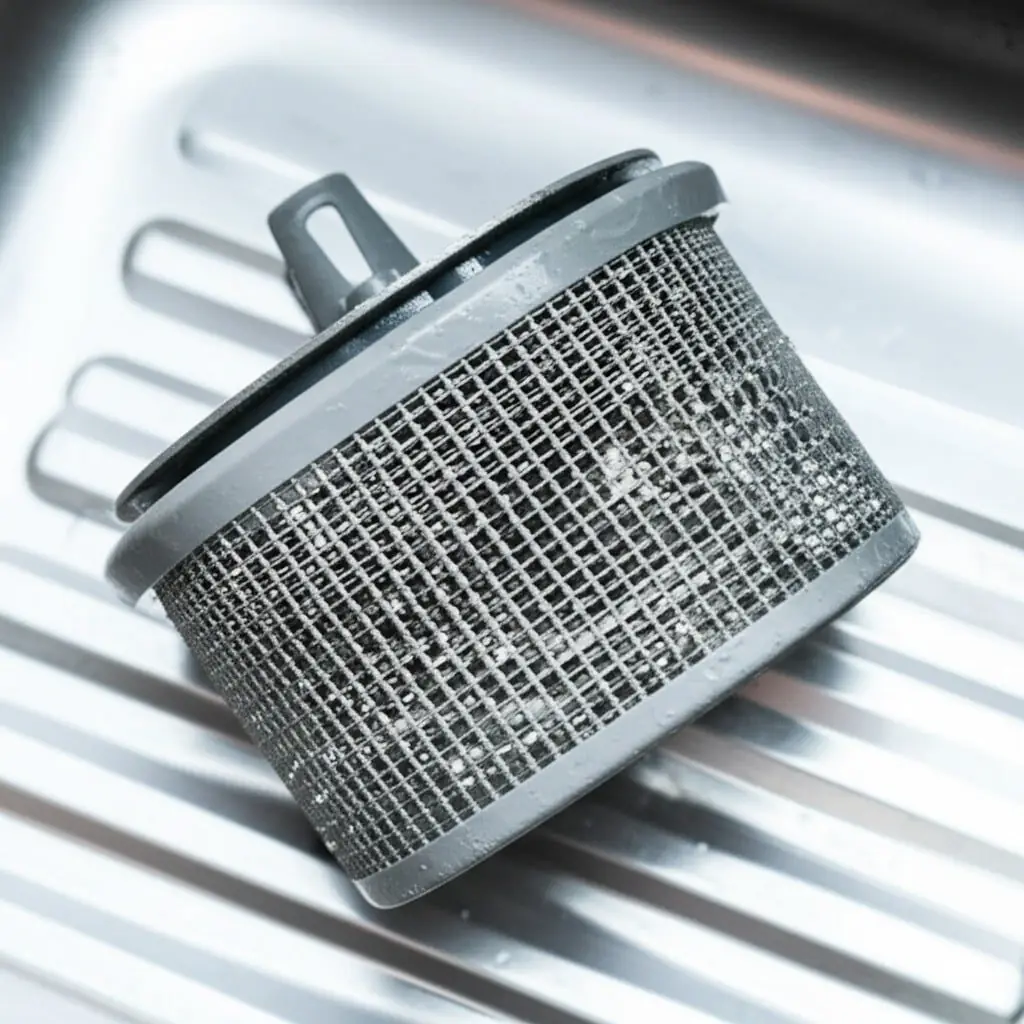
Do this first because a clogged filter blocks water circulation, so the vinegar solution never reaches the surfaces it is meant to clean. The filter also deserves its own schedule: pull and rinse it between cleans, well before the next full vinegar cycle is due.
Where does the vinegar go and which cycle should you run?
Pour about 2 cups of white distilled vinegar into an open glass or ceramic bowl or measuring cup and stand it upright on the top rack, so it mixes gradually with the wash water. If nothing on the rack holds a bowl level, pour the vinegar directly onto the empty tub floor instead.
Two things not to do: never pour vinegar into the detergent or rinse-aid dispenser, because repeated acid exposure can degrade the rubber seals, and never add anything else to this cycle. No detergent, no rinse aid, no dishwasher cleaner.
Before you start, run the kitchen tap until the water runs hot, so the machine fills with hot water from the first moments. Then select the hottest, longest cycle your machine offers, with a name like Heavy Duty, Sanitize or Pots and Pans, because heat helps the acid dissolve mineral deposits and grease. A vinegar smell during the run is normal and fades by the end. For stubborn odours that survive the wash, sprinkle baking soda across the tub floor and run a second, separate short cycle.
What should you never mix with vinegar in a dishwasher?
Never mix vinegar with chlorine bleach or any bleach-based cleaner: Health Canada warns that bleach and acids must never mix, because the reaction creates toxic gases. The Canadian Centre for Occupational Health and Safety says the same about combining vinegar, bleach or ammonia in homemade cleaners, and ammonia hides in many glass and bathroom cleaners.
That rule covers the whole cycle, not just the pour: skip detergent pods, rinse aid and any other cleaning product in the same wash. Keep baking soda in its own separate cycle too, since the two neutralize each other and fizz over. And use plain white vinegar, distilled, for this job; apple cider vinegar can stain the interior and leave a sticky residue.
How do you clean the spray arms, door seals, and dispenser?
The vinegar cycle cannot clear physical blockages, so finish the job by hand:
- Inspect the small holes in the spray arms and clear any blockage with a toothpick, thin wire or straightened paperclip. If your model allows, remove the arms and flush them under the tap, then check they spin freely.
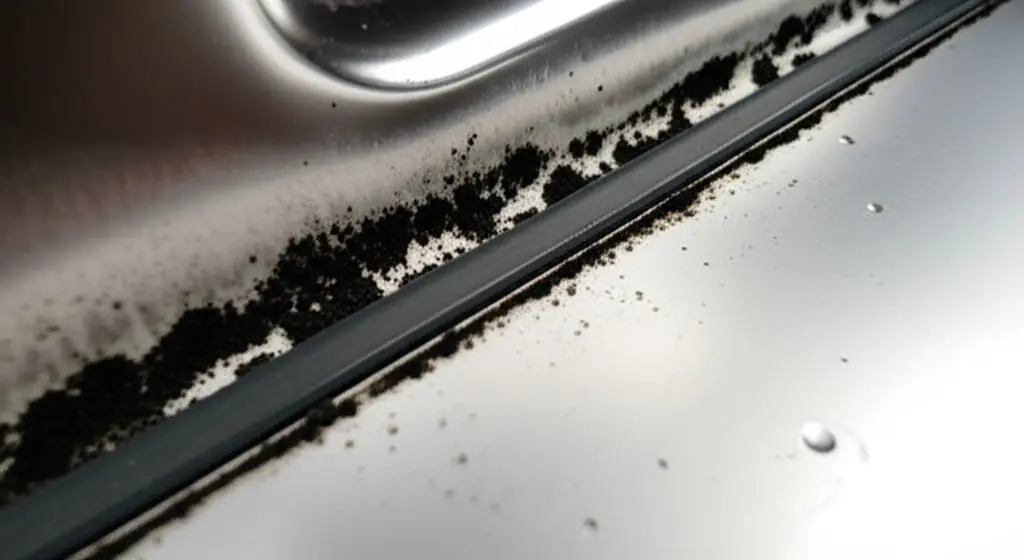
- Wipe the rubber gaskets around the door and along the bottom door edge, where water pools and mould and mildew collect, with a cloth dampened in diluted vinegar or dish soap.
- Wipe the detergent and rinse-aid dispenser flap so crusty residue does not stop it opening mid-cycle.
- Pull the racks and spot-wipe stained tub walls and the door interior with a vinegar-dampened cloth, where the spray never quite reaches.
- On the outside, wipe the door face, handle and control panel with a damp cloth. On stainless finishes, use a microfibre cloth with diluted vinegar and then go over it with plain water so it does not streak.
How often should you clean a dishwasher with vinegar?
Run a vinegar cycle every 1 to 3 months; go monthly if you have hard water or run the machine daily. Do not run it more often than needed, because excess acid wears on rubber parts over time. The signs it is due: cloudy spots or film on glasses, a persistent odour, or weaker cleaning results than the machine used to deliver.
Daily habits stretch the interval. Scrape plates instead of pre-rinsing, dose detergent correctly, keep the rinse-aid reservoir filled, run full loads, and avoid overloading or blocking the spray arms. Loading the top rack correctly matters too: Lina DaSilva of Toronto Shine Cleaning told Yahoo Canada Style never to put heavy things such as large pots or pans on the top rack, because it is not designed to hold that weight and big items can block water from reaching the smaller things around them.
To judge a finished clean, look for film and odour gone and surfaces visibly clearer. If a vinegar smell lingers after the cycle, run a short empty rinse cycle. Hard water is behind much of this film; the same method works on kettle, faucet and shower-glass deposits, and on cleaning your washing machine when its turn comes.
Keep dishwasher care on a separate appliance schedule and consider regular house cleaning for everyday kitchen upkeep.
When does a professional clean make sense?
If film, odours or mould around the seals return soon after a vinegar cycle, the next step is a deeper manual clean of the kitchen and its appliances. Interior appliance detailing like this folds into what a deep clean covers for homes across Toronto and the GTA, and folding it into a scheduled professional clean keeps filters, seals and appliances on a rhythm instead of waiting for odours to build.
One distinction: standing water that will not drain, leaks under the door, or a grinding pump noise are mechanical faults, and they need an appliance technician, not a cleaner. A vinegar cycle removes deposits; it does not repair parts. To add appliance detailing to a visit, call (647) 424-0355.
Frequently asked questions
Can I just pour vinegar into the bottom of the dishwasher instead of using a bowl?
Yes. Pour about 2 cups in just before you press start, since vinegar poured on the tub floor drains away with the first fill instead of releasing gradually the way a bowl on the top rack does. Either way, keep it out of the detergent and rinse-aid dispensers.
Is apple cider vinegar okay if it is what I have on hand?
It is better to wait for white distilled vinegar. Apple cider vinegar carries colour and sugars that can stain the tub interior and leave a sticky film on the surfaces you are trying to clean. White distilled vinegar, at about 5% acetic acid, does the job without residue.
Will a vinegar cycle fix cloudy glasses?
Only when the cloudiness is hard-water film. Rub a damp cloth over a glass: if the film wipes away, a vinegar cycle usually clears it. If the surface stays dull when held to the light, the glass is etched, a permanent pitting from soft water and hot cycles, and no cleaner will bring back the shine.
Should I run a cleaning product through the dishwasher along with the vinegar?
No. Run the vinegar cycle completely on its own, with nothing in the detergent or rinse-aid dispenser. Add the next load of dishes only after the machine has been rinsed and aired out.
Can I use vinegar to clean the outside of a stainless dishwasher door?
Yes, if you dilute it and dry as you go. Dampen a microfibre cloth with diluted vinegar, wipe with the grain, then dry the same strip with a clean cloth so no water marks set on the steel. Keep that cloth away from the door gasket, which only needs dish soap.