
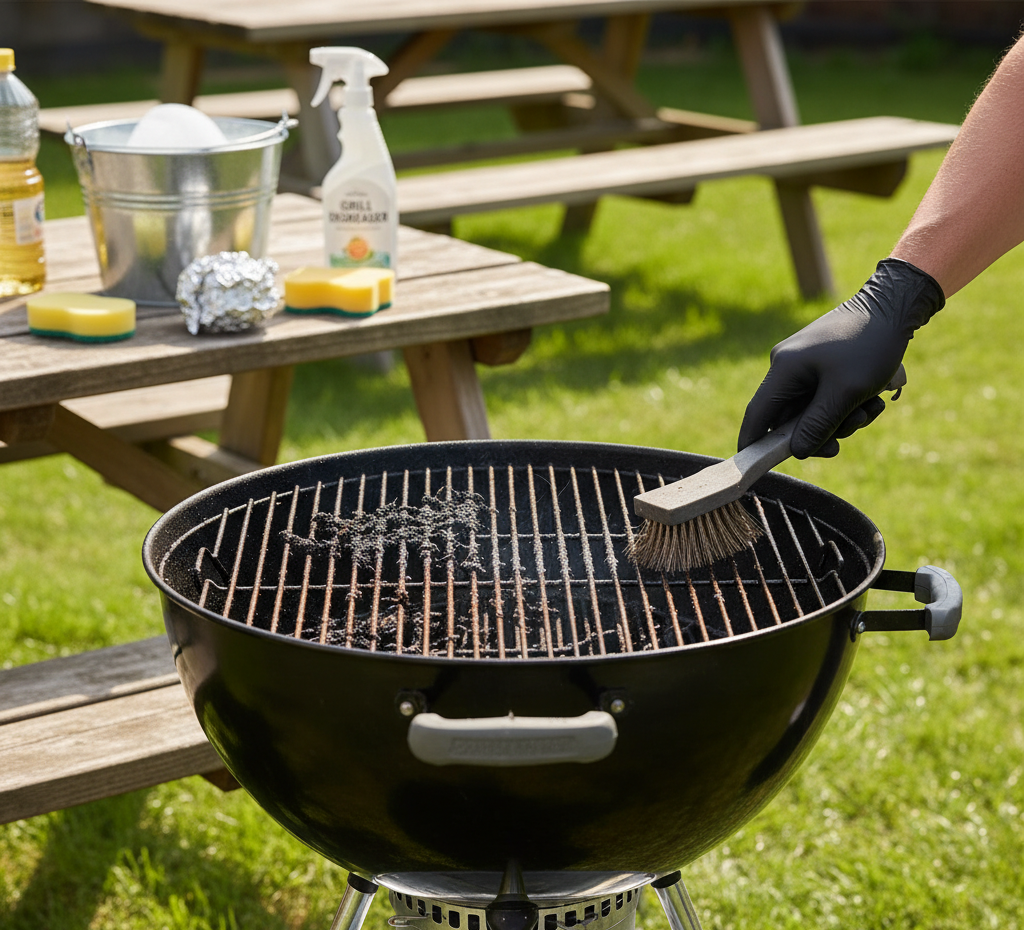
Get Your Grill Ready for Summer: A Professional Deep Cleaning Guide
How about making better use of your barbecue grill? The Victoria Day long weekend is the unofficial but undisputed start of summer in Canada. It is a time for opening the cottage, planting the garden, and, most importantly, firing up the barbecue for the first time. But after a long, cold winter spent in hibernation under a cover, your grill is not immediately ready for that first steak or burger. It is coated in the greasy remnants of last season’s final cookout, and potentially home to dust, insects, and other unwelcome guests. Before a single flame is lit, a thorough, deep cleaning is not just recommended; it is an essential ritual for performance, taste, and, above all, safety. This is not a quick wipe-down. It is a comprehensive overhaul, a process that strips the appliance back to its functional core and prepares it for a season of reliable service. The reward for this effort is a grill that heats more evenly, produces better-tasting food free from the carbonized ghosts of meals past, and operates without the significant fire risk posed by a heavy accumulation of grease. First Step The very first step in this process is preparation, and it begins with safety. Before you do anything else, you must disconnect the fuel source. For a propane grill, this means ensuring the valve on the tank is fully closed, then unscrewing the regulator from the tank. For a natural gas grill, you must shut off the gas supply at the valve where the grill’s hose connects to your home’s gas line. This step is non-negotiable. 1.Tools Next, gather your tools. This is a messy job, and having everything on hand will make the process smoother. You will need a high-quality grill brush, preferably one with stainless steel bristles that are securely fastened. You will also need a plastic scraper, a set of heavy-duty rubber gloves to protect your hands from the grease, a large bucket or utility tub, a strong degreasing dish soap, a scrub brush or non-abrasive scouring pads, and several old rags. Finally, you need a workspace. Move your grill off your finished deck or stone patio and onto a patch of lawn. The grime you will be removing can easily stain porous surfaces. With your area prepped, you can begin the cleaning process with a preliminary burn-off. Reconnect the propane tank temporarily, open the lid, and light all the burners, setting them to high. Close the lid and let the grill run for 15 to 20 minutes. This intense heat will not clean the grill, but it will incinerate any residual food particles, turning them into carbonized ash and making them much easier to scrape off. 2.Disassembly After the burn-off, turn off the burners and the gas supply, disconnect the tank again, and let the grill cool down completely. This may take at least an hour. Do not attempt to clean a hot grill. Once it is cool to the touch, put on your gloves and begin the disassembly. The first components to come out are the cooking grates. Lift them out and set them aside. Next are the heat tents, the metal plates that sit directly above the burners. These are often called “flavorizer bars” or heat shields. Their job is to protect the burners from direct drippings and to vaporize those drippings to create that classic barbecue flavor. Lift these out and set them aside with the grates. Now you can see the heart of the grill: the burner tubes. In many models, these can be easily removed by detaching a pin or a screw at one end. If they come out easily, remove them. If not, you can clean them in place. Finally, locate the grease management system. This is usually a shallow tray or pan that funnels grease into a smaller, disposable drip pan or a permanent catch cup. Remove this entire assembly. 3.Degreaser With the grill disassembled, the wet work begins. Fill your large bucket or utility tub with the hottest water your tap can produce and add a generous amount of your degreasing dish soap. Place the cooking grates and the heat tents into this hot, soapy bath and let them soak for at least 30 minutes, or longer for very heavy buildup. This soaking process is crucial; it does the hard work of softening and dissolving the baked-on, polymerized grease, which is incredibly difficult to remove when dry. While those components are soaking, turn your attention to the inside of the cook box. This is where the real grime lives. Take your plastic scraper and begin scraping down the interior walls and the inside of the lid. You will be removing a thick layer of carbonized grease and smoke residue. It is important to use a plastic scraper, not a metal one, to avoid scratching and chipping the porcelain-enamel or painted finish inside the grill. Scrape everything downwards, towards the bottom of the cook box. Continue scraping until you have removed all the flaky, built-up gunk. Once the walls are scraped, clean out the bottom of the cook box. Use your scraper and handfuls of paper towels or rags to push all the loose debris out through the opening for the grease tray and into a trash bag. This is a messy, unpleasant job, but it is critical for fire prevention. Now, inspect the burner tubes. The small ports where the gas comes out can become clogged with debris, leading to an uneven flame and poor heating. Use a stiff, narrow brush, like a venturi brush or a pipe cleaner, to clean the exterior of the tubes. Carefully poke a small wire or a paperclip into each port to ensure it is clear. Do not use a toothpick, as it can break off inside the port. If you removed the burner tubes, you can do this more easily. If they are still in place, clean them as best you can. 4.Rubbing After at least half an hour of soaking, the
Get Your Grill Ready for Summer: A Professional Deep Cleaning Guide Read More »