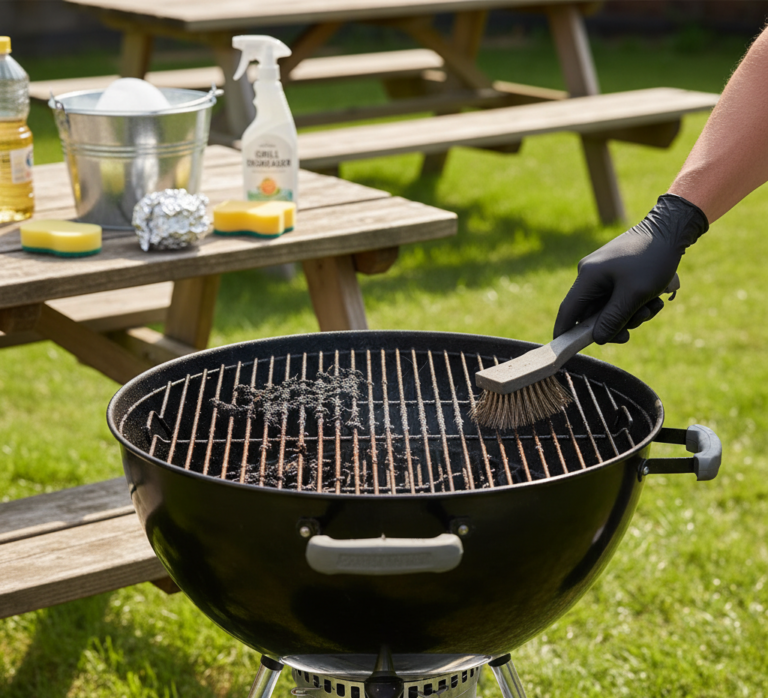










Get Your Grill Ready for Summer: A Professional Deep Cleaning Guide
The first long weekend of the season is Toronto’s unofficial barbecue starting gun, and nothing ruins it faster than a grill still wearing last October. Old grease burns, imparts off flavors, and even invites flare-ups. A proper deep clean takes an afternoon, mostly passive, and your steaks will taste the difference all summer. Here is the professional sequence, from the burn-off to the leak test.
Step 1: The Burn-Off
Fire the empty grill to high and close the lid for 15 to 20 minutes. The heat carbonizes the residue on the grates into ash, which is dramatically easier to remove than sticky, partially cooked grease. Open the lid carefully, let the grill cool just enough to work near, and brush the grates with a stainless steel grill brush to strip the loosened debris. This step does the heavy lifting before any scrubbing starts.
Step 2: Disassemble and Soak
Once the grill is cool enough to touch, take it apart: grates, heat tents or flavorizer bars, burner protectors, and the grease tray. Set everything to soak in hot, soapy water for at least 30 minutes; an hour does better for a grill that skipped its spring clean last year. While the parts soak, gather your kit:
- Stainless steel grill brush and a plastic scraper for the cook box
- Rubber gloves and scouring pads
- Degreasing dish soap and a bucket
- Microfiber rags for final wipes
Step 3: Clean the Cook Box and Burners
With the parts out, scrape the interior walls of the cook box with the plastic scraper; never metal, which can damage porcelain and coatings. Push the debris toward the grease tray and remove it in one go. Then pay attention to the burner tubes, the part most home cleanings miss: clogged ports cause uneven flames and cold spots. Clear each port with a wire or a paperclip, gently, so the gas flows evenly again.
Step 4: Scrub, Rinse, and Dry
Return to the soaking parts and scrub them with scouring pads until the grime lifts, then rinse everything clean and dry completely. Drying matters more than it sounds: cast iron grates rust when stored wet, and moisture on steel parts undoes an afternoon’s work in a week. Coat cast iron lightly with cooking oil before it goes back in place, the same logic as a cast iron pan.
Step 5: Polish the Outside
The exterior deserves more than a wipe: mix white vinegar and water half and half, spray onto a microfiber cloth rather than directly onto the grill, and wipe with the grain of the stainless steel. Follow any dedicated stainless cleaner the same way. This is also the moment to check hoses and connections for cracks or brittleness from the winter in storage.
Step 6: Reassemble and Test for Leaks
Put everything back in reverse order, grates seated properly and grease tray emptied and lined. Before the first cookout, do the leak test: apply soapy water to the hose and all connection points, open the gas, and watch. Bubbles mean a leak; tighten the connection and test again. If bubbling continues, replace the part before you cook, no exceptions. Finish with a 10 to 15 minute burn at medium high to burn off any residue left from cleaning, and the grill is officially ready.
| Step | Time | Notes |
|---|---|---|
| Burn-off and brush | 20 minutes | High heat, lid closed, then cool slightly |
| Disassemble and soak | 30 to 60 minutes, passive | Grates, heat tents, grease tray |
| Scrape and clear burners | 15 minutes | Plastic scraper; paperclip for ports |
| Scrub, rinse, dry | 30 minutes | Dry fully to prevent rust |
| Reassemble and leak test | 20 minutes | Bubbles mean stop and fix first |
Grill Cleaning FAQs
How often should a grill be deep cleaned? Once at the start of the season and once near the end is the baseline, with a quick grate brush and grease tray check every few cooks through summer. Regular small cleans make the seasonal deep cleans genuinely easy.
Can I use oven cleaner on my grill? Better not on the cooking surfaces; oven cleaners are caustic and not meant for food contact. Hot soapy water, a scraper, and elbow grease handle the cook box, and any strong chemical, if you use one at all, belongs on the unheated exterior only with gloves and ventilation, per Health Canada’s household chemical safety guidance.
Why does clean food handling matter at a cookout? Grilling season is also hand-to-mouth season: raw meat juices on hands, tongs, and counters spread bacteria fast at backyard parties. Wash hands before and after handling raw meat; the CDC’s handwashing guidance is the standard every cook should follow between the raw chicken and the salad bowl.
My grill has rust spots on the grates. Clean or replace? Light surface rust scrubs off with the brush and a vinegar soak, then a coat of cooking oil protects the bare metal. Heavy, flaking rust or cracked grates are a replacement, since no cleaning reliably restores food-safe condition.
Too Big a Job? Leave the Kitchen to Us
The grill is only half of summer prep; the indoor kitchen takes the same beating from hosting. Toronto Shine Cleaning’s deep cleaning service resets kitchens top to bottom, and recurring housekeeping keeps them guest-ready all season. A deep studio or one bedroom clean starts at $270.38 before HST, with everything listed on the pricing page. Call (647) 424-0355 and spend your summer cooking, not scrubbing.