Dishcloth Cleaning: How to Stop Kitchen Cloths from Smelling Musty
The humble dishcloth is the quiet, indispensable workhorse of the modern kitchen. From wiping down countertops and drying dishes to cleaning up accidental spills and scrubbing greasy stovetops, this simple square of fabric is handled dozens of times a day. Because of its constant utility, it is also one of the most neglected items when it comes to proper sanitization. A dishcloth operates in a challenging environment, constantly exposed to moisture, food particles, and warm ambient temperatures. This combination of factors creates a highly receptive breeding ground for bacteria, mold, and mildew. When we use a contaminated cloth to wipe down a food preparation surface, we are not cleaning it; instead, we are actively spreading bacteria across the kitchen, increasing the risk of cross-contamination and foodborne illnesses. Understanding how to properly use, clean, sanitize, and choose your dishcloths is a fundamental aspect of maintaining a healthy and functional kitchen.
Why Does it Smell bad?
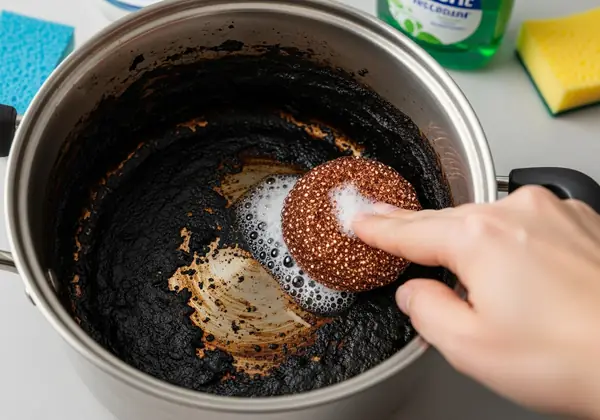
To understand why a dishcloth requires such careful maintenance, it is helpful to look at what happens to the fabric on a microscopic level. When a cloth is used to wipe a counter, it lifts up microscopic food particles, grease, and moisture. If the cloth is then rinsed quickly and left in a damp, crumpled heap at the bottom of the sink, those organic materials remain trapped within the fibers. The constant moisture and warmth of the kitchen allow bacteria like E. coli, Salmonella, and various molds to multiply rapidly. Within hours, a neglected damp cloth can develop millions of bacterial colonies, which manifests to our senses as a sour, musty, and highly unpleasant odor. This smell is a clear indicator that the cloth is no longer safe for use and is actively transferring pathogens to every surface it touches.
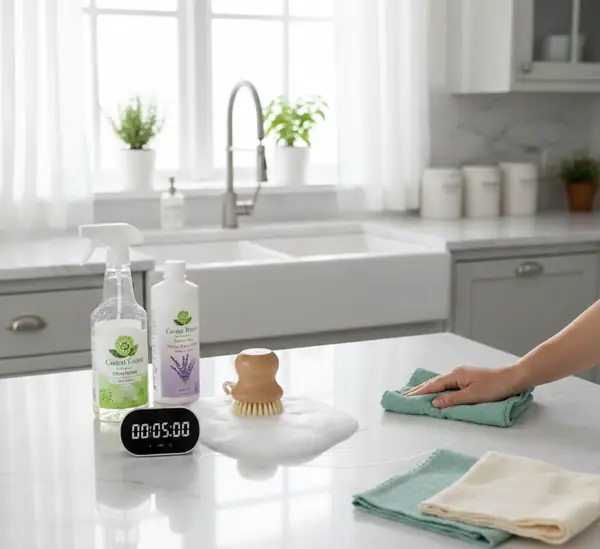
The first line of defense against a smelly and unsanitary dishcloth is the implementation of simple, daily habits. After every single use, the cloth should be thoroughly rinsed under hot, running water to flush out as much food residue and soap scum as possible. Wring the cloth out as tightly as you can to remove the bulk of the moisture. Most importantly, never leave a wet cloth in the sink or flat on the countertop. It must be hung up in a way that allows air to circulate freely around the entire surface, such as over the kitchen faucet, on a small towel bar, or over the edge of a drying rack. This simple act of hanging the cloth to dry quickly is the most effective way to slow down the growth of bacteria and prevent musty odors from developing during the day.
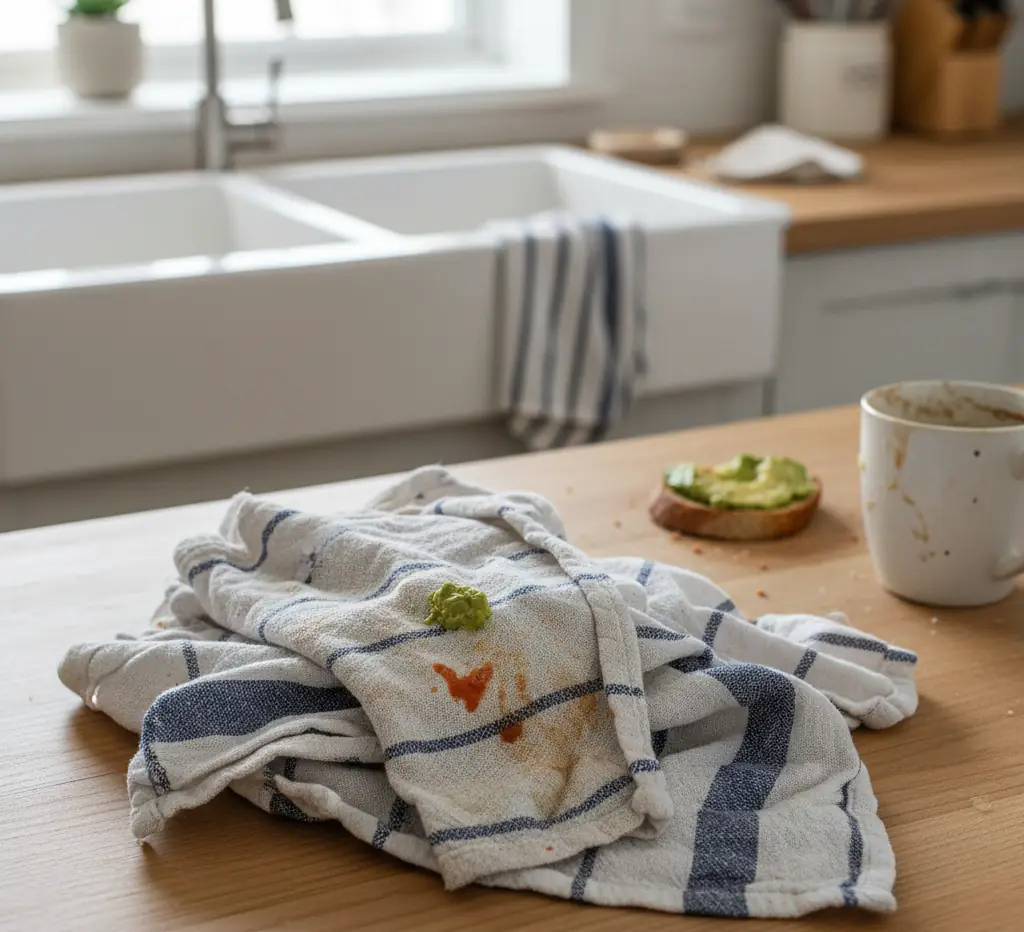
Even with diligent daily rinsing and drying, a dishcloth should be replaced far more frequently than most people realize. The general consensus among health and cleaning professionals is that a dishcloth should be changed at least once a day, and immediately after handling raw meat, poultry, or fish juices. Using a single cloth for several days in a row allows bacteria to accumulate to unsafe levels, regardless of how well it is rinsed. Transitioning to a system where a fresh, clean cloth is introduced each morning is a simple but highly effective way to elevate the hygiene of your kitchen.
Washing
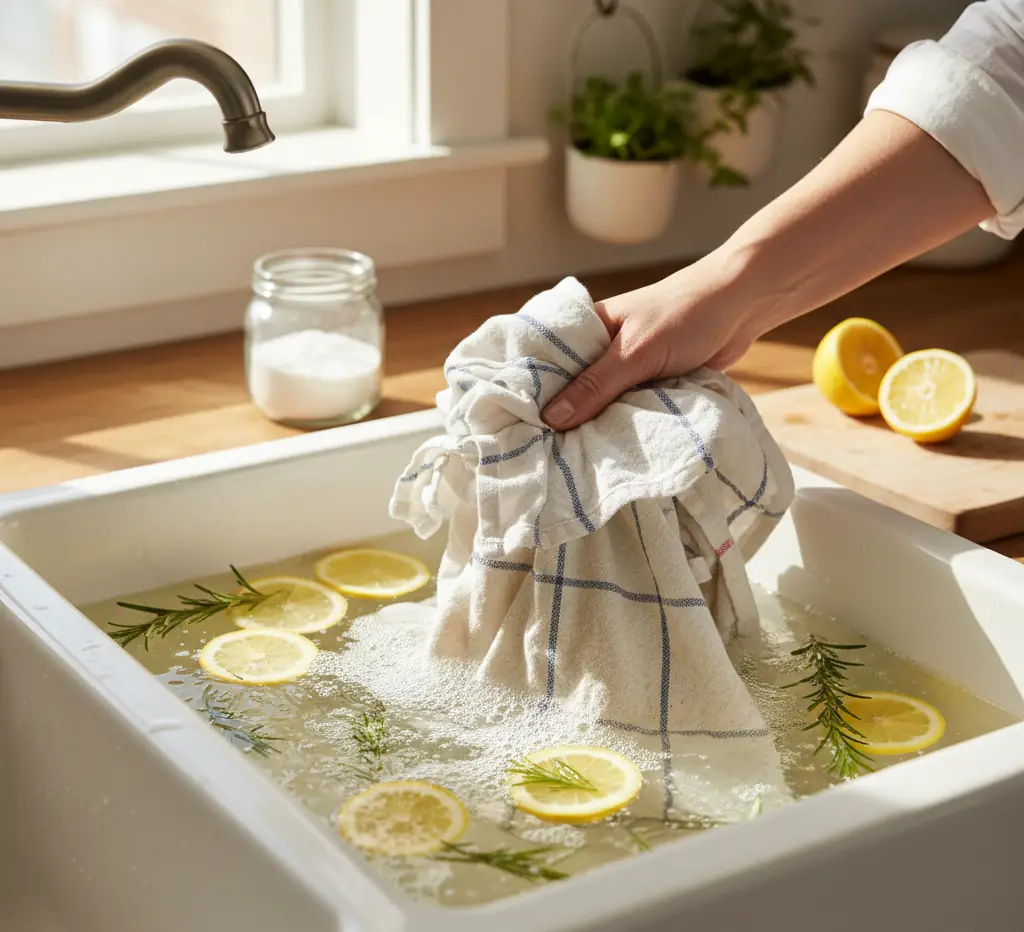
Laundering dishcloths requires a robust and methodical washing routine. Because these cloths accumulate grease, organic matter, and bacteria, they should not be washed on a gentle or cold cycle with your regular clothing. Instead, accumulate your dirty dishcloths in a small, breathable bin or bag—avoid airtight plastic containers which trap moisture and encourage mold growth—and wash them separately on a heavy-duty cycle with hot water. The water temperature should be at least sixty degrees Celsius to effectively melt away the greasy residues and neutralize the bacteria within the fibers. Use a high-quality laundry detergent, and consider adding an oxygen bleach powder, such as sodium percarbonate, to help whiten, brighten, and thoroughly sanitize the fabrics.
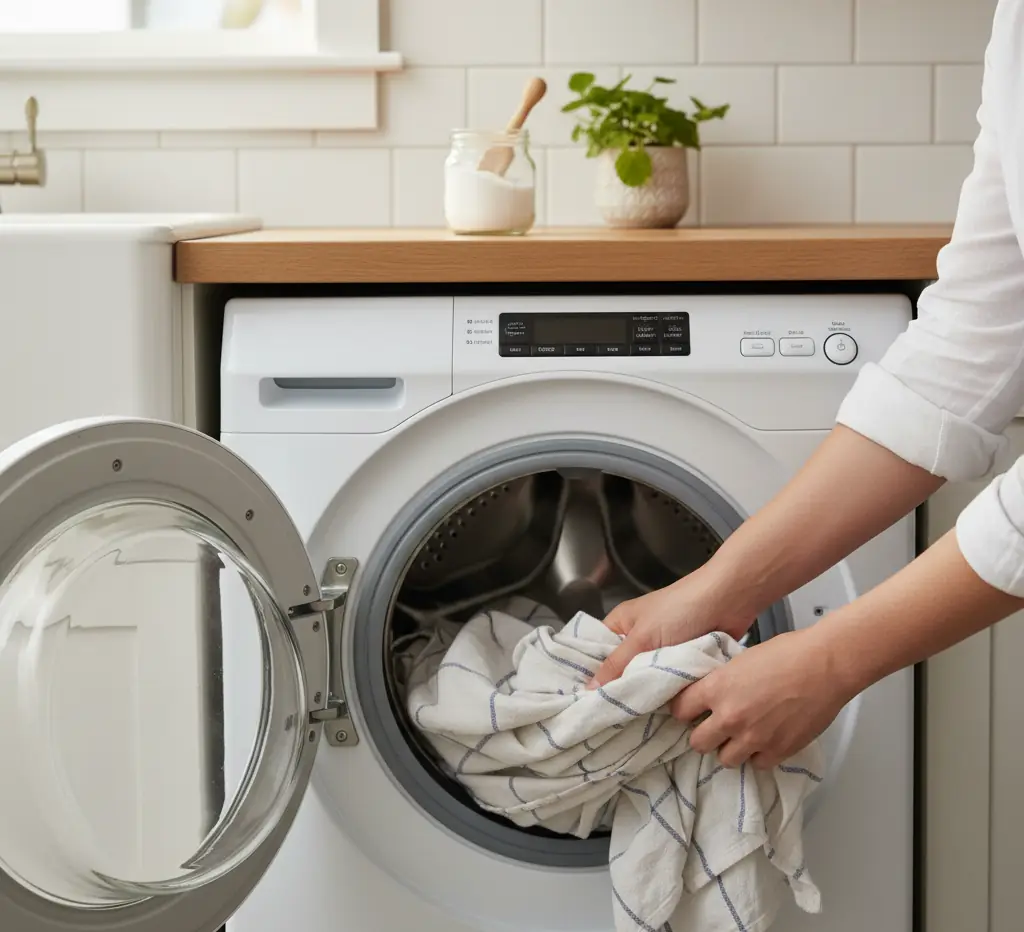
A critical mistake in washing dishcloths is the use of liquid fabric softeners or dryer sheets. While these products are designed to make laundry feel soft and smell pleasant, they work by depositing a thin, waxy chemical film over the fibers of the fabric. On a dishcloth, this coating is highly counterproductive. It clogs the pores of the fibers, drastically reducing the cloth’s ability to absorb water and lift away grime. It also locks in existing grease and bacteria, making subsequent washings less effective and contributing to a faster return of musty odors. To keep your dishcloths absorbent and clean, skip the fabric softener entirely. Instead, add half a cup of plain white vinegar to the rinse cycle. The vinegar acts as a natural, residue-free fabric softener, helps to dissolve any remaining detergent buildup, and neutralizes lingering odors.
Boiling
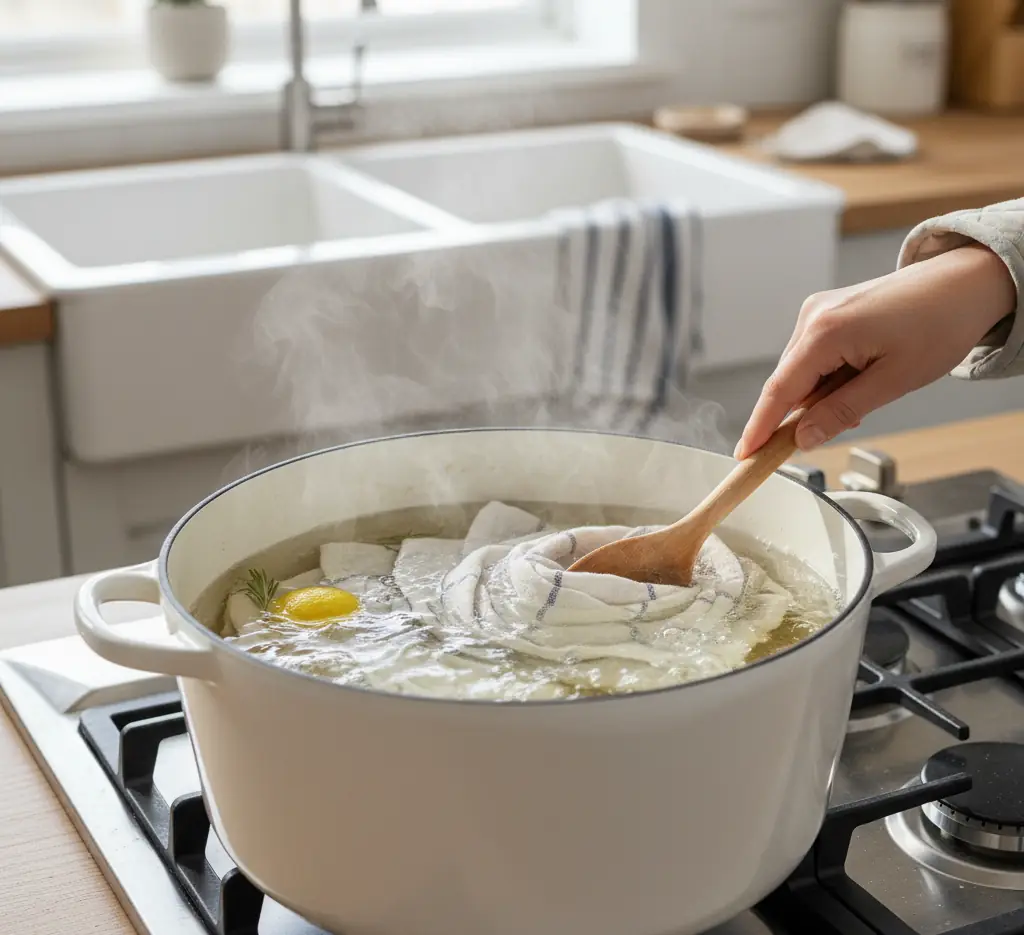
For those who want to ensure their dishcloths are sanitized but do not want to run a full load of laundry every day, there are highly effective alternative sanitizing methods that can be performed right in the kitchen. One of the oldest and most reliable techniques is boiling. Place your dirty dishcloths in a pot, fill it with water to cover them completely, and bring it to a rolling boil on the stove. Let the cloths simmer for ten to fifteen minutes. The intense heat of the boiling water is a highly effective way to kill all bacteria, yeast, and mold spores without the need for any harsh chemicals. After boiling, carefully remove the cloths with tongs, let them cool, rinse them in cold water, wring them out, and hang them to dry. This traditional method is a fantastic way to reset a musty cloth and restore it to a hygienic state.
Microwave
Another quick and convenient option is the microwave sanitizing method, though it must be approached with caution to avoid a fire hazard. The dishcloth must be thoroughly wet; never place a dry or even slightly damp cloth in a microwave, as it can quickly catch fire. Once the cloth is completely saturated with water, place it on a microwave-safe plate and heat it on high for one to two minutes. The microwave will heat the water within the fibers to a boil, creating a powerful, sanitizing steam that kills the vast majority of pathogens. Be extremely careful when removing the plate and the cloth from the microwave, as they will be scalding hot. Use tongs to lift the cloth, let it cool completely, and then hang it to dry. This method should only be used on cotton or other natural fiber cloths; synthetic materials like polyester or microfiber can melt under high heat.
Fabric
When building your collection of kitchen tools, the material of the dishcloth is a key consideration, as different fabrics have different strengths and maintenance needs. Traditional cotton dishcloths are highly popular for their natural feel, excellent absorbency, and durability. They are soft, can withstand high washing temperatures, and are comfortable to use. However, cotton is also highly porous, meaning it absorbs and holds onto organic matter and moisture tightly, making it more prone to developing musty odors and staining easily.
Microfiber is a highly effective synthetic alternative. The fibers are extremely fine and split, creating a massive surface area that physically traps dust, dirt, and grease far more effectively than cotton. A damp microfiber cloth can remove a significant percentage of bacteria from a surface with just water, making it a powerful tool for daily wiping. They also dry much faster than cotton, which helps to limit bacterial growth. However, microfiber requires specific care. It cannot be washed in hot water or dried on high heat, as the heat can melt the fine synthetic fibers, and it must never be washed with fabric softener.
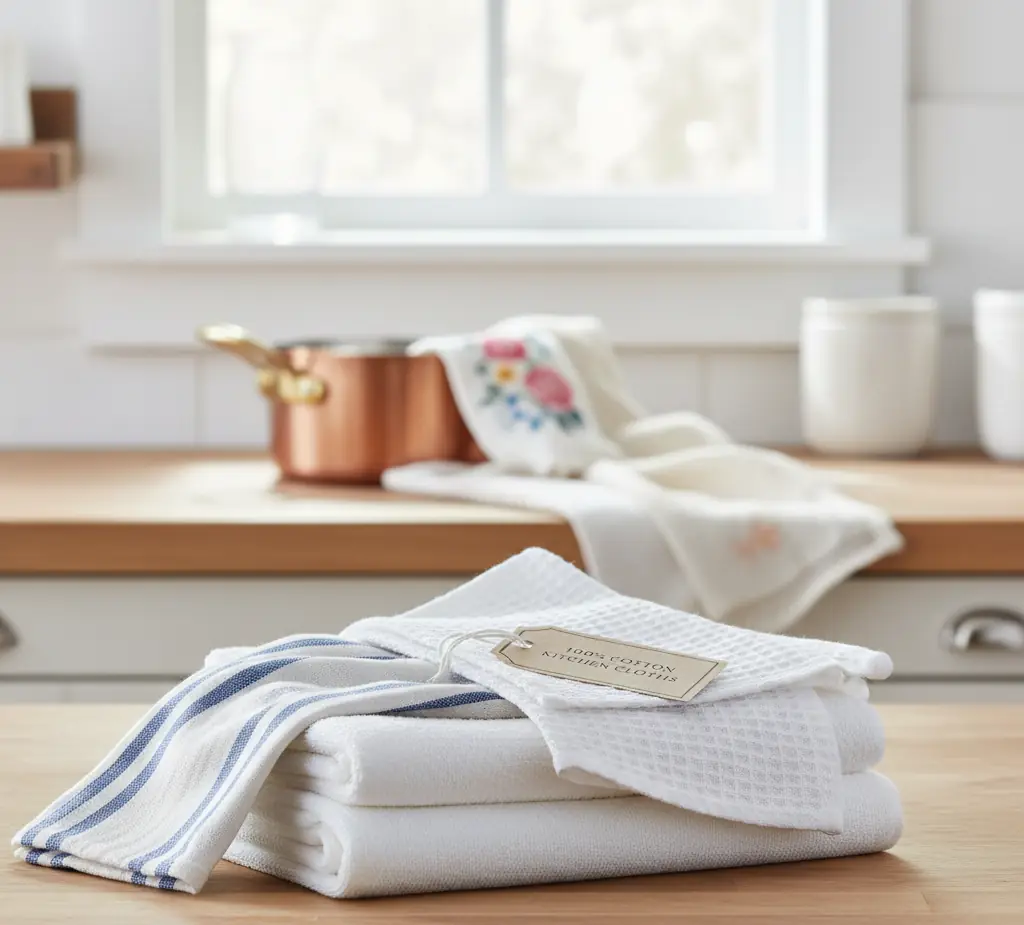
In recent years, the Swedish dishcloth, also known as a sponge cloth, has emerged as a highly versatile and sustainable option. Made from a combination of natural cellulose and cotton, these cloths are stiff when dry but become incredibly soft and pliable when wet. They are remarkably absorbent, capable of holding many times their weight in liquid, and can replace dozens of rolls of paper towels. The primary advantage of the Swedish dishcloth is how quickly it dries. Because of its unique structure, it sheds moisture rapidly, making it far less hospitable to mold and bacteria than a thick cotton cloth. They are also highly durable, biodegradable, and can be easily sanitized by boiling, microwaving, or placing them in the top rack of the dishwasher.
Organization
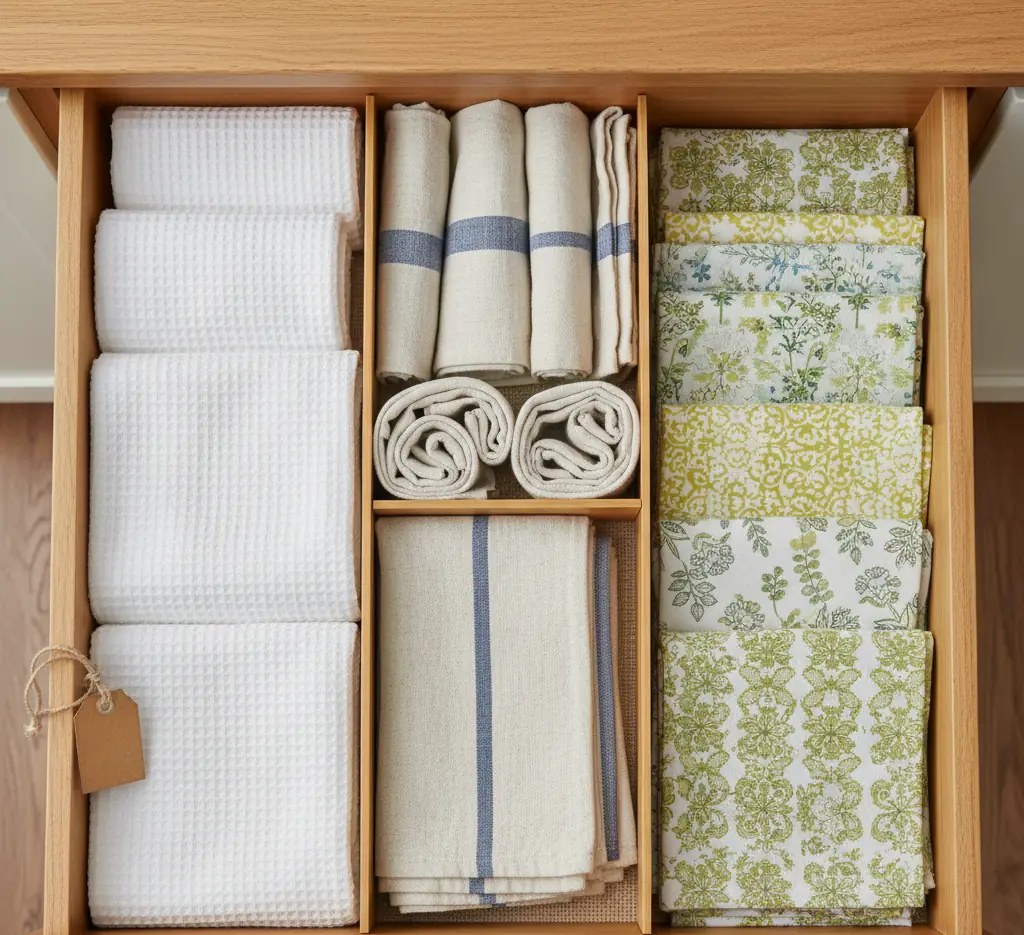
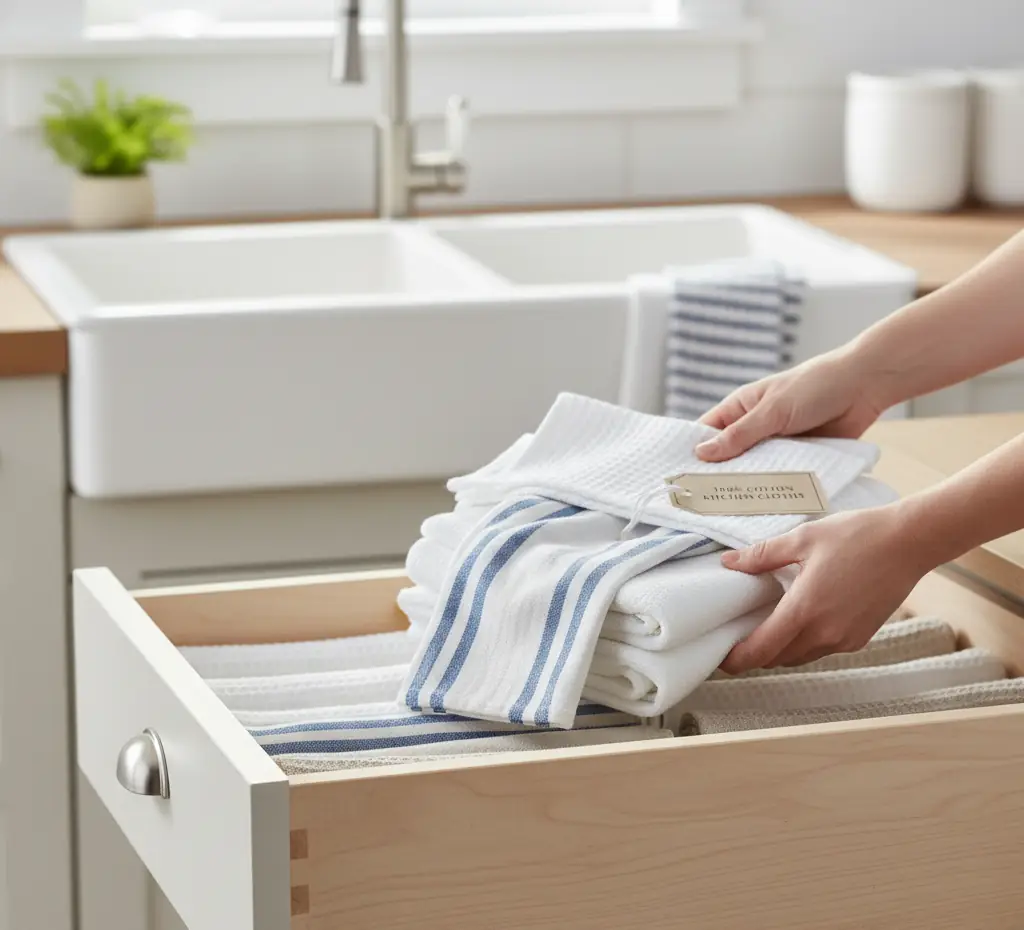
Managing a collection of dishcloths is simplified by establishing an organized system of storage and rotation. Keep a designated drawer or basket in your kitchen filled with a generous supply of clean, folded cloths, ensuring a fresh one is always within easy reach. Next to your sink or inside a cabinet, place a small, breathable container to collect the dirty cloths. Having a clear destination for both clean and used items prevents the temptation to reuse a dirty cloth out of convenience.
Ultimately, no dishcloth lasts forever. Even with the best care, the fibers of the fabric will eventually degrade over time. Cotton cloths will thin and fray, microfiber will lose its static charge and absorbency, and Swedish dishcloths will begin to tear after months of heavy use. Persistent musty odors that remain even after boiling or bleaching are a clear sign that the fibers have become deeply clogged with bacteria and grease, and the cloth should be retired. You can transition older, worn-out cloths to heavy-duty utility rags for cleaning the garage or yard, or discard them, clearing space for fresh, hygienic tools.
The care and maintenance of a simple item like a dishcloth is a small but vital component of overall kitchen health. By implementing a daily routine of thorough rinsing, proper drying, regular replacement, and correct laundering, you protect your family from foodborne pathogens and ensure that your food preparation areas are truly clean.
Fresh cloths support daily kitchen care, and regular house cleaning can help with the counters and floors that need attention too.
While maintaining clean kitchen tools like your dishcloths is essential for daily safety, keeping an entire home pristine and sanitary requires a larger, more comprehensive effort. To ensure every surface in your living space receives a deep, expert-level clean, Toronto Shine Cleaning offers professional residential services that address the details from your kitchen counters to your floors, delivering a spotless and truly refreshed environment throughout your home.