









Managing a household involves keeping various objects in order, but few collections present as persistent a challenge as our shoes. For many families, these items accumulate silently in entranceways, migrate under beds, and pile up in dark closet corners. Because we wear different types of footwear for various activities, seasons, and social occasions, our personal collection can grow rapidly, easily outstripping the storage space we have available. An unorganized collection of footwear is more than just a visual distraction; it is a source of daily friction, leading to frantic searches for a missing left boot in the morning, dust-covered heels in the closet, and the tracking of outdoor dirt and allergens throughout the living spaces. Taking the time to systematically organize your shoes is a transformative act of home maintenance. It protects your investment in high-quality items, simplifies your daily routine, and creates a more hygienic, peaceful environment.
Gather all the Shoes
The process of organizing your collection must begin with a complete and honest assessment of every pair. This requires a total empty-out. Gather every single pair of shoes from across your home—from the front door, the bedroom closets, the mudroom, the back porch, and under the beds—and lay them out in a single, well-lit area. This physical consolidation is a crucial first step, as it forces you to confront the true scale of what you own. It is common to discover duplicate styles you had forgotten about, pairs that no longer fit, or boots that have become too worn to wear. Seeing everything in one place provides a psychological reset, allowing you to transition from a mindset of accumulation to one of deliberate curation.
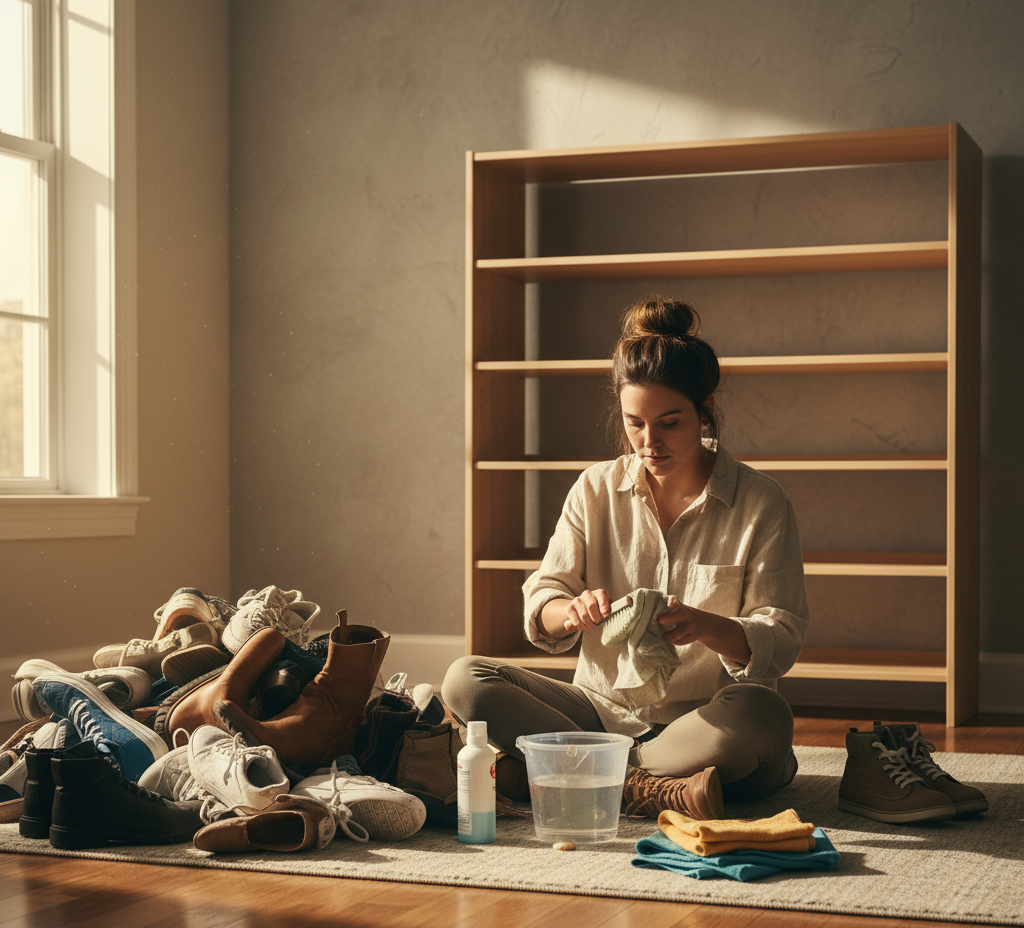
With the entire collection laid bare, the editing and sorting phase begins. This is where you must be practical and sometimes ruthless. Pick up each pair of shoes and evaluate its condition, comfort, and utility. Assess the structural integrity: are the soles worn thin, are the heels wobbly, or are the straps frayed beyond repair? If an item is damaged, decide if it is truly worth the cost of a professional repair; if not, it should be discarded. Next, evaluate comfort and fit. Many closets are filled with “aspirational” items—painfully high heels, stiff boots, or running gear that is slightly too small—kept out of a sense of guilt or the hope that they will eventually become comfortable. If a shoe causes blisters or pain, it is occupying valuable real estate without providing any value. Sort your items into distinct piles: keep, donate, repair, or discard. This purging process edits your collection down to only the footwear that serves your current lifestyle and comfort needs, making the subsequent storage phase much more manageable.
Cleaning
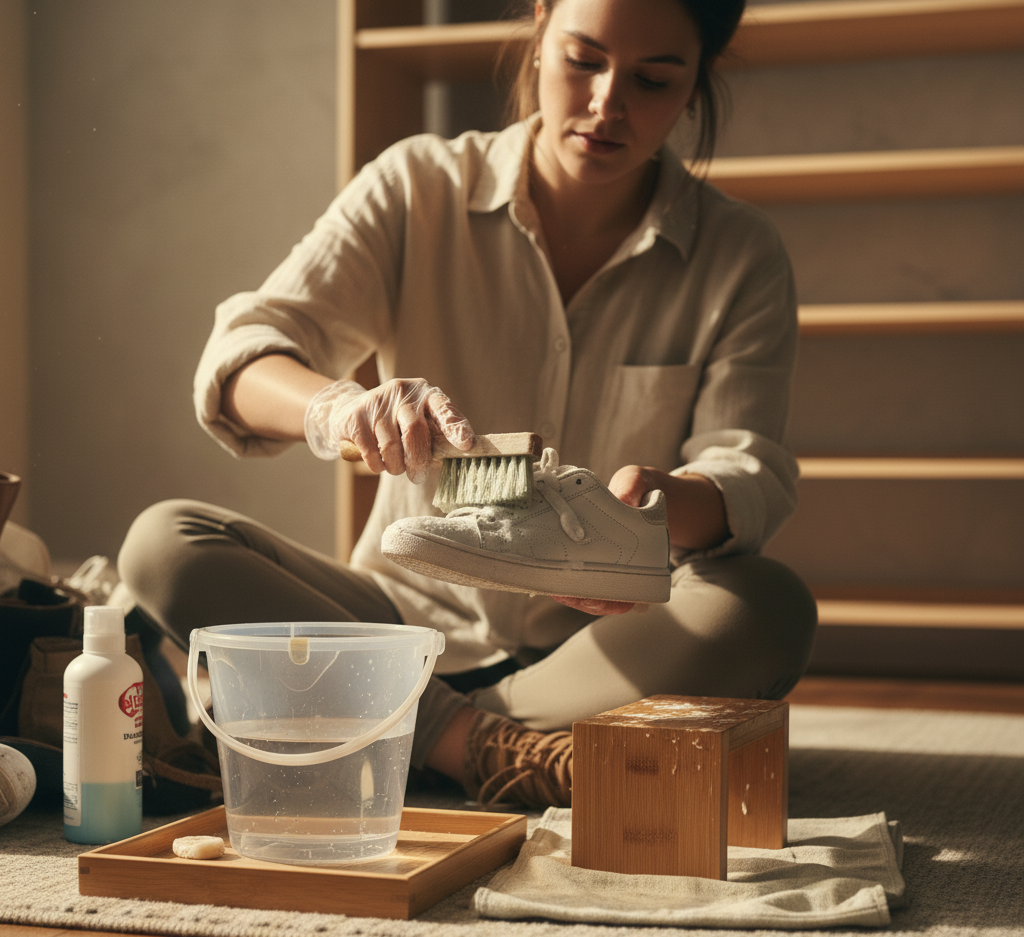
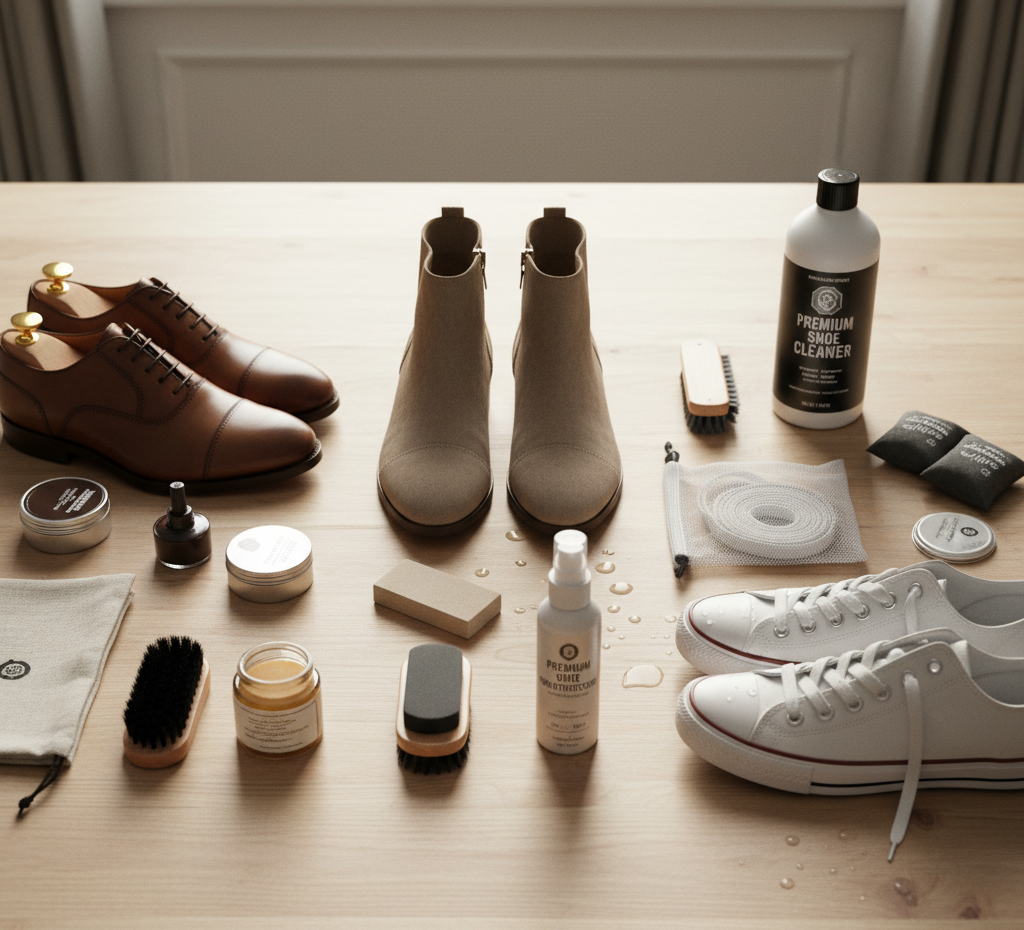
Before any items are placed into their new organized homes, they must be thoroughly cleaned. Storing dirty shoes is a critical mistake that can lead to permanent damage and unpleasant odors. Footwear accumulates a layer of grit, moisture, and organic matter from the ground, which, if left on the material in a closed closet, can degrade leathers and synthetics, creating an environment where mold and mildew can thrive. Wipe down the uppers of your boots and sneakers with a damp cloth and a mild soap solution, and use a stiff brush to scrub the outsoles clean of any packed-on dirt or mud. For leather items, apply a quality conditioner to keep the material supple and prevent cracking. Suede items should be dry-brushed with a specialized brush to restore the nap. Most importantly, allow all shoes to air dry completely in a well-ventilated area before putting them away. To address odors, sprinkle a small amount of baking soda inside each pair and let it sit overnight to absorb moisture and neutralize bacteria, shaking it out before storage.
Once your edited collection is clean and dry, the strategic planning of your shoes storage spaces can begin. The most effective systems are based on the principle of zoning, which means storing your items based on how often you wear them. This creates a logical flow and prevents high-traffic areas from becoming overwhelmed.
Organization
1.Entryway
The entryway is your home’s transition zone, and it is the most valuable and vulnerable real estate in the home organization system. It should be reserved strictly for the footwear you wear every single day. A common mistake is allowing the entryway to become a storage locker for the entire family’s boots and sneakers, leading to a chaotic pile right inside the front door. Limit this zone to one or two pairs of immediate-use shoes per person. To contain these pairs neatly, utilize a low, open rack, a durable boot tray, or a storage bench with built-in cubbies. This keeps daily footwear off the floor, allows wet or dirty items to dry safely, and creates a clear, welcoming entry to your home.
2.Bedroom Closet
The primary bedroom closet is the zone for your active, seasonal wardrobe. This is where you should store the items you wear regularly but not necessarily every day—your work shoes, casual sneakers, and current-season options. Within the closet, organize the collection by category: group all your sneakers together, then your work footwear, and then your casual flats or boots. This categorization makes finding the right pair for an outfit an intuitive, effortless task. Within each category, arrange the items by color, working from light to dark, which creates a visually calming and orderly display that reduces morning decision fatigue.
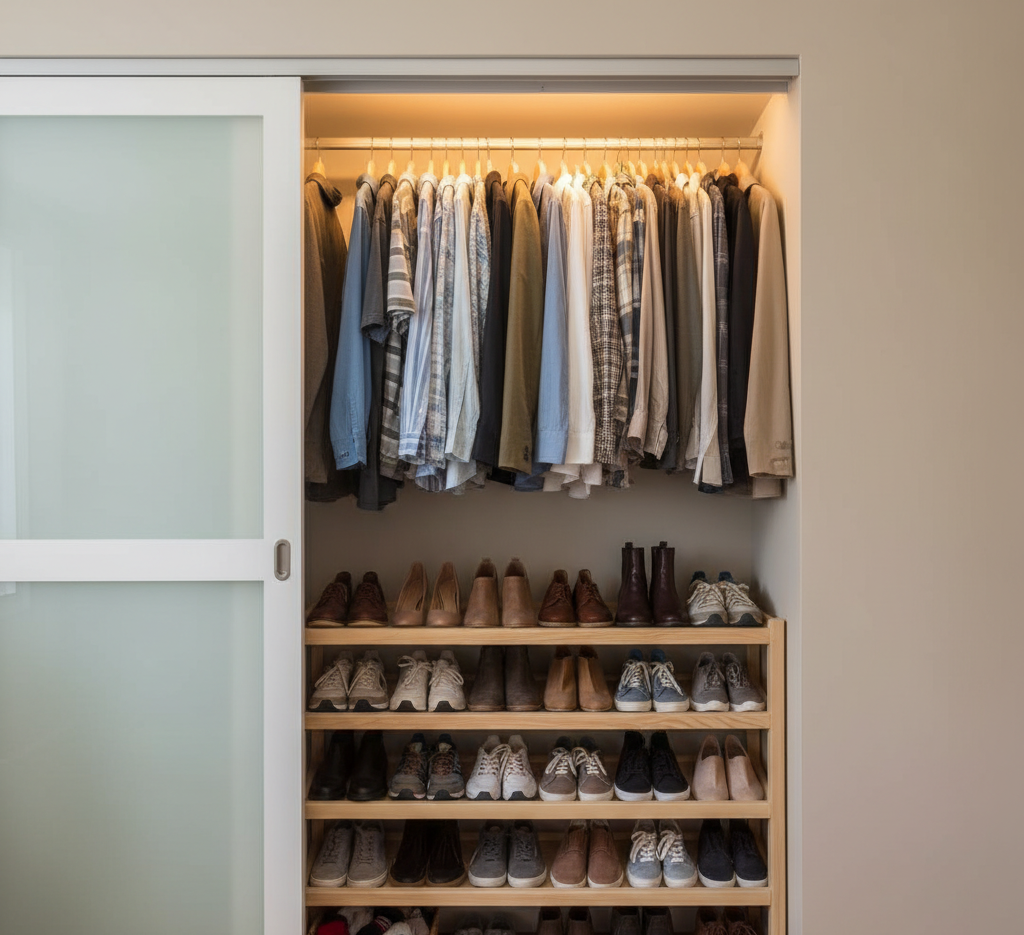
3.Deep Storage
Deep storage is reserved for out-of-season footwear, formal wear, and specialty sports gear that you only access occasionally. Swapping your shoes seasonally is a highly effective way to maximize space in your primary closet. As the weather warms in the spring, clean and prep your heavy winter boots and move them to deep storage, bringing your summer sandals and lightweight footwear to the front. Conversely, in the fall, perform the reverse switch. Deep storage areas can include the high, hard-to-reach top shelves of your closet, the space under your bed, or even a dry, organized storage closet in another part of the house. By removing out-of-season footwear from your daily view, you keep your active wardrobe organized and easy to navigate.
The specific storage solutions for your shoes will depend on your budget, space, and aesthetic preferences, but the focus should always be on visibility, accessibility, and protection.
4.Shelves
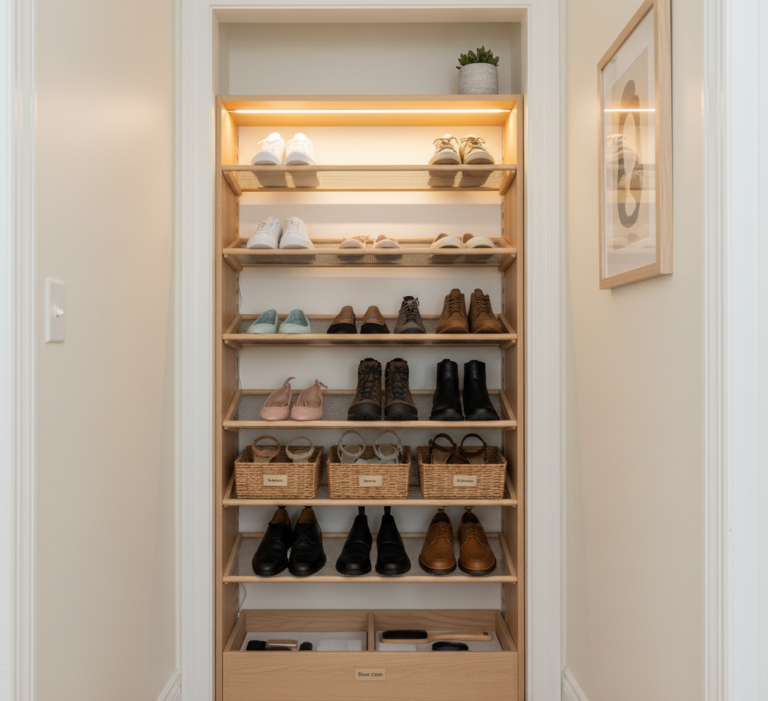
Vertical shelving is one of the most efficient ways to store footwear, as it utilizes the vertical wall space that is often wasted in standard closets. Open racks or bookcases allow you to see your entire active collection at a glance, making it easy to select a pair and put it away. For a clean look and to save space on shelves, try the heel-to-toe method: place one shoe of the pair facing forward and the other facing backward. This not only allows you to see both the front style and the heel height of the item at a glance but also allows you to fit more items onto a single shelf.
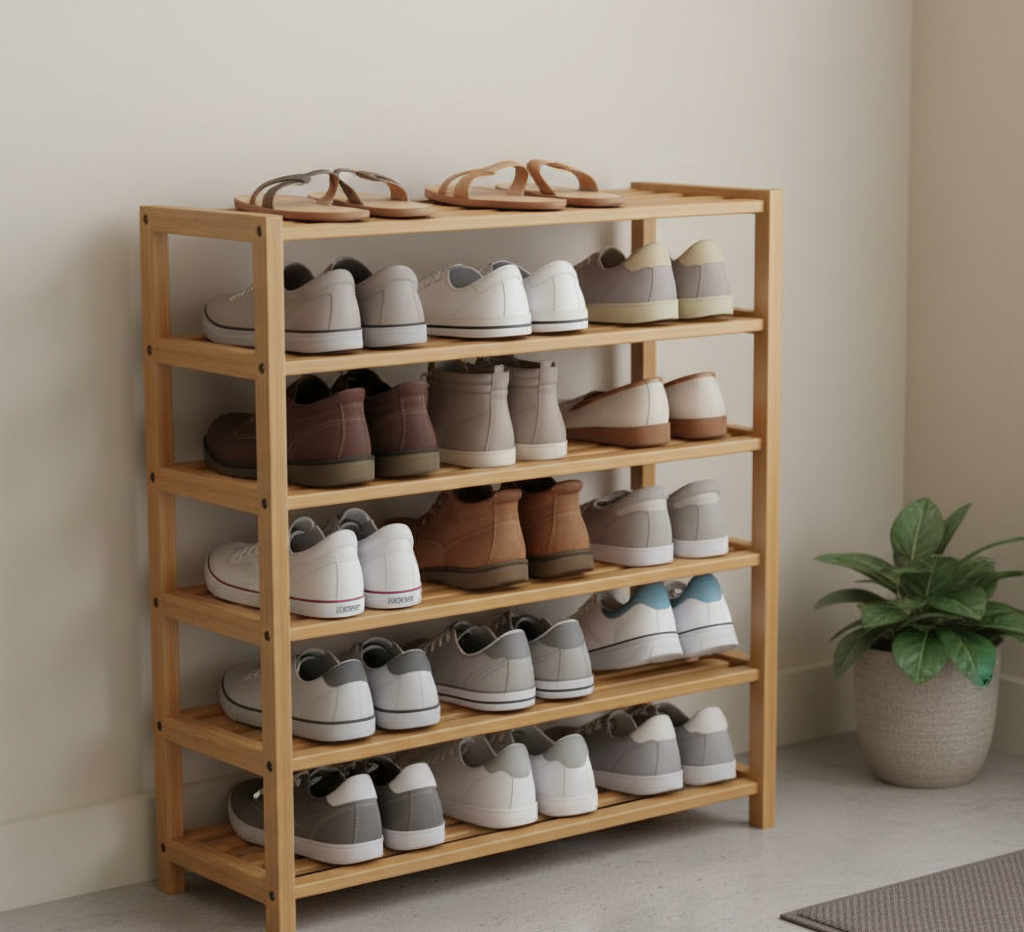
5.Boxes
For valuable, delicate, or less frequently worn items, clear plastic shoe boxes are an exceptional investment. Storing your collection in original cardboard boxes protects them from dust and light, but it also hides them from view, leading to the “out of sight, out of mind” phenomenon where items are forgotten and never worn. Clear plastic boxes solve this problem by providing excellent protection from dust and crushing while maintaining complete visibility. They are easily stackable, allowing you to build a neat, modular storage wall on your closet floor or high shelves, keeping your collection clean, visible, and preserved.
6.Shoe Organizers
In homes where floor and shelf space are limited, over-the-door shoe organizers are a practical and highly efficient alternative. These hanging organizers feature rows of pockets, typically made of clear plastic or mesh, that hang on the back of a closet or bedroom door. They are excellent for storing lightweight footwear, flats, sandals, and slippers, freeing up valuable floor space for bulkier boots and sneakers. By utilizing the vertical space of a door, you can easily store fifteen to twenty pairs of footwear in an area that would otherwise go unused.
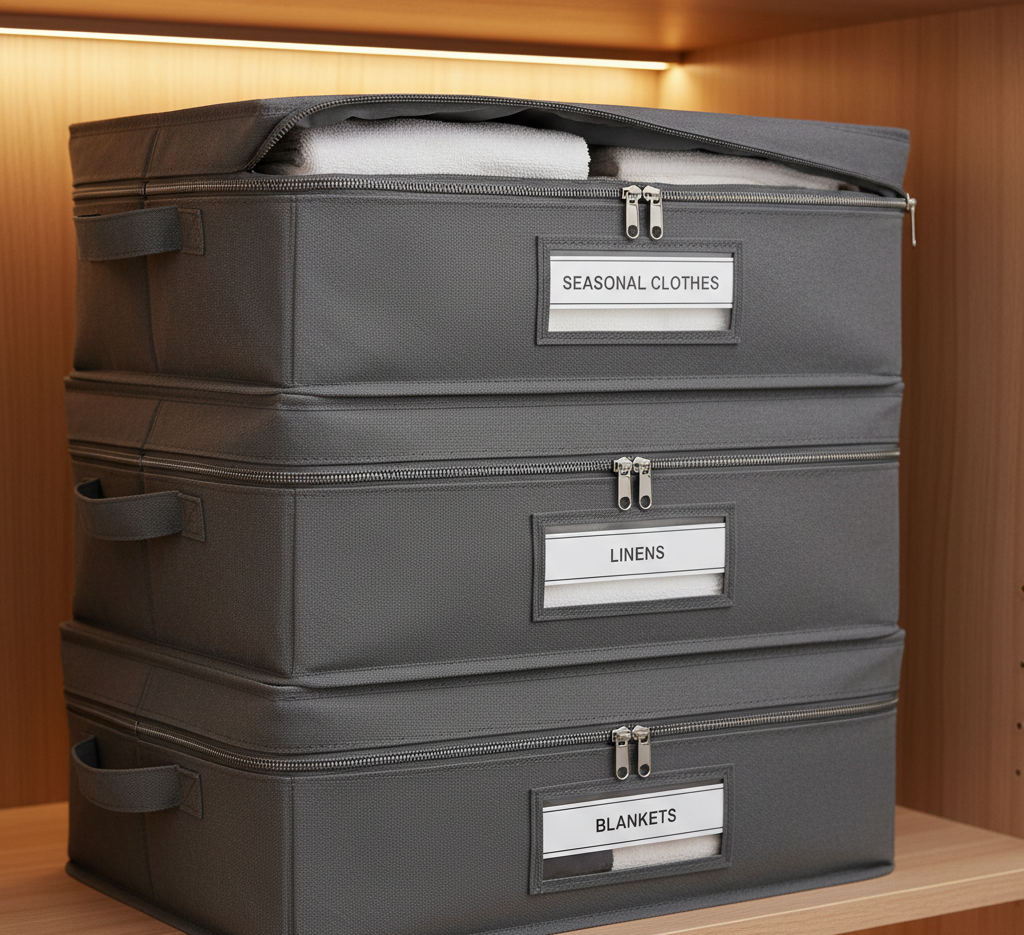
7.Fabric Boxes With Zipper
Under-bed storage is another clever solution for seasonal or formal shoes that are not in daily rotation. Utilize shallow, zippered fabric bins or plastic containers on wheels designed to slide easily under the bed frame. Fabric bins are particularly useful as they are breathable, preventing the buildup of mustiness or humidity around the items during the long months of storage. Ensure the container is securely closed to protect the items from the inevitable accumulation of dust bunnies under the bed.
Discipline
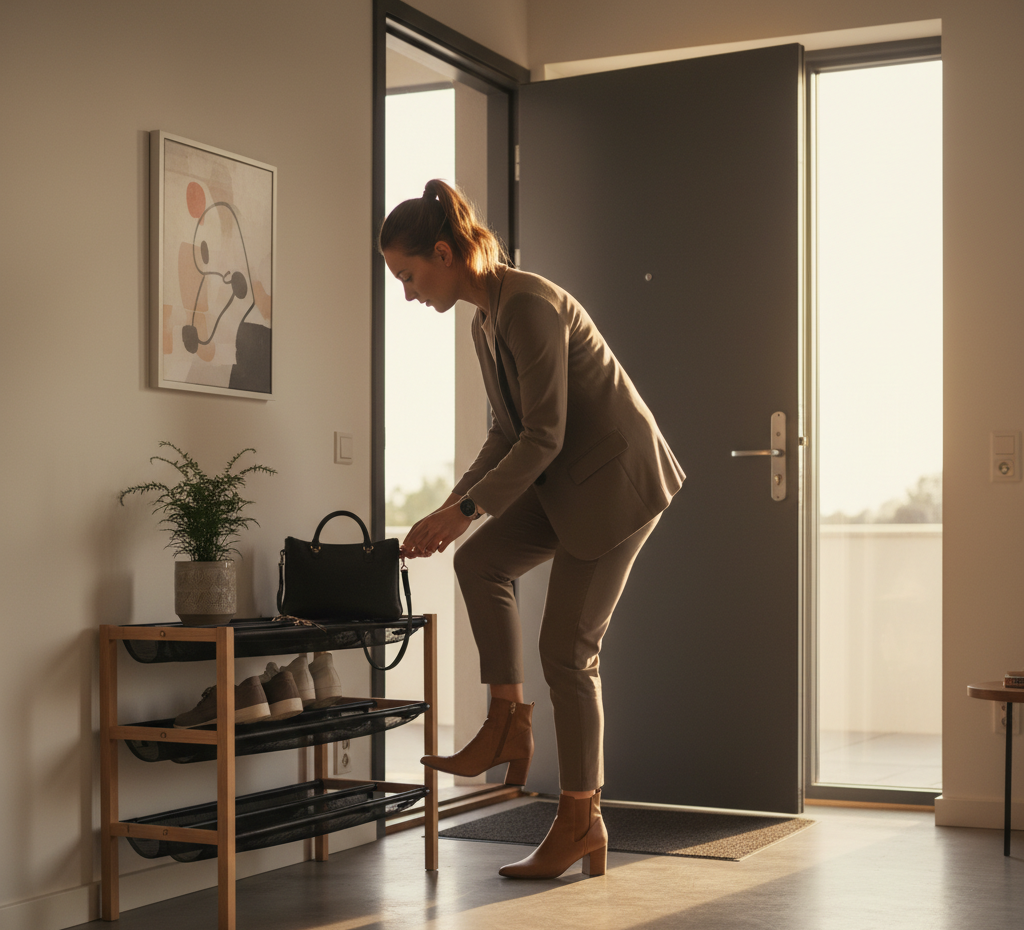
Maintaining your newly organized system relies on the consistent application of a few simple daily habits. The first and most important habit is the discipline of putting your footwear away in its designated zone as soon as you enter the home. When you walk through the door, take the extra ten seconds to place your daily shoes on the entryway rack, and return any other pairs to your bedroom closet. This prevents the gradual creep of footwear clutter across your floors.
The second habit is the “one-in, one-out” rule. To prevent your collection from slowly expanding and overwhelming your storage space again, commit to donating or discarding an old pair of shoes every time you purchase a new one. This keeps your collection edited to a manageable size that fits your storage capacity. It also forces you to evaluate whether a new purchase is truly necessary, helping to curb impulse buying and keep your home organized over time.
By organizing your shoes and establishing a clear “footwear off” rule at the entryway, you create a powerful barrier that stops pollutants at the door, keeping your floors and carpets significantly cleaner and improving the indoor air quality of your home. It also reduces the frequency of heavy scrubbing required on your hard surfaces. Footwear tracks in an astonishing amount of outdoor contaminants, including dirt, pollen, pesticides, animal waste, and microplastics, which can settle deep into carpet fibers or create fine dust on hard floors. Preventing these materials from traveling past the foyer is a major victory for home hygiene.
Special Care
Caring for your footwear collection also requires an understanding of how different materials react to storage conditions. Leather, being an organic material, needs to breathe. Storing leather boots or loafers in airtight plastic bags can trap residual moisture and lead to mold growth or cause the material to dry out and crack. Instead, store them on open shelves or in breathable fabric bags. Suede, on the other hand, is highly sensitive to moisture and light. Direct sunlight can fade the rich colors of suede, so these items should be stored in a dark, dry closet space. For athletic footwear, which is often made of synthetic mesh and foams, ventilation is key. After a workout, let your running shoes air out completely in a well-ventilated room before placing them back into a closed closet or container. This simple practice prevents the growth of odor-causing bacteria and keeps the materials fresh.
Heavy winter boots and tall fashion boots present a unique storage challenge due to their size and shape. When left to stand on their own, the tall shafts of these boots can fold over, causing creases in the leather or synthetic material and making the storage space look untidy. To prevent this, use boot shapers or insert rolled-up magazines or plastic bottles into the shafts to keep them standing upright. This simple step preserves the shape of the boots and makes them much easier to organize on shelves or the floor of your closet. For very bulky winter boots, consider storing them in a dedicated mudroom or a heavy-duty bin on a lower shelf, keeping your main closet free for lighter, everyday items.
Space for Children
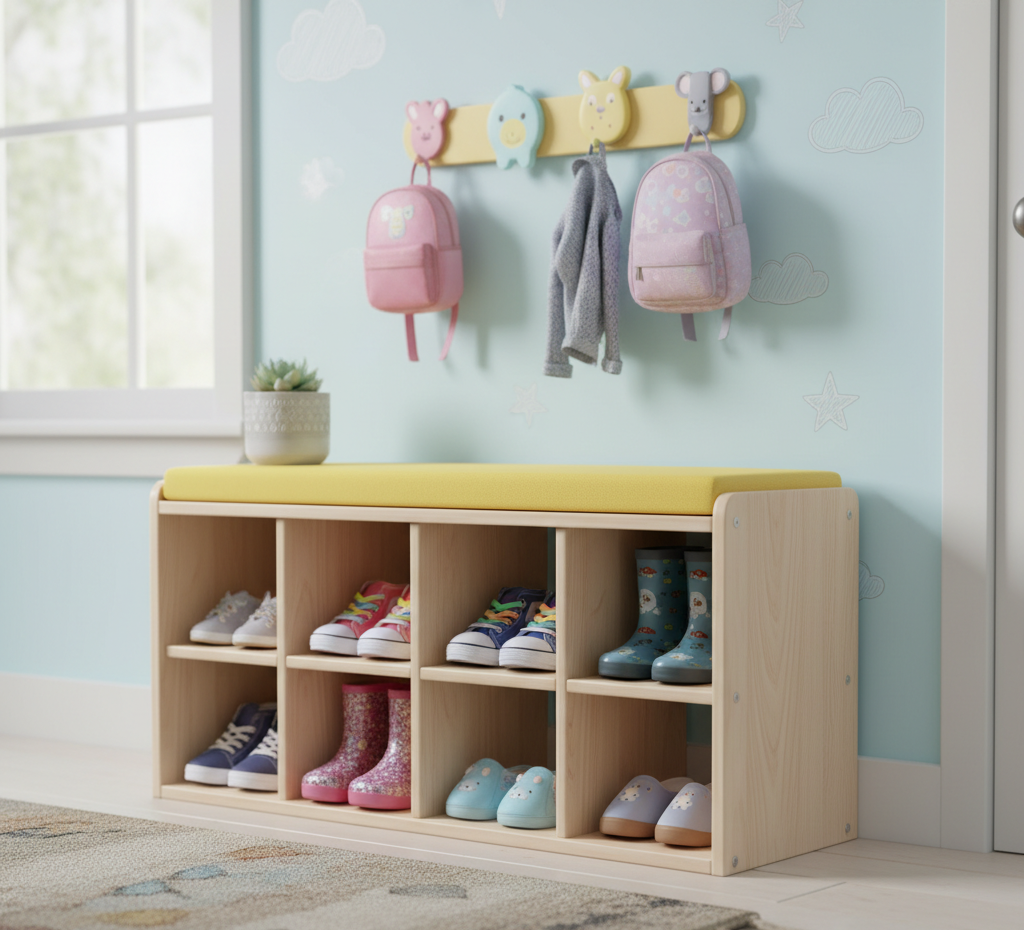
For families with young children, managing the constant influx of small, rapidly growing footwear requires its own specialized strategy. Children’s items are often scattered across the home, making it difficult to find a matching pair before school or activities. Establish a dedicated, low-level storage zone specifically for your children’s footwear. This could be a set of colorful, open bins in the entryway or the lower shelves of their bedroom closets. The key is to make it as easy as possible for them to put their own belongings away. Labeling each bin with a simple picture or the child’s name can help to reinforce this routine. Regularly auditing this collection is also essential, as children can outgrow their footwear in a matter of months, and keeping tight, outgrown items only adds unnecessary clutter to your storage spaces.
In conclusion, organizing shoes is a highly rewarding process that simplifies your daily routine, protects your investment, and establishes a cleaner, more orderly home. By systematically purging, cleaning, zoning, and choosing the right storage solutions, you can easily maintain a functional system that keeps clutter at bay.
Just as a structured system for organizing your footwear keeps your entryway and closets clear of clutter, a professional cleaning service keeps your entire home in a state of pristine cleanliness. Toronto Shine Cleaning specializes in deep, comprehensive house cleaning that addresses the dust, dirt, and allergens that accumulate over time. By letting us handle the intensive work of scrubbing, vacuuming, and mopping your newly cleared floors, you can enjoy a beautifully organized and thoroughly clean living environment.