Cleaning Products

composite deck

How to Clean Composite Decking: The Safe Cleaning Method

Composite decking has become a dominant force in the world of outdoor living, and for good reason. It offers a compelling alternative to traditional wood, promising a low-maintenance, splinter-free, and rot-resistant surface that withstands the harsh cycles of the seasons. However, the term “low-maintenance” has been widely misinterpreted as “no-maintenance.” While composite decking does not require the annual sanding, staining, and sealing that wood demands, it is far from impervious to the biological and environmental assaults of the outdoors. Dirt, pollen, algae, and grease can all accumulate on its surface, leading to a dull, stained, and sometimes dangerously slippery deck. To preserve the beauty and longevity of this significant investment, homeowners must adopt a cleaning protocol that respects the specific chemistry and structure of the material. Cleaning composite decking is not just about aesthetics; it is about preventing the growth of organic matter that can compromise the surface and create a hygiene issue. What is a Composite Deck? To understand how to clean composite decking effectively, one must first understand what it is. Composite decking is an engineered product, typically made from a mixture of recycled wood fibers (like sawdust) and plastic polymers (like polyethylene). This slurry is heated and extruded into boards. The earliest generations of composite decking were “uncapped,” meaning the wood fibers were exposed to the elements. This made them highly susceptible to staining and mold growth, as the organic wood material served as a food source. Modern, higher-quality composites are “capped,” which means the core of the board is wrapped in a durable, non-porous PVC shell. This cap is the protective layer that resists stains, scratches, and fading. The cleaning method you choose must be aggressive enough to remove the dirt but gentle enough not to damage this critical outer shell. The most common enemy of a composite deck is biological growth. In shaded, damp areas, particularly on north-facing decks or under heavy tree cover, green algae or black mold can form on the surface. This is not just unsightly; it is incredibly slippery when wet, creating a serious fall hazard. The instinct is often to blast this growth away with a pressure washer set to its highest setting. This is a critical error. The intense, focused jet of a pressure washer, especially with a zero-degree nozzle, can etch the plastic cap, permanently scarring the surface and creating a rough texture that will trap dirt even more readily in the future. Furthermore, it can strip away the embossed wood grain pattern that gives the decking its aesthetic appeal. A pressure washer can be used, but it must be used with caution and finesse. The pressure should be set no higher than 1500 PSI, and a fan-tip nozzle must be used to distribute the force over a wider area. Keep the nozzle at least a foot away from the surface and move in the direction of the grain, not against it. However, for most biological growth, a chemical approach is often safer and more effective than pure force. A solution of one part oxygen bleach (sodium percarbonate) to three parts water is an excellent fungicidal cleaner that is safe for composite decking and surrounding plants. Unlike chlorine bleach, which can discolor the composite material, oxygen bleach works by releasing oxygen bubbles that lift the algae and mold from the surface without harsh chemicals. This solution should be applied with a pump sprayer, allowed to dwell for about fifteen minutes, and then gently scrubbed with a soft-bristled deck brush before being rinsed away with a standard garden hose. Susceptible to Everyday Stains 1.Grease Beyond biological growth, composite decks are susceptible to staining from everyday life. Grease from the barbecue is a common offender. When hot grease drips onto the plastic cap, it can cool and solidify, creating a dark, oily spot. To remove a grease stain, you must act quickly. The longer the oil sits, the deeper it penetrates. First, absorb the excess grease with an absorbent material like kitty litter or baking soda. Let it sit for twenty minutes to draw the oil out of the pores of the material. Once the absorbent is swept away, scrub the area with a commercial degreaser or a strong solution of dish soap and hot water. It is crucial to rinse the area thoroughly, as any soap residue left behind will create a slippery film. 2.Tannins Another frequent stain source is tannins from fallen leaves and debris. When leaves sit on a wet deck, they release tannic acid, which can leave behind brown, tea-like stains. These are often immune to soap and water. An oxalic acid-based deck brightener, often sold for wood decks, is effective at removing tannin stains from composite as well. It works by chemically bleaching the organic pigment without harming the plastic. As with any chemical, a spot test in an inconspicuous area is essential to ensure it does not affect the color of your specific decking brand. 3.Rust Rust stains are another common issue, often caused by metal patio furniture, planters with steel bottoms, or stray nails from a construction project. These orange stains are iron oxide and require a specific chemical reaction to remove. Like with tannin stains, an oxalic acid-based cleaner is the most effective solution. The acid reacts with the iron oxide, dissolving it and allowing it to be rinsed away. Scrubbing rust with a standard brush often just smears the orange color over a larger area. Maintenance The general maintenance clean, which should be performed at least twice a year—once in the spring to remove winter grime and once in the fall to remove leaf debris—is a simpler process. For a deck that is not heavily stained, a bucket of warm soapy water and a soft-bristled deck brush are all that is needed. The key is the brush. A stiff brush, while effective on concrete, can dull the finish of the composite cap. A soft brush provides enough friction to dislodge pollen and dirt without abrading the surface. The sweeping motion

How to Clean Composite Decking: The Safe Cleaning Method Read More »

Remove Nail Polish from Any Surface

6 Tips How to Remove Nail Polish from Any Surface

A spilled bottle of nail polish is a moment of pure, heart-stopping panic. That small bottle contains a viscous, intensely pigmented lacquer designed to be durable, hard, and resistant to chipping—all the properties that make it a formidable and terrifying opponent when it lands on your carpet, your wooden floor, or your favorite piece of clothing. Removing a nail polish stain is not like treating a simple food or drink spill; it is a delicate chemical operation that requires patience, precision, and a clear understanding of the interaction between the solvent and the surface. Acting rashly with the wrong product or technique can spread the stain, dissolve the material underneath, and turn a small accident into a permanent disaster. Be Quick Before attempting any removal, there are several golden rules that must be observed. The first and most critical is to act as quickly as is safely possible. Wet nail polish is significantly easier to deal with than polish that has dried and hardened, bonding to the fibers of a fabric or the finish of a floor. Second, your instinct will be to scrub, but you must resist. The correct technique is always to blot, not rub. Rubbing or wiping a wet spill will only smear the polish over a larger area, pushing it deeper into the material and making the problem exponentially worse. Third, regardless of the surface, you must always perform a spot test with your chosen cleaning agent on a hidden, inconspicuous area first. The solvents powerful enough to dissolve nail polish are also powerful enough to dissolve dyes, finishes, and even the fibers of the material itself. Testing on the inside of a hem, a patch of carpet inside a closet, or the underside of a piece of furniture is a non-negotiable step that can save you from irreversible damage. Finally, ensure you are working in a well-ventilated area. Nail polish removers, particularly those containing acetone, produce strong fumes that can be irritating and flammable. The primary weapon in this battle is nail polish remover itself, but it comes in two main forms: acetone-based and non-acetone. Acetone is a powerful, aggressive solvent that is highly effective at dissolving polish quickly. However, it is also highly destructive to many surfaces, including certain plastics, synthetic fabrics like acetate, and virtually all wood finishes. Non-acetone removers are gentler and safer for a wider range of materials, but they work more slowly and may not be powerful enough for a heavy, set-in stain. The wise approach is to always begin with the gentlest method—a non-acetone remover—and only escalate to acetone if necessary, and only after a successful spot test. Surfaces 1.Porous and Delicate Let us begin with the most challenging scenarios: porous and delicate surfaces. If you spill nail polish on a wooden floor or piece of furniture, your first instinct must be to keep the acetone bottle far away. Acetone will strip the lacquer, varnish, or polyurethane finish from wood almost instantly, leaving a permanent, cloudy scar that will require professional refinishing to repair. The correct approach here is a careful and methodical one. If the polish is still wet, gently dab at the very center of the spill with a paper towel to absorb the excess, being extremely careful not to spread the puddle. For dried polish, do not scrape with a metal tool, which will scratch the wood. Instead, try a gentler solvent. Denatured alcohol is a good option. Apply a small amount to a cotton swab and gently dab at the polish, working from the outside edges of the stain inward. You should see the polish begin to dissolve and transfer to the swab. A surprising but effective alternative is aerosol hairspray, which contains solvents that can break down the lacquer. Spray a small amount onto the stain, let it sit for twenty to thirty seconds, and then gently wipe it away with a soft cloth. After using any solvent, you must immediately clean the area with a cloth dampened with a mild soap and water solution to neutralize the solvent, then wipe it completely dry. 2.Carpets Carpet is another common victim of nail polish spills and requires a multi-step, patient approach. First, if the spill is wet, use a spoon or the dull edge of a butter knife to gently scoop up as much of the excess polish as possible. Then, blot the remaining stain with a clean, dry paper towel. Next, begin the solvent treatment. Start with a non-acetone remover. It is crucial that you never pour the remover directly onto the carpet, as this will soak through to the backing and can dissolve the latex that holds the carpet together. Instead, apply a small amount of the remover to a clean, white cloth. Dab the stain with this cloth, again, working from the outside in to prevent the stain from spreading. As the polish transfers to your cloth, continuously move to a clean section of the cloth to avoid redepositing the stain. You will need to repeat this blotting process many times. If the non-acetone remover is not working, you can escalate to acetone, but only after you have tested it on a hidden piece of carpet to ensure it does not cause discoloration or melt the fibers. Once the polish has been lifted, the job is not done. You must now remove the solvent from the carpet fibers. To do this, blot the area with a new cloth dampened with plain, cool water. At the end, clean the spot with a solution of a few drops of clear, non-bleach dish soap mixed in a cup of water to remove any lingering residue from both the polish and the remover. Finish with a final “rinse” by blotting with a water-dampened cloth, and then dry the area by piling a thick stack of clean, dry paper towels on the spot and weighing them down with something heavy for several hours to wick all the moisture out of the carpet and padding. 3.Upholstery The

6 Tips How to Remove Nail Polish from Any Surface Read More »

hot water for cleaning

A Water Temperature Guide: Never Wash These 7 Things in Hot Water

Water temperature is one of the most powerful variables in any cleaning process, acting as a silent catalyst that can either make a task infinitely easier or cause irreversible damage. In both laundry and household cleaning, the choice between hot, warm, and cold water is often made out of habit rather than a deliberate understanding of the science involved. Hot water is frequently associated with a superior clean, credited with the ability to dissolve grease, kill bacteria, and blast away stubborn grime. While this is true in many scenarios, heat is also a highly reactive force that can set stains permanently, shrink delicate fabrics, warp plastics, and ruin expensive flooring. Mastering the proper application of hot water requires understanding the chemical and physical properties of the materials you are cleaning, ensuring you harness the power of heat effectively without causing harm. Aggressive To understand what can and cannot be washed with hot water, it is helpful to look at the molecular level. Hot water possesses significantly more kinetic energy than cold water. Its molecules are moving faster and more aggressively, which allows it to more effectively agitate and break down the bonds holding dirt and oils to a surface. Heat acts as a solvent accelerator, increasing the rate at which detergents dissolve and chemical reactions take place. This increased energy is what makes so effective at melting fats and oils, which is a cornerstone of cleaning in the kitchen and on heavily soiled fabrics. However, this same energy can be too aggressive for materials with weaker structures or those that are sensitive to temperature shifts. Let us first examine the world of laundry, where the question of water temperature is most frequently asked and where the consequences of a mistake are most visible. There is a specific category of items and stains where hot water is not only safe but is the absolute best choice for achieving a hygienic, thorough clean. Heavily soiled white fabrics made from durable natural fibers like cotton and linen are the prime candidates for hot water washing. This includes bed sheets, bath towels, kitchen dishcloths, and durable white undergarments. These items are in constant contact with our bodies, absorbing sweat, dead skin cells, and body oils, or in the case of kitchen cloths, food residue and grease. Typically defined as sixty degrees Celsius or one hundred and forty degrees Fahrenheit, is necessary to effectively melt and wash away these heavy organic oils. Sanitization Furthermore, hot water at this temperature is required for sanitization. It is the only temperature high enough to effectively kill dust mites, which thrive in bedding, and to neutralize many common bacteria and viruses. If someone in your household has been sick, washing their bedding, towels, and clothing in hot water is a crucial step in preventing the spread of illness. The heat provides a level of disinfection that cold or even warm water simply cannot achieve, ensuring that these high-contact items are truly safe and hygienic to use again. However, the list of items that cannot, and should not, be washed with hot water in the laundry room is extensive and requires careful attention. The most notorious victim is wool. Wool fibers are made of protein and possess a microscopic structure of overlapping scales, similar to the scales on a human hair or a pinecone. When wool is subjected to hot water and the mechanical agitation of a washing machine, these scales open up and become interlocked with one another. This process, known as felting, causes the fabric to shrink dramatically and become dense, stiff, and coarse. Once a wool garment has felted and shrunk in hot water, the process is largely irreversible, and the garment is ruined. For this reason, wool, as well as other delicate animal fibers like cashmere and mohair, must always be washed in cool or cold water with minimal agitation. Silk is another delicate natural protein fiber that is highly sensitive to heat. Hot water can dull the natural sheen of silk, weaken the fibers making them prone to tearing, and cause the fabric to lose its soft, smooth texture. Silk should always be treated with the utmost gentleness, washed by hand or on a delicate cycle in cold water with a specialized, gentle detergent. Synthetic Fabrics Moving to synthetic fabrics, hot water poses a different set of problems. Many modern clothes contain elastic fibers like spandex or elastane to provide stretch and comfort, found in everything from athletic wear and leggings to the waistbands of underwear and socks. Heat is the ultimate enemy of elastic. Washing these items in hot water, or drying them on high heat, causes the elastic polymers to break down and become brittle. Over time, the garments will lose their stretch, become misshapen, and effectively wear out long before their time. To preserve the fit and longevity of your activewear and any garment with stretch, cold water is always the recommended choice. Similarly, many synthetic fabrics like polyester and nylon can be sensitive to high heat. While they are more durable than wool or silk, hot water can cause these fabrics to develop permanent wrinkles, can weaken the fibers, and can contribute to the accumulation of static electricity. More importantly, hot water is the primary cause of color bleeding in laundry. The heat opens up the fibers of the fabric, allowing the dyes to escape into the wash water, leading to faded clothes and the dreaded accidental dyeing of other items in the load. To keep your brights bright and your darks dark, washing in cold water is the most effective strategy, as it keeps the fabric fibers closed and the dyes locked inside. Protein-Based Stains The rules for hot water in the laundry are dictated not just by the fabric type, but also by the nature of the stain you are trying to remove. This is where the most common mistakes are made. Hot water is catastrophic for protein-based stains. This category includes some of the most common household

A Water Temperature Guide: Never Wash These 7 Things in Hot Water Read More »

Cleaning Tea Kettle: 3 Simple Steps to a Perfectly Clean Tea Kettle

The tea kettle is one of the most constant and comforting appliances in the kitchen. Whether it is a sleek electric model on the countertop or a classic stovetop version, its daily task is simple and essential: to bring water to a boil. Yet, this constant exposure to water, especially in areas with hard water, inevitably leads to a persistent and frustrating problem: the buildup of a chalky, crusty residue on the interior. This is limescale, and it is more than just an unsightly film. It can flake off into your cup, affect the taste of your water, and even reduce the kettle’s heating efficiency. Keeping your tea kettle in pristine condition is a matter of both hygiene and performance, a simple process that restores this daily workhorse to its best. Vinegar The most common and most stubborn issue is the interior limescale. These mineral deposits, primarily calcium and magnesium carbonate, are left behind as water evaporates during the boiling process. Over time, they form a hard, layered crust on the heating element and the bottom of the kettle. Attacking this with a scrub brush is an exhausting and often futile effort. The solution is not physical, but chemical, and the most effective tool is a simple, inexpensive household staple: plain white vinegar. The mild acetic acid in vinegar is perfect for dissolving the alkaline mineral deposits. The descaling process is a study in letting chemistry do the work for you. First, ensure the kettle is unplugged or removed from its stovetop burner. Fill the kettle with a solution of equal parts white vinegar and water. You should use enough of the solution to completely submerge all the visible scale, which typically means filling it about halfway to three-quarters full. For an electric kettle, plug it in and bring the solution to a full boil. For a stovetop kettle, place it on the burner and do the same. Once it has boiled, turn off the heat and unplug the kettle. Now, the most crucial step is to let it sit. This is where the principle of dwell time is paramount. The acid needs time to react with and break down the hardened minerals. Let the hot vinegar solution soak in the kettle for at least thirty minutes, but for a kettle with very heavy buildup, letting it sit for several hours, or even overnight, will yield the best results. You will often be able to see the scale fizzing and dissolving. After the soak, pour the solution down the sink. The vast majority of the scale should be gone, revealing the clean metal underneath. Use a long-handled, non-abrasive brush to gently scrub away any remaining softened particles. The final, critical step is to rinse the kettle thoroughly with fresh, clean water several times to remove any lingering vinegar taste or smell. To be absolutely certain, you can boil a full kettle of plain water and discard it before its next use. Citric Acid For those who are sensitive to the strong smell of vinegar, citric acid is an excellent, odorless alternative. This food-safe powder, often found in the canning or baking aisle of the grocery store, is a powerful descaler. The process is very similar. Fill the kettle with water to cover the scale, add one to two tablespoons of citric acid powder, and stir to dissolve. Bring the water to a boil, then unplug the kettle and let the solution sit for twenty to thirty minutes. Pour it out, give it a light scrub if needed, and rinse it thoroughly. The result is a perfectly clean interior with no residual odor. In a pinch, fresh lemon juice can also be used, following the same boil-and-soak method. With the interior restored to its original brilliance, attention can now turn to the exterior, which requires different techniques based on its material. For the vast majority of modern kettles made of stainless steel, the main challenges are fingerprints, water spots, and smudges. For daily cleaning, a soft cloth dampened with warm, soapy water is all that is needed. The key to a perfect, streak-free finish is in the drying. After wiping it clean, immediately buff the entire surface with a completely dry, clean microfiber cloth. Microfiber is exceptional at trapping moisture and oils, leaving the steel gleaming. For more stubborn water spots, you can dampen a cloth with your 50/50 vinegar and water solution, wipe the affected area, and then buff dry. A crucial tip for cleaning stainless steel is to always wipe in the direction of the metal’s grain. Look closely at the surface and you will see fine lines; following these lines will prevent microscopic scratches and ensure a uniform, professional-looking finish. Baking Soda 1.Colored or Enameled For kettles with a colored or enameled exterior, gentleness is key. These surfaces can be scratched by abrasive cleaners. Stick to a soft cloth and mild dish soap. For stubborn, stuck-on grime or grease splatters, you can create a gentle scrubbing paste with baking soda and a little water. Apply the paste to the spot, let it sit for a few minutes, and then gently scrub with a non-scratch sponge before wiping it clean. 2.Glass kettles Glass kettles are beautiful for their transparency, but this also means they show every single water spot and mineral film. The interior can be descaled using the same vinegar method as a metal kettle. For the exterior, treat it as you would a window. A spray of your vinegar and water solution, wiped away with a clean microfiber cloth, will leave the glass crystal clear. 3.Copper kettles Copper kettles require the most specialized care to maintain their fiery luster. Copper naturally tarnishes over time, developing a dull patina. To restore its shine, you can use the classic combination of lemon and salt. The acid in the lemon dissolves the tarnish, while the salt acts as a gentle abrasive. Simply cut a lemon in half, dip it in salt, and scrub the exterior of the kettle. Rinse

Cleaning Tea Kettle: 3 Simple Steps to a Perfectly Clean Tea Kettle Read More »

different types of erasers

Erasers in Cleaning: 7 Genius Tricks for Cleaning Your Home with an Eraser

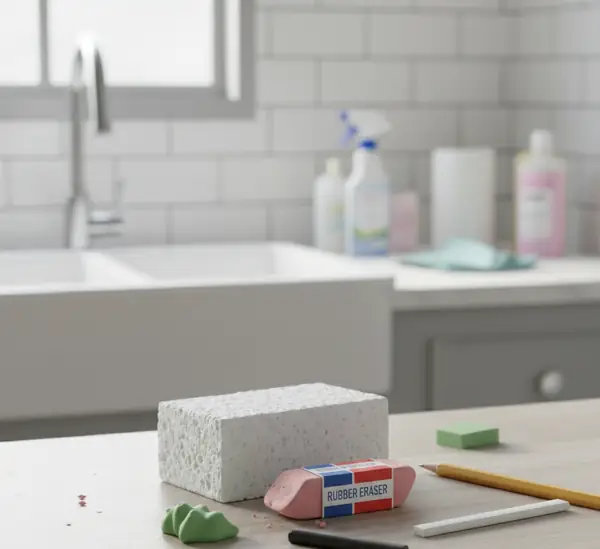
Where does eraser fit into this? In the vast world of cleaning materials, filled with specialized sprays, powerful scrubs, and high-tech gadgets, one of the most effective and precise tools is often overlooked, relegated to the pencil case or a dusty desk drawer: the simple eraser. This humble instrument, designed to lift graphite from paper, possesses a unique set of properties that make it a surprisingly versatile and powerful secret weapon for tackling some of the most frustratingly stubborn messes around the home. The wonder of the eraser lies not in brute force, but in its gentle, targeted friction, allowing for a level of control and precision that larger tools simply cannot match. Melamine Foam Eraser The most famous and transformative of these tools is, of course, the melamine foam eraser, more commonly known by its brand name, the Magic Eraser. While it shares a name and function with its rubber counterparts, it is a completely different entity. A melamine foam eraser is not a chemical cleaner; it is a micro-abrasive. The foam itself is a unique, open-cell structure that, when wet, becomes as hard as glass on a microscopic level. It acts like an incredibly fine-grained sandpaper, gently abrading and lifting away surface-level grime and stains. This is the secret to its seemingly magical ability to remove marks that soaps and sprays cannot touch. Its most celebrated use is on painted walls and baseboards. The inevitable scuff marks from shoes, furniture, and daily traffic can make an otherwise clean room look tired and worn. Instead of resorting to touch-up paint, a dampened melamine foam eraser can lift these marks with astonishing ease. The process is simple: lightly wet the eraser and squeeze out all the excess water. The eraser should be damp, not dripping. Then, with very gentle pressure, rub the scuff mark. The mark will literally disappear as the micro-abrasive action lifts the transferred color from the surface of the paint. It is crucial to use light pressure, as scrubbing too hard can begin to remove the paint finish itself, leaving a burnished or dulled patch, especially on glossy or satin paints. This tool is also a parent’s best friend, capable of removing crayon, pencil, and some types of ink marker from walls with the same gentle rubbing motion. The power of melamine foam extends far beyond walls. In the kitchen, it can cut through the thin, sticky film of aerosolized cooking grease that builds up on stovetops and range hoods. It is incredibly effective at removing stubborn, baked-on tea and coffee stains from the inside of ceramic mugs, restoring them to their original pristine white. It can even be used to lift burnt-on food residue from glass bakeware and oven doors. In the bathroom, it is a champion against soap scum, scrubbing away the waxy, cloudy buildup from glass shower doors, tile, and fiberglass tubs where other cleaners have failed. It can even be used to restore the white grout between tiles, lifting the embedded grime with targeted scrubbing. The eraser’s ability to conform to surfaces and get into corners makes it a more effective tool than a simple cloth or sponge for these specific tasks. However, because it is an abrasive, it is critical to know where not to use a melamine foam eraser. You should never use it on delicate, high-gloss surfaces like a car’s paint finish, polished wood furniture, or natural stone countertops like marble and granite, as it can create microscopic scratches that will permanently dull the finish. Always test it on a small, inconspicuous area first if you are unsure. Traditional Rubber While melamine foam is the superstar, the traditional rubber or vinyl eraser—specifically a high-quality white vinyl one—has its own unique and surprising set of cleaning superpowers. Its magic lies not in abrasion, but in its “grippy,” slightly tacky texture. This property makes it the perfect tool for removing one of the most annoying household messes: sticky adhesive residue. After peeling a price tag or label off a new piece of glassware, a book cover, or a plastic item, you are often left with a stubborn, gummy residue that smears when you try to wipe it. A white vinyl eraser works wonders here. By rubbing the eraser over the adhesive, its rubbery texture grabs onto the sticky residue, causing it to ball up and lift cleanly from the surface. Keep rubbing, and the adhesive will roll itself into little clumps that can be brushed away, leaving a clean, non-sticky surface behind without the need for oily solvents. This same principle allows a classic eraser to clean other delicate surfaces. It can be used to lift dirt and scuffs from patent leather shoes and handbags without scratching the high-gloss finish. For suede and nubuck, a special suede eraser or a clean art gum eraser is a classic shoe care tool. Its crumbly texture gently lifts dirt out of the fine nap of the material without the use of water, which would stain and flatten the suede. An eraser can even be used for light cleaning on non-precious metals, lifting grime from the surface of hardware or decorative items. The friction and the grabbing power of the rubber can remove surface-level dirt and smudges from things like brass doorknobs or silver-plated picture frames. The Small Eraser At the end, we must not forget the most precise tool of all: the small eraser on the end of a pencil. Its tiny size makes it perfect for detailed cleaning in areas that are otherwise impossible to reach. It can be used to clean the accumulated grime from the crevices of intricate jewelry or around the clasps of a watch band. It is the perfect shape for getting into the tight corners of window tracks or for cleaning the gunk that builds up around the base of a kitchen or bathroom faucet. The pencil tip provides a level of targeted control that allows you to apply pressure to a very specific, small point, lifting a

Erasers in Cleaning: 7 Genius Tricks for Cleaning Your Home with an Eraser Read More »

Effervescent Toilet

Effervescent Toilet Bowl Cleaner: 5 Facts About the Solution for Tough Toilet Stains

How does effervescent toilet bowl cleaner work? The toilet bowl is, without question, one of the most challenging and least pleasant cleaning tasks in any household. It is a fixture that demands not just a superficial wipe-down but a thorough, hygienic sanitization. For decades, this has meant dealing with drippy bottles of harsh liquid cleaners, aggressive scrubbing, and the unpleasant task of getting up close and personal with the fixture. However, a newer, more elegant solution has emerged that transforms this dreaded chore into a simple, hands-off process: the effervescent toilet bowl cleaner. This is not just another cleaning product; it is a fundamental shift in approach, leveraging the power of chemistry and time to do the heavy lifting for you. Fizzing Action The magic of an effervescent cleaner lies in its name and the satisfying, fizzing action that accompanies its use. These cleaners, typically sold as solid tablets or pucks, are a masterful piece of simple, accessible science. At their core, they are built upon a classic acid-base reaction. The tablet contains a dry acid, most commonly citric acid, and a dry alkali base, typically sodium bicarbonate, which is the chemical name for baking soda. In their solid, dry state, these two compounds are completely inert and stable, able to coexist without any reaction. The moment the tablet is dropped into the water of the toilet bowl, this stability is broken. The water acts as a catalyst, dissolving the acid and the base and allowing their molecules to mix and react with one another. This reaction rapidly produces a large volume of carbon dioxide gas, which manifests as a vigorous, bubbling fizz that spreads throughout the bowl. This effervescent action is far more than just a visual spectacle; it is a powerful mechanical cleaning force. The millions of tiny, energetic bubbles create a gentle but persistent scrubbing action that reaches every square inch of the submerged surface. This “micro-scrubbing” is particularly effective at getting into the areas that are most difficult to clean with a traditional brush, such as the very bottom of the bowl and the hard-to-reach opening of the P-trap, or S-bend. As the bubbles rise, they carry the cleaning agents up the sides of the bowl, ensuring a more comprehensive coverage than a simple liquid cleaner that can streak down the porcelain. Surfactants Beyond the core fizzing ingredients, these tablets are formulated with a suite of other cleaning agents designed to tackle the specific challenges of a toilet bowl. They almost always contain surfactants, which are the same types of compounds found in soaps and detergents. These surfactants work to reduce the surface tension of the water, allowing it to penetrate and lift organic waste and grime from the surface of the porcelain. They also help to emulsify and wash away any greasy or oily residues. Many high-quality effervescent cleaners also contain chelating agents. These are specialized compounds designed to combat one of the most stubborn problems in a toilet bowl: hard water stains. The chalky rings and rust-colored streaks that form at the waterline are caused by mineral deposits, primarily calcium, magnesium, and iron, that are left behind as water evaporates. Chelating agents work by binding to these mineral ions, essentially grabbing onto them and holding them in suspension in the water so they can be easily flushed away. This is a chemical solution to a chemical problem, one that is far more effective than simply trying to scrub the mineral scale off with brute force. Deodorizers and Sanitizers Furthermore, these tablets are powerful deodorizers and sanitizers. They often include disinfecting agents that work to kill germs and odor-causing bacteria that thrive in the toilet bowl environment. As the tablet dissolves, it releases these sanitizers along with a pleasant, fresh fragrance, tackling both the source of the odor and its symptoms simultaneously, leaving the entire bathroom smelling cleaner. Dwell Time The practical application of an effervescent cleaner is a study in simplicity and the power of dwell time. The process begins with a simple pre-flush of the toilet. This wets the interior surfaces of the bowl, preparing them for the cleaner, and ensures you are working with a fresh bowl of water. Next, you simply unwrap and drop the tablet directly into the water. The instructions will then direct you to do the most important part: walk away. This is where the principle of dwell time becomes paramount. The chemical reactions—the fizzing, the stain lifting, the disinfecting—are not instantaneous. They require time to work. The typical recommendation is to let the product sit for at least twenty to thirty minutes, but for more heavily stained bowls, letting it work for several hours, or even overnight, can produce dramatically better results. During this waiting period, the product is doing all the hard work for you. The fizzing action loosens debris, the surfactants lift the grime, the chelating agents dissolve the mineral rings, and the sanitizers kill the germs. When you return, the water will often be a different color, indicating the presence of the cleaning agents. The final step is a brief, light scrub with a toilet brush. This is no longer a session of aggressive, back-and-forth scrubbing. Instead, it is a simple “polishing” step, where you use the brush to easily wipe away all the now-loosened grime and stains that the effervescent action has lifted from the surface. One final flush, and the job is complete. The bowl is left sparkling clean, sanitized, and deodorized, all with a fraction of the physical effort required by traditional methods. Advantages One of the most significant advantages of using tablets is portion control. With liquid cleaners, it is very easy to overuse the product, pouring far more than is necessary down the drain. This is wasteful and can be hard on septic systems. Effervescent tablets are perfectly pre-measured for a single, effective dose, which is both economical and more environmentally conscious. Their solid form also eliminates the risk of messy drips and spills that are common with

Effervescent Toilet Bowl Cleaner: 5 Facts About the Solution for Tough Toilet Stains Read More »

The Best Mop for Every Floor Type: A Complete Guide

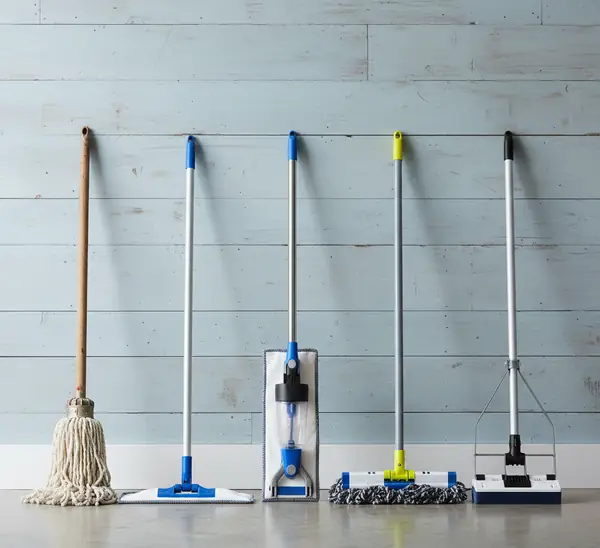
Choosing the right mop is one of the most fundamental yet frequently overlooked aspects of effective home cleaning. The modern home is a complex landscape of different floor types, each with its own unique needs and vulnerabilities. Using a one-size-fits-all approach—the same string mop for every surface—is an outdated strategy that can lead to frustration, subpar results, and even permanent damage to your flooring. The secret to achieving a truly deep and lasting clean lies in understanding that a mop is not just a mop; it is a specialized tool. Matching the right tool to the right surface transforms mopping from a dreaded chore into a satisfying and efficient process. Ceramic, porcelain, vinyl and Linoleum Let us begin in the most demanding areas of the home: the kitchen and the bathrooms. These high-traffic zones are subject to a unique and challenging combination of messes. The floors, typically durable and water-resistant materials like ceramic tile, porcelain, vinyl, or linoleum, must endure everything from greasy cooking splatters and sticky food spills to soap scum, water spots, and the need for thorough disinfection. For these environments, the spin mop is an unparalleled champion. Its genius lies in its two-part bucket system, which features a built-in spinning mechanism, often operated by a foot pedal. This system gives you absolute control over the moisture level of the mop head. For a tough, sticky mess on a tile floor, you can leave the microfiber head quite wet to dissolve the grime. For a quick daily clean or for a final pass, you can spin it until it is nearly dry, preventing excess water from sitting on grout lines. The fluffy, absorbent microfiber heads are excellent at lifting and trapping both dirt and grease, and the round shape is surprisingly adept at getting into corners and navigating around the base of a toilet. A spin provides the perfect balance of scrubbing power and moisture control needed for these resilient but demanding floors. Steam When the goal in the kitchen or bathroom shifts from simple cleaning to deep sanitation, the steam takes center stage. This tool is a chemical-free powerhouse, using high-temperature steam to kill 99.9% of germs and bacteria, including E. coli and Salmonella. It is incredibly effective at breaking down stubborn, stuck-on grime and can even loosen dirt from deep within textured tile and grout lines without any harsh chemicals. The intense heat dissolves greasy residue and sticky soap scum with ease. However, the steam comes with a critical caveat: it should only be used on completely sealed, durable hard floors. The high heat and moisture can be catastrophic for unsealed surfaces like natural stone, unsealed grout, and, most importantly, any type of wood or laminate flooring, as it can cause warping, swelling, and permanent damage to the finish. For the right surface, though, a steam mop provides a level of hygienic clean that is difficult to achieve otherwise. Hardwood Floors Moving into the main living areas and bedrooms, we often encounter the most beautiful and most delicate of floor types: hardwood. Wood is a natural, porous material, and its greatest enemy is water. Excessive moisture can cause the boards to swell, warp, cup, and can permanently damage the finish, leading to costly repairs. For hardwood floors, the cleaning philosophy must be one of minimal moisture and gentle care. The ideal tool for this task is the flat microfiber mop. This simple, elegant tool is arguably the most versatile mop in any cleaning arsenal. Its primary advantage for hardwood is its ability to be used almost dry. For daily maintenance, a dry microfiber mop pad is the best tool for dusting your floors, as its natural static charge acts like a magnet for dust, pet hair, and allergens, trapping them far more effectively than a traditional broom. When it comes to wet cleaning hardwood, the key word is “damp.” You never want the floor to be visibly wet. The proper technique is to have two microfiber mop pads. Lightly dampen one pad by spritzing it with a pH-neutral wood floor cleaner—never spray the cleaner directly onto the floor itself. The pad should be just moist enough to wipe away smudges and dirt without leaving any significant moisture behind. Mop a small section of the floor, and then immediately go over it with the second, completely dry mop pad to buff the floor and pick up any residual moisture. This two-step, damp-then-dry method is the safest and most effective way to protect your investment and keep your hardwood floors gleaming. A close cousin to the flat mop, and another excellent choice for hardwood, is the spray mop. This tool offers the ultimate in convenience and moisture control. It features a built-in reservoir for cleaning solution and a trigger on the handle that emits a fine, controlled mist directly onto the floor in front of the mop head. This ensures you are using the absolute minimum amount of liquid necessary to clean, preventing any risk of oversaturation. A spray mop is perfect for quick cleanups of spills and for routine maintenance, making it easy to keep hardwood floors looking their best without the hassle of a bucket. Cleaning Laminate and Luxury Vinyl The challenges of cleaning laminate and luxury vinyl tile (LVT) floors are similar to those of hardwood, though these materials are generally more durable. The main vulnerability of laminate is its seams. If excess water is allowed to seep between the planks, it can cause the fiberboard core to swell and the edges to peel, resulting in irreversible damage. Luxury vinyl is more water-resistant but can still show streaks easily if too much cleaner or water is used. For both of these popular flooring types, the flat microfiber mop and the spray mop are once again the ideal choices. Their ability to clean effectively with minimal moisture is paramount. Using a clean, damp microfiber pad will lift dirt and grime without flooding the seams, and it is the key to achieving a beautiful, streak-free finish.

The Best Mop for Every Floor Type: A Complete Guide Read More »

dwell time

Why Dwell Time is the Secret to a Truly Clean Kitchen

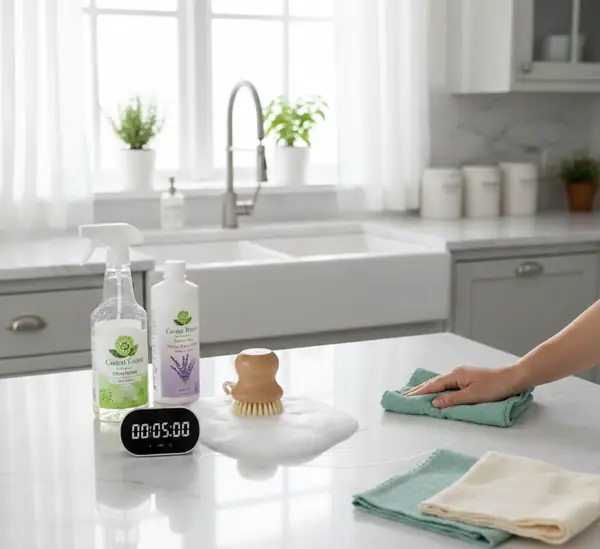
In the world of household cleaning, especially in the demanding environment of the kitchen, we often ignore dwell time and fall into the trap of valuing speed and physical effort above all else. The common instinct when faced with a dirty surface is to spray and immediately wipe, putting faith in the power of “elbow grease” to muscle through the grime. This approach, however, fundamentally misunderstands the science of cleaning. It ignores the single most critical, yet often overlooked, factor in achieving a truly deep and sanitary clean: dwell time. Dwell time, also known as contact time, is the period that a cleaning or disinfecting product must remain wet on a surface to do its job effectively. It is a simple concept with profound implications, transforming cleaning from a battle of force into a strategic process of chemistry, saving time, effort, and ensuring a healthier home. Disinfection and the Breakdown The importance of dwell time is rooted in two distinct chemical processes: disinfection and the breakdown of soils. Let’s first consider disinfection. A kitchen countertop can be a significant hub for bacteria like E. coli and Salmonella, especially after preparing raw meat. When we spray a disinfectant, our goal is not just to wipe away visible dirt, but to kill these unseen pathogens. This process is not instantaneous. Disinfectants work by chemically destroying the cell walls of bacteria and viruses. This chemical assault takes time. Every registered disinfectant product has a specific “kill claim” on its label, which states the amount of time the product must remain on a surface to kill a certain percentage of germs. This can range from thirty seconds to ten minutes or more. If you spray a disinfectant and immediately wipe it dry, you are essentially removing the active chemical agent before it has had the chance to complete its mission. You may have removed some of the germs through the physical act of wiping, but you have not truly disinfected the surface, leaving behind a false and potentially dangerous sense of security. Stubborn and Sticky The second process is the chemical breakdown of grease, food residue, and mineral deposits. Kitchen grime is often stubborn and sticky. The grease that aerosolizes from a frying pan and settles on a stovetop or vent hood is a complex mixture of polymerized fats. The sugary sauce that has boiled over and carbonized onto a cooktop is a hardened, blackened mass. The chalky white film around your sink faucet is a layer of mineral deposits from hard water. Attacking these messes with brute force and scrubbing is an exhausting and often ineffective approach. The surfactants in a degreaser need time to penetrate the layers of grease and emulsify them, breaking them down into smaller, water-soluble droplets that can be easily wiped away. The mild acids in a descaling agent need time to react with and dissolve the alkaline mineral deposits. By spraying a cleaner and giving it a few minutes of dwell time, you are allowing the product’s chemical properties to do the heavy lifting for you, breaking the bonds of the grime so that a gentle wipe, rather than a frantic scrub, is all that is required to remove it. Dwell Time Nowhere is the practical application of dwell time more critical than in the kitchen. Let’s walk through the space to see this principle in action. Consider your countertops after preparing a meal. The correct procedure is a two-step process. First, clean the surface. Use a cloth with warm, soapy water to wipe away all the loose crumbs, food particles, and visible spills. This removes the physical debris that can shield germs from the disinfectant. The second step is to disinfect. Spray the surface with your chosen disinfectant—be it a commercial product or a simple solution of vinegar and water—until it is visibly wet. Then, walk away. Read the product label to determine the required dwell time. Let it sit for that prescribed period, whether it is three minutes or ten. Only after that time has elapsed should you return to wipe the surface dry with a clean cloth or rinse it with water if required. This patient approach is the only way to ensure your food preparation surfaces are hygienically clean. The kitchen sink is often cited as having more bacteria than a toilet bowl, making it a prime candidate for proper disinfection. After scrubbing the basin to remove food particles, you can apply your disinfectant and let it dwell to sanitize the surface. To tackle the mineral buildup around the faucet, soak a few paper towels in white vinegar, wrap them around the base of the faucet and the nozzle, and let them sit for at least thirty minutes. This extended dwell time will allow the vinegar to dissolve the chalky white deposits, which can then be scrubbed away with an old toothbrush, restoring the fixture’s shine. The Stovetop The stovetop is a theater of grease and burnt-on messes. Instead of immediately scrubbing a boil-over, spray it with a quality degreaser or an all-purpose cleaner and let it sit for five to ten minutes. You will often see the hardened mess begin to soften and liquefy as the cleaner penetrates it. A gentle wipe will then remove what would have previously required intense scraping. The same principle applies to the greasy, grimy filter of your range hood. Instead of trying to scrub it in the sink, submerge it in a basin of hot water and a strong degreasing solution and let it soak for at least thirty minutes. This extended dwell time is what allows the hot water and detergent to break down the years of accumulated grease, which will then rinse away with ease. The ultimate testament to the power of dwell time is cleaning a dirty oven. Confronted with a blackened interior coated in carbonized grease, the instinct to scrub is entirely useless. The only effective, non-toxic method relies almost exclusively on an extremely long dwell time. By creating a thick paste

Why Dwell Time is the Secret to a Truly Clean Kitchen Read More »

Deep Cleaning of Your Patio and Deck

Deep Cleaning of Your Patio and Deck: A Small-Space Guide to Spring Preparation

Pre-season cleaning of a communal space such as a patio and outdoor decks is a revitalization ritual. As the last vestiges of winter begin to recede, yielding to the longer days and milder temperatures of early spring, there is a collective, almost primal urge to reconnect with the outdoors. We want to throw open the doors, step onto the patio, and feel the first genuinely warm sun on our faces. However, the space we step into is often a grim tableau of winter’s aftermath. The deck is coated in a grey film of grime, the patio furniture is veiled in a layer of pollen and dust, and the corners are filled with the desiccated leaves and debris of autumn past. The transition from a winter-battered outdoor area to a welcoming spring sanctuary does not happen on its own. It requires a strategic, pre-season clean-up designed to reverse the effects of months of neglect and prepare the foundation for the season of leisure ahead. Complete Cleaning The first order of business in reclaiming your outdoor space is a thorough and uncompromising sweep. Over the winter, even a covered patio or balcony accumulates a surprising amount of debris. Wind blows leaves, twigs, and dirt into corners where they decompose into a dense, muddy sludge. The bristles of a stiff, outdoor broom are required to dislodge this compacted organic matter. This is not just an aesthetic task; leaving rotting leaves against the foundation of the house or the base of wooden deck posts traps moisture and invites insects like carpenter ants to investigate. For decks with gaps between the boards, using a putty knife or a painter’s tool to clear out the debris is essential for promoting airflow and preventing rot from setting in underneath. Once the loose debris is gone, the real work of washing begins. The surfaces of your patio and deck have been subjected to months of precipitation and freeze-thaw cycles, leaving them stained and discolored. The cleaning method must be tailored to the specific material underfoot. For wooden decks, a gentle approach is paramount. The temptation is often to blast the wood with a high-pressure power washer, but this is a common and catastrophic error. The intense force of a power washer can splinter the wood, raise the grain, and strip away the protective sealant, leaving the raw timber exposed to the elements. Instead, a commercial deck cleaner—often an oxygenated bleach formula that kills mildew without the harshness of chlorine—should be applied with a pump sprayer. After allowing the cleaner to dwell and lift the grime, a light scrub with a deck brush and a gentle rinse with a garden hose is all that is needed to restore the color of the wood without causing structural damage. Concrete, Stone Pavers and Balconies Concrete patios, stone pavers, and balconies present a different challenge. These surfaces are porous and can harbor green algae or black mold in shaded, damp areas. For these, a power washer can be an effective tool, provided it is used with a fan-tip nozzle to avoid etching the surface. A solution of water and vinegar can help to kill the biological growth, but for stubborn stains, a specialized masonry cleaner might be required. Pay close attention to the grout or sand lines between pavers; blasting them too aggressively can wash away the jointing material, leading to wobbly stones. Furniture The second phase of the pre-season reset involves the furniture. Patio chairs, tables, and loungers have likely been sitting under a cover or stacked in a corner, accumulating a layer of dust and hosting spider webs. Dragging this furniture out into the sun and giving it a thorough cleaning is essential before it is used. For plastic or resin furniture, a bucket of warm soapy water and a sponge is usually sufficient to remove the winter grime. For metal furniture, particularly wrought iron, this is the time to inspect for rust. If you find spots where the paint has chipped and oxidation has begun, sand them down lightly and apply a coat of rust-inhibiting spray paint. Catching rust early prevents it from spreading and eating through the metal. Cushions and outdoor fabrics should be removed, and if they are machine-washable, laundered to remove mildew and stale odors. If not, a spray-down with a fabric cleaner and a scrub with a soft brush, followed by air-drying in the sun, will refresh them for the season. The barbecue grill, the centerpiece of many outdoor gatherings, requires a deep clean after its winter hibernation. If it was not cleaned properly in the fall, you will likely open the lid to find a grim scene of rancid grease and possibly mold. The grates must be removed and scoured with a grill brush, and the grease trap at the bottom of the unit needs to be emptied and cleaned to prevent a dangerous flare-up during the first cookout of the season. Wiping down the exterior of the grill removes the layer of dust and pollen, restoring its shine and making the entire patio area feel more intentional and cared for. Window At the end, consider the vertical elements of your outdoor space. The glass of the patio doors is likely streaked with water spots and dirt from winter storms. Cleaning both the interior and exterior of this glass is the final touch that visually connects your clean indoor space with your newly revitalized outdoor one. Check the window and door tracks for the same debris that collected on the deck, vacuuming them out to ensure a smooth glide. Wipe down railings, inspect planters for cracks caused by freezing soil, and prepare the space for the new life of spring. The pre-season clean is a ritual of reclamation. It is a physical act that signals the end of indoor confinement and the beginning of outdoor living. It is a laborious but deeply satisfying process that transforms a neglected patch of ground into a functional and beautiful extension of the home. However, the sheer

Deep Cleaning of Your Patio and Deck: A Small-Space Guide to Spring Preparation Read More »

Woman unsure whether to use caustic soda for cleaning.

Caustic Soda 101: The Dangers and Safe Handling of Lye

How does caustic soda work, in the world of cleaning, there is a clear hierarchy of chemical power. At the bottom are the gentle, pH-neutral soaps designed for daily maintenance. Further up the scale are the acids, like vinegar and citric acid, which dissolve mineral deposits. At the very top, reigning supreme as one of the most potent and aggressive substances available to the public, sits sodium hydroxide. More commonly known as caustic soda or lye, this chemical is not a cleaner in the traditional sense. It does not lift dirt; it chemically dismantles it. It is an industrial-strength weapon that has found its way into household products, particularly oven cleaners and drain openers. Its efficacy is undeniable, but so are its dangers. To handle caustic soda is to handle a controlled chemical reaction. Understanding its properties, its limitations, and the absolute necessity of safety protocols is the non-negotiable prerequisite for anyone considering its use. Alkaline Substances To appreciate the power of caustic soda, one must understand its chemistry. It is a highly alkaline substance, sitting at the extreme end of the pH scale. When it comes into contact with organic matter, it initiates a process called saponification. In simple terms, it turns fats and grease into soap. The sodium hydroxide breaks down the triglycerides in the fat, creating glycerol and a water-soluble fatty acid salt (soap). This reaction is exothermic, meaning it generates a significant amount of heat. It is this combination of chemical transformation and thermal energy that makes caustic soda so effective at clearing a drain clogged with hair and grease. The heat melts the solid fats, and the chemical reaction turns the entire mess into a liquid that can be flushed away. The most common household application of caustic soda is in heavy-duty oven cleaners. Over time, the spills and splatters in an oven undergo polymerization. The oils bake onto the enamel surface, turning into a rock-hard, black carbonized layer that is impervious to standard scrubbing. When you spray an oven cleaner containing caustic soda onto this surface, the chemical begins to dissolve this polymer. It breaks down the long-chain molecules of the baked-on grease, softening the carbon into a gummy, brown sludge. After allowing the chemical to dwell for several hours, this sludge can be wiped away, revealing the clean enamel underneath. Without caustic soda, removing this layer would require hours of aggressive scraping with a razor blade. The chemical does the physical work for you. Corrosive However, this immense power comes with an equally immense risk profile. Caustic soda is indiscriminately corrosive. While it targets fats and proteins, it will also attack living tissue with the same ferocity. Skin contact with a concentrated lye solution can cause severe chemical burns within seconds. The chemical not only burns the surface layer but continues to eat through the tissue underneath. Splash-back into the eyes can result in permanent blindness. This is why the safety warnings on these products are not suggestions; they are absolute mandates. Protective gear is not optional. Heavy-duty rubber gloves that extend up the forearm, along with splash-proof goggles, are the minimum requirement for handling any product containing this chemical. Inhalation is another significant danger. Many caustic soda products, particularly drain openers, are sold in a granular or flake form. When these solids are mixed with water, the exothermic reaction can create a cloud of hot, corrosive steam. Inhaling this vapor can cause severe damage to the delicate tissues of the respiratory tract. Furthermore, if the reaction is uncontrolled—such as by pouring water into a container of lye instead of the other way around—the mixture can erupt violently, splashing the caustic solution across the room. All work with caustic soda must be done in a well-ventilated area, with windows open and fans running to disperse the fumes. The reactivity of caustic soda extends beyond biological tissue. It is highly corrosive to certain metals, most notably aluminum. If a lye-based drain cleaner is used in pipes made of aluminum or certain alloys, it will eat through the metal, causing catastrophic leaks. This is why it is crucial to know the composition of your plumbing before using these products. It is generally safe for PVC and stainless steel, but older homes with mixed metal plumbing present a significant risk. The same caution applies to cookware. Never use an oven cleaner containing caustic soda on an aluminum baking pan or a grill grate made of aluminum. It will pit and discolor the metal permanently. Drain Plunger The use of caustic soda as a drain opener also carries a mechanical risk. If the chemical fails to clear the clog, you are left with a pipe filled with a highly toxic, corrosive liquid. At this point, you cannot use a mechanical snake or a plunger, as the back-splash could be life-threatening. You are forced to call a plumber and inform them that the drain is “live” with chemicals, a situation that significantly increases the cost and complexity of the repair. For this reason, many plumbers advocate for enzymatic drain cleaners or mechanical removal as the first line of defense, reserving caustic soda for professional use only. Despite these dangers, the effectiveness of caustic soda for specific, targeted tasks is undeniable when used correctly. For restoring old, cast iron cookware that has been caked with decades of carbon buildup, a lye bath is the gold standard for restorers. This involves creating a diluted solution of caustic soda and water in a plastic bin and submerging the pan for several days. The lye slowly but surely strips everything off the pan—old seasoning, rust, and carbon—down to the bare grey iron, without the physical labor of sanding. This process must be done outdoors with extreme care, but it yields a perfectly clean slate for re-seasoning. The key to safely using caustic soda is neutralization. As a strong base, it is neutralized by a strong acid. After cleaning an oven or a piece of cast iron, the surface must be thoroughly

Caustic Soda 101: The Dangers and Safe Handling of Lye Read More »