









Why the Dishwasher Pod Beats Powder and Liquid
Dishwasher pods are a quiet piece of chemical engineering: one pre-measured dose that contains everything a full wash cycle needs, wrapped in a film that disappears at exactly the right moment. The jump from scooping powder to dropping in a pod made the chore simpler, but it also moved the skill from the scoop to the placement. Get that part wrong and the pod is gone before the dishes are even wet. Get it right, along with a couple of small habits, and glassware comes out bright and streak-free with almost no effort.
What Is Actually Inside the Pod
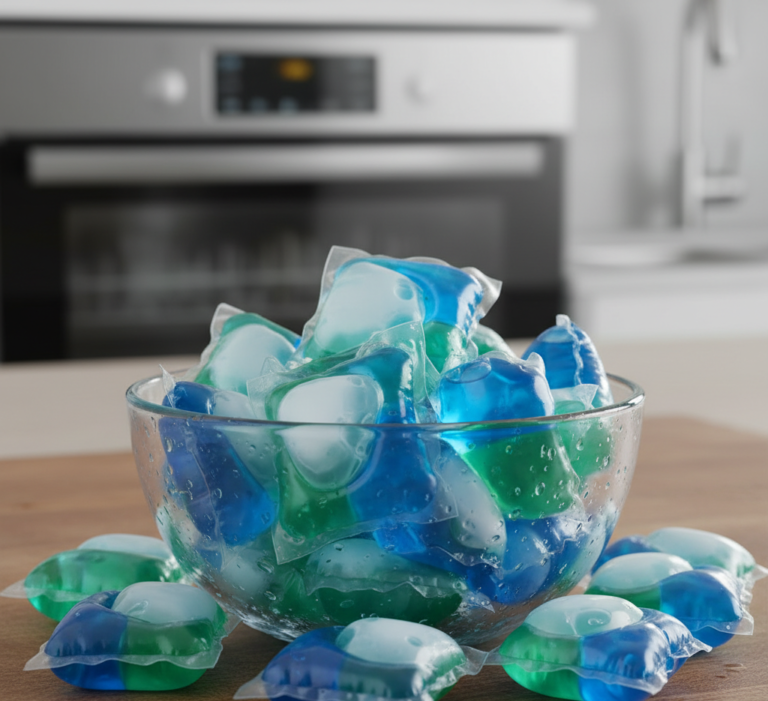
The dissolving film
The outer skin is a water-soluble polymer, usually polyvinyl alcohol. It stays sealed and stable on the shelf, then melts away once hot water hits it in the main wash. That behaviour explains the number one handling rule: dry hands only. Even a little moisture on your fingers starts breaking the film down early, which makes pods clump in the tub or dissolve before they reach the machine.
The powder core
Most of the pod by weight is the detergent powder, and its enzymes do the heavy lifting. Lipase enzymes attack fats and cooking oils, while amylase enzymes break down starches from rice, pasta, and potatoes. The same powder carries builders, compounds that lock onto calcium and magnesium so hard water cannot interfere with cleaning or leave a chalky white veil on glasses.
The liquid chambers
The coloured gel in the other chambers adds surfactants, the same family of molecules found in dish soap, which lower the surface tension of water so grease can be rinsed away. Many pods also carry a measured dose of rinse aid, which helps the final rinse water sheet off dishes instead of drying in droplets that spot. Keeping these ingredients separated until use is the entire reason for the multi-chamber design.
Where to Put the Pod (and Where Not To)
This is the detail almost everyone gets wrong. The small covered cup on the inside of the dishwasher door looks like the logical home for a pod, but most machines run a short pre-rinse first, pop the cup open, and wash your detergent straight down the drain before the main wash begins. The machine then runs its longest, hottest, most important stage with nothing but water on board. Drop the pod at the bottom of the tub instead, near the filter or in a corner of the cutlery basket, so it sits through the pre-rinse and dissolves when the real wash starts.
Three habits that make pods work harder
- Do not overload. Spray arms need room to spin; block one with a stockpot and hot water may never reach the pod, leaving a goopy half-dissolved mess.
- Respect the temperature. Most pods perform best with wash water at about 120 degrees Fahrenheit (50 degrees Celsius). If residue is a pattern in your kitchen, your water heater setting may simply be too low.
- Prime the line. Run the kitchen tap hot for a minute before starting the cycle, so the machine fills with hot water rather than the cold water sitting in the pipes.
When Dishes Come Out Wrong
| Symptom | Likely cause | Fix |
|---|---|---|
| Pod not fully dissolved | Clogged or blocked spray arm | Clear food debris, confirm the arm spins freely, rerun |
| Chalky white film | Very hard water overwhelming the builders | Fill the rinse aid dispenser too, even on all-in-one pods |
| Dishes still greasy | Pod released during pre-rinse | Move it from the door cup to the tub floor |
| Glasses heavily spotted | Droplets evaporating instead of sheeting off | Add a dedicated liquid rinse aid |
If a pod survives the cycle intact, start with the spray arms. A blocked arm starves the machine of water flow, and that same blockage is behind many dishes that come out looking untouched. When the issue is instead a white calcium haze, the water entering the home is the culprit; a second dose of rinse aid from the door dispenser is the standard remedy, and a water softener is the long-term answer in hard water neighbourhoods.
Honest Drawbacks of Pods
Pods are convenient but inflexible. Every load, big or small, light or baked-on, gets the same full-strength dose, so a half-empty rack wastes detergent. Per wash, pods generally cost more than loose powder or gel. And the small, brightly coloured packets look like candy to toddlers, which makes storage a safety matter rather than a tidiness preference. Health Canada’s guidance on using household products safely covers detergent packets specifically: keep them in the original container, sealed, and well out of reach. The broader principles on household chemical safety apply to every cleaner under your sink, including dishwasher products, drain cleaners, and laundry packets.
Dishes Sparkle, Homes Follow
The pod logic is really the professional logic: use the right product, apply it correctly, and control the conditions. Toronto Shine Cleaning works the same way on kitchens, bathrooms, and floors, with teams that are bonded and insured under a $1,000,000 policy including $10,000 accidental breakage coverage. Kitchen deep cleans, appliance interiors, and greasy range hoods are core parts of our deep cleaning service, and if you would rather hand over the whole chore list on a schedule, the regular cleaning service does that. See pricing for rates before HST, starting at $212.63 for a studio or one-bedroom regular clean, and call (647) 424-0355 with any questions about your home. Washing your hands thoroughly after handling detergent pods is another small habit worth keeping, and the CDC’s handwashing guide explains when and why it counts.
Frequently Asked Questions
Should dishwasher pods go in the dispenser or the tub? The tub. Pods placed in the door cup are released during the pre-rinse and washed away before the main hot wash, which is why dishes come out greasy. Tub placement near the filter solves it.
Do I still need rinse aid with all-in-one pods? Often yes. Built-in rinse aid helps, but very hard water can still leave spotting, so filling the door dispenser with liquid rinse aid gives the final rinse extra help on glass and cutlery.
What temperature do pods need to dissolve? Most are formulated to work best around 120 degrees Fahrenheit, or 50 degrees Celsius. If your water heater runs cooler, pods may dissolve slowly and leave residue; a hot water line prime before each cycle helps.
Are pods safe in a home with toddlers? Only with strict storage. The packets are small, colourful, and soft, and their contents can injure skin, eyes, or airways if handled. Keep them sealed in the original tub, high and out of reach.