









DIY Methods to Clean Your Bathroom Sink Drain Naturally
A slow-draining bathroom sink is one of the most common household frustrations. Toothpaste, soap scum, hair, and shaving cream accumulate daily, eventually creating clogs and unpleasant odors. You do not need harsh chemicals to fix it. These DIY methods use simple household ingredients and basic tools to restore your drain to full flow and keep it fresh. Regular maintenance prevents the buildup that leads to standing water and costly plumbing repairs.
Weekly Boiling Water Flush
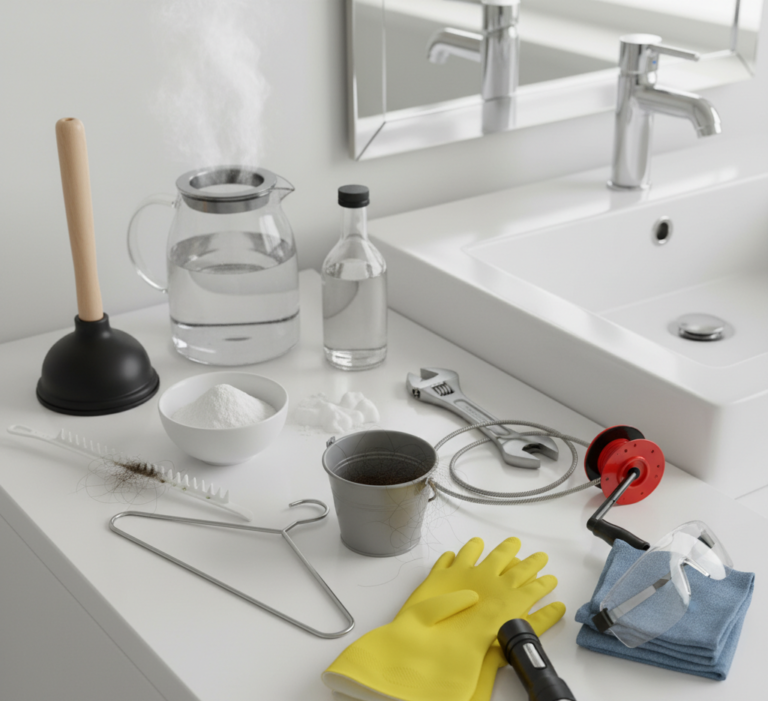
The easiest preventative measure is a weekly boiling water flush. Boil a full kettle, then pour the water straight into the drain in a slow, steady stream. The heat melts congealed grease, soap scum, and waxy buildup before they can trap hair and form solid clogs. This thirty-second habit keeps your drain flowing freely and prevents odors from developing. Make it part of your Sunday cleaning routine for best results.
Baking Soda and Vinegar Treatment
For deodorizing and breaking up mild clogs, the baking soda and vinegar method is safe and effective. Pour half a cup of baking soda into the drain, followed by half a cup of white vinegar. The fizzing chemical reaction scrubs pipe walls and neutralizes odor-causing bacteria. Cover the drain with a stopper for fifteen to thirty minutes, then flush with boiling water. This is a great natural alternative to chemical cleaners and costs pennies per use.
Remove and Clean the Pop-Up Stopper
Most clogs form right below the pop-up stopper. Look for the pivot rod extending from the drainpipe under the sink. Place a bucket underneath, loosen the retaining nut (usually hand-tight), and pull the rod free. Lift the stopper out of the drain. You will likely find a dense clump of hair and gunk wrapped around the shaft. Clean it thoroughly with an old toothbrush and hot soapy water, then set it aside to dry. This step alone often resolves a slow drain entirely.
Use a Drain Snake for Physical Removal
After removing the stopper, use a plastic zip-it drain snake. Feed the barbed strip into the pipe as far as it will go, then pull it back slowly. The barbs snag hair and debris that has built up further down. Repeat until the tool comes up clean. This method clears bathroom sink drains without any chemicals and is inexpensive to do at home. A basic zip-it tool costs only a few dollars at any hardware store.
Signs Your Drain Needs Attention
- Water drains noticeably slower than usual after use
- Unpleasant odors rise from the drain opening
- Gurgling sounds when the sink empties
- Standing water that takes minutes to clear
| Method | Best For | Frequency |
|---|---|---|
| Boiling water flush | Preventative maintenance | Weekly |
| Baking soda + vinegar | Odors and minor clogs | Monthly |
| Stopper removal + snake | Moderate to stubborn clogs | As needed |
| P-trap disassembly | Deep annual cleaning | Yearly |
Clean the P-Trap for Stubborn Blockages
The P-trap is the U-shaped pipe beneath your sink. It holds water to block sewer gases but also collects debris that passes through the stopper. Place a bucket underneath, loosen the two slip nuts by hand, and lower the trap. Empty it, scrub the interior with a bottle brush, then reassemble. Hand-tighten the nuts and run water to check for leaks. This thorough approach ensures a properly sealed bathroom sink drain when complete and removes every trace of accumulated debris.
What to Avoid
Never use liquid chemical drain cleaners. They are highly corrosive to pipes, especially older metal ones, and create hazardous toxic puddles if they fail to clear the clog. Stick to mechanical and natural methods for safe, effective results. Prevention through regular maintenance is always better than dealing with a fully blocked pipe. A well-maintained drain also means fewer bacteria and less odor coming up from the pipe, keeping your whole bathroom smelling fresh.
For general guidance on cleaning safely at home, consult the CDC home cleaning and disinfecting guide and the Canada safe household product use page.
Frequently Asked Questions
How often should I flush my bathroom sink drain with boiling water? At least once a week to melt soap scum and grease before they form clogs and create odors.
Does baking soda and vinegar really clean drains? Yes. The fizzing reaction scrubs pipe walls and neutralizes odor-causing bacteria effectively and naturally.
When should I remove the pop-up stopper? When your drain is slow and the clog is clearly near the top of the pipe below the stopper assembly.
Is it safe to take apart the P-trap myself? Yes. It is a straightforward DIY task using only hand tools and a bucket for water. Most slip nuts turn by hand.
Why should I avoid chemical drain cleaners? They corrode pipes and create toxic standing water if the clog holds. Natural methods are safer and equally effective.
Keep your bathroom sink drain fresh and flowing with these simple DIY methods. For the rest of your home, Toronto Shine Cleaning provides professional deep cleaning services that tackle every surface. Our regular maid service also keeps bathrooms spotless between deep cleans. Find your nearest Toronto location and call (647) 424-0355 to schedule your service today.