Fall Cleaning

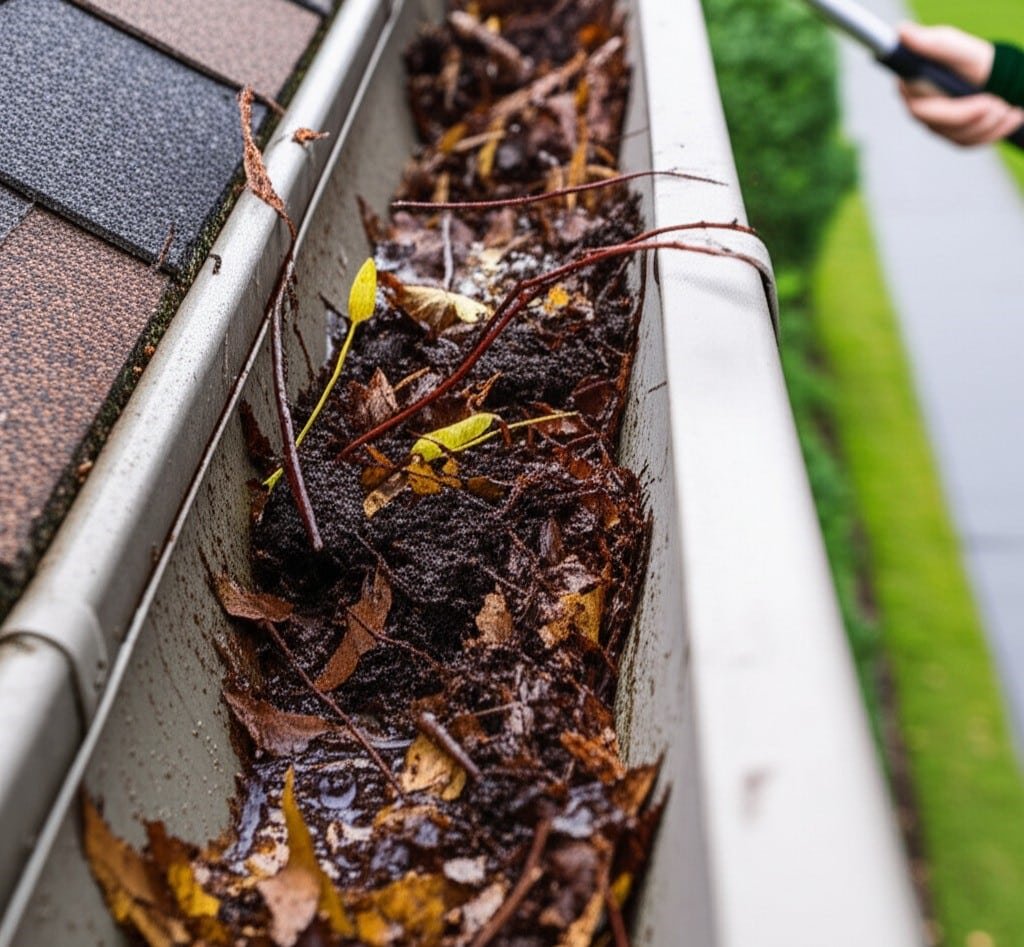
Very dirty gutter

Gutters Cleaning In 3 Steps – You Should To Know

Effective gutters cleaning starts with selecting the right tools. For a thorough cleaning, make sure you have a sturdy ladder. The ladder should be tall enough to safely reach the gutters without straining. Always prioritize safety. You’ll also need heavy-duty, waterproof gloves to protect your hands from the sharp debris and bacteria that are often encountered during cleaning. A gutter shovel or small, sturdy garden spade is essential for removing leaves, twigs, mud, and even snow. These tools make the physical act of cleaning much easier. Have a bucket ready to collect debris, or lay a tarp on the ground beneath your work area to catch any debris that falls. A garden hose fitted with a spray nozzle is crucial for removing fine particles and testing the flow after the main cleaning. Safety glasses are essential to protect your eyes from falling debris or splashing water during the process. For stubborn clogs, a plumber’s snake or flexible auger can be a very useful addition to your arsenal. Having all of these items ready before you begin will speed up the job. 1.Safety First Proper ladder safety is essential before performing any gutter cleaning. Position your ladder on firm, level ground. If the ground is uneven, use a ladder leveler or sturdy boards to create a stable base. Never place a ladder on wet or slippery surfaces. When extending the ladder for cleaning, make sure it reaches at least three rungs above the roof line or gutter lip for safe access. Always maintain three points of contact with the ladder when climbing or working—two feet and one hand, or two hands and one foot. Avoid reaching too far to the side while cleaning; it is much safer to climb down and replace the ladder frequently. This may seem time-consuming, but it significantly reduces the risk of falls, which are a serious hazard when cleaning gutters. Let someone know that you will be cleaning, especially if you are working alone. A properly positioned and safely used ladder is the foundation of any successful, injury-free gutter cleaning task. Start your gutter cleaning by removing the largest debris. It’s usually most effective to start near the outlet of a gutter. This allows you to clear a path for water if you decide to flush during the process, though removing large amounts usually comes first. Using your gutter shovel or trowel, begin removing leaves, twigs, pine needles, gravel, and any other accumulated solids. Work in manageable sections along the gutter. Deposit the removed debris directly into the bucket or onto the tarp spread below. This initial step of the cleaning can be messy, which is why gloves are so important. Pay close attention to areas where debris tends to accumulate, such as valleys or corners of your gutter system. Removing this bulk material consistently is the crux of the gutter cleaning process and will make subsequent steps easier. This part of the cleaning prevents larger items from being pushed into and clogging your gutters. 2.Cleaning Gutters With Water? Once the bulk of the debris has been removed, grab your garden hose, fitted with a spray nozzle, and start at the end of the gutter furthest from a downpipe. Direct a stream of water into the gutter, working toward the downpipe. This flushing action will remove any remaining smaller particles, mud, and grit that your shovel may have missed during the initial phase. Watch the flow of water carefully. If the water pools or backs up, this indicates a blockage further along the gutter or in the downpipe itself. This flushing step of gutter cleaning not only clears the channels, but also serves as an excellent diagnostic tool for identifying problem areas that require more focused attention. A strong, consistent flow toward and into the downpipe signifies a successful cleaning for that section. Checking and clearing your downpipes is an essential part of a thorough gutter cleaning. If, during the flushing step, you notice that water is not draining properly through a downpipe, it is almost certainly clogged. Start by trying to clear the downpipe from top to bottom with a concentrated spray of water from the hose. Sometimes the force of the water is enough to clear the clog. If this does not work, try inserting the hose into the bottom opening of the downpipe and spraying upward. This can sometimes clear the pipe from below. For more stubborn blockages found during gutter cleaning, a plumber’s snake or auger can be carefully inserted from top to bottom or bottom to top into the downpipe to break up or remove compacted debris. In severe cases, it may be necessary to disassemble sections of the downpipe, especially at elbow joints, where clogs often form. Ensuring that your downpipes are clear is vital, as a clogged downpipe renders all your efforts ineffective. 3.Benefits After the primary gutter cleaning and flushing are complete, conduct a thorough inspection of your gutters and downspouts. Look closely for any signs of damage. Check for cracks, holes, or areas of rust, particularly in older metal gutters. Ensure that all gutter sections are securely fastened to the fascia board and that there is no sagging, as sagging can cause water to pool and not drain correctly, defeating the purpose of gutter cleaning. Examine the seams between gutter sections and at the end caps for any leaks. Inspect the downspouts to ensure they are firmly attached to both the gutter outlet and the house, and that they extend far enough away from your home’s foundation to direct water appropriately. This post-gutter cleaning inspection can help you identify minor issues before they become major, costly repairs, extending the life of your gutter system and the benefits of your gutter cleaning. Finally, establish a schedule for regular gutter cleaning. The frequency of gutter cleaning depends largely on your home’s surroundings. As a general rule, gutter cleaning should be performed at least twice a year: once in the late spring after trees have shed their seeds and

Gutters Cleaning In 3 Steps – You Should To Know Read More »

gray wooden house autumn

Fall House Cleaning Made Easy: 5 Top Strategies for a Stress-Free Clean-Up

Hey there, folks! As the leaves start to turn those gorgeous shades of orange and the air gets a bit chillier, it’s a sure sign that fall is upon us. And with it comes the perfect time for a good old house clean-up. But don’t worry, this doesn’t mean you need to brace yourself for a stressful cleaning marathon. Today, I’m going to share five top strategies to make your fall house cleaning a breeze, keeping it as stress-free and efficient as possible. So, grab a pumpkin spice latte, and let’s dive in! 1. Fall House Cleaning: Room-by-Room Approach Why This Approach Works: Manageable Chunks: Think of it like eating a pizza slice by slice rather than trying to stuff the whole thing in your mouth at once. When you focus on one room, the task seems smaller and more achievable. This way, you’re not drained of energy by just thinking about the mountain of work ahead. Customized Cleaning: Each room in your house serves a different purpose and therefore has different cleaning needs. Your kitchen might require more elbow grease due to cooking spills, while your bedroom might need a good dusting and vacuuming. Tackling one room at a time allows you to adapt your cleaning techniques and products to the specific needs of each space. Immediate Satisfaction: There’s nothing quite like the feeling of looking at a freshly cleaned room. By completing one room before moving to the next, you get to bask in the glory of your accomplishment, giving you a motivational boost. It’s like giving yourself a high-five after each room – and who doesn’t like high-fives? How to Implement It: Prioritize Your Rooms: Start with the room that needs the most love. Is your living room looking a bit chaotic after doubling as a makeshift office? Or maybe your kitchen has remnants of summer BBQ parties? Identify the spaces that will give you the biggest sense of achievement once done. Set Realistic Goals: Don’t set yourself up for a cleaning marathon. Instead, plan to tackle one room a day, or even just a part of a room, depending on your schedule. This way, you won’t feel rushed, and you can give each area the attention it deserves. Celebrate Small Wins: Once you finish cleaning a room, take a moment to enjoy your handiwork. Have a cup of tea, step outside for some fresh air, or just do a happy dance. Celebrating these small wins keeps your spirits high and ready for the next cleaning challenge. 2. Declutter Before You Clean Decluttering before you start cleaning is like setting the stage for a grand performance. It’s about removing all the props (in this case, unnecessary items) so that the main act (cleaning) can proceed without any hindrances. When you clear away the clutter, you’re essentially giving yourself a blank canvas to work on. It simplifies your cleaning process because you’re not constantly moving things around. Plus, a decluttered space just feels more calming and manageable, making the task of cleaning less daunting. The How: A Step-by-Step Guide to Decluttering Start With Seasonal Items: Look around and identify what screams ‘summer’ in your home. It could be the inflatable pool toys lying in the corner, the stack of beach towels, or the lightweight bedding that won’t do much good in the coming colder months. These are your first targets. The Three-Category Rule: As you sift through your items, mentally categorize them into three groups. There’s the ‘keep’ pile for items you’ll continue to use, the ‘donate’ pile for things in good condition that you no longer need, and the ‘discard’ pile for items that are worn out or broken. This method streamlines the decluttering process and keeps you from just moving clutter from one place to another. Organize As You Declutter: Once you decide what to keep, don’t just put it back haphazardly. Take a moment to organize it. Fold the clothes neatly, line up the books on the shelf, or arrange the kitchenware in an orderly fashion. This not only makes your space look tidier but also makes it easier when you start the actual cleaning.     3. Deep Clean Key Areas Fall deep cleaning is akin to preparing your home for a fresh start. As the seasons change, so does the energy and requirements of our living spaces. The summer months often bring a lot of outdoor activities, and with them, a trail of dust, pollen, and general wear and tear inside our homes. By deep cleaning in the fall, you’re not just scrubbing away the physical remnants of summer, but you’re also preparing your home for the more indoor-centric colder months. This preparation ensures your living environment is not only clean but also healthy and comfortable. How to Effectively Deep Clean Key Areas: Tackling Overlooked Spaces: Start with areas that are often neglected during routine cleaning. This includes spaces like under the beds, behind large furniture pieces, and the tops of cabinets. These spots tend to accumulate dust and grime over time, which can affect the overall air quality in your home. Window Washing: Cleaning your windows both inside and out can drastically change the feel of your home. Not only does it improve visibility and the appearance of your home, but it also allows more of that gorgeous fall light to filter in, brightening up your space naturally. Curtains and Blinds: These often-overlooked fixtures can harbor a surprising amount of dust. Washing curtains and wiping down blinds can not only improve the air quality but also rejuvenate the look of your rooms. Focus on Appliances: Your appliances have likely seen a lot of use over the summer, especially if you’ve hosted gatherings or had kids home from school. Cleaning appliances like your oven, refrigerator, and dishwasher not only prolongs their life but also ensures they’re hygienic and functioning efficiently. Address Upholstery and Carpets: These are areas where allergens and dust mites can thrive. A thorough vacuuming, followed by steam cleaning where

Fall House Cleaning Made Easy: 5 Top Strategies for a Stress-Free Clean-Up Read More »