How to Clean Dishwasher: 6 Steps for a Sparkling Finish
On this page
A dishwasher that smells sour or leaves a cloudy film on glass is rarely broken. It is dirty in places you never think to look. Food scraps, cooking grease and hard water minerals pack into the filter, the spray arms and the door gasket, and once that layer builds up your dishes come out dull no matter which detergent you buy. This job takes about an hour, uses two pantry staples, and needs no service call. Work through the six stages below once a month and the machine will drain faster, run quieter and rinse cleaner.
Step 1: Gather Your Supplies
Everything you need is probably already in the kitchen:
- White vinegar, about two cups
- Baking soda, about one cup
- A soft brush or a retired toothbrush
- Mild dish soap
- Two microfiber cloths
- A dishwasher-safe bowl or mug
Vinegar cuts grease and dissolves mineral scale while neutralizing odor. Baking soda lifts stains and freshens the tub without scratching stainless steel. The brush reaches the filter mesh and the tiny nozzles, and the cloths handle the gasket, the door edge and the outer panel.
Step 2: Empty the Tub and Inspect It
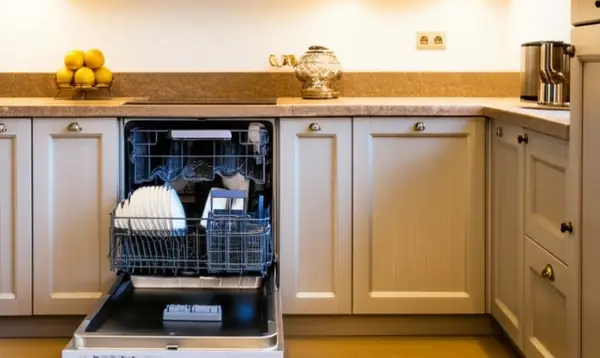
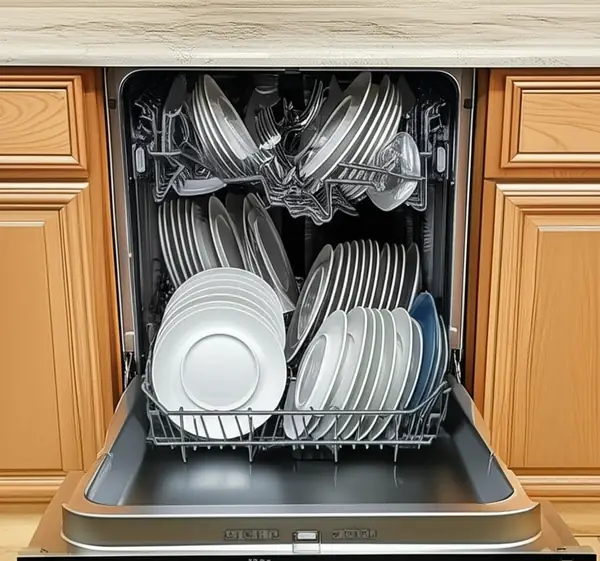
Pull every rack, plate and utensil out so you can see the entire interior. Run your fingers along the base of the tub, the corners, the rubber seal around the door and the area near the drain. Hold the spray arms up to a bright light: if you cannot see through the holes, water pressure is being wasted. Note any standing water, gritty residue or dark patches, and wipe loose debris away with a damp cloth before going further.
Step 3: Wash the Filter
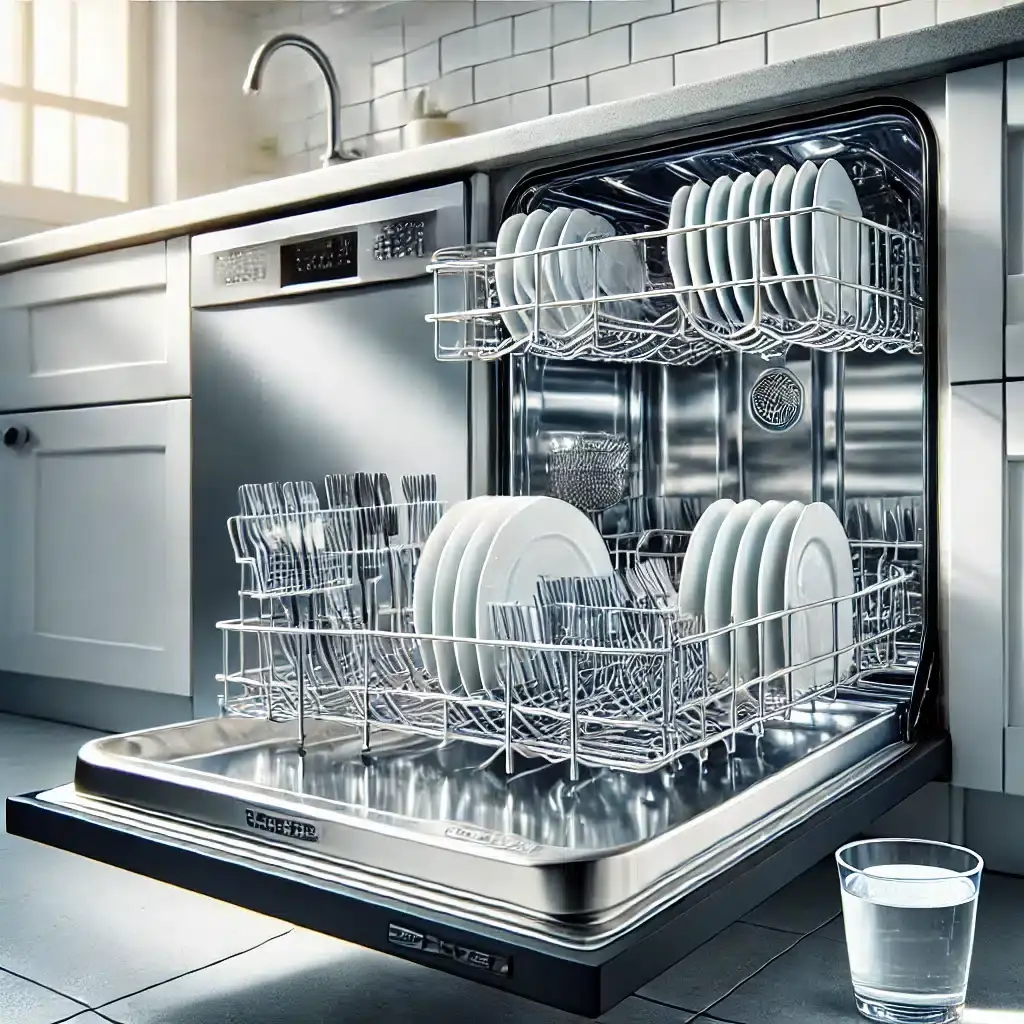
The filter sits at the bottom of the tub and it is the most common cause of poor results. Twist or unclip it free, remember how it sat so it goes back the same way, then rinse it under the hottest tap water you have. Greasy film needs dish soap and the brush. Work the mesh until water runs through freely and no grey coating remains, then click it back into position.
Step 4: Clear the Spray Arms
Remove the arms, which usually unscrew or unclip depending on your model, and rinse them in warm water. Push a toothpick through each nozzle to force out mineral grit and trapped food. One blocked hole can leave an entire section of the load unwashed. When every outlet is clear, refit the arms and spin them by hand to confirm they turn freely.
Step 5: Run a Vinegar Cycle
Set a bowl of white vinegar upright on the top rack of the empty machine and start the longest hot cycle. Steam carries the acid into every corner, breaking down grease and hard water deposits and killing the mildew behind that damp basement smell. Skip detergent for this cycle. When it ends, open the door and let the interior air out. Wash your hands afterwards, since the basin water you touch when pulling the bowl out is never as clean as it looks: see the hand hygiene guidance from the CDC.
Step 6: Finish With Baking Soda
Sprinkle a cup of baking soda across the floor of the tub, then run a short hot rinse. The powder works as a mild abrasive and a deodorizer, so residue the vinegar loosened gets flushed away and the machine finishes the cycle smelling clean. Wipe the door, the gasket and the control panel with a damp microfiber cloth, then clean the outer panel with the grain of the steel or in the direction of the cabinet finish.
A Simple Maintenance Calendar
| Task | How Often | Time Needed |
|---|---|---|
| Rinse the filter | Weekly | 3 minutes |
| Check spray arm holes | Monthly | 5 minutes |
| Vinegar cycle | Monthly | One long cycle |
| Baking soda rinse | Monthly, or when odor returns | One short cycle |
| Wipe the gasket and door edge | Weekly | 2 minutes |
Habits That Keep It Fresher Longer
- Scrape plates instead of pre-rinsing, since modern detergents need something to work on.
- Run a hot cycle with vinegar if the machine sits unused for more than a week.
- Leave the door slightly open between loads so moisture can escape.
- Use the heavy or pots setting for baked-on casseroles rather than running two light loads.
- Check the drain and the disposal connection once a year for slow drainage.
The same hygienic routine applies to the rest of the house. Surfaces that see hands, food and pets benefit from the wash, rinse and dry order described by the CDC home cleaning guidance, which is exactly the sequence a trained crew follows.
When to Bring In Help
Dishwasher care is the appliance half of kitchen cleaning. Counters, cabinet fronts, the backsplash, the range hood and the floor need attention too. If the whole room has slipped while life got busy, a proper deep cleaning service resets the kitchen, bathrooms and living areas in a single visit. Toronto Shine Cleaning carries $5,000,000 liability insurance and works across the city. Regular upkeep starts at $194 for a studio or one bedroom before HST, and every option is listed on the pricing page. Call (647) 424-0355 to book, or read customer reviews before you choose.
Frequently Asked Questions
How often should a dishwasher be cleaned?
Rinse the filter every week, run a vinegar cycle once a month and follow it with a baking soda rinse in the same month. Machines used daily, or fed heavily greasy dishes, may need the monthly cycle every three weeks. If you notice a sour smell or a white haze on glasses, clean it now rather than waiting for the calendar.
Can I put bleach in the dishwasher?
Chlorine bleach can pit stainless steel tubs and dry out rubber seals, and it must never meet vinegar or another acid, because mixing them releases a toxic gas. Save bleach for surfaces that tolerate it and follow the dilution and safety rules in the CDC bleach guidance. Vinegar and baking soda are the safer pairing inside the machine.
Why are dishes still gritty after a cleaning cycle?
Blocked spray arm nozzles are the usual culprit, because mineral grit stops water from reaching the upper rack. Remove the arms, clear each hole with a toothpick, and refill the rinse aid dispenser. If the problem continues, confirm the filter is locked in properly and that nothing tall is blocking the upper arm.
Is a monthly vinegar cycle safe for every machine?
It is safe for stainless steel interiors and for the plastic and rubber parts in normal use, provided you use plain white vinegar and never pour it into the detergent dispenser. Watch older units with worn seals after the first cycle. A weekly wipe down and a monthly cycle cost far less than a repair visit.