









5 Common Dishwasher Cleaning Mistakes You Need to Stop Making
A dishwasher is a precision instrument, not a brute-force cleaning bin. It delivers sparkling, sanitized dishes only when whoever loads it understands the spray pattern and the chemistry of detergent. When plates come out gritty, streaked, or wet, the fault usually lies with repeatable habits rather than the appliance. Fix these five and it becomes the dependable workhorse it was built to be.
1. Overloading and Blocking the Spray
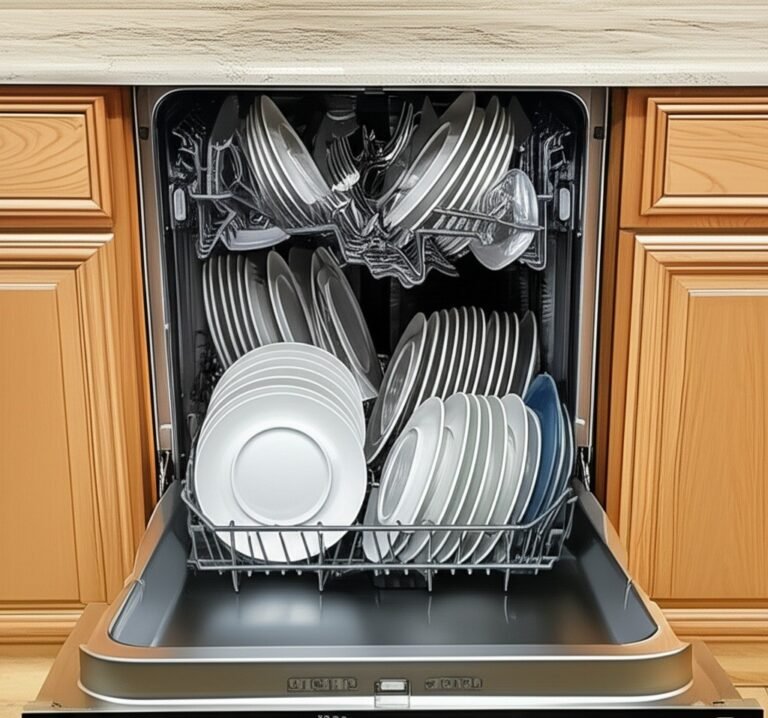
Cleaning depends on hot, detergent-laden water reaching every surface in the tub, so anything that blocks the spray guarantees a failed load. Squeezing in one extra plate creates what technicians call water shadows, and a single large bowl at the wrong angle can hide half a dozen smaller items behind it. Food loosened from those hidden dishes then gets thrown around during the rinse, leaving a gritty film on dishes that were never dirty. Leave clearance on all sides so water can circulate.
2. Loading Dishes the Wrong Way Round
Spray arms sit at the bottom of the tub and often beneath the top rack, so most of the water travels upward. Soiled faces need to point down and angle toward the middle of the machine, where the jets are strongest. A bowl left standing upright stays a dry, dirty island. Place cups, glasses, and bowls on the top rack, tilted downward between the tines.
- Plates on the lower rack should face the central spray rather than all leaning the same way.
- Cutting boards and baking sheets belong along the sides or back of the bottom rack.
- A large flat item pushed to the front can block the detergent door or stop the lower spray arm from rotating, cancelling the whole wash.
The rack split is deliberate. The bottom rack sits above the heating element in the path of the strongest jets, so it is reserved for ceramic plates, stainless steel pots, and sturdy pans. The top rack gives a gentler wash and is the safe home for delicate glassware and every plastic item, even those marked dishwasher safe. Direct heat warps or melts plastic placed below, and some plastics degrade and release chemicals.
3. Careless Cutlery and Items That Should Never Go In
Dumping cutlery into the basket lets identical shapes nest together and form a watertight seal, so food never rinses away. Mix the load instead, alternating handles up and handles down and spreading pieces across compartments. Sharp knives belong blade-down for safety, but fine cutlery should be washed by hand rather than exposed to the harsh interior of a dishwasher.
Some materials should stay out entirely. Wood absorbs hot water, swells, and cracks as the heat-dry cycle pulls the moisture back out. Cast iron loses the polymerized oil seasoning that keeps it non-stick, and the exposed iron rusts. High-carbon chef knives take a double hit, with detergent corroding the edge while the racks knock it dull. Non-stick coatings wear away, metallic trim and hand-painted china are stripped, and insulated travel mugs can lose their vacuum seal after repeated temperature swings.
4. Pre-Rinsing Everything and Getting Detergent Wrong
Rinsing dishes to a squeaky finish backfires on modern machines. A turbidity sensor shines light through the wash water to measure how much soil it holds, so a nearly clean load triggers a short, light cycle that may not be enough for the greasy pans sharing that load. Enzyme detergents built with amylase and protease also need residue to work on, so rinsing it away wastes their cleaning power. Scrape off large chunks and stop there.
Hand dish soap is the most destructive mistake of all. It foams heavily, overwhelms the tub, pours across the floor, and can damage pumps and water-level sensors. Only detergent labeled for automatic dishwashers belongs in the dispenser. Too much leaves a chalky film, too little leaves food behind, and the pack instructions settle the right dose.
5. Skipping Rinse Aid and Long-Term Maintenance
Rinse aid is not a luxury. It is a surfactant that breaks the surface tension of water in the final hot rinse, so water sheets off instead of forming droplets that dry into mineral spots. The effect shows most on plastics, which do not retain heat like glass. Machine care matters just as much, because a dishwasher washes your dishes but never washes itself.
| Part | How often | What to do |
|---|---|---|
| Filter | Monthly | Twist out the mesh screen and rinse it under hot water. |
| Spray arms | Every few months | Clear the jet holes, then run an empty hot cycle with a cup of white vinegar on the top rack. |
| Unloading | Every cycle | Pull the bottom rack out first, since mugs above hold water that would spill onto dry dishes below. |
A clogged filter forces the machine to recirculate food debris onto your dishes, the leading cause of grit and foul odors. Rinsing it monthly, plus an occasional vinegar cycle that dissolves buildup in the arms, hoses, and pump, keeps results consistent. After handling it, wash up: the CDC hand hygiene guidance recommends soap and running water, or a sanitizer with at least 60 percent alcohol when soap is unavailable.
Never add bleach to a rinse cycle or mix it with vinegar and other cleaners, since the combination can release dangerous fumes. The CDC bleach safety guidance explains the safe rules, and the CDC routine cleaning advice shows what a hygienic kitchen surface really takes.
Frequently Asked Questions
Should I rinse dishes before loading them? Scrape off large scraps and skip the rinse. A turbidity sensor judges how dirty the wash water is, so a spotless load can trigger a short cycle that leaves greasy pans half cleaned. Enzyme detergents also need food residue to activate, so rinsing to a squeaky finish wastes water, detergent, and electricity.
Is hand dish soap ever safe in a dishwasher? No. Hand soap produces heavy suds that flood the tub, spill onto the floor, and can damage the pump and water-level sensor. Use a detergent labeled for automatic dishwashers, and measure the dose rather than filling the cup by eye.
Why are my glasses still spotted after a wash? Spots are mineral droplets left behind when water dries in place. Rinse aid lowers surface tension so water sheets away, and it matters most for plastics. Check the reservoir, make sure nothing tall blocks the dispenser door, and unload the bottom rack first so water pooled in mugs does not drip onto dry dishes.
How do I clean the dishwasher itself? Pull the cylindrical filter from the bottom of the tub and rinse it under hot water monthly. Check the spray arm holes for hard water deposits, then run one hot empty cycle with a cup of white vinegar sitting on the top rack.
Toronto Shine Cleaning applies the same attention to detail in every room. Our regular maid service keeps a home on an even keel week after week, our reviews show what clients say, and you can see which locations we serve before booking. When the kitchen needs more than maintenance, our deep cleaning service reaches the spots a weekly wipe-down misses. Call (647) 424-0355 to arrange your visit.