Cleaning Cast Iron Pans: A Step-by-Step Tutorial for a Perfect Patina
On this page
The cast iron skillet is an icon of the culinary world, revered for its ability to retain heat, create the perfect sear, and last for generations. It is a tool that improves with age, developing a natural non-stick patina that rivals any synthetic coating on the market. However, despite its durability and performance, many home cooks are terrified of owning one. This fear stems almost entirely from the confusion and mythology surrounding cleaning cast iron pans. There is a pervasive belief that these pans are high-maintenance divas that will rust if you look at them the wrong way or that a single drop of soap will ruin a century of seasoning. The reality is far simpler. Cast iron is a hunk of metal that is virtually indestructible. Understanding the science and the simple mechanical steps involved in cleaning cast iron pans effectively transforms this chore from a source of anxiety into a quick, satisfying ritual that preserves your cookware for a lifetime.
Soap
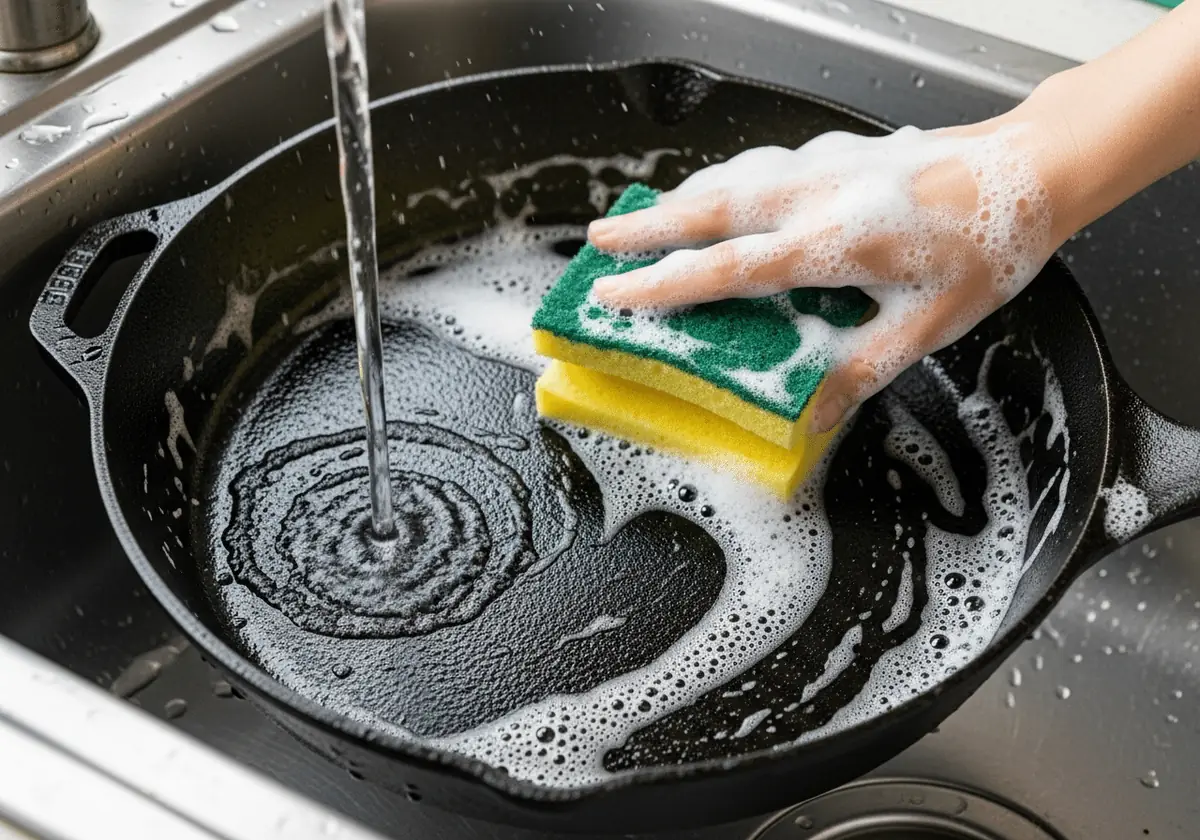
To navigate the process correctly, one must first address the most persistent and controversial myth: the ban on soap. For decades, the golden rule of cleaning cast iron pans was to never, under any circumstances, use dish soap. This advice originated in an era when soaps were made with lye and vinegar, which were harsh enough to strip the polymerized oil seasoning from the metal. Modern dish soaps, however, are much milder detergents. They are designed to break down loose grease, not the hard, polymerized layer of seasoning that is chemically bonded to the iron. Therefore, incorporating a small amount of mild soap into your routine for cleaning cast iron pans is perfectly safe and often necessary to remove bacteria and food residue. It will not destroy your pan, provided you do not soak it for hours.
Warm Water
The timing of the wash is a critical factor. The most effective approach to cleaning cast iron pans involves tackling the mess while the cookware is still warm. When the pan is warm, the food residues and fats are still pliable and easier to release. If you allow the pan to cool completely, the fats congeal and the food proteins harden, binding essentially to the surface like glue. However, one must be careful to avoid thermal shock. Plunging a scorching hot iron pan into ice-cold water can cause the metal to warp or crack due to rapid contraction. The best practice for cleaning cast iron pans is to let them cool slightly until they are comfortable to touch, and then wash them with warm water that matches the temperature of the metal.
Sponges
Mechanical agitation is often required, as cast iron does not have the slip-slide surface of Teflon. The tools you choose for cleaning cast iron pans matter. A standard sponge is often insufficient for stuck-on bits, and steel wool is too aggressive for daily maintenance as it will scour away the seasoning. The ideal middle ground is a chainmail scrubber. This consists of stainless steel rings linked together, creating a mesh that scrapes away food without scratching the underlying seasoning. It is specifically designed for the task of cleaning cast iron pans and works wonders on stubborn, charred debris. If you do not have chainmail, a stiff nylon brush or a plastic pan scraper are excellent alternatives.
Salt
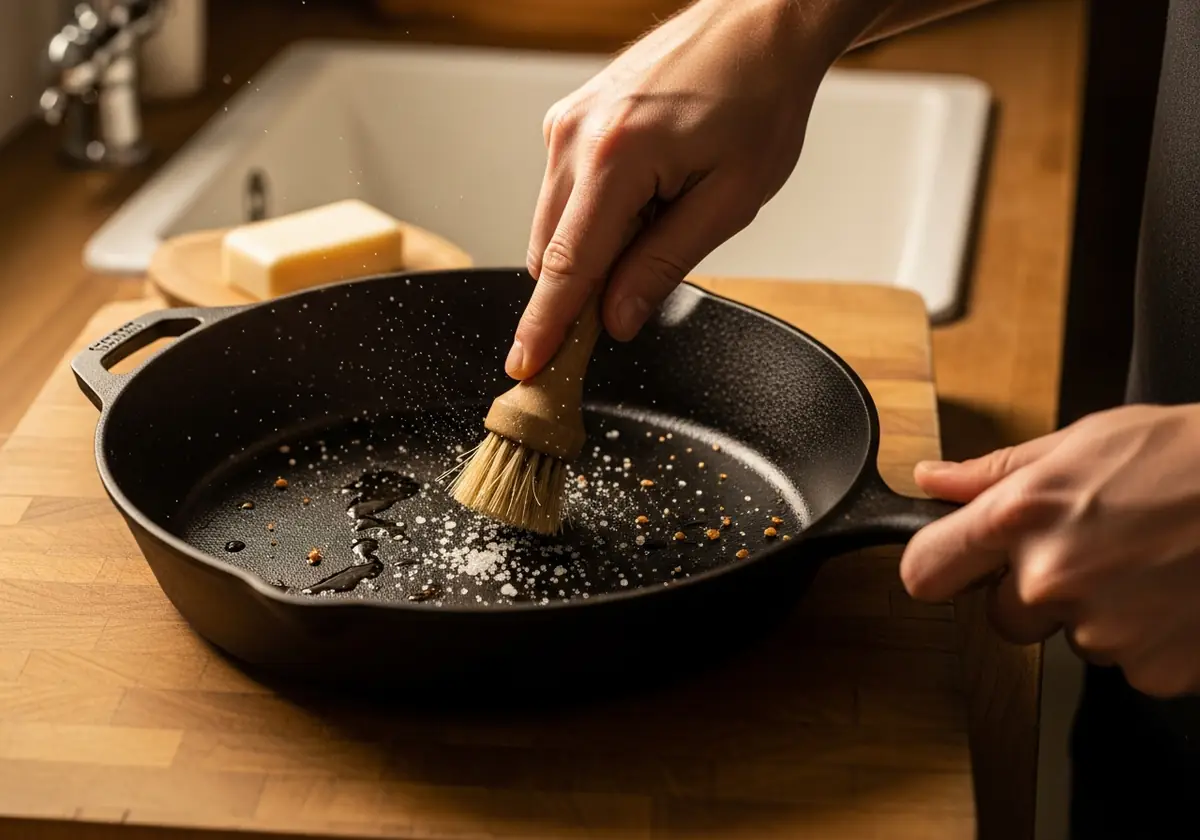
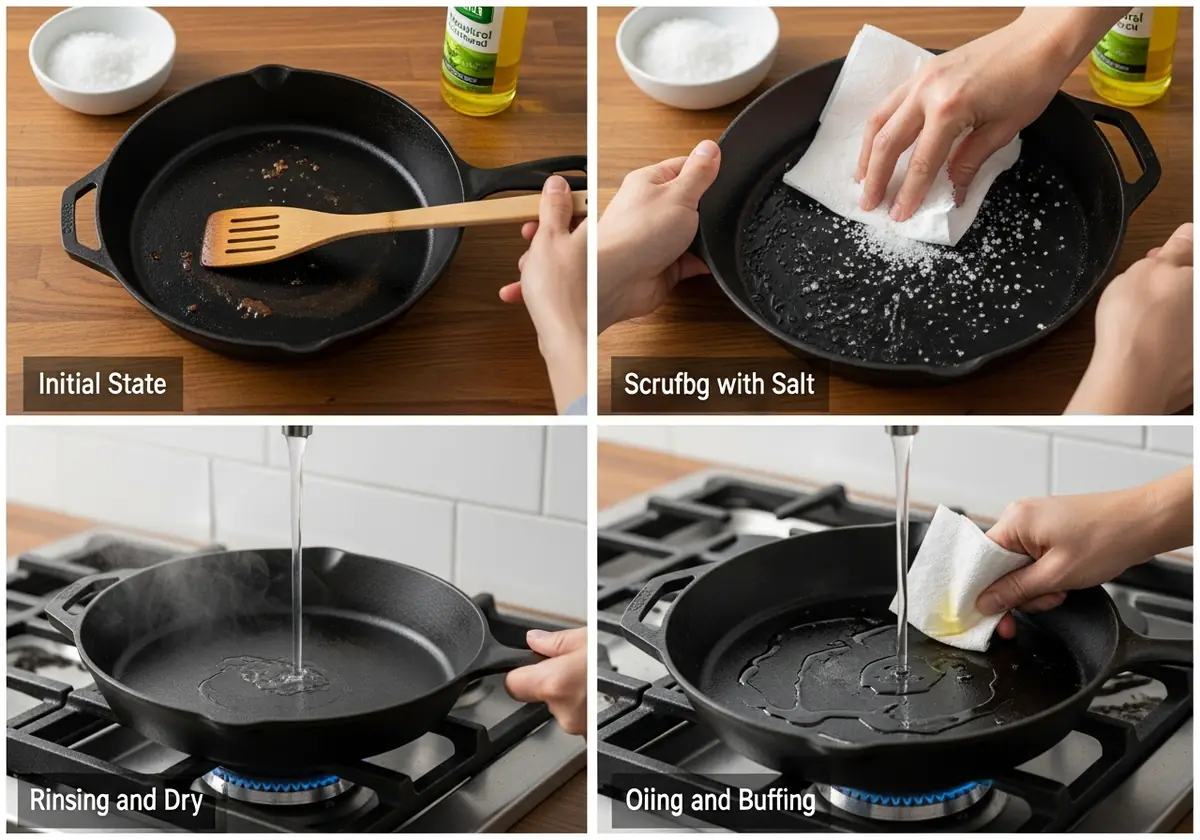
For those situations where food is burnt on and refuses to budge, there is a chemical-free method that relies on abrasion. Using coarse kosher salt is a time-honored technique in the art of cleaning cast iron pans. To do this, pour a generous amount of coarse salt into the warm pan and use a paper towel or a dedicated rag to scrub the salt around. The salt acts as a gentle abrasive, grinding away the stuck food while absorbing excess grease. It is hard enough to scrub but soft enough not to damage the iron. Once the salt becomes dirty, simply dump it out and rinse the pan. This method for cleaning cast iron pans is particularly useful for those who wish to avoid using water excessively or for camping situations.
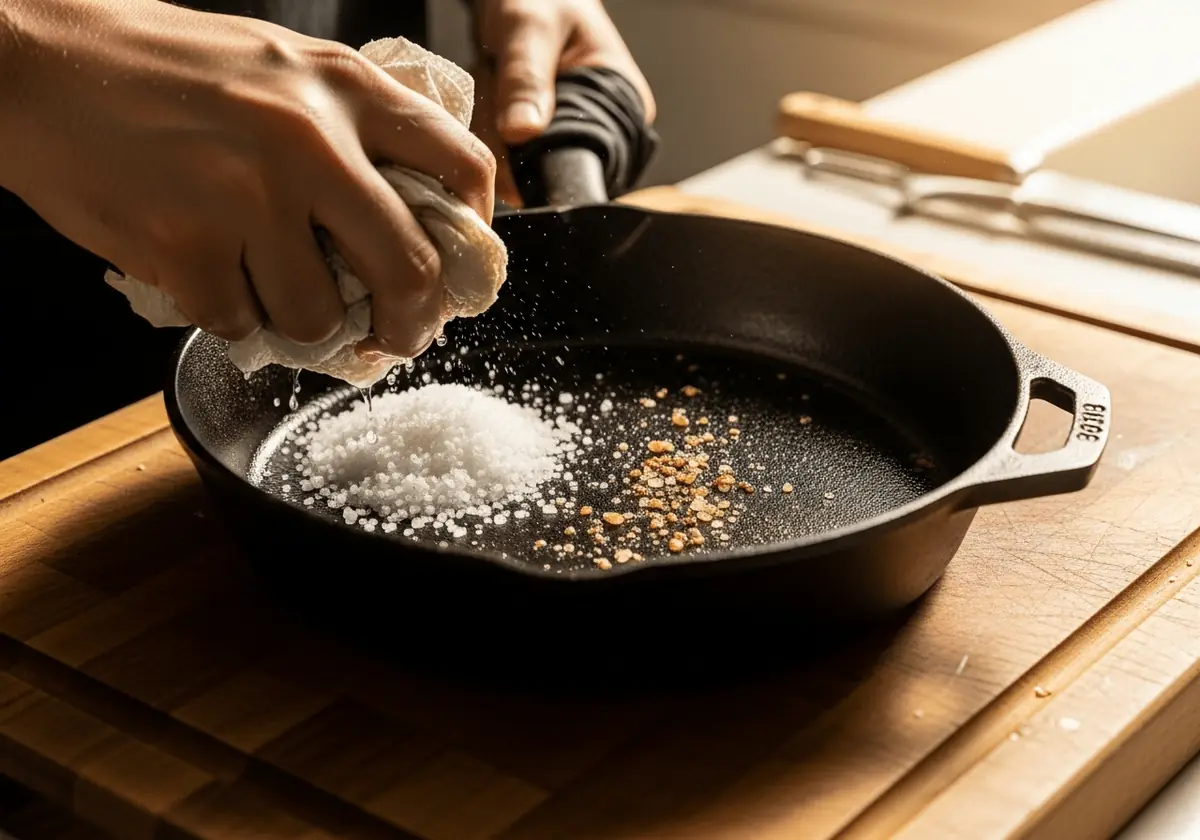
If food is burnt on too hard for salt alone, deglaze the pan: with it still hot, pour in about two tablespoons of water. The steam lifts the burnt layer so a wooden spatula can scrape it off. Pour out the water, dry the pan on the burner and oil it as usual.
Quick drying
Water is the natural enemy of iron, causing rust within minutes if left unchecked. Therefore, the drying phase is arguably the most important step in the process of cleaning cast iron pans. It is not enough to simply wipe the pan with a towel and put it away. Towel drying often leaves microscopic moisture in the pores of the metal. To ensure the pan is truly dry, place it back on the stove over low heat for a few minutes. This evaporation method guarantees that no moisture remains to cause oxidation. This attention to detail is what separates successful cleaning cast iron pans from a routine that leads to a rusty, orange surface the next time you reach for the skillet.
Oil
Once the pan is clean and dry, the final step in the maintenance cycle is re-oiling. This is often confused with full seasoning, but it is really just a maintenance layer. After cleaning cast iron pans, while the metal is still warm from the drying stage, apply a very thin layer of neutral oil—like grapeseed, canola, or flaxseed oil—to the entire surface. Wipe it on, and then wipe it off as if you made a mistake and are trying to remove it all. You want a micro-layer that protects the iron from the air. This step reinforces the polymerization and keeps the non-stick surface slick. It is the finishing touch in the ritual of cleaning cast iron pans that keeps the tool ready for action.
There are specific foods that make cleaning cast iron pans more difficult and can threaten the seasoning. Acidic ingredients like tomatoes, vinegar, wine, or citrus can break down the polymerized oil if cooked for long periods. If you simmer a tomato sauce in a cast iron pan for hours, you may find the sauce tastes metallic and the pan looks dull grey afterwards. While a well-seasoned pan can handle short exposure to acid, it is generally best to avoid long simmers. If you do cook acidic foods, prompt cleaning cast iron pans immediately after serving is essential to minimize the chemical reaction time.
Rust
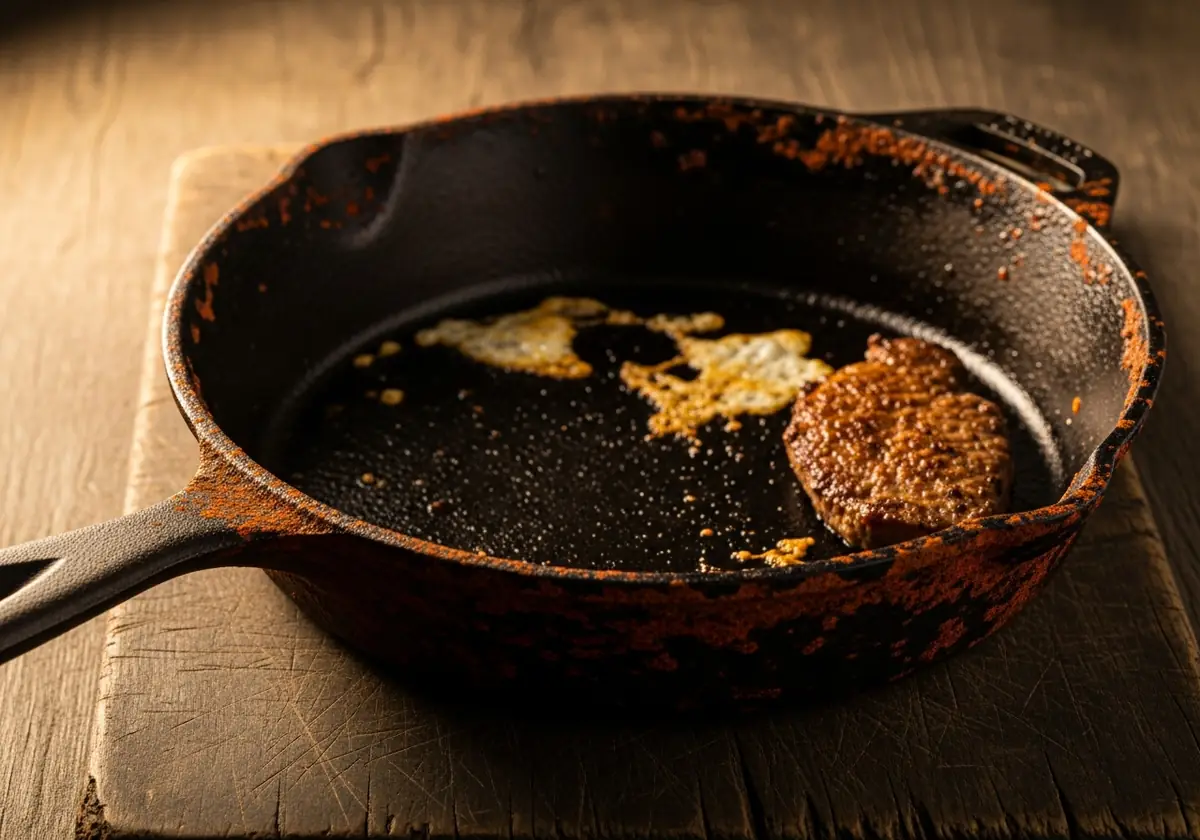
Sometimes, despite best efforts, a pan becomes neglected. It might be found at a yard sale covered in rust, or left in a damp sink by a well-meaning guest. Restorative cleaning cast iron pans is different from daily maintenance. If there is significant rust, you have permission to break the rules. You can use fine steel wool to scour away the rust down to the bare grey metal. Once the rust is gone, you must wash it, dry it, and then go through the full seasoning process—baking oil onto the pan in the oven multiple times—to rebuild the protective layer. This resilience is why cleaning cast iron pans is so forgiving; even if you ruin the surface, you can always sand it down and start over.
Dishwasher
The dishwasher is the only place where cleaning cast iron pans is strictly forbidden. The environment of a dishwasher is catastrophic for cast iron. The combination of high heat, prolonged moisture exposure, and harsh, abrasive detergents will strip the seasoning down to the bare metal and induce rapid rusting before the cycle is even finished. Placing a skillet in the dishwasher is essentially hitting the factory reset button, but with the added bonus of rust. Everyone who shares a kitchen must be educated on this rule regarding cleaning cast iron pans to prevent accidental destruction of the patina.
Another aspect to consider is the exterior of the pan. While most focus is on the cooking surface, cleaning cast iron pans includes the bottom and sides. Carbon buildup on the bottom of the pan can affect heat transfer and cause the pan to sit unevenly on the burner. While you do not need the outside to be as slick as the inside, giving it a good scrub with your chainmail or brush prevents layers of burnt-on crud from accumulating. This is especially important for those using glass-top stoves, where rough carbon buildup on the bottom of a pan can scratch the cooktop. Comprehensive cleaning cast iron pans ensures the entire vessel remains functional and safe for all surfaces.
Storage
Storage is the silent partner to cleaning. If you stack your cast iron pans directly on top of one another, the friction can scratch the seasoning you worked so hard to maintain. Furthermore, if there is any trapped humidity, rust can form between the nested pans. Part of the philosophy of cleaning cast iron pans includes proper storage. Placing a paper towel or a designated pan protector between stacked skillets allows for airflow and protects the finish. This simple step ensures that your effort in cleaning cast iron pans is not wasted while the cookware sits in the cupboard.
Odor
Odor retention can occasionally be an issue, especially if the pan was used to cook fish or pungent spices. Cast iron is porous, and if the seasoning is thin, it can hold onto smells. If you find that cleaning cast iron pans with soap and water is not removing a lingering odor, baking the pan in the oven at 400 degrees Fahrenheit for an hour can help incinerate the organic compounds causing the smell. Alternatively, the salt scrub method mentioned earlier is excellent for drawing out odors. Managing the olfactory profile is a subtle but important part of cleaning cast iron pans effectively.
Careful
The psychology of the chore often dictates how well it is done. Because cast iron is heavy and retains heat, it can be physically demanding to manipulate in the sink. However, shifting the perspective to view cleaning cast iron pans as part of the cooking process rather than a separate cleanup task helps. It is the cool-down lap after the marathon of dinner. The immediate care you provide ensures that the next time you want to sear a steak, the pan is ready and waiting. Procrastination is the enemy here; leaving a pan to sit overnight with food in it allows the moisture to penetrate the seasoning and start the rusting process. Success in cleaning cast iron pans rewards the disciplined cook.
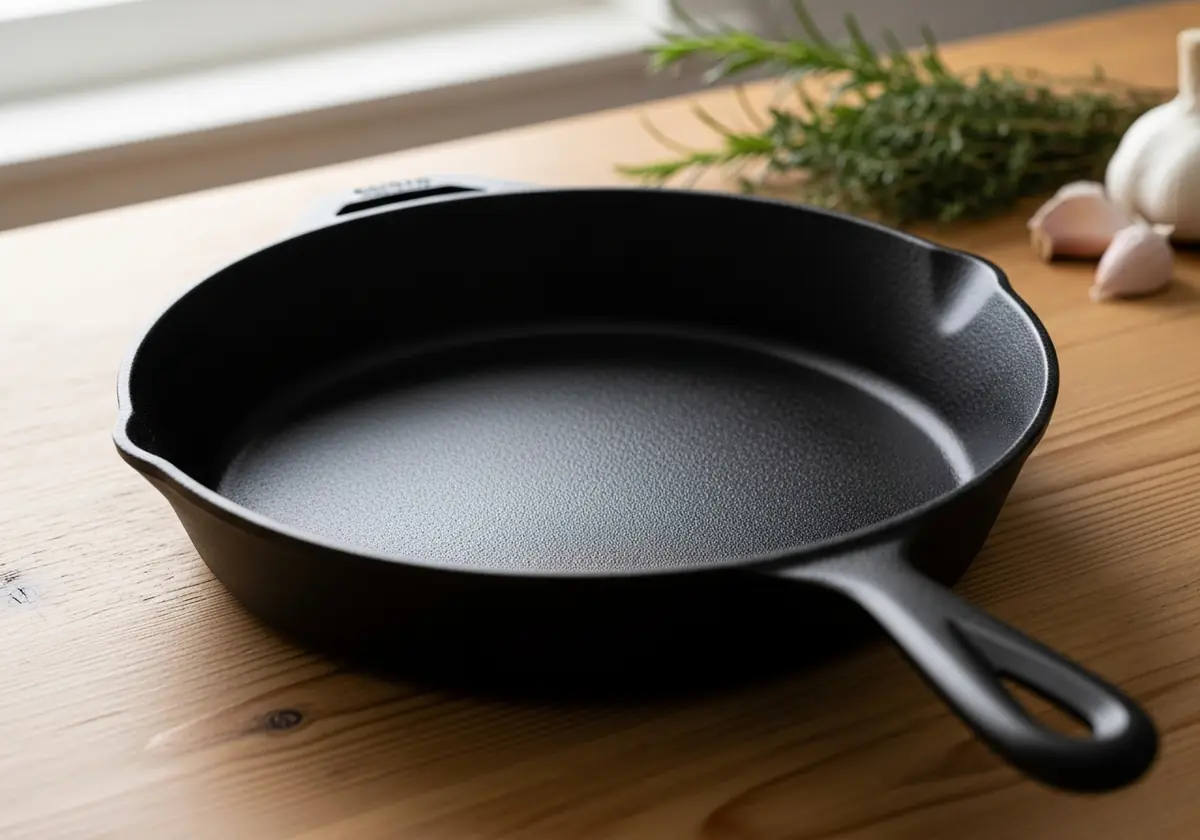
Ultimately, the goal is to build up layers of polymerized oil that make the pan black, shiny, and non-stick. Every time you cook with fat and perform the routine of cleaning cast iron pans correctly, you are adding to this layer. It is a cumulative process. A brand new pan will never perform as well as one that has been used and cleaned properly for ten years. This is why vintage pans are so highly prized; they have survived thousands of cycles of cleaning cast iron pans and have the surface to prove it.
Latest Analysis
The versatility of the cookware is matched only by the simplicity of its care. Whether you are using it over a campfire, in a professional kitchen, or on an induction stove, the rules for cleaning cast iron pans remain constant. Scraping, washing, drying, and oiling. It is a primitive, tactile feedback loop. You can feel when the pan is clean. You can see when the metal is thirsty for oil. Developing this intuition is key to mastering the art of cleaning cast iron pans.
In summary, do not let the fear of maintenance deter you from using this superior cookware. The danger is overstated, and the resilience of the metal is understated. By following the simple steps of washing with warm water, using gentle abrasives like salt or chainmail, drying thoroughly with heat, and applying a maintenance coat of oil, you ensure the longevity of the tool. Cleaning cast iron pans is not a burden; it is the small price we pay for the best crust on a steak and the fluffiest cornbread. It is a connection to a slower, more deliberate way of cooking that honors the equipment.
Maintaining a kitchen filled with specialized equipment like cast iron requires time, knowledge, and consistent effort. While managing the daily dishes is part of life, the deep cleaning of a home—from the grease on the stove hood to the dust on the baseboards—can often become overwhelming. When you want your entire home to shine with the same level of care you give your favorite skillet, professional assistance is the answer. Toronto Shine Cleaning offers premium cleaning services that address the details most people miss. Just as we have explored the nuances of cleaning cast iron pans, Toronto Shine Cleaning applies that same rigorous attention to detail to every corner of your living space. Whether you need a deep seasonal clean or regular maintenance to keep your home pristine, their professional team has the expertise to handle the heavy lifting.