
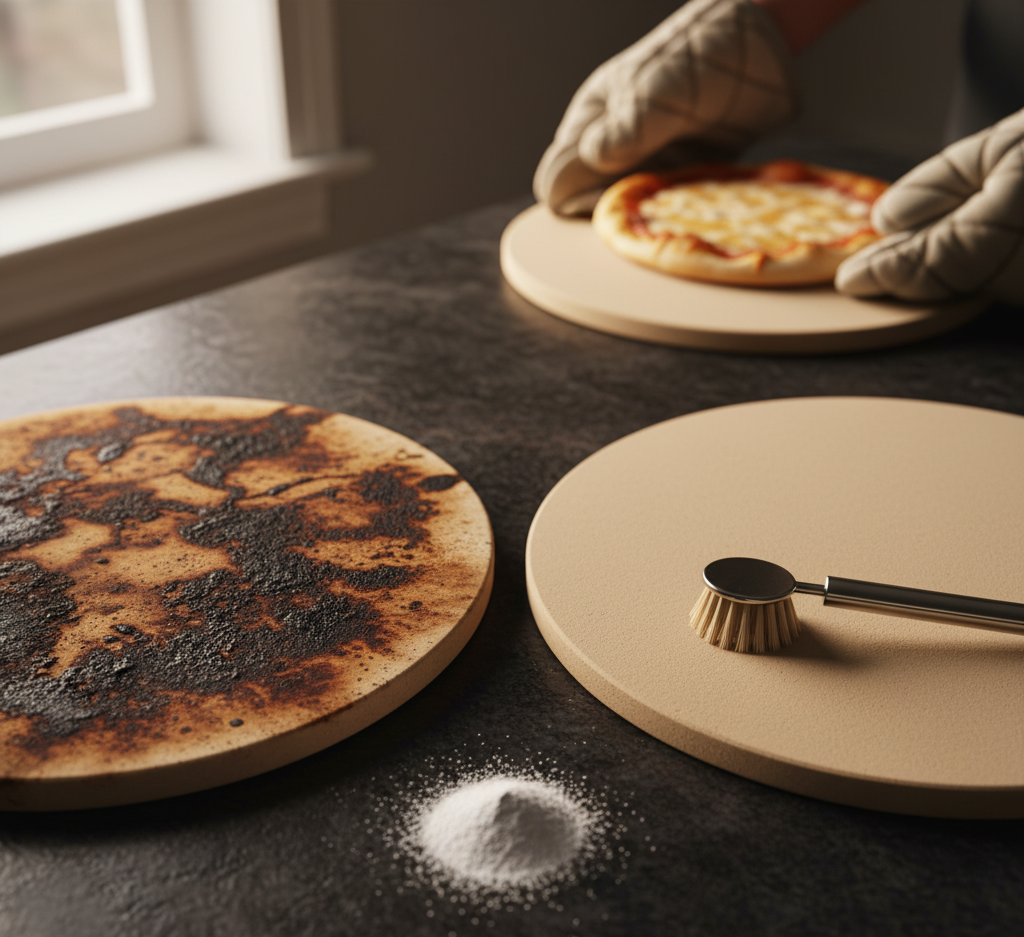
How to Make Your Stained Pizza Stone Look and Cook Like New
A pizza stone is a transformative tool in any home kitchen, the secret weapon for achieving a crisp, pizzeria-quality crust that a standard metal baking sheet simply cannot replicate. Its magic lies in its material—typically a porous ceramic, cordierite, or clay—which absorbs moisture from the dough and distributes heat with incredible efficiency. This very porosity, however, is the source of much confusion and anxiety when it comes to cleaning. A pizza stone does not behave like a metal pan or a ceramic dish. Its cleaning process is counterintuitive, a ritual of care where what you don’t do is far more important than what you do. Mishandling this essential tool can lead to a soapy-tasting pizza, a cracked stone, or a sticky, smoky mess. What you Should Never use 1. Soap or Detergent The first and most inviolable rule of cleaning a pizza stone is to never, under any circumstances, use soap or detergent. This cannot be overstated. The porous nature of the stone acts like a very hard sponge. If you apply soap to its surface, it will absorb the soap deep into its structure. The next time you heat the stone to the high temperatures required for making pizza, that trapped soap will heat up, release fumes, and bake its unpleasant, chemical taste directly into the bottom of your crust. No amount of rinsing can fully remove soap that has been absorbed into the ceramic. This single mistake can permanently ruin a pizza stone, relegating every future pizza to a soapy-flavored disappointment. 2. Thermal Shock The second golden rule is to avoid thermal shock at all costs. A pizza stone is a single, solid piece of ceramic that expands when heated and contracts when cooled. If this temperature change happens too quickly, the stress will cause it to crack. This means you must never plunge a hot stone into a sink of cool or even lukewarm water. The sudden, drastic temperature change will almost certainly break it in half. Similarly, you should never place a cold stone into a preheated oven. The proper practice is to always place the stone in a cold oven and allow it to preheat along with the oven itself. Special Care With these critical “don’ts” established, the correct cleaning process is a study in gentle, methodical care, focused on function over aesthetics. The goal is not to return the stone to its original, pristine beige color, but to remove any physical food debris, leaving a smooth, functional cooking surface. In fact, a well-used pizza stone is supposed to be stained. The dark, splotchy marks that develop over time are a sign of a well-seasoned stone, similar to the patina on a cast iron skillet. These stains are battle scars from countless delicious pizzas, and they do not affect the stone’s performance in any negative way. Obsessing over these cosmetic imperfections is a common beginner’s mistake. The cleaning process should always begin with a complete cool-down. After you have finished baking, simply leave the stone in the oven, turn the oven off, and let it cool down gradually with the oven. This may take several hours. Once the stone is completely cool to the touch and can be handled safely, you can remove it for cleaning. The first and primary step is a thorough dry scrape. Your goal here is to remove any raised, physical debris—the drips of burnt cheese, the patches of scorched tomato sauce, or the bits of crust that have fused to the surface. The best tool for this job is a flat, rigid scraper, such as a bench scraper or a metal spatula. Hold the scraper at a low angle and use firm pressure to shear the baked-on food from the stone’s surface. You can also use a stiff-bristled grill brush or a dedicated pizza stone brush for this task. Scrape every bit of residue off until the entire surface feels smooth to the touch, even if it is still stained. For the vast majority of cleanings, this dry scraping is the only step required. Once you have dislodged all the debris, you can simply wipe it away with a dry cloth. If you have particularly stubborn spots that the dry scrape cannot conquer, you can escalate to a gentle wet cleaning. This requires extreme caution with water. Remember, you should never soak or submerge the stone. Instead, take a soft cloth or a non-abrasive sponge, dampen it with a small amount of plain, warm water, and wring it out thoroughly. Use this damp cloth to scrub at the specific problem area. You can use a small amount of force to lift the stubborn spot. Once it is removed, use a dry cloth to wipe away any moisture immediately. Stubborn Stains For a specific, greasy stain that feels sticky or tacky, a baking soda paste is an effective next step. Baking soda is a mild alkali and a gentle abrasive that can help lift grease without damaging the stone. In a small bowl, mix a few tablespoons of baking soda with just enough water to form a thick paste. Apply this paste to the stained area and let it sit for about ten to fifteen minutes. Then, using a stiff brush or a damp cloth, scrub the area gently. The paste will help to break down and lift the grease. The most critical part of this method is the removal. You must meticulously rinse the area with a damp cloth, wiping it several times to ensure all the baking soda residue is gone. Any leftover baking soda can affect the taste of your next pizza. For a truly deep, restorative clean, some people opt to use their oven’s self-cleaning cycle. This is a high-risk, high-reward method that should be approached with caution. Place the cool, scraped pizza stone into a cool oven. Lock the oven door and run the self-cleaning cycle according to your oven’s instructions. This cycle will heat the oven to extremely high temperatures (often over 900°F or 480°C), which
How to Make Your Stained Pizza Stone Look and Cook Like New Read More »