









Expert Tips for Keeping High Traffic Areas Spotlessly Clean
Entryways, kitchens, living rooms, and bathrooms carry the household’s foot traffic, so they collect dirt like uninvited guests who overstayed. Keeping those zones spotless feels like a losing battle when the schedule is full. These five tips make it manageable: smaller habits, better tools, and a home that helps a little more than you expect.
1. Build a Daily Quick-Clean Routine
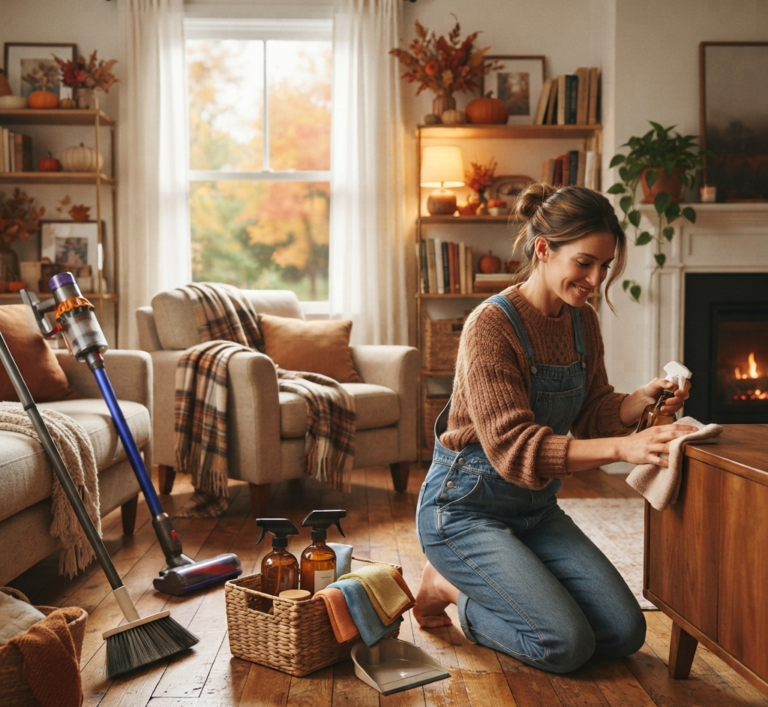
Pick the hours of the day you can actually rely on and attach a short tidy to them. Morning types can do a fast sweep after coffee; evening people can make the reset part of winding down: plumping cushions, folding throws, leaving the room calm for tomorrow. Then use the gaps you already own. While the tea steeps or the oven works, unload the dishwasher, wipe the counters, or sort the day’s mail. Keep tasks short so they read as habits, not chores. After meals, spread the work: one person clears, another loads the dishwasher, a third wipes surfaces. The team approach lightens the load and teaches everyone to own a piece of it.
2. Use the Right Cleaning Supplies
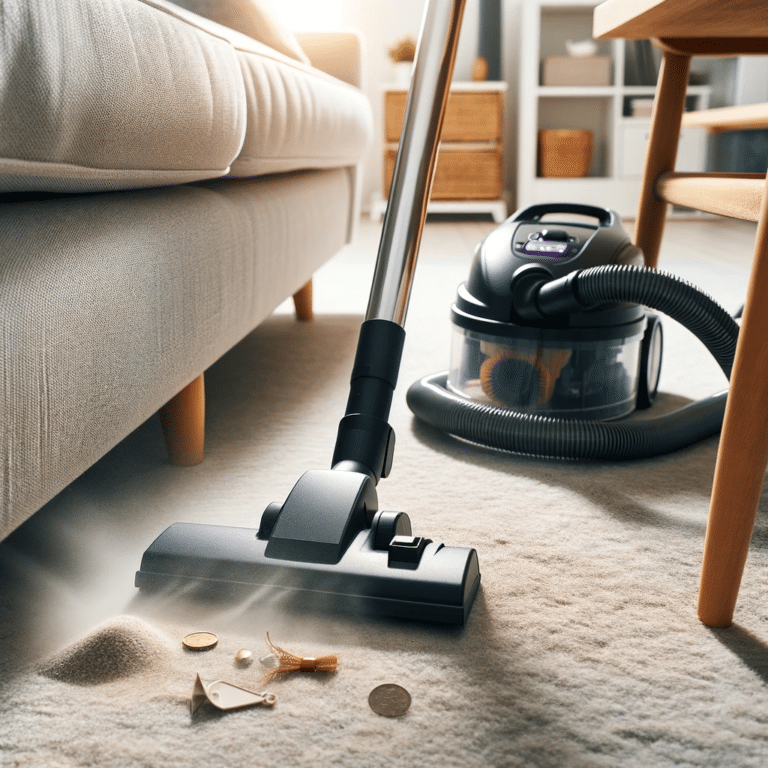
Microfibre cloths earn their reputation: the weave traps dust, dirt, and microscopic germs instead of smearing them, and they rinse and return. Floors need their own strategy. A quality vacuum with surface attachments lifts dirt out of the home rather than shuffling it around, and HEPA-filter models capture allergens. Eco-friendly cleaners matter just as much: conventional formulas can leave residues that are hard on family and pets, while natural-ingredient products achieve the same results, extend the life of your surfaces, and reduce toxic runoff into waterways. Organization tools belong on the list too, because clutter is friction: a basket for shoes, hooks for coats, a tray for keys and mail, and a dedicated home for the cleaning supplies themselves.
When shared spaces need more than a wipe, the CDC’s cleaning and disinfecting guide settles what deserves what.
3. Set Up Cleaning Stations
High-traffic zones collect germs and bacteria faster than any other room, and supplies within arm’s reach turn “I will get to it later” into a quick fix now, before a spill sets or travels. Make each station blend in: decorative baskets or stylish containers hide the supplies yet keep them grabbable. Customize by location. The entryway station leans on wipes and hand product for shoes and hands; the kitchen stock adds stainless polish and a grease-fighting dish soap; the bathroom corner keeps toilet cleaner, a brush, and disposable towels ready. The deeper genius is participation. When supplies sit everywhere, the inconvenience excuse dies, kids join in, and cleaning up after yourself becomes a normal, teachable reflex rather than a parental solo act.
Hand hygiene is the anchor of any entryway station, and the CDC’s handwashing pages explain why clean hands stay the first line of defence in the busiest rooms.
4. Protect the Zones Before Dirt Arrives
The cheapest clean is the dirt that never lands. Floor mats built for high-traffic zones outlast ordinary area rugs: they shrug off heavy footfall, resist stains, wipe clean easily, and suit any room’s style, so entryways and hallways get first claim. On hardwood and tile, a fresh finish or sealant adds a sacrificial layer against scratches, scuffs, and spills, extending floor life. A no-shoes rule does quiet miracles too, and slippers or shoe covers for guests turn it into hospitality instead of fussiness. Then maintain: wipe spills before they set, match cleaners to each floor type, and deep clean rugs, carpets, and floors periodically so the protection holds.
5. Get the Whole Household Participating
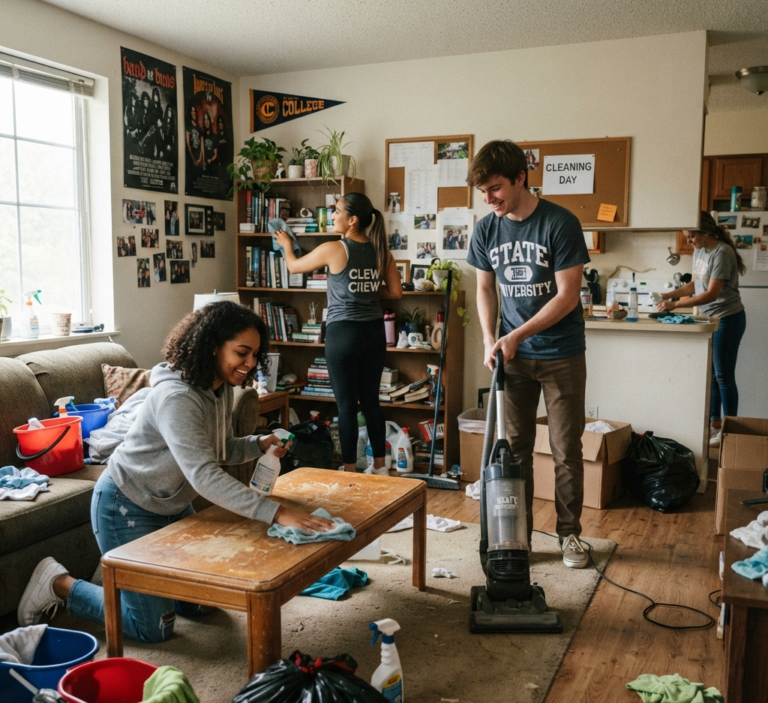
When everyone contributes, the home runs smoother and the work stops landing on one person’s evening. Technology helps: apps that schedule, assign, and track tasks land especially well with pre-teens and teens, turning “helping out” into something visible and acknowledged. Leading by example does the rest: children copy adults who clean, and knowing a tidy space feels calmer and more productive plants the same value in them. Finally, match tasks to temperaments. Some people love the instant gratification of vacuuming; others find sorting and organizing more satisfying. Aligned work stops feeling like a tax.
A Weekly Rhythm for the Busy Zones
| Zone | Daily | Weekly |
|---|---|---|
| Entryway | Shoes to the basket, quick sweep | Mats shaken or vacuumed, hooks decluttered |
| Kitchen | Counters wiped after dinner | Floor deep mop, appliance fronts polished |
| Living room | Cushions and throws reset | Vacuum with attachments, high-touch surfaces wiped |
| Bathroom | Quick wipe after morning rush | Full clean from the stocked station |
Small kit, stocked once, keeps every zone ready:
- Microfibre cloths, one colour per room to avoid bathroom-to-kitchen tours.
- A vacuum with surface tools and, ideally, a HEPA-grade filter.
- Eco-friendly cleaner matched to each floor and surface type.
- Wipes and hand product at the entryway for the five-second fixes.
Frequently Asked Questions
How many minutes should the daily routine take? Ten to fifteen spread across the day is plenty. Two minutes while the kettle boils and five after dinner beat a heroic Saturday marathon, because dirt that never accumulates never needs heavy removal.
Do eco-friendly cleaners really perform like conventional ones? On everyday soil, well-formulated natural products achieve the same or better results without harsh residues, and they are gentler on surfaces and waterways. Proper disinfection during illness still deserves label-checked products used as directed.
What belongs in a cleaning station? Only what that room actually needs: wipes and hand product at the door, surface spray and cloth in the kitchen, bowl, brush, and towels in the bathroom. A spare caddy keeps stock one trip away.
Is a no-shoes policy worth the awkwardness? Floor mats plus a slipper basket make the habit feel welcoming rather than strict, and the drop in tracked-in grit shows up within a week, especially on hardwood and tile.
When does a routine stop being enough? When the weekly rhythm slips for a month and grime returns faster than you can chase it, a scheduled clean resets the baseline. A deep cleaning service clears what a stretched routine leaves behind.
Let the Routine Come to You
If building these habits alone feels like another job, hand the baseline to professionals. Toronto Shine Cleaning is bonded and insured with a $1,000,000 insurance policy and a $10,000 accidental breakage and surety bond. A regular visit for a studio or one-bedroom starts at $212.63 and a deep clean at $270.38, both before HST, shown on our pricing page, with teams across the city listed under locations. Call (647) 424-0355 and let the busiest rooms in your house stay the cleanest.