
Cleaning The Pantry: 5 Expensive Mistakes You Are Making with Pantry Storage
On this page
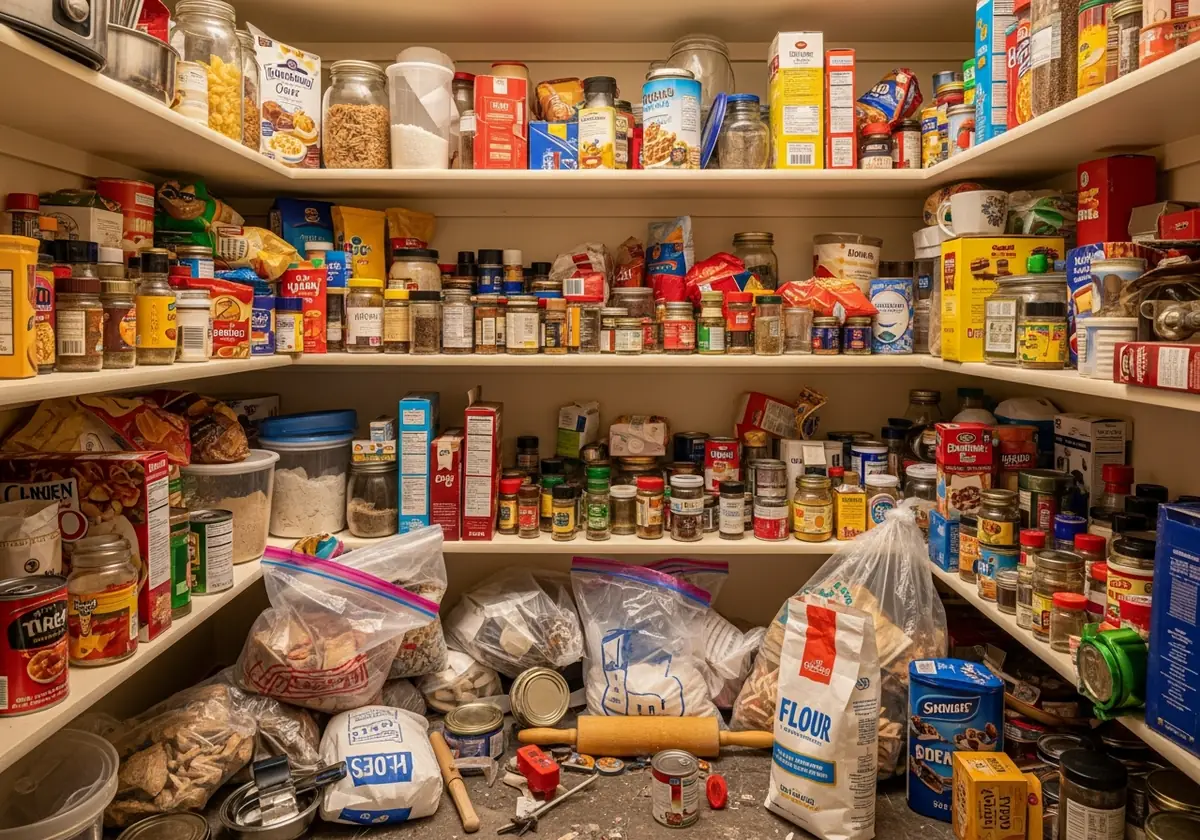
The pantry is the engine room of the kitchen. It is the repository of potential meals, the fuel station for the family, and, all too often, the most chaotic space in the entire home. A disorganized pantry is not merely an aesthetic annoyance; it is a source of daily friction that wastes money, time, and mental energy. When you cannot see what you have, you inevitably buy duplicates, leading to a cycle of waste where expired cans of beans and stale crackers accumulate in the dark corners of deep shelves. Cooking becomes a chore because locating the necessary ingredients requires an excavation process. Furthermore, a cluttered pantry is a haven for pests, from pantry moths to ants, which thrive in the undisturbed debris of open packages. Transforming this space from a graveyard of good intentions into a streamlined, functional asset requires more than just buying a few plastic bins; it requires a systematic approach to inventory management and spatial planning.
1. Evacuation
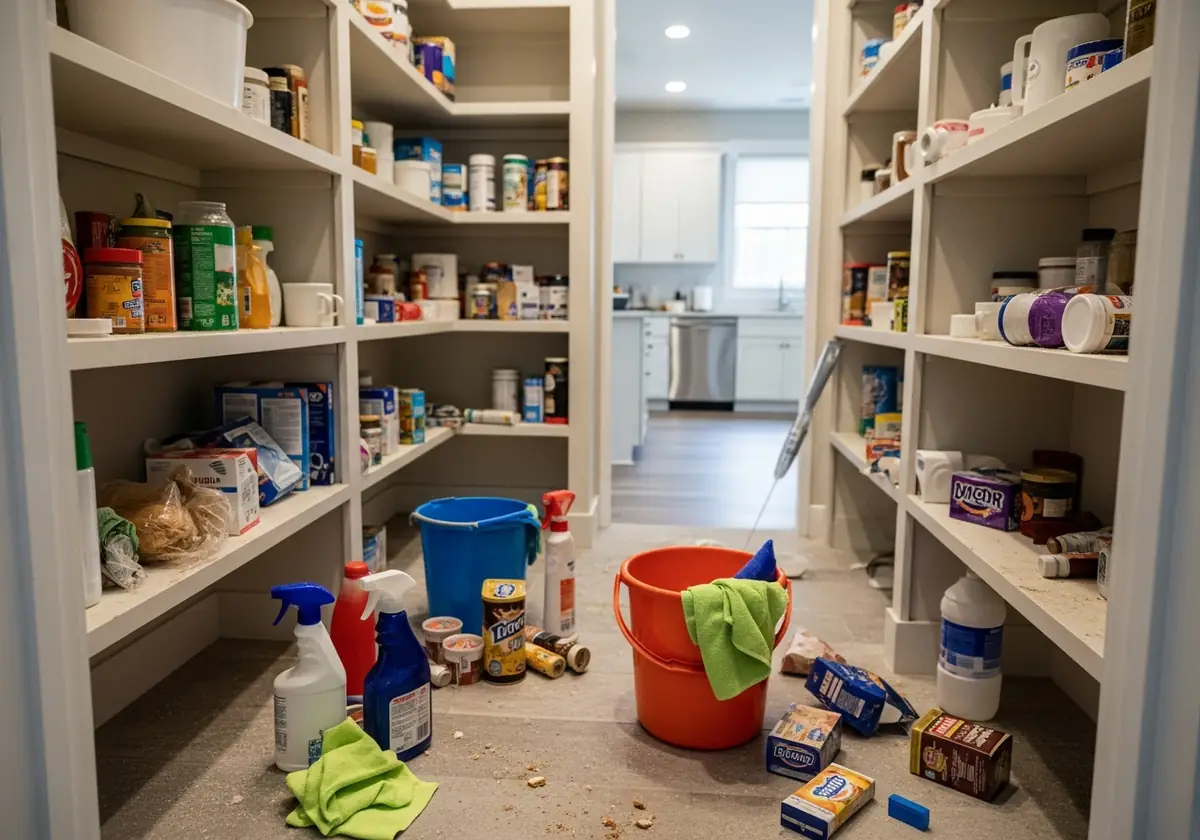
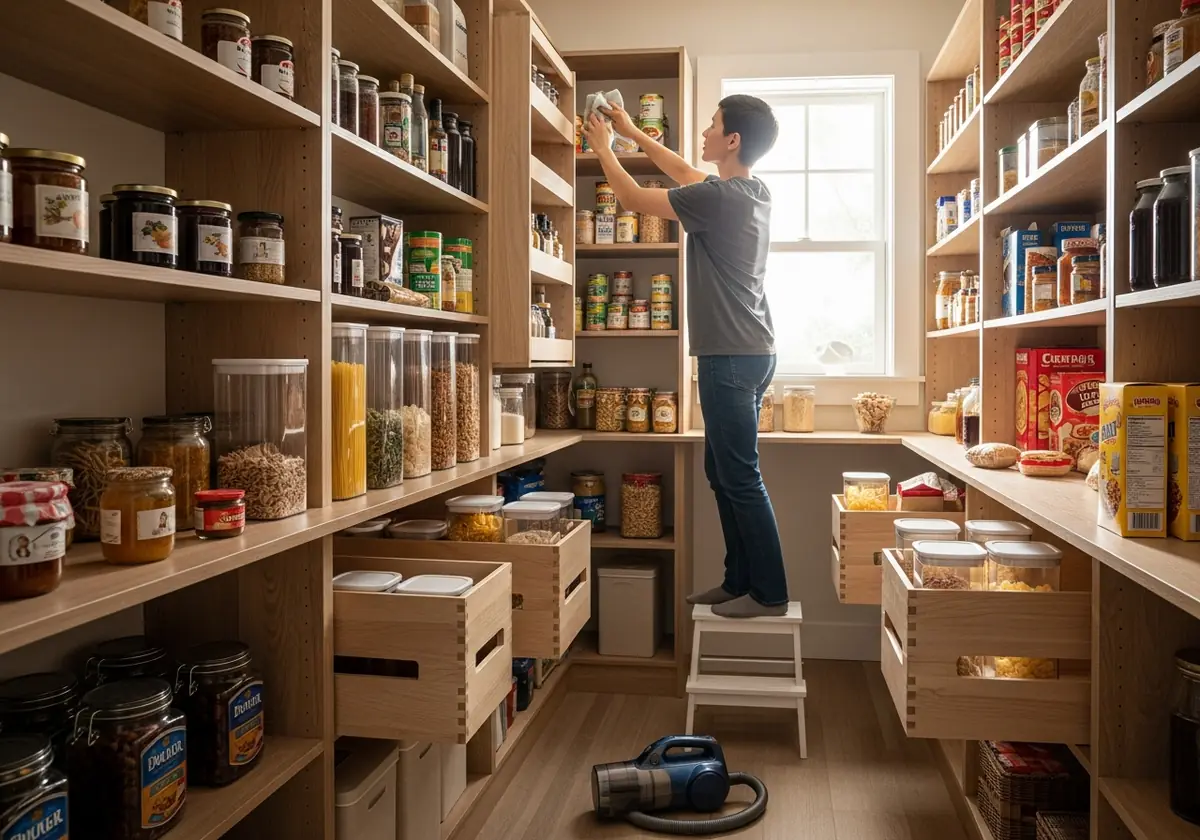
The process of organizing a pantry must begin with a total evacuation. There is no halfway measure here. Attempting to organize shelf by shelf results in simply shuffling the clutter from one side to the other. You must remove every single item—every spice jar, every cereal box, and every bag of flour—and place them on the kitchen table or counters. This reveals the true volume of your inventory and, more importantly, exposes the physical state of the pantry itself. Once the shelves are bare, you will likely find rings of sticky syrup, scattered grains of rice, and layers of dust. This is the moment to perform a deep clean. Vacuum the corners to remove any cobwebs or insect larvae. Wash the shelves with warm soapy water or a vinegar solution to cut through any grease or sticky residues. If you have wire shelving, pay attention to the undersides of the wires where grime collects. The space must be pristine before anything returns to it; you cannot build a system of order on a foundation of dirt.
With the inventory exposed on your counters, the auditing phase begins. This is often the most painful part of the process because it forces you to confront waste. You must be ruthless. Check every expiration date. Spices that have been sitting since the last decade have lost their potency and should be discarded. The half-empty bag of stale chips, the hardened brown sugar, and the tea bags you bought on a whim and never drank must go. This purge is essential to create the negative space required for a functional system. If you find unexpired food that you know realistically you will not eat, donate it to a food bank immediately. Do not put it back in the pantry out of guilt; it will simply expire there later.
2. Categorization
Once you have reduced the volume of items, the next step is categorization. Think of your pantry like a grocery store. Stores are navigated by zones—baking, breakfast, dinner, snacks, beverages. You must replicate this logic. Group all baking ingredients together: flour, sugar, baking powder, vanilla, chocolate chips. Group the breakfast items: oats, cereal, syrup, pancake mix. Group the dinner staples: pasta, rice, jarred sauces, canned vegetables. By creating these zones, you reduce the cognitive load of cooking. When you are making a cake, you only need to look at the baking zone. You are not hunting for vanilla extract behind a box of crackers.
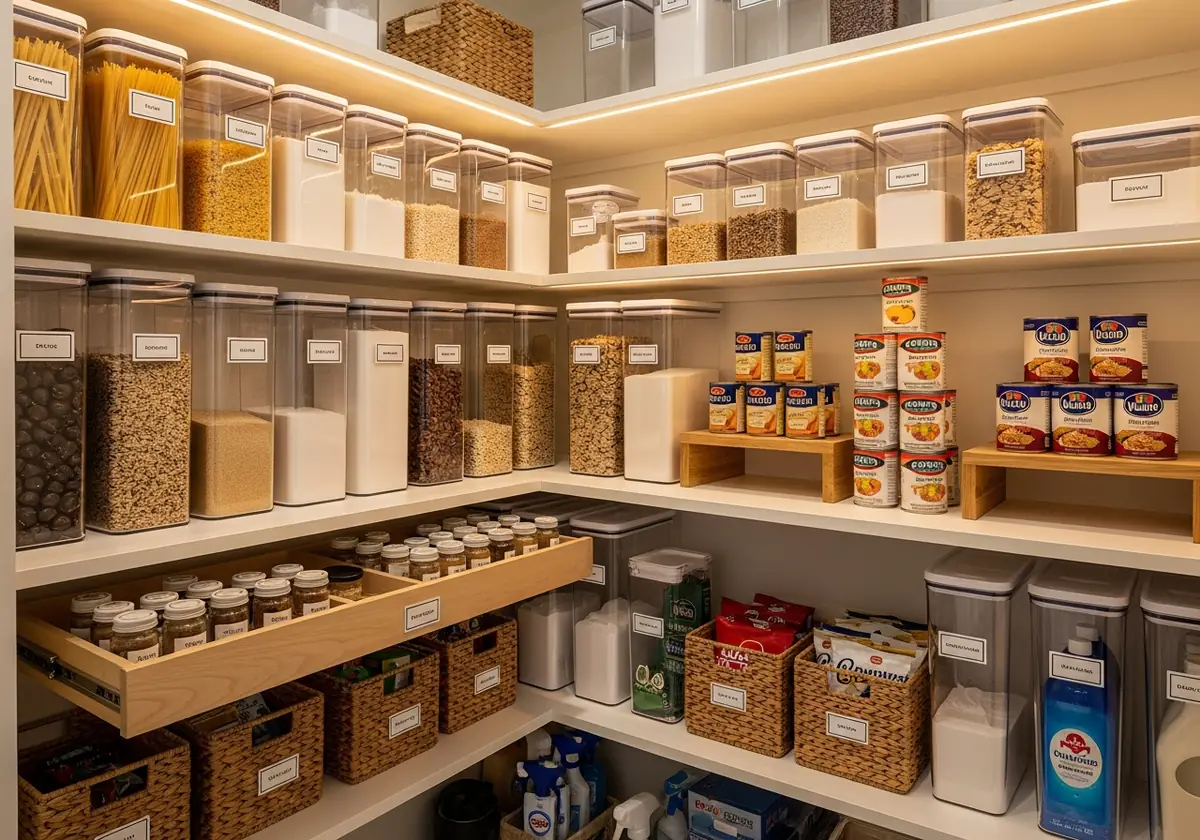
The most controversial but effective step in pantry organization is decanting. This involves removing food from its original commercial packaging and placing it into matching, airtight containers. Many people view this as an unnecessary aesthetic choice, but it is functionally superior for several reasons. First, commercial packaging is designed to sell the product, not to store it efficiently. Boxes are often half-empty, taking up unnecessary space. Bags are difficult to seal, leading to staleness and spills. Second, uniform containers stack and fit together like a puzzle, maximizing every inch of shelf space. Square or rectangular containers are mathematically more efficient than round ones, which leave gaps of “dead space” between them. Third, clear containers provide an instant visual inventory. You can see exactly how much rice or pasta you have left without opening a box, which simplifies grocery shopping. Finally, airtight containers are the only true defense against pantry moths and weevils, which can chew through cardboard and thin plastic.
3. Identification
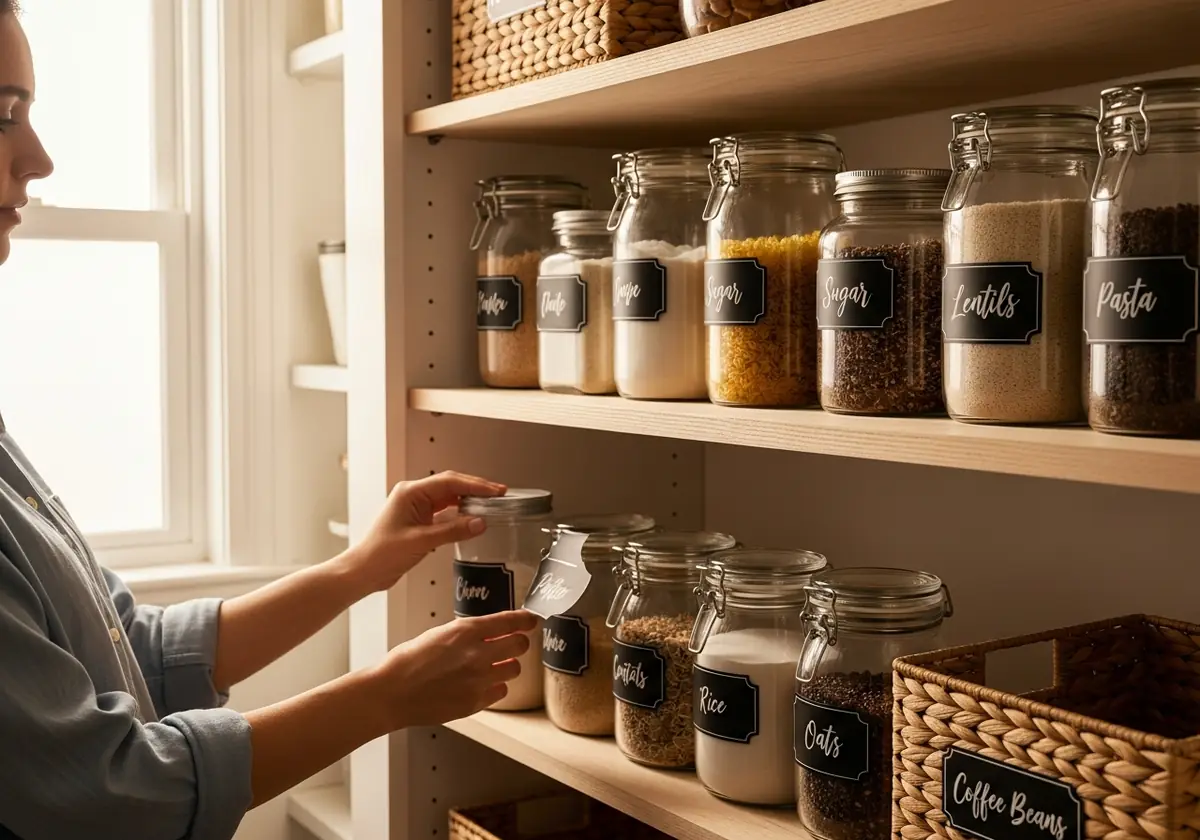
When selecting containers, consistency is key. Investing in a modular system where the lids are interchangeable and the bases stack securely prevents the “avalanche” effect common in messy pantries. For heavy items like flour and sugar, ensure the containers have wide openings so you can scoop directly out of them with a measuring cup. Labeling is non-negotiable. While you might think you can tell the difference between all-purpose flour and bread flour by sight, you will eventually make a mistake. Use a label maker, a chalk marker, or simple masking tape to identify the contents and, crucially, to note the expiration date on the bottom or back of the container. If you have cooking instructions—like the water-to-grain ratio for quinoa—cut that part of the box out and tape it to the back of the container.
The architecture of your shelves dictates where items should live. The prime real estate is the area between your waist and your eye level. This is where your high-use items should go—the daily cereals, the dinner staples, and the snacks. Items that are heavy, like bulk bags of rice, cases of water, or large appliances, should go on the floor or the bottom shelf to prevent injury when lifting. Light items, like paper towels or extra napkins, and rarely used items, like the turkey roaster or holiday-specific sprinkles, should go on the highest shelves. If you have young children, place their approved snacks on a low shelf they can reach independently. This empowers them and keeps them from climbing the shelving units.
4. Facilitators
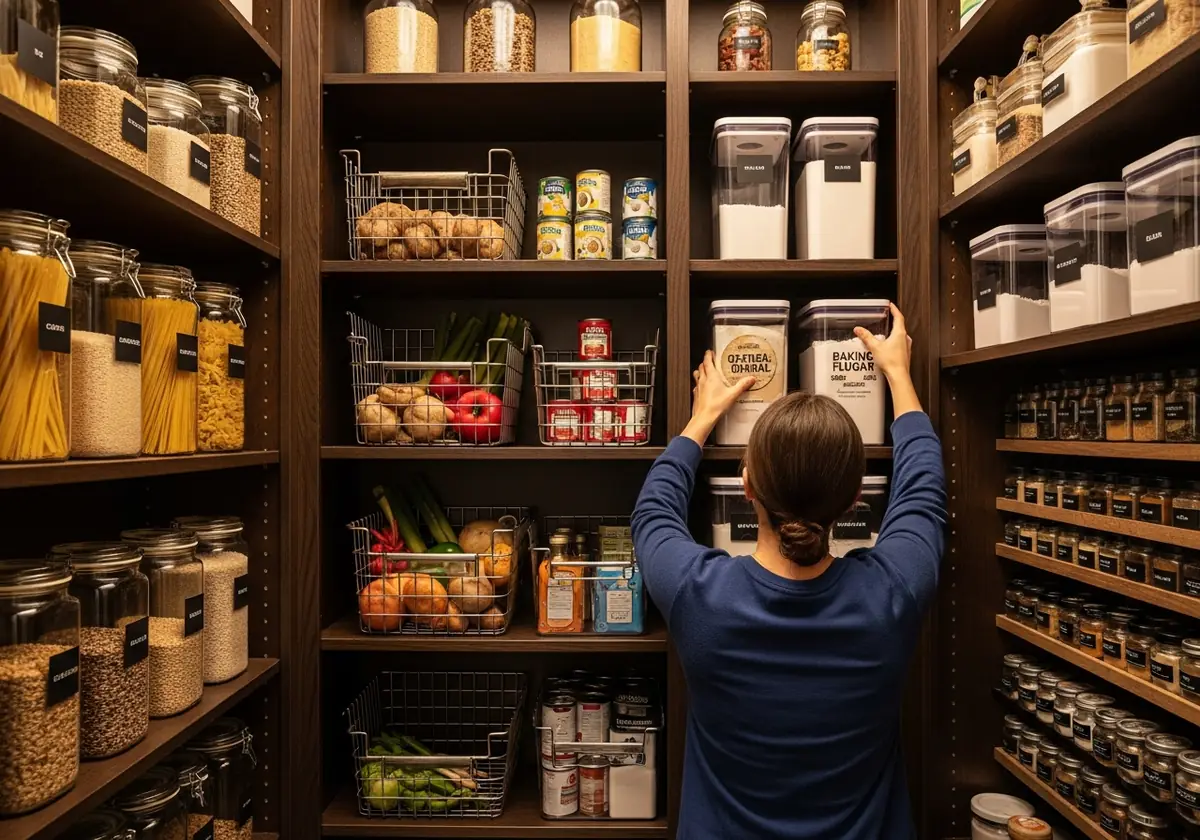
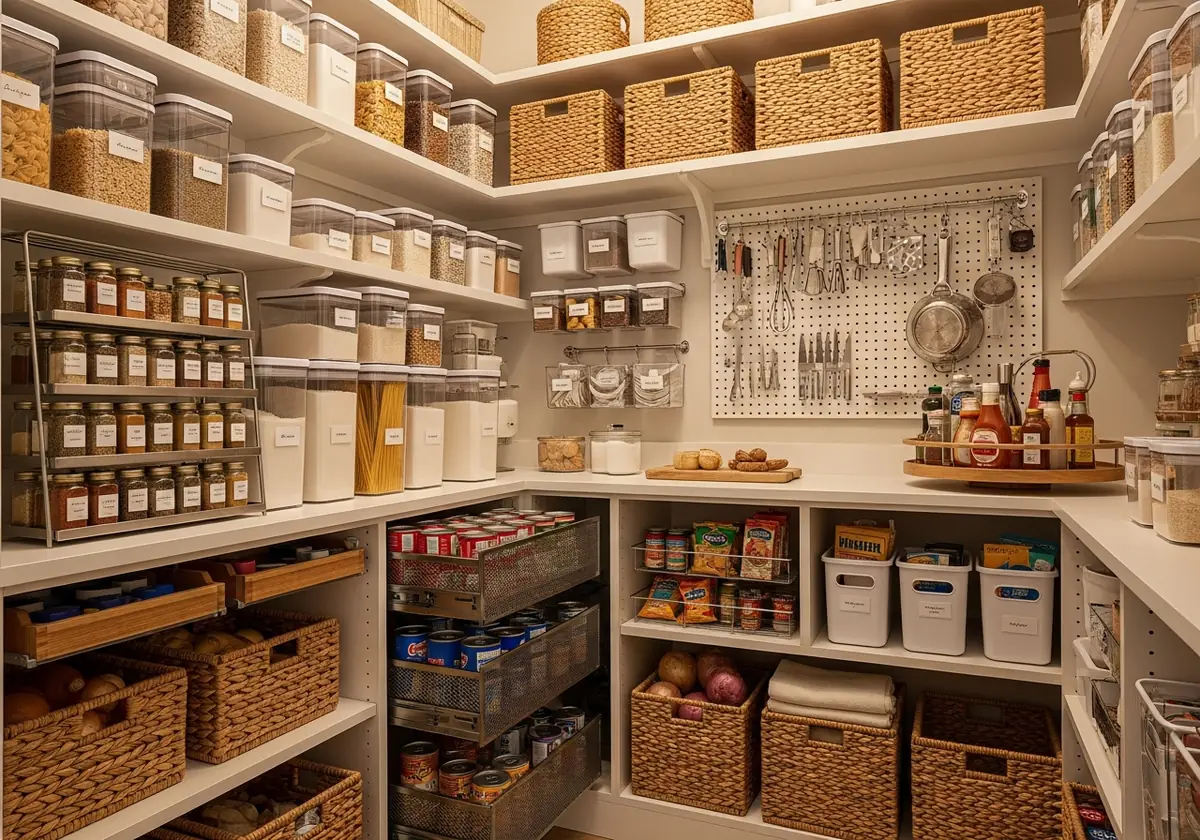
Deep pantries present a specific challenge: things get lost in the back. To combat this, you must treat the shelves like drawers. Use deep bins or baskets to house loose items like bags of chips, granola bars, or pouches of sauce. When you need a snack, you pull the entire bin out, make your selection, and slide it back. This prevents the “shoving” phenomenon where new items push old items into the abyss. For bottles and jars, such as oils, vinegars, and nut butters, a turntable (or lazy Susan) is transformative. It allows you to access items in the back corner with a simple spin, ensuring that nothing is forgotten until it expires. Tiered risers are excellent for canned goods, elevating the back rows so that you can see the labels of every can at a glance.
The floor of the pantry is often a dumping ground, but it needs to be kept clear to allow for cleaning and pest monitoring. If you must store items on the floor, use large, rolling bins or crates. This allows you to easily roll the inventory out to sweep and mop underneath. A pantry floor covered in loose onions and potato sacks is a recipe for rot and fruit flies. Speaking of root vegetables, they should be stored in cool, dark, well-ventilated baskets, never in airtight containers and never directly on the floor where they can stain or decompose unnoticed.
5. Maintenance
Maintenance is the final and ongoing phase of organization. A perfectly organized pantry will devolve into chaos within a week without a system of rules. The most important is the “first in, first out” rule. When you buy a new box of pasta, put it behind the open one or the older box. When refilling a canister of flour, use up the old flour first rather than pouring the new flour on top of the old, which leaves a layer of ancient flour at the bottom that never gets used. Avoid the temptation to “top off” containers until they are empty; wash the container between refills to ensure hygiene.
Furthermore, resist the urge to buy in bulk unless you have the dedicated space for it. A “good deal” on five gallons of olive oil is not a good deal if it goes rancid before you can use it or if it occupies space needed for daily essentials. Your pantry is a dynamic ecosystem that needs to reflect your actual eating habits, not an idealized version of them. If you stop eating keto, move the almond flour to the freezer or donate it; don’t let it take up prime real estate for two years.
The aesthetics of the pantry, while secondary to function, do play a psychological role. A visually pleasing space encourages maintenance. When the labels align and the containers match, there is a satisfaction in opening the door. It feels like a boutique rather than a storage locker. This visual order reduces stress. It makes the act of preparing a meal feel like a deliberate, organized process rather than a frantic search. It allows you to build a grocery list in seconds because the gaps in the system are immediately obvious.
6. Final Analysis
Ultimately, organizing a pantry is an exercise in self-knowledge and logistics. It requires you to be honest about what you eat and disciplined about how you store it. It creates a system where the flow of food into and out of the house is seamless. It saves money by reducing waste, saves time by speeding up prep, and preserves the quality of the food you feed your family.
However, organizing is difficult to do in a dirty environment. You cannot effectively categorize your food if you are battling dust bunnies, sticky shelves, and cobwebs. The foundation of any organizational project is a deep, restorative clean that resets the space. This is often the step that stops people before they even start. The sheer effort of scrubbing down a pantry, let alone the rest of the kitchen to match, can be overwhelming.

Once the pantry is sorted, regular house cleaning can help you keep up with the rest of the kitchen.
This is where Toronto Shine Cleaning becomes your essential partner. We understand that organization works best in a pristine environment. Toronto Shine Cleaning offers professional deep cleaning services that go into the corners you can’t reach and scrub away the residues that have built up over years. We can strip the grease from your kitchen, sanitize the shelving, and ensure that your new organizational system is built on a flawless foundation. Whether you need a one-time deep clean to kickstart your home organization project or regular maintenance to keep your home functioning perfectly, our team has the expertise to help.