
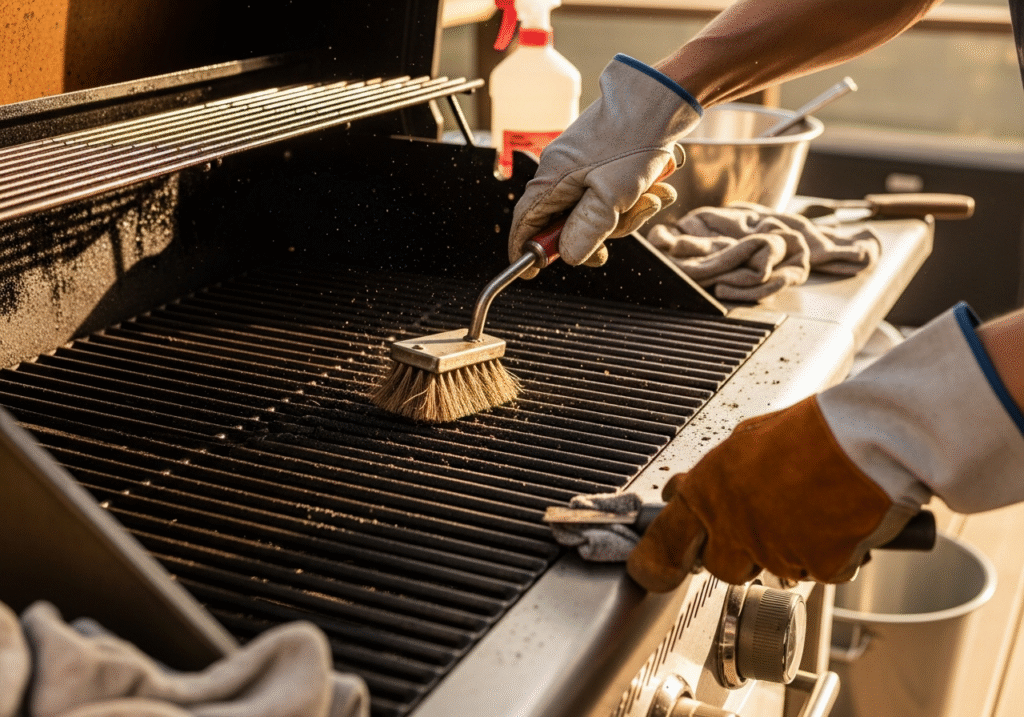
Grill Cleaning: A Masterclass in Barbecue Grill Maintenance
Cleaning the grill is important and the barbecue is undoubtedly the centerpiece of the outdoor culinary experience, a symbol of leisure, summer evenings, and the primal joy of cooking over an open fire. It’s a meeting point for friends and family, where the aroma of grilled meat and caramelized vegetables creates a festive atmosphere.However, once the last burger is flipped and the guests have departed, the grill is often abandoned to cool in the darkness, coated in a layer of rendered fat, charred marinades, and ash. This cycle of use and neglect is the primary cause of equipment failure and culinary disappointment. A grill is a cooking appliance just like a stove or an oven, yet it is exposed to the elements and subjected to intense, direct heat that carbonizes food residue into a stubborn, cement-like substance. Mastering the art of Barbecue Grill Cleaning is not merely a chore to be endured; it is a fundamental requirement for food safety, fire prevention, and the preservation of the flavor profiles you work so hard to create. A Dirty Grill Enhances The Flavor To understand the necessity of Barbecue Grill Cleaning, one must first dispel the persistent myth that a dirty grill adds flavor. There is a common misconception among amateur pitmasters that the black crust accumulated on the grates and the flavorizer bars is “seasoning,” similar to what one might find on a cast-iron skillet. This is false. A cast-iron skillet is seasoned with polymerized oil that creates a non-stick surface. The buildup on a grill is simply carbonized food waste, rancid grease, and soot. When this material heats up, it does not release a pleasant smoky aroma; it emits acrid, bitter smoke that coats fresh food with the taste of old, burnt meals. Furthermore, this buildup contains polycyclic aromatic hydrocarbons (PAHs) and heterocyclic amines (HCAs), chemical compounds formed when fat burns at high temperatures, which are known carcinogens. Regular Barbecue Grill Cleaning removes this toxic residue, ensuring that the smoke flavoring your food comes from your wood chips or charcoal, not from the decaying remnants of last month’s chicken wings. The process of Barbecue Grill Cleaning must begin with a focus on safety, particularly regarding the fuel source. If you are working with a gas grill, the tank should be turned off and disconnected. If it is a charcoal grill, all old ash must be cold and removed. The most critical safety hazard in a neglected grill is the grease fire. Every time you cook fatty foods, the rendered liquid drips down past the burners and collects in a tray or cup at the bottom of the unit. Over time, this grease creates a thick, flammable sludge. If a flare-up from the burners reaches this reservoir, the entire bottom of the grill can become an inferno that is difficult to extinguish with water. Routine Barbecue Grill Cleaning involves locating this grease management system—often hidden behind the doors of the cart—and scraping out the tray or replacing the disposable liner. Neglecting this hidden area is the leading cause of grill-related property damage. How to Clean Properly The grates are the primary point of contact for your food and naturally receive the most attention during Barbecue Grill Cleaning. The method of cleaning depends entirely on the material. Porcelain-coated cast-iron grates are fragile; if the porcelain chips, water enters the iron and causes rust, which eventually destroys the grate. For these, a soft brass brush or a nylon scrubber is preferred over harsh steel. Stainless steel grates are more durable and can withstand aggressive scrubbing with a stainless steel wire brush or a scraper. However, a significant safety concern has arisen in recent years regarding wire brushes. Loose bristles can snap off, adhere to the sticky grill surface, and eventually become embedded in food, leading to severe medical emergencies if ingested. As a result, many experts now recommend using coil brushes, wooden scrapers that form-fit to the bars over time, or even a ball of crumpled aluminum foil held with tongs for safe Barbecue Grill Cleaning. Beneath the grates lie the heat deflectors, often called flavorizer bars or heat tents. These metal angles protect the burners from direct dripping and help distribute heat evenly. They are also the first line of defense against grease and are subjected to extreme thermal shock. During Barbecue Grill Cleaning, these bars should be removed and scraped clean. They are often coated in a thick layer of white and black ash. If this ash is allowed to build up, it acts as an insulator, preventing the grill from reaching high searing temperatures. If these bars are crumbling or have holes rusted through them, cleaning is futile, and they must be replaced to protect the delicate burners underneath. The Burner Tubes The burner tubes themselves are the engine of a gas grill, and maintaining them is a delicate part of Barbecue Grill Cleaning. Over time, the tiny ports—the holes where the gas exits—can become clogged with drippings or corrosion. This results in uneven heating, where one side of the grill is hot while the other is tepid. Worse, insects such as spiders are attracted to the smell of propane and the shelter of the tubes. They often spin webs inside the venturi tubes (the mix point for air and gas), which creates a blockage. This blockage forces gas back toward the control knobs, leading to a “flashback” fire behind the control panel. Cleaning the burners involves using a venturi brush to clear the tubes and a small pin or paperclip to poke out any clogged ports, ensuring a consistent blue flame across the entire length of the tube. The interior of the lid and the cookbox is an area that often causes alarm for grill owners. Over time, the inside of the lid develops what looks like peeling black paint. This is rarely paint; it is a deposit of carbonized grease and smoke that has built up in layers and is now flaking off due to heat expansion. While not toxic, these flakes can fall onto your food, looking like
Grill Cleaning: A Masterclass in Barbecue Grill Maintenance Read More »