Understanding Acetone: A Guide to the Powerful Cleaning Solvent

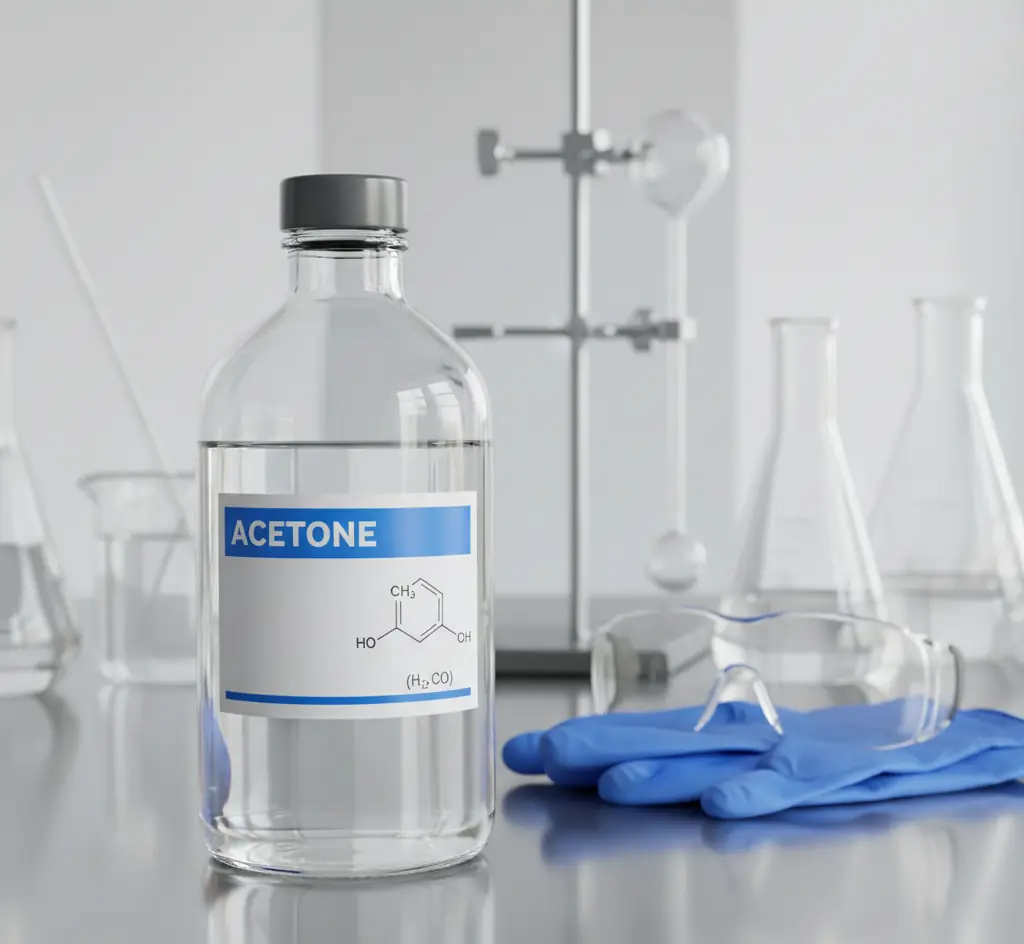
Acetone is a remarkably potent organic solvent, a chemical powerhouse whose utility in cleaning is matched only by the caution required for its use. Its effectiveness is rooted in its molecular structure; as a polar aprotic solvent, it has the unique ability to dissolve a vast array of substances that are resistant to water and other common cleaners. This includes non-polar materials like oils and greases, as well as polar substances. This dual-action capability is why it can tackle such a diverse range of problems, from varnish and lacquer to permanent ink and stubborn adhesives. Its high volatility, meaning it evaporates very quickly, is often considered an asset, as it can perform its function and then disappear, frequently leaving behind a clean, dry, and residue-free surface. However, this same strength means it is indiscriminately aggressive, making a thorough understanding of its properties essential before it is ever brought near a surface.
Paint Remover
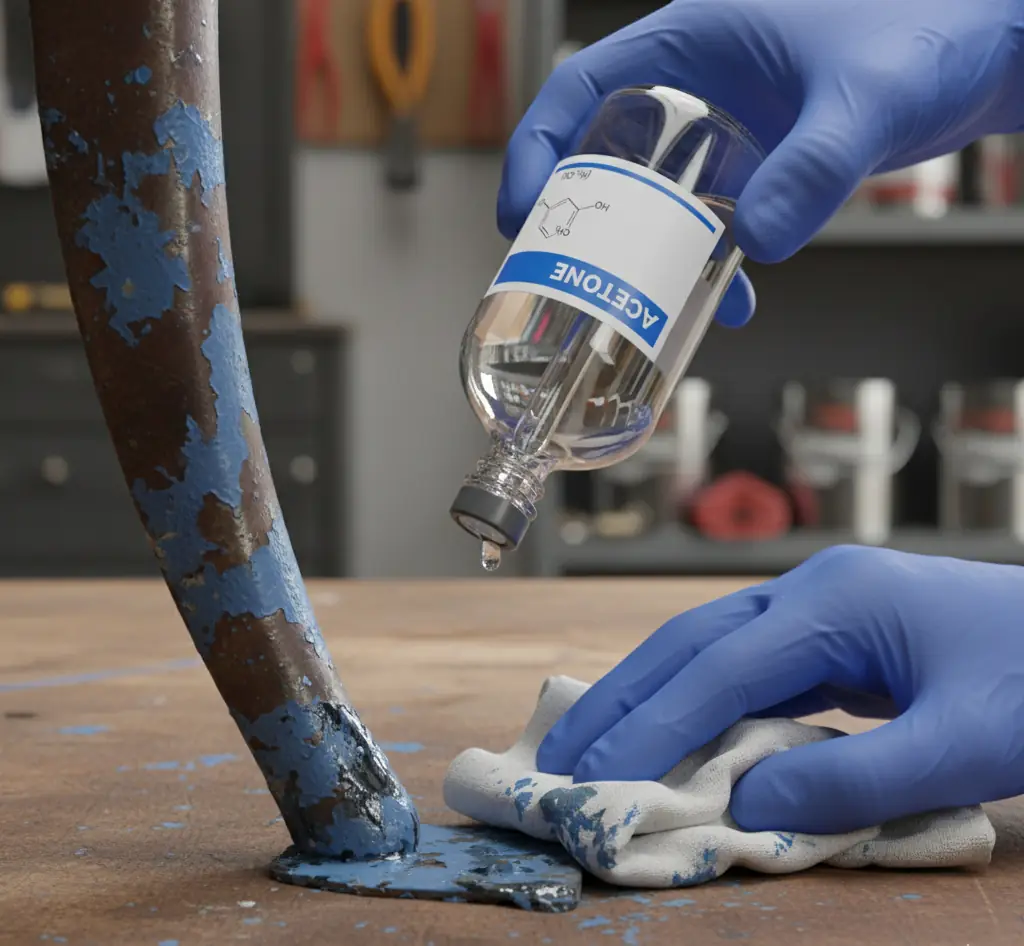
One of its most celebrated roles is as a paint and finish remover. When dealing with dried latex or oil-based paint splatters on hard, non-porous surfaces like glass, tile, or bare metal, acetone works by breaking down the polymer binders that give the paint its structure. By dissolving these binders, it effectively liquefies the paint, allowing it to be wiped away. This is also why it is the go-to solvent for cleaning paint brushes, rollers, and spray gun components that have been used with lacquers or enamels, restoring them to a usable state when other thinners might fail. It can strip varnish and polyurethane from metal hardware or remove old, yellowed lacquer from brass fixtures, revealing the untarnished metal beneath. The process requires patience, applying the acetone, allowing it time to work on the coating, and then carefully scraping or wiping away the softened layers.
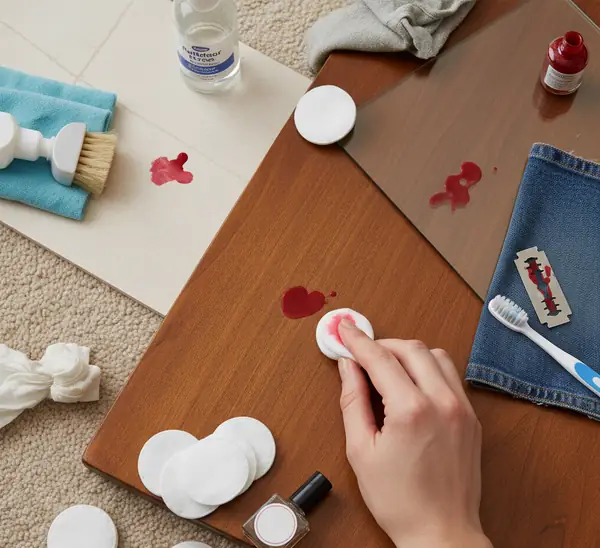
Beyond paint, acetone excels at vanquishing adhesives. It is the active ingredient in most nail polish removers, effortlessly dissolving the tough acrylic polymers in nail lacquer. This same principle applies to more challenging adhesives like cyanoacrylate, commonly known as super glue. A small, careful application can break the bond of cured super glue on skin or countertops. It is also highly effective for removing the stubborn, gummy residue left behind by stickers, labels, and various types of tape. The acetone penetrates the adhesive mass, reducing its viscosity and tackiness until it can be easily wiped clean. For more substantial challenges, like removing contact cement or construction adhesives, acetone can soften the material, though it may require multiple applications and significant mechanical action to fully remove the buildup.
Degreaser
The solvent’s power is also invaluable for degreasing and deep cleaning in mechanical or workshop environments. When preparing a metal part for welding, painting, or powder-coating, any trace of oil, grease, or wax can compromise the integrity of the final bond or finish. Acetone cuts through these petroleum-based contaminants with ease, flashing off quickly to leave a perfectly clean substrate ready for the next step. It is used to clean automotive parts, machinery, and tools, dissolving grime and tar that would otherwise require harsh mechanical scrubbing. On a concrete garage floor, it can be used to lift deep-set oil stains, though it may drive the stain deeper if not used correctly with an absorbent material to pull the dissolved oil out of the porous concrete.
It Can Cause Damage
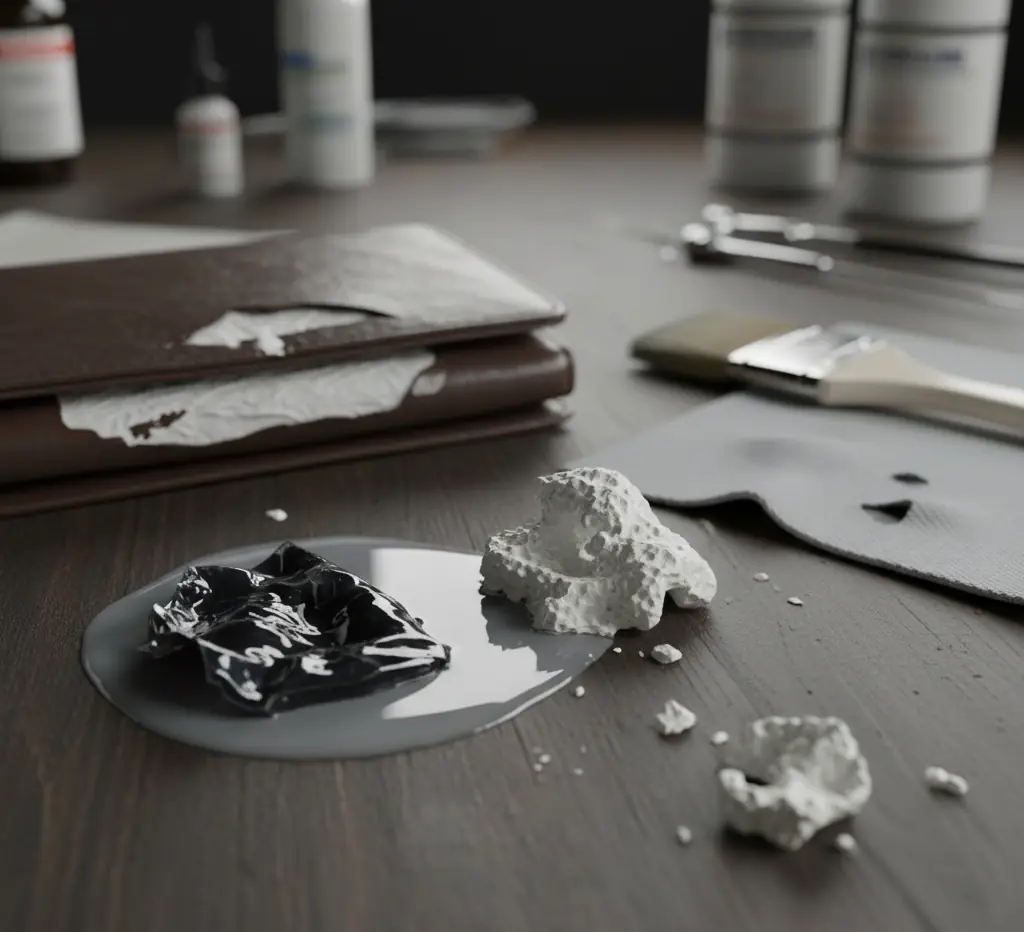
Despite this wide range of applications, the list of materials that acetone can damage is extensive and requires serious consideration. Its most dramatic effect is on plastics. It is a powerful solvent for many common polymers, including polystyrene (styrofoam), ABS (used in many electronics housings and car interiors), acrylic (Plexiglas), and polycarbonate. Contact will cause these materials to soften, warp, cloud over, or completely dissolve into a sticky mass. This is why it is critical to test acetone on an unseen area of any plastic item before use. Even brief contact can cause irreversible damage known as solvent crazing, creating a network of fine cracks in the plastic’s surface. Conversely, it is generally safe on high-density polyethylene (HDPE) and polypropylene, which is why acetone containers are often made from these materials.
Finished wood surfaces are also highly vulnerable. Acetone will strip almost any finish, from shellac and varnish to lacquer and polyurethane, ruining the protective layer and exposing the raw wood. This action can be so aggressive that it also dehydrates the wood fibers themselves, potentially causing them to become brittle. It can lift wood veneers and damage laminates. For these reasons, acetone should never be used to clean wooden furniture, flooring, or cabinetry unless the specific goal is to completely strip the existing finish for a refinishing project.
The danger extends to fabrics as well. Acetone will dissolve fabrics made from acetate, triacetate, and modacrylic fibers, literally creating holes in the material. While it is generally considered safe for natural fibers like cotton, wool, and silk, it can strip the color from dyed textiles. A spot test in an inconspicuous area, such as an inner seam, is absolutely mandatory before attempting to use it for stain removal on any fabric or carpet.
Be careful
Given its potent nature, safety protocols are non-negotiable. Acetone is extremely flammable, with a very low flash point, meaning its vapors can ignite at room temperature from a distant spark or flame. Ignition sources can be obvious, like a pilot light on a water heater, or subtle, like the spark from a refrigerator motor kicking on or a discharge of static electricity. Therefore, its use requires robust ventilation, such as opening windows and doors and using a fan to create a cross-breeze that directs fumes outside. Working outdoors is always the safest option when possible.
Personal protective equipment is essential. Chemical-resistant gloves, specifically those made of butyl rubber or nitrile, are necessary to protect the skin. Latex gloves are not sufficient as acetone can degrade them quickly. Direct skin contact can cause defatting, leading to severe dryness, irritation, and cracking. Splash-proof safety goggles are also a must to protect the eyes from accidental splashes, which can cause significant irritation and damage. In enclosed spaces or during prolonged use, a respirator with an organic vapor cartridge may be necessary to prevent inhalation of concentrated fumes, which can lead to respiratory tract irritation, dizziness, headaches, and other central nervous system effects.
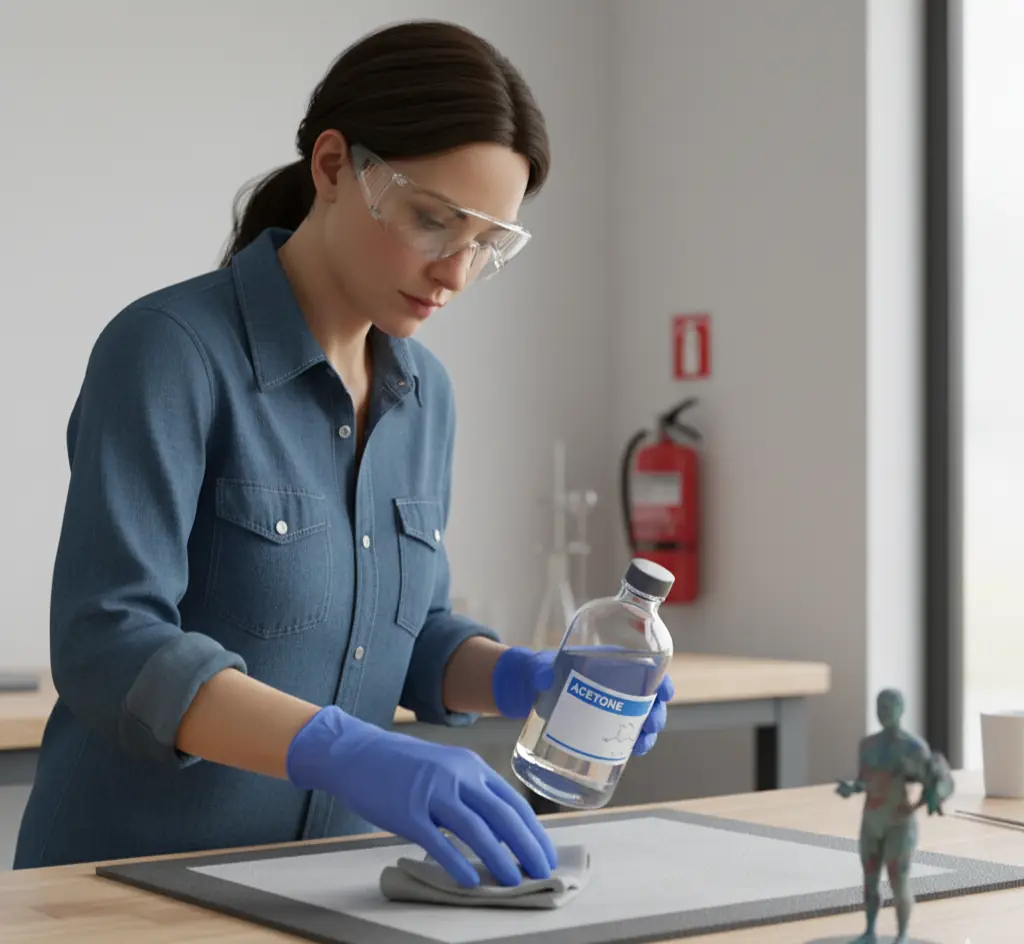
How to Remove Dried Paint With Acetone (4 Steps)
Read the video transcript
Paint belongs on the brush. Not this bare metal plate. Acetone can soften dried paint. For a small splatter, gather white cloths, mild detergent and water. Work outdoors when possible, away from sparks and flames. Use butyl or nitrile gloves, not latex, and splash-proof goggles. Avoid finished wood, laminates and vulnerable plastics. Acetate fabrics can dissolve. Fabric stain treatment requires a hidden spot test. One. Apply acetone to a clean white cloth, not directly to the surface. Two. Let it soften the paint. Blot from outside inward, rather than rubbing. Three. Wipe with a cloth dampened with water and mild detergent. Four. Use a clean, water-dampened cloth for a final rinse, then dry thoroughly. The paint has lifted. The metal is visible again. Reserve acetone for specific jobs, not daily dust and dirt. For everyday care, book regular cleaning: kitchens, bathrooms, surfaces and floors. Professional supplies and equipment come with your vetted, background-checked cleaners. Choose your clean. See your price, choose your time. We take it from there. Include your access notes. No contracts. No upfront payment. You'll love your clean, or we'll make it right. See your price at torontoshinecleaning.ca.
How to Use
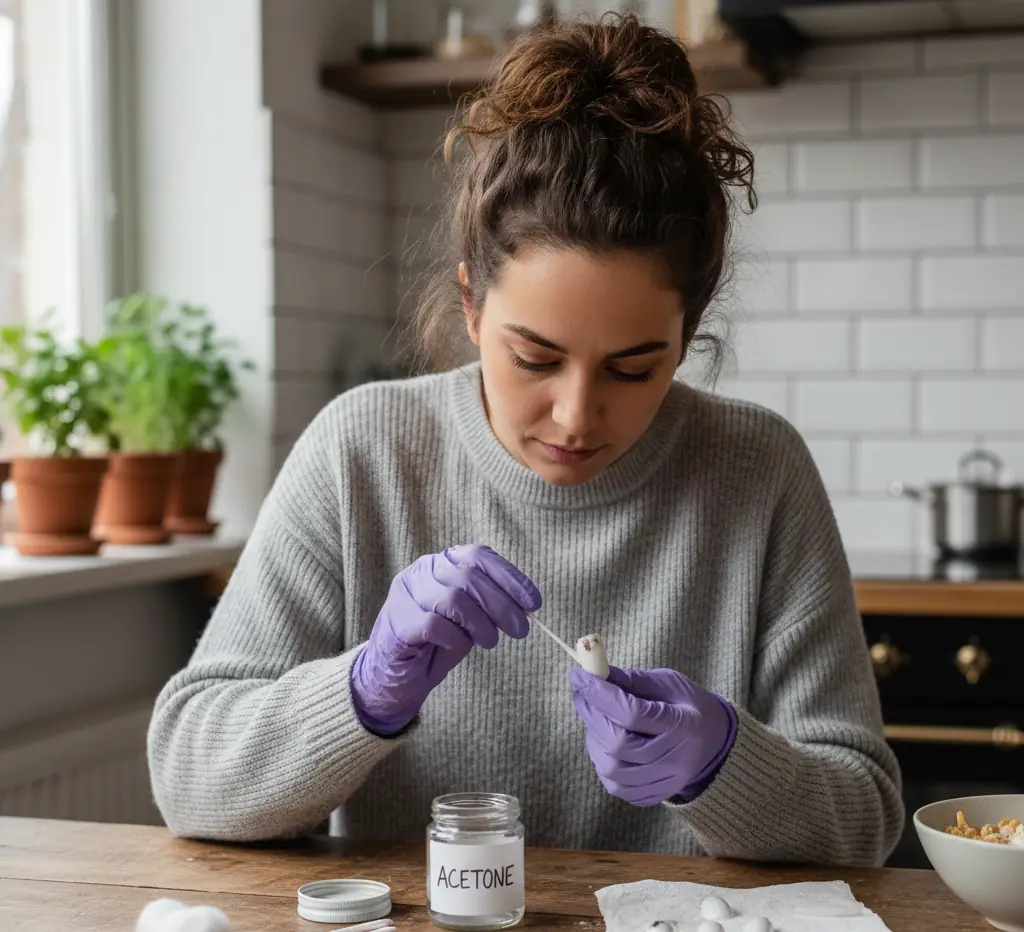
Proper application techniques can maximize effectiveness while minimizing risk. For small stains, apply acetone to a clean white cloth or cotton ball rather than pouring it directly onto the surface. This controls the amount used and prevents it from spreading to vulnerable surrounding materials. When treating a stain, it is best to blot the area, working from the outside of the stain inward to prevent creating a larger ring. Rubbing can sometimes embed the stain further or damage the surface texture. After the acetone has done its job, it is often wise to neutralize the area by wiping it with a cloth dampened with water and a mild detergent, followed by a final rinse with a clean, water-dampened cloth before drying thoroughly.
Handling such a powerful and hazardous chemical requires knowledge and respect for its properties. Its ability to dissolve what other cleaners cannot makes it an indispensable tool for very specific and difficult cleaning tasks, but its potential for damage and danger means it must be used with a clear understanding of the material being cleaned and with every recommended safety measure in place.
For ordinary dust and dirt rather than solvent work, explore regular home cleaning.
When faced with stubborn residues, paint, or grease that go beyond everyday cleaning, the right approach is crucial for an effective and safe outcome. Toronto Shine Cleaning offers paint & residue spot removal as a paid extra on post-renovation and post-construction cleans only; your cleaner removes what comes off safely. For built-up household grime, book a deep clean.