Green Cleaning at Home: Simple Eco-Friendly Swaps

On this page
Many conventional cleaners release volatile organic compounds, and the residue that rinses down the drain keeps travelling into waterways long after the cloth is put away. Green cleaning replaces those products with plant based, biodegradable options that are kinder to the people, pets and surfaces in the home. The switch is simpler than it sounds, because most of the work is done with items already sitting in the pantry.
Why Go Green in Your Cleaning Routine
All purpose sprays, glass cleaners and disinfectants are built around solvents and synthetic fragrances. In a closed bathroom or kitchen those ingredients hang in the air for hours, and a headache, a dizzy spell or a scratchy throat after a long clean is a common reaction, especially for anyone with asthma or allergies.
The environment pays as well. Whatever goes down the sink keeps moving, into the sewer, into rivers and lakes, and sometimes back into drinking water, while plant based ingredients break down harmlessly instead of persisting. Cost is the third reason: concentrates are diluted at home, and a vinegar or baking soda mix costs a few cents per spray bottle.
- Fewer fumes indoors, which matters most in small bathrooms and bedrooms
- Biodegradable ingredients that break down after they leave the drain
- No artificial fragrances or dyes, which is easier on sensitive skin and lungs
- Concentrates and pantry staples that stretch further per dollar
Easy Eco-Friendly Cleaning Swaps
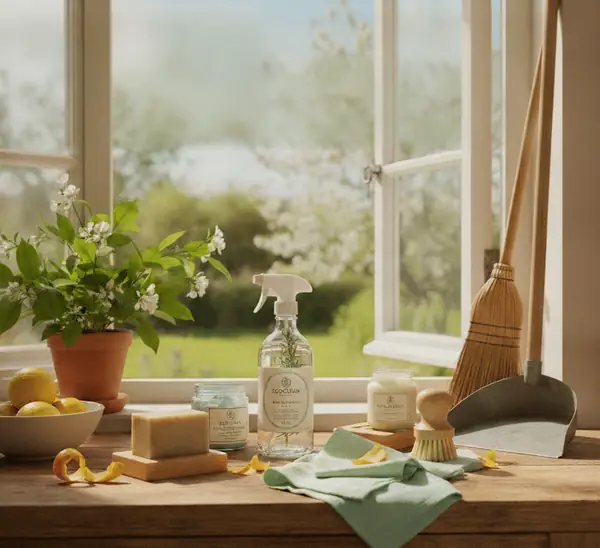
Start in the pantry. White vinegar cuts grease and dissolves the mineral film that dulls glass and fixtures. Baking soda scrubs without scratching and neutralizes odours, and lemon juice leaves a fresh scent with mild antibacterial action. Use them separately or combine them into a spray and a scouring paste, with one firm rule: never mix vinegar with bleach.
If you would rather buy a finished product, look for biodegradable ingredients and packaging and check for certification marks such as EcoLogo or Green Seal, because the word natural on a label is marketing rather than a standard.
Replace paper towels with microfiber cloths, which trap dust and dirt rather than pushing it around and can be washed and reused hundreds of times. A few drops of lavender or citrus oil add antibacterial and antiviral action to a homemade spray, and brushes made from bamboo or sisal outlast plastic scrubbers and break down in landfill.
Green Swaps at a Glance
| Instead of | Try this | Why it works |
|---|---|---|
| All purpose chemical spray | Vinegar and water in a spray bottle | Cuts grease and mineral film without fumes |
| Paper towels | Microfiber cloths | Trap dust and can be washed and reused |
| Plastic scrub pad | Bamboo or sisal brush | Biodegradable and longer lasting |
| Bleach based disinfectant | Soap and water first, disinfect only when needed | Cleaning alone removes most germs from surfaces |
Tips for a Green Cleaning Routine
Start small. Swap one item, such as the all purpose cleaner, and see how it performs before replacing the rest of the cupboard. A gradual change is easier to keep than an overnight overhaul.
Read labels. Look for a recognized certification instead of a leaf printed on the bottle, and stay curious about new formulations through an eco living newsletter or a community forum.
Reuse what you own. Old t-shirts and towels cut into rags work as well as bought cloths, and a retired toothbrush reaches grout lines and tight corners, which keeps usable material out of landfill. Consider the whole lifecycle too: minimal packaging and recycled materials lower the footprint before the bottle reaches your kitchen.
Making Green Cleaning a Habit
A habit sticks when the household takes part. Children enjoy mixing a safe vinegar and baking soda paste, and a supervised session doubles as a lesson in what each ingredient does; letting them choose a scent buys more enthusiasm than any lecture.
Set a schedule. Give every room or task a day so the work stops feeling like one enormous job, and wipe counters after cooking so a heavy deep clean is rarely needed. Keep a short note of which swaps worked, because looking back at how much of the cupboard has turned over is surprisingly motivating.
Safety Notes Before You Mix Anything
Never combine vinegar with bleach or any other disinfectant. The reaction releases vapours that are dangerous to breathe, and the CDC guidance on disinfecting with bleach is blunt about keeping bleach away from every other cleaner. Cleaning comes before disinfecting: soap and water removes most germs and dirt, and disinfecting earns its extra step mainly when someone at home is sick or has a weakened immune system, as the CDC home cleaning guide explains.
Keep acid off marble, travertine and limestone, where it etches the finish, and off aluminium and cast iron, and test any new mix on a hidden patch first. A homemade spray has no preservatives, so mix small batches and use them within a week. Ventilate while you work as well, since damp cloths and wet grout are how mould takes hold, and the CDC mold page treats moisture control as the real fix.
When You Want the Whole House Done
DIY mixes handle the everyday jobs, but they will not lift years of scale from a shower, cut baked on grease behind a stove, or clean carpet. Toronto Shine Cleaning is insured, carrying $5,000,000 in liability insurance, and serves Toronto and the GTA. Book a deep cleaning visit for the seasonal reset, keep it up with a regular cleaning plan, and check the pricing page for rates that start at $194 before HST. Call (647) 424-0355 to arrange a visit.
Frequently Asked Questions
Does green cleaning actually disinfect?
Not on its own. Vinegar and lemon clean well and shift most grease and dirt, but soap and water is the step that removes germs, and a disinfectant is only needed when someone at home is sick.
Can I use one spray everywhere?
A vinegar and water mix is fine on glass, chrome, ceramic and sealed counters. Keep a baking soda paste for scrubbing, and skip the acid on marble, travertine, aluminium and cast iron.
How long does a homemade cleaner keep?
Without preservatives, a water based spray is best used within a week or two, and it should smell like its ingredients when opened. Mix smaller batches and store the bottle in a cool cupboard.
Is green cleaning more expensive?
Usually not. Vinegar, baking soda and lemon cost cents per use, microfiber cloths replace repeated paper towel purchases, and concentrates are diluted at home, so one bottle covers many more cleans.