
5 Best Ways to Clean Wooden Furniture and Keep It Looking New
On this page
Wooden furniture adds warmth and elegance to any home, but it requires proper care to maintain its beauty. Using the wrong cleaning methods can cause damage, dull the finish, or lead to buildup. If you want to clean wooden furniture effectively and keep it looking like new, follow these five best methods. With the right cleaning techniques, your wooden furniture can maintain its natural shine and durability for years.
1. Dust Regularly with a Microfiber Cloth
One of the easiest ways to clean wooden furniture is by dusting it regularly. Dust buildup can make your furniture look dull and neglected, affecting its natural beauty. If dust accumulates for too long, it can mix with moisture in the air and create a sticky residue that is difficult to remove. Using a soft microfiber cloth helps trap dust without scratching the wood’s surface, making it the best option for maintaining your furniture’s finish.
For best results, dust your wooden furniture at least once a week. When dusting, move the cloth in the direction of the wood grain to prevent tiny scratches. Avoid using dry paper towels or rough fabrics, as they can leave micro-abrasions on the wood. If your wooden furniture has detailed carvings or hard-to-reach corners, use a soft brush or an old toothbrush to remove dust from small crevices without damaging the finish.
In addition to regular dusting, consider using a static duster or a vacuum with a brush attachment for larger pieces of furniture. These tools help remove dust from underneath tables, along chair legs, and inside cabinets. Keeping wooden furniture dust-free not only enhances its appearance but also prevents dirt buildup that could require deeper cleaning in the future.

2. Use a Gentle Wood Cleaner
When it comes to cleaning wooden furniture, using a gentle and safe wood cleaner is essential. Harsh chemical-based cleaners can strip away the protective finish, leaving the wood vulnerable to stains and damage. A simple yet effective way to clean wooden furniture is by using mild dish soap mixed with warm water. This solution is strong enough to remove grime but gentle enough to preserve the wood’s natural texture and sheen.
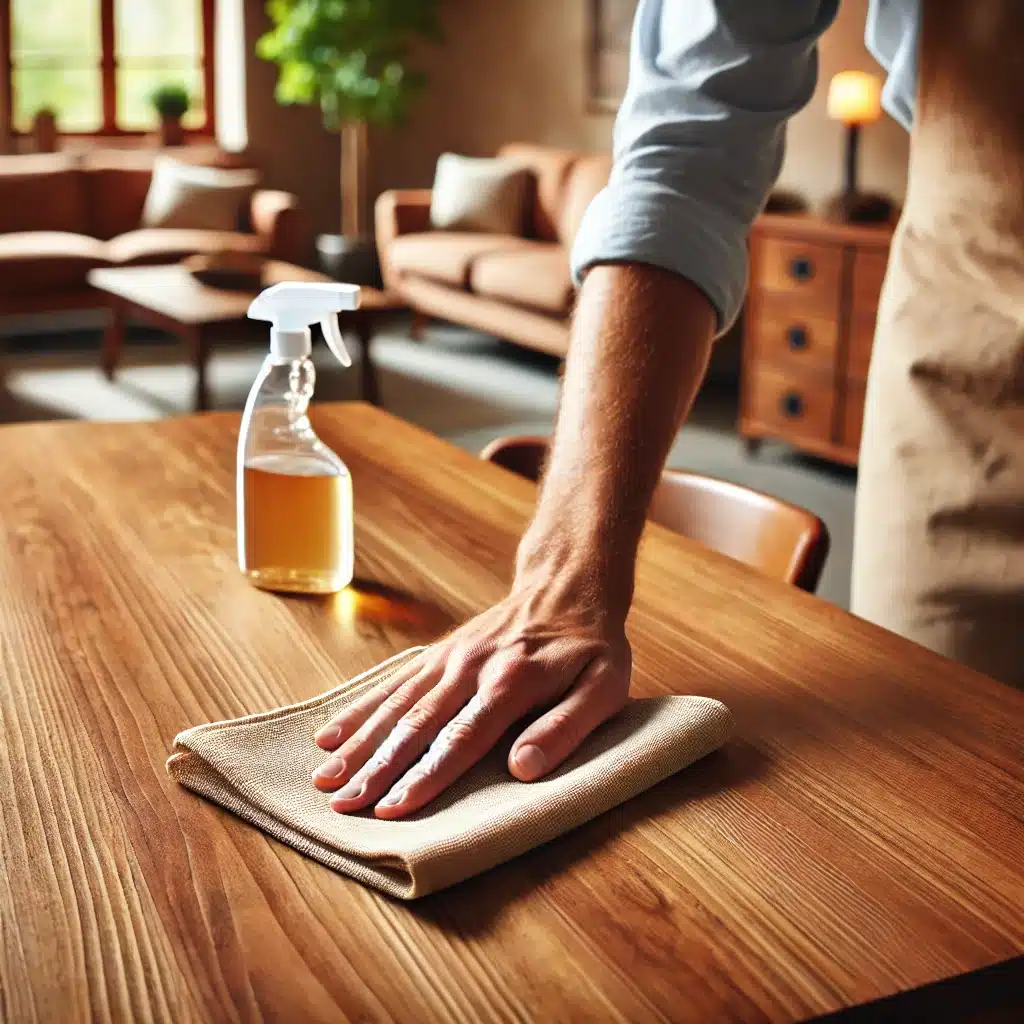
To clean wooden furniture properly, dampen a soft cloth with the soapy water solution and wipe the surface in circular motions. Never soak the wood or allow water to sit on the surface, as excessive moisture can cause warping, discoloration, or even mold growth. Always follow up by drying the furniture immediately with a clean, dry cloth to remove any leftover moisture. This prevents water damage and keeps the wood looking polished.
If you prefer a store-bought wood cleaner, choose a product specifically designed for natural wood furniture. Avoid cleaners with ammonia, bleach, or silicone, as these ingredients can cause long-term damage. A high-quality wood cleaner will help remove dirt and fingerprints while preserving the protective finish of your wooden furniture, ensuring that it remains in top condition for years to come.
3. Polish with Natural Oils for Shine
To keep wooden furniture looking vibrant and polished, regular oiling is essential. Natural oils like mineral oil or lemon oil work wonders in restoring the wood’s shine while preventing it from drying out. Unlike wax-based polishes that leave behind residue, natural oils penetrate the wood, keeping it nourished and protected from cracks or discoloration.
To properly clean wooden furniture and enhance its shine, apply a small amount of oil to a soft cloth and rub it gently onto the surface using circular motions. Let the oil sit for a few minutes before buffing it with a clean, dry cloth. This method helps seal in moisture, making wooden furniture more resistant to dust, dirt, and environmental factors like humidity. Polishing once every few months can significantly extend the life of your furniture and keep it looking brand new.
It’s important to use the right type of oil for your wooden furniture. Avoid vegetable oils or olive oil, as they can turn rancid and attract dust. Instead, opt for high-quality wood oils or specialized furniture polishes designed for wooden surfaces. By incorporating regular polishing into your furniture care routine, you can keep your wooden furniture glowing with a natural, healthy finish.

4. Protect Against Scratches and Spills
Scratches, spills, and stains are some of the biggest threats to wooden furniture. Without proper protection, wooden surfaces can easily develop unsightly marks that are difficult to remove. To prevent scratches, always use coasters under glasses, placemats under plates, and felt pads under decorative objects. These small precautions can help minimize the risk of surface damage and keep your wooden furniture in top shape.
If your wooden furniture does get scratched, there are easy ways to fix minor imperfections. A simple trick is to rub a walnut over light scratches—the natural oils in the nut help darken the scratch, making it less visible. For deeper scratches, furniture wax or wood repair markers can help restore the original finish. Keeping a wood touch-up kit on hand is a great way to maintain your furniture’s appearance in case of accidental damage.
Spills are another common problem that can ruin wooden furniture. Always clean up spills immediately using a dry cloth to prevent liquid from seeping into the wood. If water rings or stains appear, applying a small amount of wood polish can help restore the finish. By taking preventative measures, you can clean wooden furniture more effectively and prevent long-term damage.
5. Keep Wooden Furniture Away from Direct Sunlight and Humidity
Environmental factors like sunlight and humidity can significantly impact the condition of wooden furniture. Prolonged exposure to direct sunlight can cause wood to fade, dry out, or develop cracks over time. To protect wooden furniture, place it away from windows or use curtains and blinds to block intense sunlight. If rearranging furniture isn’t an option, consider using UV-protective furniture sprays to reduce sun damage.
Humidity is another major factor that affects wooden furniture. Excess moisture in the air can cause wood to swell and warp, while low humidity can make it brittle and prone to cracking. To maintain an ideal indoor environment, use a humidifier in dry seasons and a dehumidifier in humid climates. Keeping humidity levels between 40-50% helps preserve the integrity of your wooden furniture and prevents long-term damage.
Seasonal changes can also impact wooden furniture, causing it to expand or contract. To prevent this, regularly check for signs of damage and apply a wood conditioner if needed. By controlling sunlight exposure and humidity levels, you can ensure that your wooden furniture remains sturdy, beautiful, and long-lasting.

Clean Wooden Furniture With Toronto Shine Cleaning!
By following these simple yet effective methods to clean wooden furniture, you can keep it looking brand new for years to come. Regular dusting, gentle cleaning solutions, occasional polishing, and proper protection all contribute to the longevity and beauty of your wooden furniture. Taking the time to maintain your furniture properly not only enhances the look of your home but also helps preserve the value of your wooden pieces.
For routine dusting around your furniture, consider regular house cleaning and share any finish-specific care instructions.
However, if you want expert care for your wooden furniture or need a professional deep cleaning service, Toronto Shine Cleaning is here to help. Their experienced team uses safe and effective cleaning techniques to restore the beauty of your furniture while protecting its delicate finish. Whether you need routine maintenance or a specialized wood cleaning service, Toronto Shine Cleaning ensures your home looks spotless and well-maintained.
For top-quality cleaning services in Toronto, trust Toronto Shine Cleaning to keep your home and furniture in pristine condition. Contact them today to schedule a professional cleaning and enjoy the lasting beauty of your wooden furniture!