Master Bench Cleaning in 5 Steps: Restore Your Seating Today

On this page
Master the art of bench cleaning with our comprehensive Canadian guide. From residential mudrooms to commercial locker rooms, discover expert tips for every surface.
The Ultimate Guide to Bench Cleaning
When we think of residential and commercial cleaning, our minds immediately jump to the usual suspects: sweeping floors, scrubbing toilets, and wiping down countertops. However, there is one piece of furniture that frequently flies under the radar despite enduring some of the highest daily traffic in any space. We are talking about the humble bench.
From the mudroom bench that catches our salt-covered winter boots to the commercial locker room bench exposed to endless gym-goers, benches are the silent workhorses of our environments. Because they are often transition zones—places where we sit to take off shoes, wait for an appointment, or eat a quick meal—they accumulate a staggering amount of dirt, bacteria, and allergens. Implementing a proper bench cleaning routine is not just about making a piece of furniture look presentable; it is a vital step in maintaining the hygiene, air quality, and overall longevity of your space.
Whether you are a homeowner in the Greater Toronto Area trying to preserve a beautiful wooden dining bench, or a facility manager overseeing a busy Canadian corporate office, this comprehensive guide will walk you through the essential strategies for effective bench cleaning across all materials and environments.

Why Bench Cleaning is Essential
Benches are unique because they straddle the line between seating and storage. Unlike a plush living room sofa, a bench is often subjected to rougher treatment. We drop heavy bags on them, rest dirty shoes against their legs, and slide across them in wet outdoor gear.
In Canada, the need for regular bench cleaning is amplified by our dramatic seasons. The transition from muddy, wet springs to dusty, pollen-heavy summers, and finally to harsh winters filled with road salt and slush, means our benches take a constant beating.
Preventing Cross-Contamination: In commercial settings like gyms, hospitals, or lobbies, benches are touched by dozens or hundreds of people daily. Proper bench cleaning prevents the spread of pathogens, including cold viruses and skin infections.
Preserving Material Integrity: Dirt and grit act like sandpaper. Every time someone sits on a dusty wooden or leather bench, the friction grinds those particles into the finish, causing premature wear, scratches, and dullness.
Improving Indoor Air Quality: Upholstered benches in waiting rooms or dining areas act as giant filters, trapping dust, pet dander, and odors. Routine extraction and cleaning remove these allergens from your breathing zone.
Residential Bench Cleaning
In a residential setting, benches serve highly specific purposes depending on the room they are in. Your bench cleaning methodology must adapt to the specific type of grime found in these different zones.
1. Mudroom and Entryway Benches
The entryway bench is the first line of defense against the Canadian outdoors. During the winter, it is subjected to calcium chloride (road salt), melting snow, and mud.
How to clean it:
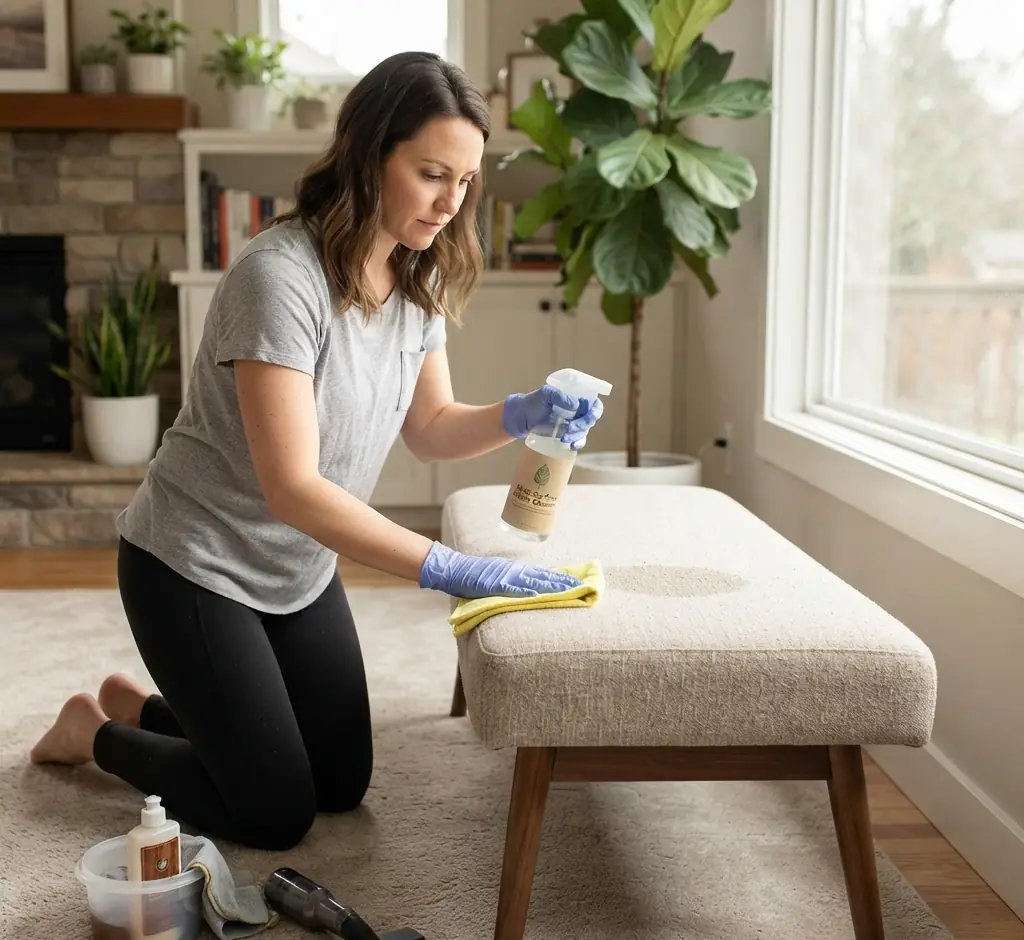
If you have a wooden mudroom bench, moisture is your biggest enemy. Begin your bench cleaning routine by using a vacuum with a brush attachment to remove dry dirt and sand from the corners and crevices. Next, to tackle the white chalky stains left by winter salt, mix a solution of equal parts white vinegar and warm water. The mild acid neutralizes the alkaline salt. Lightly dampen a microfiber cloth with this solution and wipe the wood, following the grain. Immediately dry the bench with a second microfiber cloth to prevent the wood from swelling. Finish by applying a protective wood polish to restore its barrier against future moisture.
2. Kitchen and Dining Benches
Dining benches have surged in popularity, offering cozy, communal seating. However, they are magnets for food spills, sticky children’s fingers, and grease.
How to clean it:
For bare wood or painted dining benches, a simple solution of warm water and a drop of mild dish soap is highly effective at cutting through food grease. Avoid using harsh chemical degreasers that can strip the paint or varnish.
If your dining bench is upholstered, you must act quickly on spills. Blot (never rub) fresh spills with a clean, dry cloth. For routine bench cleaning on fabric, lightly mist the upholstery with a fabric-safe cleaner or a DIY water-and-vinegar mix, gently agitate with a soft-bristled brush, and wipe clean.
3. Outdoor Patio and Garden Benches
Outdoor benches face the harshest conditions: UV rays, rain, bird droppings, and fluctuating temperatures.
How to clean it:
Your approach depends on the material. For plastic or resin benches, a heavy-duty wipe-down with warm water and a splash of bleach or white vinegar will kill mildew and remove dirt. For teak or cedar wood benches, avoid power washing, which can splinter the soft wood. Instead, use a specialized wood cleaner and a stiff bristle brush to scrub away the gray, oxidized layer, rinsing thoroughly with a garden hose. Once fully dry, apply a specialized teak or wood oil to protect it for the upcoming summer season.

Commercial Bench Cleaning
In the business world, cleanliness equates to professionalism. A stained, sticky, or dusty bench in your establishment instantly damages your brand’s reputation and can pose significant health and safety liabilities. Commercial bench cleaning requires industrial-grade solutions and a strict, high-frequency schedule.
1. Gym and Locker Room Benches
Nowhere is commercial bench cleaning more critical than in a fitness facility. Locker room benches are exposed to sweat, damp towels, and bare skin, making them prime breeding grounds for bacteria like MRSA, staph, and ringworm fungi.
The Protocol:
Gym benches are typically made of sealed wood, high-density plastic, or metal. They require continuous, daily sanitization. Cleaners must first wipe away physical moisture and debris. Then, a hospital-grade, EPA-registered disinfectant must be applied.
Crucial Tip: The most common mistake in locker room bench cleaning is ignoring dwell time. The disinfectant must remain visibly wet on the bench surface for the duration specified on the product label (usually 3 to 10 minutes) to successfully kill pathogens before it is wiped dry.
2. Waiting Room and Lobby Benches
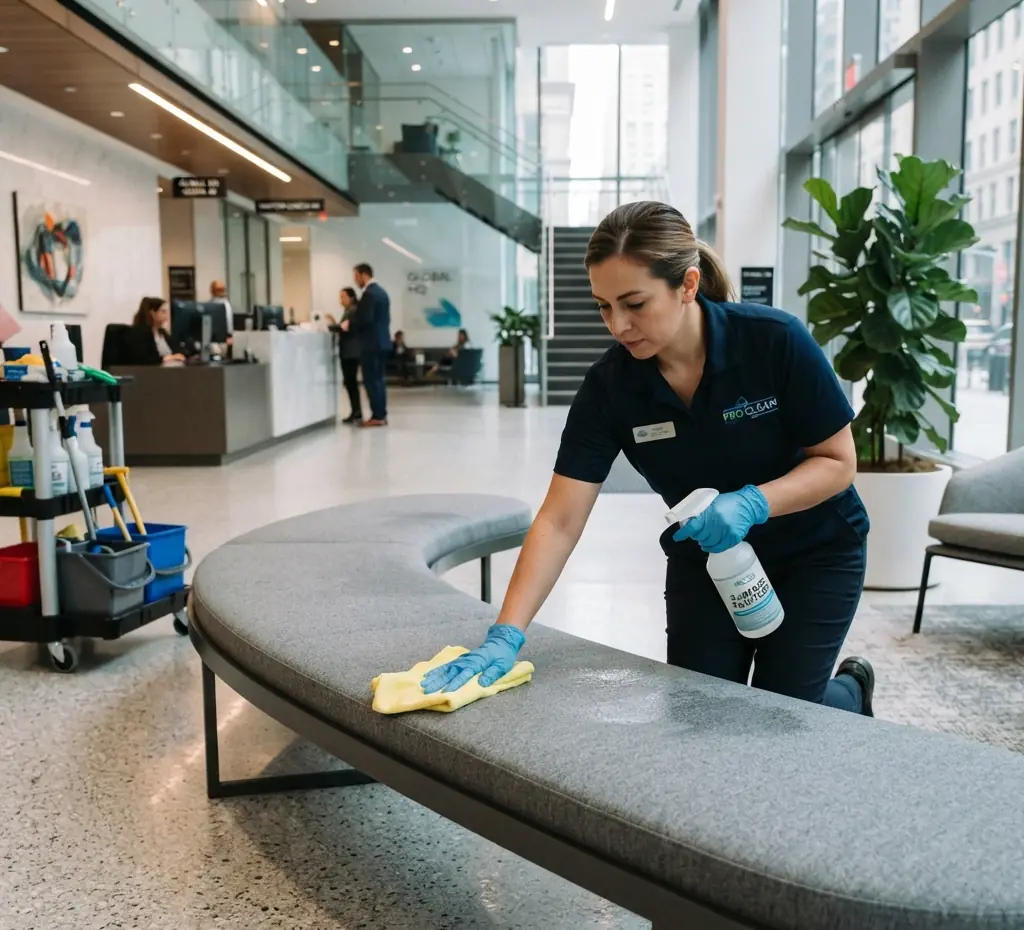
First impressions matter. The benches in medical waiting rooms, hotel lobbies, and corporate reception areas see constant, diverse foot traffic. These are frequently upholstered in commercial-grade fabrics, vinyl, or leather.
The Protocol:
For vinyl and leather lobby benches, a daily wipe-down with a pH-neutral cleaner followed by a specialized conditioner will prevent the material from cracking under heavy use. For upholstered fabric benches, daily vacuuming is mandatory to remove abrasive grit. Furthermore, professional hot-water extraction (steam cleaning) should be scheduled quarterly to lift deep-seated dirt, remove coffee stains, and neutralize lingering odors.
3. Industrial and Workshop Benches
In workshops, laboratories, and industrial settings, the “bench” is a workspace. These workbenches accumulate heavy grease, chemical spills, metal shavings, and sawdust.
The Protocol:
Industrial bench cleaning focuses on safety and functionality rather than pure aesthetics. Heavy-duty degreasers are required to break down machine oils. A shop vacuum should be used to remove metal shavings and sawdust before introducing any liquids to prevent creating a concrete-like sludge. If the bench has an anti-static or specialized chemical-resistant coating, always use cleaning agents strictly approved by the manufacturer to avoid degrading the safety surface.
Bench Cleaning Toolkit
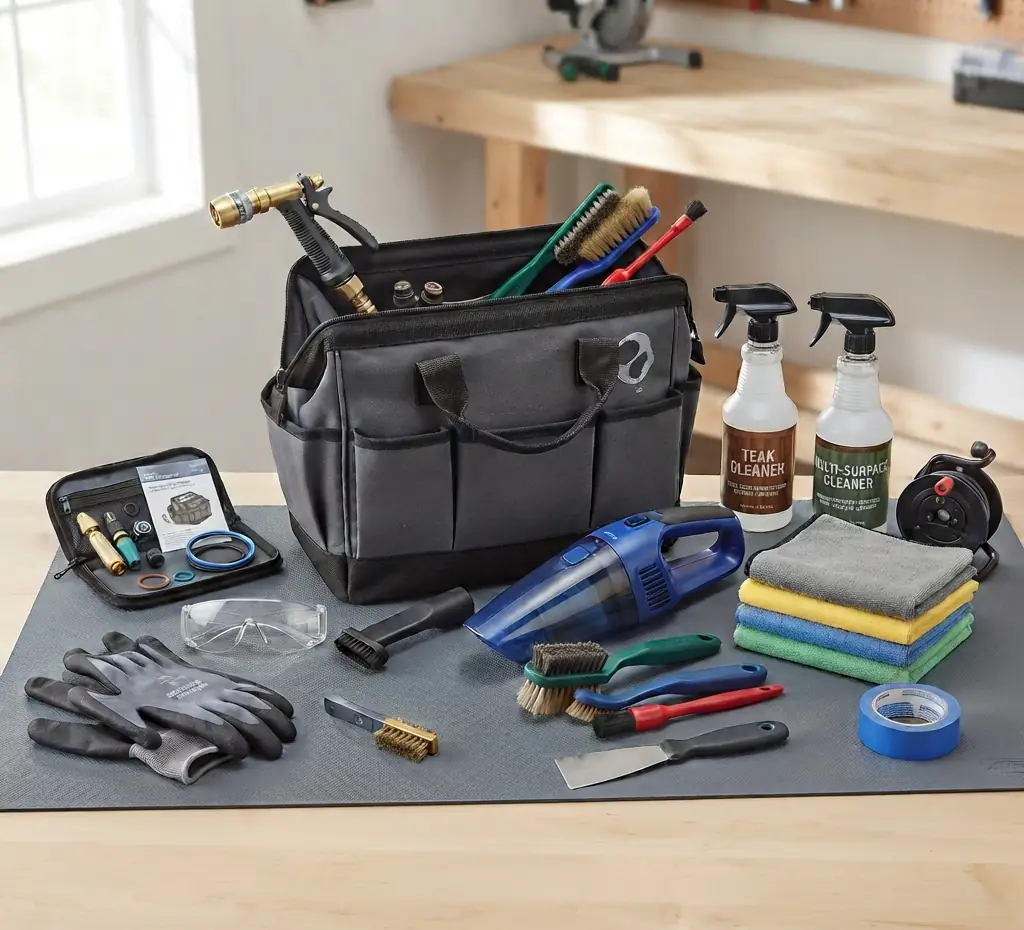
To execute a flawless bench cleaning routine, you need to equip yourself with the right tools. Having a well-stocked cleaning caddy saves time and ensures you don’t damage your furniture.
Make sure you have the following on hand:
High-Quality Microfiber Cloths: The undisputed champion of cleaning. Microfiber traps dust and absorbs liquid far better than cotton rags or paper towels, ensuring a streak-free finish without scratching delicate wood or leather.
Soft-Bristled and Stiff-Bristled Brushes: A soft brush is perfect for agitating upholstery cleaner on fabric dining benches, while a stiff brush is necessary for scrubbing outdoor wooden benches or industrial workbenches.
pH-Neutral All-Purpose Cleaner: Safe for almost all sealed surfaces, including painted wood, plastic, and metal.
White Vinegar and Baking Soda: Essential natural cleaners for neutralizing winter salt on mudroom benches or lifting stains without harsh chemicals.
Material-Specific Conditioners: Leather conditioner for lobby seating and teak oil for outdoor garden benches to restore moisture and shine after cleaning.
5 Practical Tips for Highly Effective Bench Cleaning
Whether you are tackling a residential mudroom or a commercial locker room, keep these 5 golden rules of bench cleaning in mind to maximize your efficiency:
Always Dry Clean First: Never spray a liquid cleaner onto a dusty bench. You will simply create a muddy smear that is twice as hard to remove. Always vacuum or dry-dust the bench thoroughly before applying any sprays or damp cloths.
Respect the Material: A one-size-fits-all approach will ruin your furniture. What works on a plastic patio bench will strip the finish off an antique wooden hallway bench. Always read the care labels or test a small, hidden area first.
Don’t Forget the Underside: Out of sight should not mean out of mind. The underside of benches, the legs, and the crossbeams are notorious for collecting massive dust bunnies, spiderwebs, and pet hair. Vacuum these areas during every deep clean.
Control Your Moisture: Over-wetting is the fastest way to ruin a bench. Excess water will warp wood, cause metal joints to rust, and create deep-seated mildew inside the foam of upholstered cushions. Always spray your cleaner onto your cloth, not directly onto the bench.
Seal and Protect: Bench cleaning shouldn’t end with wiping away the dirt. Apply a protective layer—such as a fabric scotch-guard for upholstery, a wax polish for wood, or a UV protectant for outdoor plastic—to repel future stains and make your next cleaning session much easier.

Alongside care for your bench, regular home cleaning can help with the floors and surfaces throughout your living space.
Conclusion
Benches are the unsung heroes of our living and working environments. They welcome our guests, hold our belongings, and provide essential rest stops in our busy days. Incorporating a dedicated bench cleaning routine into your standard property maintenance is a small investment of time that yields massive returns in hygiene, aesthetics, and furniture longevity.
By understanding the specific materials of your benches and the unique types of grime they attract—from the salty slush of a Canadian winter to the heavy sanitization needs of a commercial gym—you can ensure these vital pieces of furniture remain beautiful, safe, and inviting for years to come.
However, we know that managing the deep cleaning of an entire home or a sprawling commercial facility can be overwhelming. When the dust builds up and the daily chores become too much, you don’t have to handle it alone.

Toronto Shine Cleaning is your trusted partner for premium residential and commercial cleaning services across the Greater Toronto Area. Our highly trained professionals utilize industry-leading equipment and meticulous methodologies to clean every inch of your space—yes, including every single bench! Let us take the heavy lifting off your shoulders so you can enjoy a spotless, healthy, and brilliantly refreshed environment.