
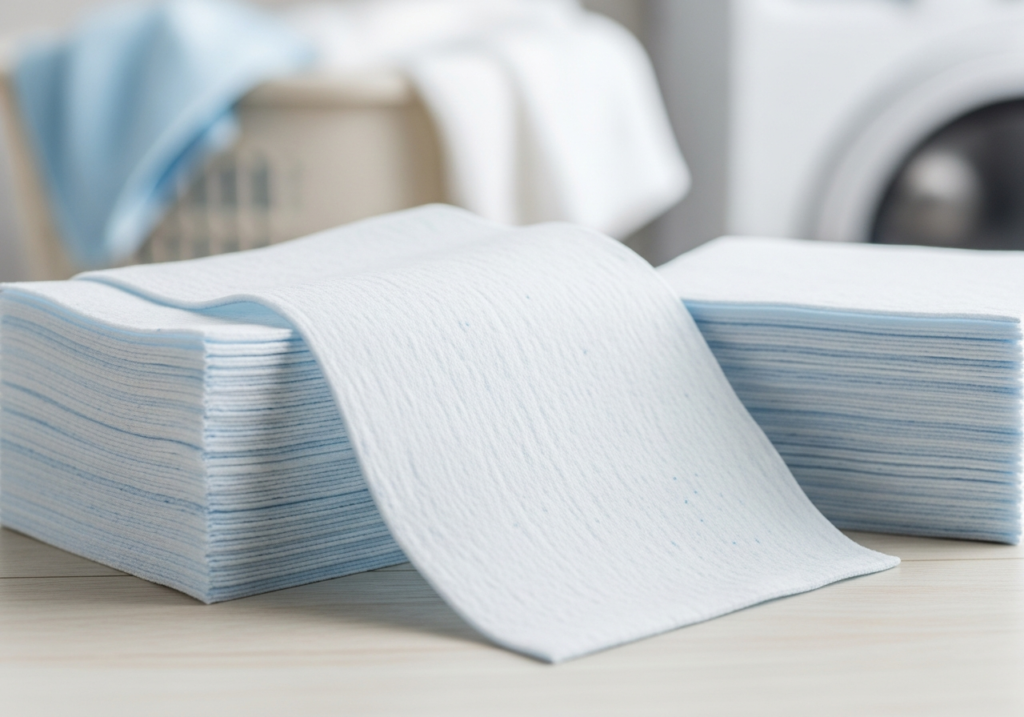
Fabric Softener Sheets: 5 Things You Should Never Put in the Dryer with a Softener Sheet
Fabric softener sheets, commonly known as dryer sheets, have become a staple of the modern household, synonymous with the concept of “freshness.” We are conditioned to believe that our clothes are not truly clean unless they emerge from the machine smelling of “Mountain Rain” or “Lavender Fields,” free of static and soft to the touch. However, this convenience product is often the subject of misunderstanding. While they solve specific problems—namely static cling and roughness—they introduce a layer of chemical complexity to our textiles and appliances that can have unintended consequences. To use them effectively, one must look past the marketing and understand the mechanics of how a dryer sheet actually works, what it leaves behind, and when it should be strictly avoided. How Does it Work? To comprehend the function of a dryer sheet, you must visualize it not as a cleaning agent, but as a delivery system. The sheet itself is merely a carrier, usually made of a synthetic non-woven fiber. It is coated in a heat-activated compound, typically comprised of stearic acid (a fatty acid often derived from animal fats), clay fillers, and heavy fragrances. In the cool air of the laundry room, this coating is solid. However, once introduced to the high heat of the dryer cycle, this waxy layer melts. As the wet clothes tumble, the sheet makes repeated contact with the fabrics, transferring this liquefied coating onto the fibers of your clothing. It is, in essence, a process of lubrication. The primary and most functional benefit of this coating is the elimination of static electricity. Static is the bane of the laundry process, particularly in the dry winter months or in climates with low humidity. It occurs when synthetic fabrics like polyester and nylon rub against each other in the dry heat, exchanging electrons and building up an electrical charge. This results in clothes that cling to the body, crackle when separated, and attract dust and hair. The coating provided by the dryer sheet contains positively charged ions. These ions neutralize the negative charge created by the tumbling fabrics, effectively canceling out the static. For households that wear a significant amount of synthetic clothing, this antistatic property is not just a luxury; it is a necessity for wearable garments. Beyond physics, there is the tactile and olfactory appeal. The fatty acids in the coating reduce the friction between individual fibers. This makes rough fabrics, such as denim or air-dried cotton, feel significantly softer and more pliable against the skin. Simultaneously, the heat activates the encapsulated fragrance molecules, embedding them into the weave of the cloth. This scent lingers far longer than detergent fragrance because it is applied at the end of the process and is not rinsed away. For many, this lingering scent is the primary indicator of hygiene, a sensory signal that the laundry chore is complete. Disadvantages However, the mechanism that provides these benefits—the coating of the fiber—is also the source of the product’s significant downsides. The most detrimental effect of dryer sheets is on absorbency. The waxy layer that makes a fabric feel soft is hydrophobic, meaning it repels water. When you use dryer sheets on bath towels, you are essentially waterproofing them. Over time, the buildup of these fatty acids coats the loops of the terry cloth. You end up with a towel that feels plush to the touch but merely pushes water around on your skin rather than soaking it up. To restore a towel’s absorbency, one often has to strip the fabric using vinegar and hot water to melt away the accumulated softener residue. This blocking of the fiber’s pores is even more catastrophic for modern athletic wear. Performance fabrics are engineered with a specific synthetic weave designed to wick moisture away from the body and allow it to evaporate quickly. This is a mechanical function of the textile. When you dry yoga pants or running shirts with a fabric softener sheet, the residue fills the micropores of the fabric. This traps sweat, dead skin cells, and bacteria inside the weave. The result is twofold: first, the garment loses its ability to wick sweat, leaving you clammy during a workout; second, it develops a “perma-stink.” Because the bacteria are trapped under a layer of silicone or wax, the detergent cannot reach them in the next wash. The clothes begin to smell musty even when they are technically clean. Manufacturers of high-end athletic gear almost universally advise against the use of softeners for this reason. Security There is also a safety concern regarding the flammability of textiles. Children’s sleepwear is legally required to be flame-resistant. This is achieved either through the use of specific synthetic fabrics or chemical treatments. The coating left by dryer sheets, being derived from emulsified fats and oils, is inherently flammable. Coating flame-resistant pajamas in a layer of flammable residue reduces their resistance to fire. Most dryer sheet boxes carry a warning label advising against use on children’s sleepwear or garments labeled as flame-resistant, yet many consumers overlook this fine print, unknowingly compromising the safety features of the clothing. The impact on the dryer itself is a “hidden cost” of dryer sheet usage. As the chemical coating melts, it does not only transfer to the clothes; it transfers to the drum and the filtration system of the machine. The most critical area of concern is the lint trap. The screen of the lint trap is designed to catch fine particles while allowing hot, moist air to pass through. Over time, the invisible waxy film from dryer sheets can coat the mesh of the screen. This blockage is often invisible to the naked eye. The screen looks clean, but air cannot pass through it efficiently. This forces the dryer to work harder, increasing energy bills and the risk of the motor overheating. A simple test is to take the lint screen to the sink and run water over it. If the water pools and beads up rather than flowing through the mesh, the screen is clogged
Fabric Softener Sheets: 5 Things You Should Never Put in the Dryer with a Softener Sheet Read More »