
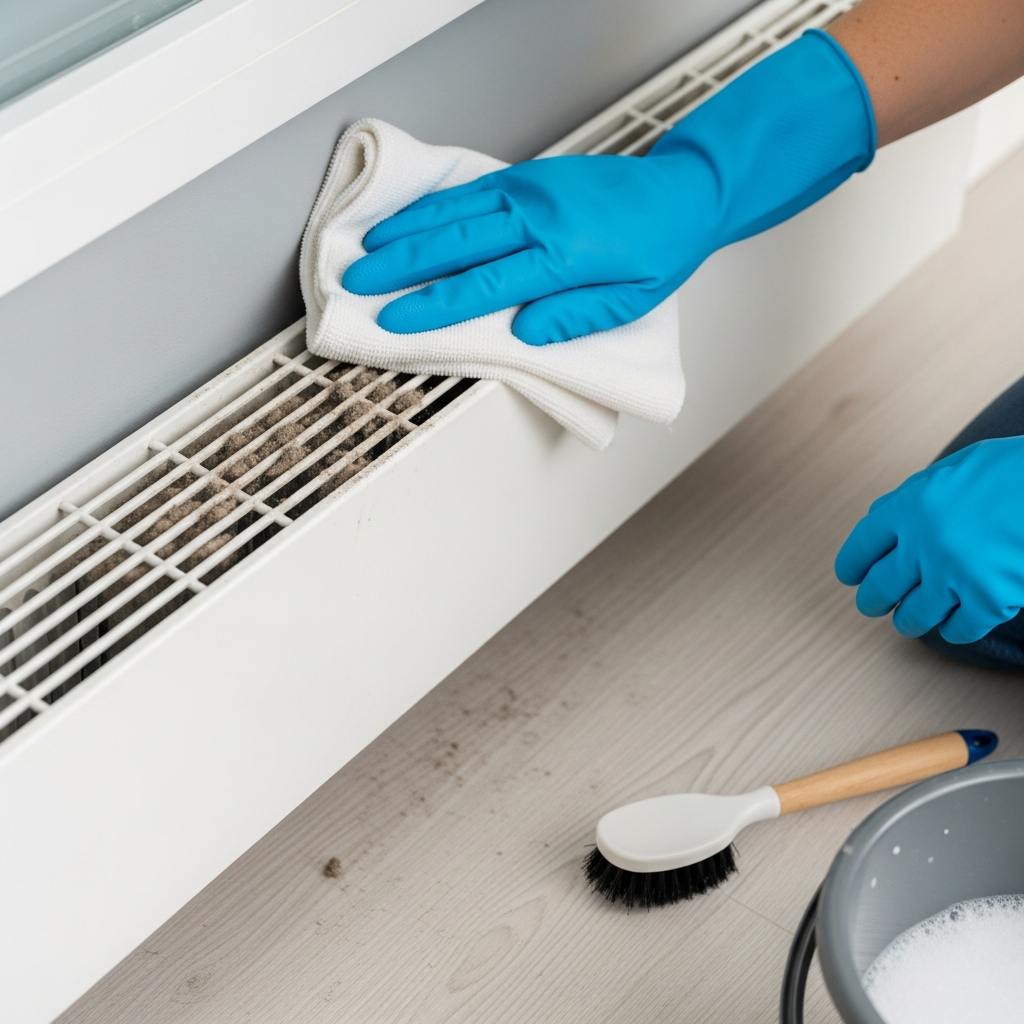
Baseboard Heaters: The Step-by-Step Heater Cleaning Routine
Baseboard heaters are the silent, often ignored workhorses of residential heating. In many regions, particularly in older apartments and homes where retrofitting ductwork for forced air is structurally impossible, these metal units are the primary source of warmth. They sit unobtrusively at the floor level, usually beneath windows, occupying a visual blind spot that allows them to be easily disregarded until the first cold snap of autumn arrives. It is in that moment, when the thermostat is finally turned up, that the distinct, acrid scent of burning dust fills the room, signaling months of neglect. This smell is not merely a nuisance; it is the olfactory evidence of a system that is choked, inefficient, and potentially dangerous. While baseboard heaters are mechanically simple—essentially a heating element inside a metal pipe surrounded by aluminum fins—their placement and design make them magnets for the worst kind of household debris. Maintaining them is not just a matter of cleanliness; it is a critical component of energy efficiency, air quality, and home safety. How Does it Work? To understand why cleaning these units is so vital, one must first understand the physics of how they operate. Baseboard heaters rely on convection. Unlike a furnace that uses a blower fan to force air through vents, a baseboard heater is a passive engine. It utilizes the natural law that hot air rises and cold air sinks. Cold air from the floor creates a vacuum effect as it is drawn into the bottom of the heater. It passes over the heating element, warms up, and then rises out of the top of the unit, displacing the cooler air in the room. This cycle creates a continuous, silent current of air circulation. However, this same current acts as a low-level vacuum cleaner for the home. As the air is drawn into the bottom of the unit, it carries with it everything that settles on the floor: pet hair, human dander, textile fibers, and general dust. Because the heater is located at the lowest point of the room, it inhales the heaviest concentration of particulate matter. Once this debris enters the metal housing, it encounters the heat exchanger. This component consists of a central pipe surrounded by hundreds of thin, sharp aluminum fins. These fins are designed to maximize surface area, allowing the heat from the pipe to transfer to the air as efficiently as possible. However, the tight spacing between these fins makes them a perfect trap for debris. The dust and hair do not simply pass through; they get caught on the jagged edges of the aluminum and wedged between the plates. Over time, this buildup forms a thick, felt-like blanket of grey fuzz. This blanket acts as an insulator. The entire purpose of the fins is to release heat, but the dust layer traps that heat against the metal. The result is a heater that has to work significantly harder and run for longer periods to raise the room temperature, leading to a direct and noticeable spike in electricity bills. You are essentially paying to heat the dust, not the air. Security Beyond the financial cost of inefficiency, there is a legitimate safety concern. The heating element inside an electric baseboard heater gets incredibly hot. While the metal housing remains touchable, the internal components reach temperatures high enough to singe organic matter. The “burning smell” that permeates a home in October is literally the combustion of the dust and hair that has settled on the element during the summer months. While most of this dust simply carbonizes and floats into the air as soot, a heavy accumulation of lint—which is highly flammable—poses a fire risk. If a piece of paper, a curtain, or a thick clump of pet hair falls directly onto the element, it can ignite. This risk is compounded by the fact that baseboard heaters are often hidden behind furniture or drapes, meaning a small smolder could go unnoticed until it becomes a significant problem. The health implications of a dirty baseboard heater are also frequently underestimated. As the unit heats up and burns off the accumulated dust, it releases particulate matter and chemical byproducts of combustion back into the room’s airflow. For individuals with asthma, allergies, or respiratory sensitivities, this creates a toxic environment. The convection current that heats the room also serves to circulate these allergens efficiently, ensuring they remain suspended in the breathing zone. Furthermore, the dark, warm environment inside a heater that is not in use during the spring and summer can become a harbor for mold or pests. Cleaning the unit is the only way to break this cycle of recirculating filth. Cleaning a baseboard heater requires a specific methodology because the internal components are delicate and sharp. The aluminum fins are incredibly pliable; they can be bent by a stray vacuum attachment or a clumsy finger. If the fins are bent flat against each other, the airflow is blocked, and the unit’s efficiency drops to zero in that spot. Therefore, the first step in any cleaning regimen must be safety—both for the user and the machine. The power must be turned off at the main breaker panel. Simply turning the thermostat down is insufficient, as a sudden drop in temperature could trigger the unit to activate while your hands are inside. A voltage detector is a handy tool to confirm the power is truly dead before opening anything. Vacuum Cleaner The exterior cover, or the faceplate, is usually removable, though the difficulty varies by model. Removing this panel provides access to the fins and the element. The initial attack on the dust should always be dry. Introducing water to a caked-on layer of dust creates mud, which is nearly impossible to remove from the tight crevices of the fins. A vacuum cleaner with a strong suction and a crevice tool is the best starting point. The goal is to suck out the loose debris from between the fins without dragging the hard plastic of the vacuum nozzle
Baseboard Heaters: The Step-by-Step Heater Cleaning Routine Read More »