
Removing Glitter from Upholstery: The Best Hacks for a Sparkle-Free Sofa
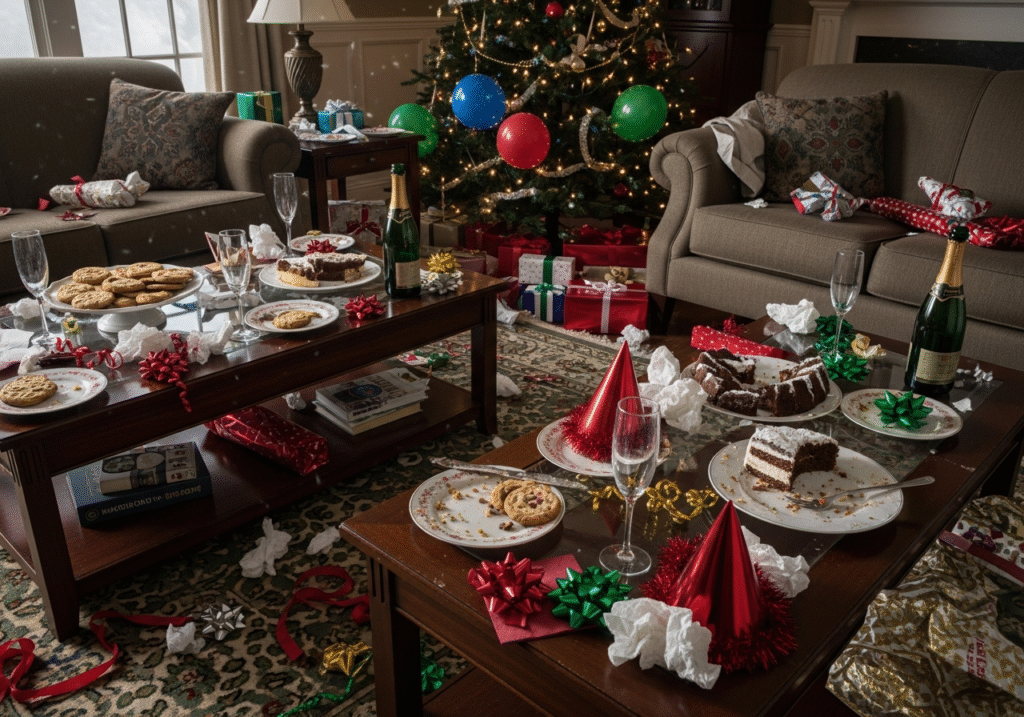
The silence that descends upon a home on the morning of December 26th is distinct. It is a quietude born of exhaustion and satisfaction, a heavy, peaceful stillness that follows weeks of frenetic activity. The wrapping paper has been torn, the carols have been sung, and the guests have departed. However, as the adrenaline of the season fades and the winter sun streams through the window, it illuminates the aftermath of the festivities. The floor is no longer a surface for walking but a mosaic of fallen pine needles. The sofa glitters with the remnants of a shattered ornament or a festive card. The tablecloth bears the crimson map of a spilled Merlot, and the rug near the dining table hides a solidified patch of turkey gravy. This is the post-Christmas reality. It is a scene of beautiful chaos, but chaos nonetheless. To restore your home to livable order without succumbing to overwhelm, you must approach the cleanup not as a general chore, but as a triage operation, prioritizing the messes that cause permanent damage and tackling the debris that threatens the very mechanics of your household. Christmas Tree The first adversary in this battle is the Christmas tree itself. Whether you chopped it down at a farm or bought it from a lot, a real evergreen is a shedding organism. By the time Christmas Day has passed, the tree is likely drying out, dropping thousands of needles that act like tiny, resin-coated daggers. The instinct is often to grab a broom, but this is a tactical error. Sweeping pine needles on a hard floor or a carpet is largely ineffective; the bristles of the broom tend to flick the lightweight needles into the air or, worse, drive them deeper into the grout lines of tile and the weave of the rug. Furthermore, pine needles are coated in sap, which can smear across hardwood if dragged by a broom, leaving sticky streaks that attract dirt. The correct weapon for pine needle removal is a vacuum, but specifically the hose attachment. Do not run the upright vacuum with the beater bar (the rotating brush) over a pile of needles. The needles are tough and can easily jam the rotation mechanism or clog the intake valve, burning out the belt of your machine. Instead, get on your hands and knees with the hose and the crevice tool. This allows you to suck up the needles directly without grinding them into the fibers. For upholstery where needles have embedded themselves like splinters, duct tape is surprisingly effective. Wrap a length of tape around your hand, sticky side out, and pat the cushions. The adhesive lifts the needles that the vacuum misses. If you encounter sap on your hardwood floors, do not scrub it with water, which does nothing against resin. A small amount of rubbing alcohol or hand sanitizer on a microfiber cloth will dissolve the sap instantly, protecting the finish of the floor. Glittler Once the organic debris is managed, you must face the inorganic invader: glitter. It is often jokingly referred to as the permanent guest of the craft world because once it enters a home, it seems impossible to remove. Glitter adheres to surfaces via static electricity, making it resistant to simple dusting. Trying to wipe glitter with a dry cloth simply charges the particles further, causing them to jump to the nearest vertical surface or stick to your clothes. To conquer glitter, you must break the static bond. On hard surfaces like tables and floors, a damp microfiber cloth is essential. The moisture increases the weight of the particles and neutralizes the static charge, allowing you to wipe them up rather than push them around. For carpets and fabric, where glitter embeds deep into the pile, a vacuum often fails to extract the particles trapped at the base. Here, the “play-dough” method is incredibly effective. Take a ball of children’s play dough—or a wad of masking tape—and press it into the glitter-infested area. The glitter will stick to the compound more readily than the carpet fibers. This is a tedious process, but it is the only way to ensure you aren’t finding sparkles on your socks in July. For larger areas, a lint roller is a faster, though slightly less precise, alternative. It is crucial to tackle glitter immediately; if it is allowed to disperse, it will migrate into the HVAC vents and circulate through the house for months. Food Stains While needles and glitter are annoyances, food stains represent a structural threat to your textiles. The holiday meal is a minefield of potential disasters, with gravy being a primary culprit. Gravy is a combination stain, consisting of protein from the meat juices, pigments from browning agents, and a high concentration of fat. When a drop of gravy hits the carpet, the fat begins to solidify as it cools, binding the pigments to the fiber. The worst thing you can do is scrub it with hot water. Heat will cook the protein in the gravy, setting the stain permanently, while scrubbing will spread the grease outward. The triage for gravy involves patience and chemistry. First, use a dull knife or a spoon to lift away any solid residue. Do not rub. Once the excess is gone, you need to draw the oil out of the fiber. Cover the stain with a generous mound of baking soda, cornstarch, or salt. These powders are absorbent and will pull the liquid fat up from the carpet backing. Let it sit for at least fifteen minutes, or until the powder looks greasy, then vacuum it up. Now you are left with just the protein and pigment. Mix a solution of lukewarm water and a clear, bleach-free dish soap. Dish soap is a degreaser and a surfactant. Blot the stain gently with this solution until the color transfers to your cloth. Rinse by blotting with clear water. If you skip the powder step and go straight to water, you risk turning the oil
Removing Glitter from Upholstery: The Best Hacks for a Sparkle-Free Sofa Read More »