Blog

december checklist

December Checklist: 11 Things You Must Do Before the First Major Snowfall

December Home Prep: The Canadian Checklist That Beats the First Snowfall December in Canada asks for more than patience. The month buries autumn under snow, shortens daylight, and stacks holidays into four busy weeks, so its first half belongs to preparation, not panic. This eleven-task checklist covers the roof, the plumbing, the heating system, the emergency supplies, and the pre-holiday deep clean, ideally before the first major snowfall locks you indoors. 1. Clean the Gutters Before Ice Dams Can Form Work from the top down, starting at the roofline. Leaves, twigs, and sludge left in the gutters overwinter into a frozen dam. When mild days melt roof snow, that dam traps the water, which backs up under shingles, refreezes, and pushes moisture into the roof deck, insulation, and interior walls. One ice dam repair dwarfs the cost of raking out the gutters, and late fall, after leaf drop but before the deep freeze, is the last comfortable moment to clear them. 2. Drain and Shut Down Every Exterior Water Source Disconnect garden hoses, drain them fully, and store them for the season. Then close the interior shut-off valve feeding each outdoor tap and open the tap itself so remaining water drains out. This five-minute chore stops water from freezing, expanding, and bursting a pipe, which is how a mild December night turns into a flooded basement. 3. Stage Shovels, Ice Melt, and Scrapers Before the Blizzard Rush Do not shop for snow gear during a storm warning, when shelves empty fast. Check shovels for cracks, keep ice melt, sand, or grit in a sealed container so it stays dry and free-flowing, and replace a chipped windshield scraper now. Prepared tools turn a snow day from stressful into routine. 4. Chase the Drafts Around Windows and Doors An annoying October draft becomes a heater-taxing problem in December. Walk every window and exterior door, feel for moving air, and look for visible gaps. Swap out worn weatherstripping, and fit plastic insulation film kits over older windows; the film traps a still layer of air that cuts heat loss. 5. Service the Heating System While It Warms Up Replace the furnace filter before the system runs hard every day: a clogged filter restricts airflow, wastes energy, and pushes dust and allergens through the house, one of the effects behind Health Canada’s indoor air contaminants reporting. If your furnace carries a whole-house humidifier, clean its pad or filter, switch it on, and set it against dry winter air. Persistent dampness or a musty smell is a different problem; mould guidance from Health Canada covers moisture control. 6. Sweep the Chimney and Stack Seasoned Wood If nobody has cleaned and inspected your chimney this season, book it now. Creosote from past fires is a genuine fire hazard. Keep your firewood dry, seasoned, and stored under cover with airflow around it, with a small indoor supply ready for cold nights. 7. Build a 72-Hour Emergency Kit for Storm Outages December storms knock power out for hours or days. Assemble a kit you can find in the dark, kept somewhere accessible: Reliable flashlights with spare fresh batteries Warm blankets for every household member A stocked first-aid kit and any daily medications Non-perishable food and bottled water to cover at least 72 hours A battery-operated or hand-crank radio for storm updates A fully charged power bank for your phone 8. Stock the Pantry and Freezer Before the Run Once the first big storm lands, a grocery run becomes a trek. Load staples early: pasta, rice, canned goods, coffee, and enough freezer meals for a comfortable snow day. A full freezer also holds temperature better during an outage than an empty one. 9. Deep Clean the House Before the Decorations Go Up With safety tasks handled, late November or early December is the smart moment for a seasonal deep clean. Run the oven’s self-clean cycle now, well before holiday baking, scrub the kitchen, and give living areas and guest bathrooms a thorough dust and vacuum, the same clean-first approach the CDC recommends for household surfaces. A reset home feels calmer during a chaotic month. Recurring maid service keeps the baseline tidy through the party weeks. 10. Fortify the Entryway and Test the Light Strings The front zone will soon swallow boots, coats, hats, and mittens, so set up a durable mat for wet feet, reachable hooks, and baskets for accessories now. Declutter unused items before gifts arrive to make room for them. Before decorating, plug in every strand of holiday lights and replace dead bulbs early. 11. Winter Proof the Vehicle, Kit Included Winter tires are not only for snow. Their softer rubber compound grips far better and shortens stopping distances in any cold, even on dry pavement, so mount them before the temperature truly turns. Replace streaking wiper blades, top up with winter-rated washer fluid that will not freeze, and store spare bottles away from living space, since washer fluid is a household chemical with real hazards. 11a. Add a Car Emergency Kit Every winter trip deserves a small kit in the trunk: a blanket, a compact shovel, traction sand or kitty litter, a flashlight, jumper leads, and some shelf-stable snacks. December Prep at a Glance Task Best timing What it prevents Gutter clearing Late November Ice dams, roof and wall damage Exterior taps off Before first hard freeze Burst pipes, flooded basements Furnace filter swap Early December High bills, dusty air, strain Chimney inspection Before heavy fireplace use Creosote fires Deep clean Before decorations and guests Holiday chaos on a dirty house Winter tires First sustained cold Longer stopping distances December Checklist FAQ Is it too late to clean gutters in December? Not usually. Clear them on any dry, above-freezing day before the next snowfall. If the debris has already frozen in, wait for a thaw or hire a roof and gutter crew rather than chipping at ice on a ladder. How often should the furnace filter be changed in winter? Check it monthly during the

December Checklist: 11 Things You Must Do Before the First Major Snowfall Read More »
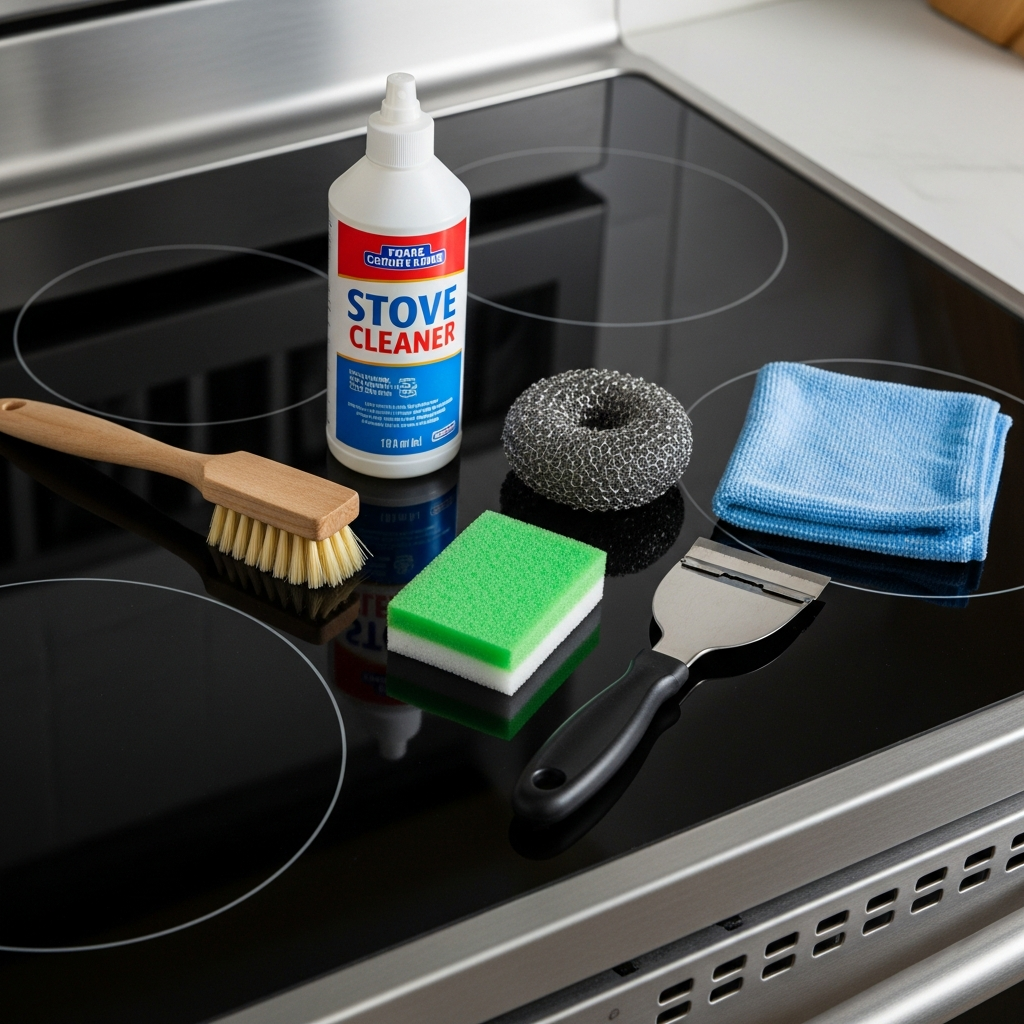
Make Your Stove Look New Again with These Simple Tools

A Stove Collects More Filth Than Any Appliance You Touch Daily Every splatter of oil and dropped crumb lands on the stove and hardens into something nearly as tough as the metal beneath it. A grease-laden cooktop is a fire hazard, and blocked burner ports throw heat unevenly. Most people also clean it wrong, grinding abrasive pads across delicate glass or spraying electronics. The fix is matching each surface, glass, cast iron, enamel, or coil, to the right chemistry and force. Glass-Ceramic Cooktops: Use a Blade, Not a Scrub Pad Burnt-on food is the real enemy on a glass top, and sugary spills need instant attention because they pit the glass as they cool. The rough side of an ordinary sponge acts like sandpaper on glass-ceramic, leaving micro-scratches that dull the finish and then trap dirt. The correct tool is a razor blade scraper held at about forty-five degrees, shearing carbon off safely. Keep the glass wet with cleaner or baking soda paste as lubricant, then buff dry with a microfiber cloth. Cast Iron Grates: Let Ammonia Fumes Do the Scrubbing Gas ranges bake grease into porous cast iron, and the grates’ corners shred sponges. Hand-scrubbing burns an afternoon and rarely finishes the job. Instead, seal the grates in a heavy-duty garbage bag with a splash of ammonia and wait twenty-four hours, opening the bag outdoors because the fumes are strong. Ammonia breaks the bond between carbonized food and the iron, so grime wipes off with almost no scrubbing. Rinse and dry the grates completely, warming them briefly in the oven, because bare iron rusts fast. And never combine ammonia with bleach-based products: CDC bleach guidance warns that mixing cleaners releases dangerous vapors. Burner Ports, Igniters, and the Blue Flame Test A yellow flame instead of steady blue, or endless clicking, means clogged ports. Clear the tiny holes gently with a straightened paper clip, careful not to snap the tip off inside. Burner caps and heads soak fine in warm soapy water, but the ceramic igniter nub must stay dry; a damp or cleaner-smeared igniter cannot spark until it has dried out. On reassembly, confirm every cap sits flat; an askew cap produces a dangerous, flaring flame. Electric Coils: The Drip Pans Are the Real Problem Coil stoves are the most modular design in any kitchen, and the coils mostly self-clean by burning residue off. The shallow pans underneath catch everything else, and a carbonized pan becomes a smoke generator every time the stove turns on. Never line them with aluminum foil, a shortcut that traps heat and can melt wiring. Drip pans are cheap: replace rusted or hopelessly caked ones, or boil salvageable pans in water with vinegar. Coils pull straight out, but never submerge their electrical contacts. Control Panels: Pull the Knobs, Spare the Circuit Board Knobs and buttons are the most touched, least cleaned parts of a range. Grease hardens behind the knobs into glue, so pull them off and degrease the stems; wiping around them packs dirt deeper. On digital panels, never spray cleaner at the screen, because liquid seeping behind the bezel can short the board. Spray the cloth, then wipe, and when disinfecting surfaces follow the CDC’s basics for cleaning and disinfecting your home: remove soil first, then respect the stated contact time. The Oven Interior: Skip the Self-Clean Cycle Self-cleaning sounds effortless, but it incinerates soil by pushing the cavity past 900 degrees F, and the aftermath is smoky and risky. That heat can fry sensitive control boards, and fumes from burning coated racks or polymerized grease are toxic to pets, birds especially. A manual clean is safer: spread a baking soda paste over the interior, leave it overnight so the alkali breaks down grease, then mist vinegar over the dried paste. The foaming reaction lifts grime for a nylon brush and preserves the appliance. Racks, Door Glass, and the Range Hood Oven racks are too big for the sink, so use the bathtub: towels down, racks on top, covered with hot water plus dissolved dishwasher detergent. Enzymes chew through proteins and fats over hours, and burnt residue then wipes off with a sponge. The brown film on the door window is polymerized grease; the glass is tempered, so paste plus a kept-wet razor handles stubborn patches. Streaks between the two panes need full door disassembly, which most people sensibly skip. Above the cooktop, clogged hood filters dump grease back onto cabinets. Wash metal mesh filters monthly in a boiling degreaser soak; charcoal filters in ventless hoods must simply be replaced. Prevention Beats Every Method Above Wipe spills while warm, before carbonization locks them in, and remove sugar from glass tops instantly, since it contracts while cooling and can tear the surface. If you line the oven floor, use a correctly sized liner rather than foil, because foil blocking vents can cause carbon monoxide buildup. The whole science is alkaline cleaners on fatty soils, gentle blades on delicate glass, and dwell time: rushed jobs push people toward pads and knives that scratch permanently. For layers beyond DIY, a scheduled deep clean of the kitchen resets hood, oven, and everything between, the same approach that anchors an end-of-tenancy visit before a deposit deadline. Surface Use this Never do this Glass cooktop Razor at 45 degrees, wet paste Scrub with the rough sponge side Cast iron grates Sealed bag with ammonia, 24 hours Leave rinsed grates damp Drip pans Boiling vinegar soak, or replace Line with aluminum foil Oven interior Overnight paste, vinegar mist Rely on 900 degree self-clean fumes Controls and screen Cleaner sprayed onto the cloth Spray directly at the bezel Frequently Asked Questions Can I use baking soda and vinegar on every part of the stove? The paste is gentle enough for oven walls, door glass, and rims, and the vinegar mist lifts what the paste loosened. Exceptions: electrical areas, where liquid belongs on a cloth, and stone surrounds, where acid dulls the finish. Why is my gas burner flame yellow

Make Your Stove Look New Again with These Simple Tools Read More »

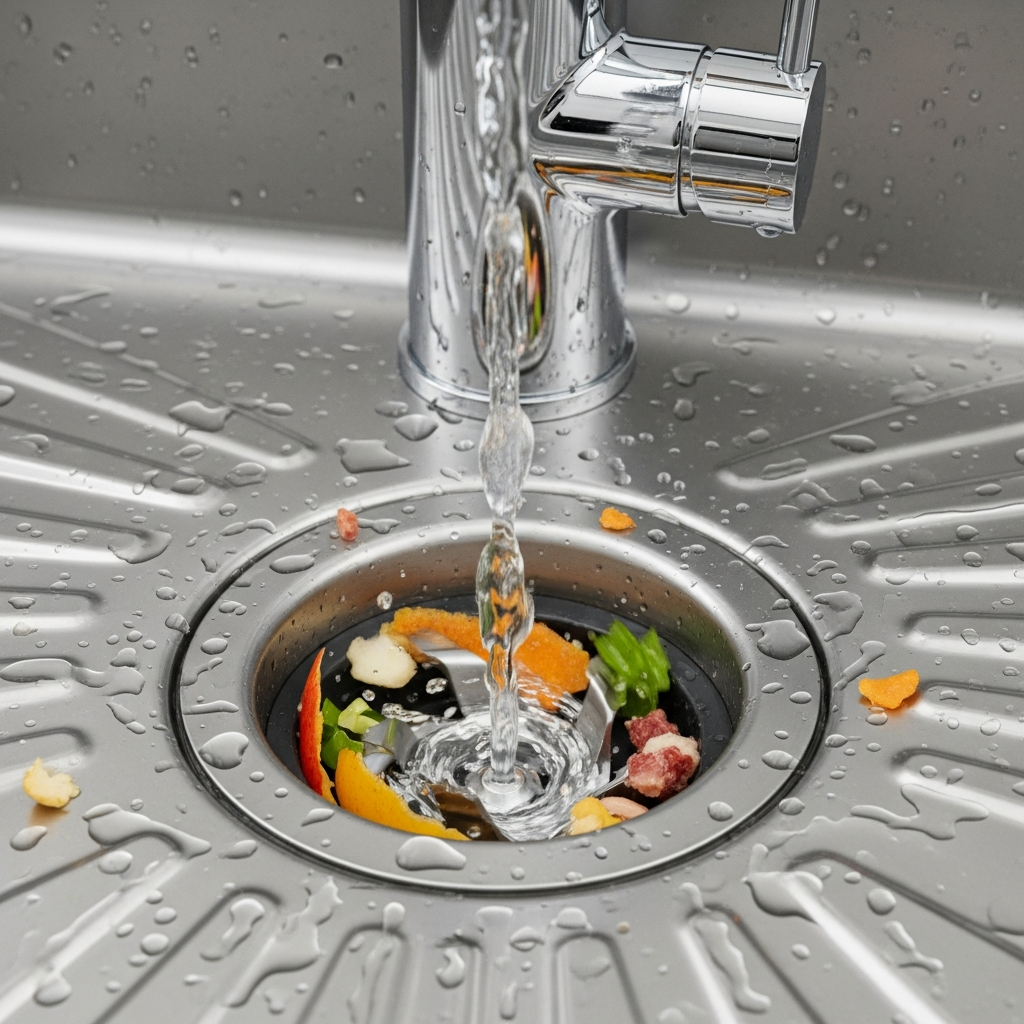
garbage disposal

Why Your Garbage Disposal Keeps Jamming: 10 Habits to Break

Your Garbage Disposal Is Not a Trash Can, a Goat, or a Blender Beneath the sink sits the most misused appliance in the house: a motorized chamber many homeowners treat as a magical hole that swallows any organic waste. That misconception drives most plumbing disasters, burnt-out motors, and lingering smells. A disposal has one narrow job, pulverizing modest scraps of soft waste into fragments tiny enough to travel narrow pipes. Knowing how it grinds, and why certain foods defeat it, breaks the habits that shorten its life. How the Machine Actually Grinds The popular image of spinning blades is completely wrong. With the power off, look inside: a metal turntable fitted with two blunt, swiveling lugs called impellers. Running, the unit presses food against the stationary grind ring lining the chamber wall, and the impellers smash waste against that ring like a cheese grater, shredding it into pulp. No knives are involved, which is why stringy materials are so destructive: nothing cuts them. Food Habit 1: Fibrous Vegetables Celery, corn husks, artichokes, asparagus, and onion skins are built from tough fibers. Those strands wrap around the impeller bases and drive shaft like hair fouling a vacuum brush roll. At first the motor only slows and hums; eventually the tension wins and the unit jams solid. Freeing a tangle takes pliers and a flashlight under the sink, an awkward job the compost bin avoids entirely. Food Habit 2: Grease, and Food Habit 3: Starch That Swells Hot cooking fat flows like water, fooling people into trusting it to the disposal. A few feet into cold plumbing it solidifies into a waxy paste that coats the grind ring and pipes, thickens with every pour, and traps debris until the pipe closes into a fatberg. Collect oils and fats in a container, let them cool, and bin the solid block. Pasta, rice, oats, and potatoes seem gentler but hydrate into a glue-like slurry, and potato peels are the worst: a big volume becomes a starchy mash that creeps into the P-trap, the U-shaped pipe holding water against sewer gas, and hardens into a plumber-worthy blockage. Food Habit 4: Hard Objects and Foreign Items Fruit pits, large bones, and seafood shells are too dense for residential units; a pit striking the turntable can dent it, snap impellers, or crack the housing into an under-sink leak. Non-food items like glass, plastic, and twist ties never break down; they rattle until the machine fails or block someone else’s line. Water Habit 5: Hot Water, and the Missing Post-Flush Hot water is harmful here: it liquefies fat, letting grease slip through the unit and re-solidify deep in the drain where nothing reaches it. Run cold water instead: it keeps fats firm so the grind ring shatters them into granules that flush clear. Start the flow before the motor and keep it running thirty seconds after the grinding stops; shutting the tap early leaves pulverized waste in the trap to settle, dry, and clog. Smell Habit 6: Waiting Until the Odor Migrates A damp chamber of decaying scraps breeds bacteria and mold, and the CDC’s mold overview shows the pattern: moisture plus organics equals regrowth. The odor rarely starts at the bottom; it starts on the underside of the black rubber splash guard flaps, where particles stick and rot unseen. Scrub those flaps with an old toothbrush and dish soap, since pouring cleaner down the hole misses them. Inside the chamber, skip harsh drain openers and bleach, which damage rubber seals; grind a cup of ice cubes with half a cup of rock salt while cold water runs, an abrasive scrub that knocks slime off the impellers. For the sink around it, the CDC’s guide to cleaning and disinfecting your home applies: remove soil physically and respect contact times. Jam Habit 7: Panicking Wrong If the unit hums without turning, something is stuck; if it is silent, an internal safety has tripped to save the motor. Rule one: no hands inside, because a jammed impeller can snap back the instant the obstruction shifts. Most disposals carry a red thermal overload button underneath; press it when the machine is dead silent. For a hum-with-no-spin jam, the hex wrench shipped with most units fits a slot in the motor base; rocking it rotates the shaft free from outside. Big-Picture Habits 8 to 10: Load, Force, and Neglect Everything ground must be processed by water treatment plants, and heavy disposal use raises their biological load. Septic households should double the caution: ground food upsets the tank’s bacterial balance and fills it with sludge faster than pumping schedules assume, so grind sparingly and compost scraps instead. Second, never force a struggling unit: one fed bones, grease, and fibers wears out in a few years, while gentle use with cold water and ice scrubs can reach a decade. Third, learn the farewell signs: leaks from the housing mean a cracked shell or blown seal, a motor jamming on soft food is dying, and rust inside is terminal. Pairing disposal care with a periodic whole-home deep clean keeps drains, traps, and the under-sink cabinet honest. Symptom Likely cause First fix Loud rattling grind Pit, bone, or shell inside Power off, retrieve with pliers Hum but no spin Fiber wrap or obstruction Hex wrench rock on the motor base Total silence Tripped overload Press the red reset button Slow drain, musty air Rotting film on guard or trap Toothbrush the flaps, then ice and salt Water under the sink Cracked housing or failed seal Stop using it, call a plumber Frequently Asked Questions What foods should never go into a garbage disposal? Keep fibrous items like celery, corn husks, onion skins, and asparagus ends out, along with grease and oils, bulk starch such as pasta, rice, and potato peels, plus fruit pits, bones, and shells. Small plate scrapings are the intended diet; non-food objects never belong inside. Should I run water before or after using the disposal? Both. Cold water should flow before the

Why Your Garbage Disposal Keeps Jamming: 10 Habits to Break Read More »

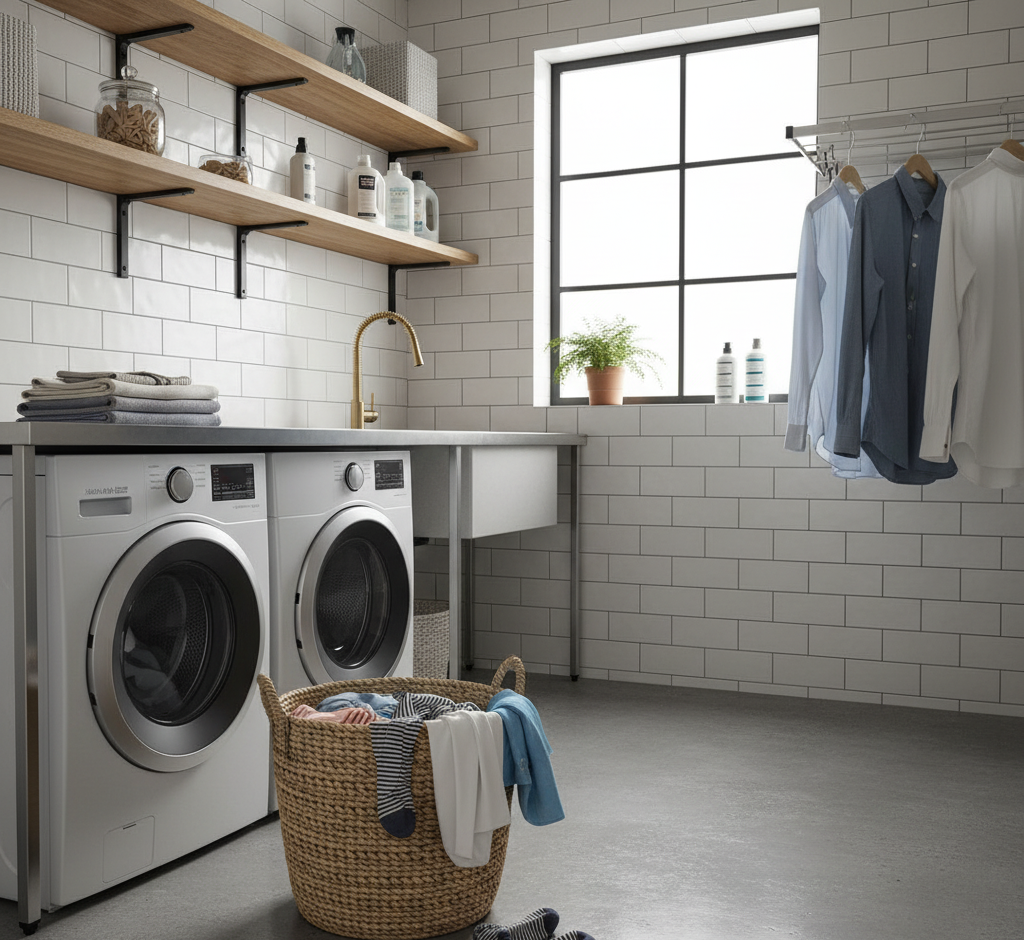
laundry basket in the laundry room

Washing Clothes: 10 Mistakes You Need to Stop Making When Washing Your Clothes

Your Laundry Routine Is Quietly Ruining Your Wardrobe Few chores feel as automatic as starting a load of wash. Toss things in, pour detergent, press a button, walk away. That autopilot habit is the problem, because a washing machine juggles chemistry, friction, and timing at once. Repeated small errors fade colors, tear fibers, stiffen towels, and damage the appliance itself. Faded leggings, mystery holes, and swamp-smelling washers trace back to mistakes almost everyone repeats weekly. Here are the ten most costly ones, and what to do instead. Mistake 1: You Sort by Color Alone Keeping darks from lights matters, but weight and texture matter just as much. Machines clean through agitation, so heavy denim thrashing against a thin cotton tee works like gentle sandpaper, creating pilling, thinning, and tiny holes over dozens of cycles. Texture also drives lint: fuzzy towels washed with synthetics leave dark garments coated in fuzz that never fully shakes off. Build one split by color, then split again by fabric weight and lint behavior. Mistake 2: You Skip Pockets and Ignore the Hardware Rules Two simple rules protect nearly every load: close the zippers, open the buttons. An unzipped zipper drags through the drum like a saw, snagging lace and scratching softer fabrics, while a buttoned shirt swells heavy when wet, so the spin strains button threads and warps buttonholes. Check pockets too: one forgotten tissue can blanket a load in white confetti, and coins can slip past seals and damage the drain pump. Mistake 3: You Pour Too Much Detergent Advertising taught us that bubbles mean cleanliness. In high-efficiency machines the opposite is true: little water plus friction does the work, so a flood of suds cushions garments into floating while stains stay put. The rinse cannot clear the surplus, so leftover soap film attracts oils and grime, breeds bacteria, and creates the sour smell clinging to old towels. Measure with the cap. Mistake 4: You Treat Fabric Softener as Standard Softener works by laying a waxy, lipid-based coating over fibers. That layer defeats absorbency, so towels push water across your skin instead of soaking it in, and it seals performance athleisure until trapped gym odor becomes permanent. Pour plain white vinegar into the rinse dispenser instead: it dissolves detergent buildup, settles static, and leaves no film behind. Mistake 5: You Stuff the Drum, or Wash One Heavy Item A compressed drum never cleans properly because detergent solution cannot circulate and clothes cannot tumble through open space. On the opposite extreme, a single soaked blanket becomes an unbalanced wrecking ball that hammers the suspension and wears bearings out years early. Leave a hand of room above the load, and pair one bulky item with a few towels to balance the drum. Mistake 6: You Pick the Same Temperature Every Load Cold water protects dyes and limits shrinkage but often lacks the energy detergent enzymes need against heavy oils. Sheets and towels collect shed skin and dust mites; cold water only rinses them. Blind hot water does the opposite damage, baking protein stains like blood and sweat into the weave. Use hot for bedding and towels, warm for average daily soil, cold for delicates and darks. The CDC’s guidance on cleaning and disinfecting your home pairs well with smarter temperature choices. Mistake 7: You Scrub Stains and Wait Days to Wash Them Vigorous rubbing drives a spill deeper into the yarn and abrades the surface, often leaving a pale patch worse than the original mark. Blot instead, lifting the substance away from the fabric. Timing matters as much as technique: once a stain dries, and especially once dryer heat reaches it, it bonds chemically to the fiber. A quick flush with cool water on the day of the accident keeps the stain soluble until laundry day. Mistake 8: You Assume the Machine Cleans Itself The warm, dark, damp interior of a washer is an ideal mold incubator. Front-loaders suffer most because water stands in the rubber door gasket after every cycle. Wipe that seal dry, leave the door ajar between loads, and flush the dispenser drawer regularly to clear the congealed soap and softener sludge hiding there. A colonized machine transfers mustiness onto clean clothes, and CDC information on mold and health explains why breathing those spores is worth avoiding. Mistake 9: You Dry Everything on High Heat High heat cooks moisture out of natural fibers until they turn brittle and snap, and it destroys the rubber inside waistbands, elastics, and bra bands. Pull items slightly damp and finish them on a rack, and shake each piece before drying so wrinkles relax and air moves through the load. Hanging a heavy wet knit stretches its shoulders permanently, so dry sweaters flat. Mistake 10: You Ignore the Care Label Those small symbols are the manufacturer’s tested instructions for a specific weave and dye, not decorative suggestions. Skipping them causes felted wool sweaters and dull, distorted silk. Five seconds of reading protects an entire garment. Temperature Cheat Sheet Load type Best water temperature Why it works Sheets and towels Hot Activates enzymes, helps sanitize Everyday cottons Warm Handles average soil gently Delicates and dark colors Cold Protects dyes, limits shrinkage Fresh blood or sweat Cold, first Heat locks protein stains in Before You Press Start Close zippers, unbutton shirts, empty every pocket Split loads by color, then weight and lint Measure detergent to the line Keep a hand of open space above the load Wipe the gasket and leave the door open after the last wash Frequently Asked Questions Why do my towels still smell sour after drying? Detergent and softener residue coats the fibers, trapping oils and bacteria the rinse cannot flush. Rewash with no detergent, add white vinegar to the rinse dispenser, and measure detergent carefully from now on. Is white vinegar really a fair replacement for softener? Vinegar dissolves the soap and mineral residue that stiffens fabric, restoring softness with no coating left. Towels stay absorbent, gym clothes keep breathing, and the vinegar smell

Washing Clothes: 10 Mistakes You Need to Stop Making When Washing Your Clothes Read More »

Paperwork Organization

Paperwork Organization: 7 Steps to Organizing Your Important Documents

A Pile of Paper Is Really a Pile of Decisions Cluttered paperwork is the most stressful mess in a modern home. A sink of dishes or a hamper of laundry is a simple, repeatable task, but a stack of envelopes represents obligation: deadlines, payments, and information you fear losing. That fear of the wrong choice, not laziness, keeps paper spread across counters, tables, and entry consoles. The way out is not more tidying. It is a workflow, built once and maintained with small habits, that turns reactive anxiety into calm control. These seven steps move you from chaos to a working system. Step 1: Gather Every Loose Sheet First You cannot organize clutter one corner at a time. Collect every scrap from the whole house onto one large surface; a dining table works well. Check junk drawers, the bottoms of work bags, the refrigerator door, shelves, and the car’s glove compartment. The single pile will look overwhelming, and that is the point. Seeing the true volume destroys the illusion that a quick tidy could fix anything and gives you the resolve to sort ruthlessly. Step 2: Triage Into Three Piles Sort fast, deciding what each item is without filing anything yet. The trash pile should be the biggest: junk mail, expired coupons, flyers for stores you never visit, empty envelopes. If the information lives online, the paper need not exist. Keep a shredder within reach, because any discarded page carrying your name, address, identification number, or financial details must be destroyed to prevent identity theft. The action pile holds living to-dos such as bills to pay, forms to sign, and invitations needing a reply. The archive pile collects records with no urgent task attached: tax returns, medical records, insurance policies, property deeds, vehicle registrations. Sentimental items go into a fourth box set aside for later, because reminiscing mid-sort is how momentum dies. Step 3: Build an Action Station You Actually Use Living paperwork should never disappear into a drawer. A desktop sorter, tiered wall file, or tray system with slots like to pay, to read, and to file keeps the current list visible but contained, with finished items waiting in the last slot until archiving day. A station only works with a habit behind it, so hold a fixed weekly session to pay, sign, and clear the piles. Step 4: File by Broad Categories The archive is the backbone of the system, whether you use a metal cabinet, plastic boxes, or binders. Resist creating a folder for every utility provider, which yields thin floppy tabs nobody can navigate. Instead keep a handful of wide categories and park everything inside the right one. The mental friction of choosing a home for a document drops to nothing, and later retrieval simply means asking which big group it belongs to. Step 5: Label Clearly and Stay Consistent Scribbled tabs on manila folders are illegible and demoralizing. Type labels or print them in bold block letters so every folder looks inviting enough to use. Arrange files alphabetically, or by how often you touch them, but pick one logic and apply it everywhere. Consistency is what lets a filing system survive daily life. Step 6: Keep Only What Rules Require, Then Go Digital Fear of discarding something vital keeps drawers stuffed; a retention plan dissolves that fear, and the table below covers common cases. For everything else, a phone scanning app turns receipts, which fade with age, and reference documents into searchable PDFs in seconds. Name each file with its date and description, then back everything up to a cloud service or external drive so no dead laptop erases your records. With reference material digitized, the physical cabinet holds only essential legal and financial papers. Document type Suggested retention Best home Tax returns and supporting papers About seven years Archive cabinet Utility bills One year, or toss once reconciled Digital or archive Real estate records While you own the property Archive cabinet Birth certificates, marriage licenses, wills Indefinitely Fireproof safe or lockbox Product manuals None; PDFs live on maker sites Recycling bin Step 7: Control Inflow, Curate Memories, Lock It Up Systems fail if new paper keeps pouring in, so treat the front door like a filter: stand there with a recycling bin, pitch flyers and catalogs on the spot, and let only real mail inside. Switch accounts to paperless billing and unsubscribe from catalogs, which alone can cut the incoming load in half. Fill the sentimental box with a curator’s eye; a portfolio of a child’s five best drawings per year is a treasure, and the chosen pieces belong in archival-quality boxes away from light, dust, and moisture. Finally, guard what you kept. A filing cabinet holds the blueprint of your identity, so use a locking cabinet or lockbox if strangers ever enter, and make cross-cut shredding an immediate habit rather than a someday task. Months of carrying this mess tax your mood, and CDC self-care guidance notes that calmer surroundings support a calmer mind, while the lifting and sorting counts toward everyday movement your body benefits from anyway. Your First-Hour Sweep List Clear one central table and stack everything on it Pull paper from drawers, bags, the fridge door, and the car Set up trash, action, archive, and sentiment piles Bag shredding items immediately instead of leaving them out Book a recurring weekly session for the action pile Frequently Asked Questions Should I shred every envelope I receive? No. Shred anything printed with your name, address, identification numbers, or account details, including credit card offers and old statements. Plain flyers, circulars, and envelopes with nothing personal inside can go straight to recycling. The rule protects identity data, not stacks of paper. What if I cannot decide whether something matters? Build a parking lot. Put undecided items in one box marked with today’s date and revisit it after a cooling period, then decide in bulk. Most contents answer themselves, because you survived the gap without the document; keepers then move to the archive.

Paperwork Organization: 7 Steps to Organizing Your Important Documents Read More »

entryway for winter dirt and salt

How to Set Up Your Entryway for Winter Muck and Salt – 6 Professional Tips

The Entryway Is Your Home’s First Line of Defense Against Winter Muck When November settles over Canada, the entryway stops being a pretty threshold and becomes a work zone. Wet leaves, mud, melting frost, and the first applications of road salt all arrive on the soles of boots within seconds of every trip outside. Anything you fail to trap at the door gets tracked deeper, staining carpet, scratching hardwood, and leaving a permanent gritty film on every surface. A purpose-built winter entryway is not decoration. It is containment, and it protects the floors you have already paid for. Here are six professional setups that make the muck season manageable. Tip 1: Put a Real Scraping Mat Outside the Door Everything starts with an exterior mat whose one job is aggressive scraping. A thin decorative welcome mat cannot handle clumps of mud, snow, and gravel; a Canadian winter needs a workhorse. Coir coconut fiber, heavy-duty rubber with deep grooves, and synthetic turf designs all shrug off freezing temperatures and moisture without cracking or rotting, and their texture nudges people into a proper shoe wipe. Shake the mat out often, and give it a hard hose-down before the deep freeze so its scraping surface stays sharp rather than cemented with old mud. Tip 2: Let the Interior Mat Absorb What the First Mat Misses Inside, the second mat plays a different role: soaking up moisture and trapping the fine grit and salt dust that slips past the scraper. Size matters. Choose one long enough that a person can step fully onto it, close the door, and kick off shoes without touching clean floor. High-absorbency cotton or microfiber surfaces pull up a surprising volume of water, and a non-slip rubber backing prevents dangerous slips while keeping trapped dampness off your flooring. Vacuum this mat daily through the high-traffic season, then shake it or launder it weekly. A saturated, filthy mat absorbs nothing; it just becomes a launchpad for the mess. Tip 3: Give Soaking Boots a Containment Zone Even a double-mat system loses to truly drenched footwear. A boot tray, a shallow plastic or rubber basin with a raised lip, catches melting snow, mud drips, and salty brine before any of it meets your floor. That single habit saves polyurethane finishes from salt stripping and keeps grout lines from slowly crumbling. Rinse and wipe the tray often: boots left sitting in days-old brine just reabsorb the corrosive water you were trying to keep out. Tip 4: Build a Complete Unloading Station Think through the whole arrival ritual, not just the floor. A small sturdy bench beside the boot tray lets people sit while wrestling stiff winter boots, instead of hopping and stamping slush onto clean boards. Strong hooks mounted above the mat zone catch dripping jackets and scarves so wet outerwear sheds its moisture inside your one easy-to-clean area rather than onto carpets and furniture further in. The essentials of a working station: A low bench or stool rated for repeated sitting Heavy hooks for coats, backpacks, and leashes Baskets for hats, gloves, and mufflers The boot tray, sized to the household’s shoe volume A hook or shelf for the daily bag, keys, and pass Tip 5: Dissolve Salt Film, Then Rinse, in That Order The defensive line will be breached, and how you respond decides whether floors survive the season. Act fast: salt attracts moisture, and once it dissolves into brine it can dull and strip the protective finish on hardwood, then creep into porous grout on tile and slowly crack it. Never mop a gritty floor first; that is like scrubbing with sandpaper, grinding sharp particles into the clear coat. Vacuum with a hard-floor head or sweep with a soft broom to lift dry grit, then work the salt marks with a damp, not wet, mop, because excess water swells and warps hardwood and laminate. For routine mopping of tile and sealed stone, a diluted pH-neutral cleaner lifts grime without attacking grout. For stubborn white haze, dissolve the alkaline deposits with one cup of white vinegar per gallon of warm water, then follow immediately with a second pass using a clean mop head and plain water to rinse. Dissolve, then rinse: skipping the rinse just re-deposits a new film as it dries. Store any vinegar or salt-removal solution carefully and follow the federal guidance on household chemical safety about labels, storage, and never mixing products. Tip 6: Keep Dedicated Cleaning Tools in the Front Closet Cleanup happens when supplies are five seconds away. Park a small dustpan and brush, a roll of paper towels or a designated muck cloth, and a spray bottle of your salt solution right in the entry closet so spills get wiped before they set. Use the same effort to organize the closet itself: room for bulky parkas without bursting doors, a shelf for boots mid-dry, and bins for the endless parade of toques and gloves. A tidy closet keeps the whole zone calm, because a clean entryway is an organized entryway. Your Winter Entryway Kit at a Glance Component Job Best picks Maintenance Outdoor mat Scrape heavy debris Coir, grooved rubber, turf Shake often; hose before freeze Indoor mat Absorb water, trap fine grit Cotton or microfiber, rubber backing Vacuum daily; wash weekly Boot tray Contain meltwater and brine Plastic or rubber with raised lip Wipe and rinse frequently Bench and hooks Safe unloading of people and coats Sturdy, wipeable surfaces Declutter weekly Tool caddy Instant spill response Dustpan, cloths, salt spray Restock as used The CDC’s overview of cleaning and disinfecting household surfaces reinforces the same sequence you need at the door: remove the gross stuff first, then clean the surface itself. Winter Entryway FAQ How big should an indoor winter mat be? Long enough that both feet land fully on it and you still have room to shut the door and remove shoes. A small rug that slides aside when kicked is worse than useless in slush season. Will road salt ruin hardwood

How to Set Up Your Entryway for Winter Muck and Salt – 6 Professional Tips Read More »

Woman cleaning the counter with pH-neutral products next to her.

Understanding pH-Neutral Cleaners: The Complete Guide

What pH-Neutral Cleaners Are and Why Your Surfaces Thank You for Them Somewhere between the vinegar bottle and the oven degreaser sits the most important concept in household chemistry: a balanced pH. Master it and you move from aggressive scrubbing that quietly damages finishes to gentle, sustainable maintenance that keeps stone, wood, and tile looking new for decades. This guide explains what a pH-neutral cleaner actually does, exactly where it is essential, where it fails, and how to use one like a professional. The pH Scale in Plain Language The pH scale measures how acidic or alkaline a water-based solution is, running from 0 to 14. Pure water sits at 7, dead center, and is the model of neutral. Below 7 lands acid, with vinegar and lemon juice as the classic household examples. Above 7 is alkaline, also called basic, a club that includes bleach, ammonia, and most oven degreasers. The further a product strays from 7, the more chemically reactive and potentially caustic it becomes. That reactivity is a double-edged sword: it is what lets strong cleaners dissolve hard water stain or cut heavy grease, and it is also what ruins surfaces that never stood a chance against them. Health Canada’s resource on using household products safely makes the same point about reading labels and respecting product strength. What a Neutral Cleaner Actually Does A pH-neutral soap is a surfactant formulated to sit at or very near 7. It lifts dirt, oils, and grime off a surface and suspends them so they can be wiped away, without trying to dissolve, etch, or strip the material underneath. Its action is mechanical, breaking the bond between soil and surface rather than attacking the surface itself. Think of it as the do-no-harm principle of cleaning: the default choice for any material that a strong acid or alkali would permanently damage. Natural Stone: The Strongest Case for pH 7 Marble, limestone, travertine, and onyx bring luxury into a home and extraordinary vulnerability with them. These stones are largely calcium carbonate, which reacts violently with acid. Even a “natural” splash of vinegar on a marble counter sets off a reaction that dissolves a microscopic layer of stone. The result, called etching, looks like a dull whitish stain but is physical damage that no wipe can undo; removing it means professional re-honing and polishing. Alkaline cleaners are less dramatic but still wrong, dulling the finish and working into pores over time. A pH-neutral cleaner is the only recommended routine product for these calcium-based stones. Granite etches far less readily, yet harsh chemicals degrade the sealant that protects it from stains, so neutral soap remains the wisest daily choice. Floors, Leather, and Fabrics The same preservation logic protects your floors. A sealed hardwood floor is defended by its finish, not the wood beneath, and repeated washes with high-alkaline cleaners slowly strip that polyurethane layer. The floor may look clean today while growing duller and thinner with every mop. A properly diluted pH-neutral floor cleaner lifts soil off the finish without eating it. Manufacturers of luxury vinyl tile and laminate almost universally specify neutral cleaners for the same reason: harsh chemistry clouds or embrittles the factory wear layer, permanently marring the look and often voiding the warranty. Leather, a natural skin kept supple by its own oils, reacts the same way to alkaline soaps by drying, cracking, and fading, while delicate upholstery and clothing respond far better to a neutral spot-cleaning solution. Professionals follow that order of force: start with the gentlest method that can work. Where pH-Neutral Cleaners Hit Their Limits Neutral products are masters of maintenance, not miracle workers. Three common jobs need something else: Hard water stains and soap scum. These are alkaline mineral deposits of calcium and magnesium, so an acidic cleaner is required to break the bonds. Baked-on stovetop or oven grease. Polymerized oil needs a moderately alkaline degreaser; a neutral soap simply lacks the power. Disinfecting. Neutral soaps clean but do not inherently kill germs. Countertops touched by raw meat or a bathroom during flu season need a dedicated disinfectant applied after cleaning, as the CDC’s home cleaning and disinfecting guidance describes. Strong chemistry also demands respect: never blend cleaning products, and store them per Health Canada’s household chemical safety rules, since mix-ups like combining bleach with other cleaners can release toxic gas. Smart Technique: Dilute, Two-Bucket, Microfiber Most neutral cleaners ship as concentrates, so dilute exactly to the label. Too much product leaves a sticky film that attracts fresh dirt, the opposite of the goal. For floors, the two-bucket method keeps things honest: one bucket holds cleaning solution, the second holds clean rinse water, so the mop never redistributes what it lifted. On countertops, pair the cleaner with a quality microfiber cloth whose fibers trap soil instead of pushing it around. Lift the dirt, remove it, leave nothing behind but a clean surface. The sensible arsenal is small: a neutral workhorse for the vast majority of daily and weekly tasks, plus acidic and alkaline specialists reserved for the specific problems that truly need them. Which Cleaner for Which Surface Surface or soil Right chemistry Why Marble, limestone, travertine, onyx pH-neutral Acids etch calcium carbonate instantly Granite and sealed stone pH-neutral Protects the stain-blocking sealant Sealed hardwood, LVT, laminate pH-neutral, diluted Spares the wear layer and the warranty Leather, upholstery, delicates pH-neutral Keeps natural oils and dyes intact Hard water and soap scum Mildly acidic Alkaline minerals dissolve in acid Baked-on grease Mildly alkaline degreaser Saponifies polymerized oils Germ-sensitive counters Clean, then disinfect Neutral soap lifts soil, not pathogens pH-Neutral Cleaner FAQ How do I know if a cleaner is truly pH-neutral? The label should say pH neutral or pH 7. If it does not, contact the manufacturer; a generic “all surface” claim is not a promise, since many multi-purpose products lean alkaline. Is a diluted neutral cleaner safe for everyday mopping? Yes, and it is the recommended routine for sealed floors and stone. Use weak solution, a well-rinsed mop

Understanding pH-Neutral Cleaners: The Complete Guide Read More »

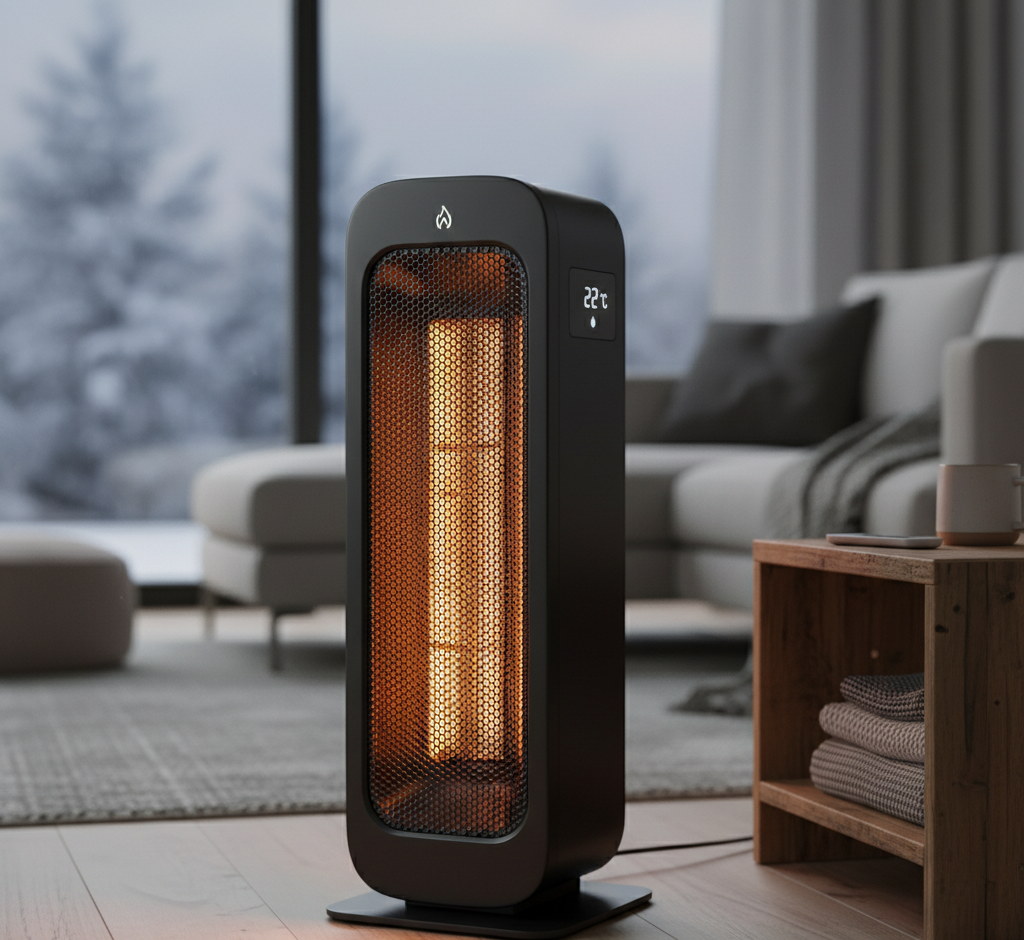
heater

3 Signs Your Heater Needs a Professional Check-Up

Your Heater Works Overtime Until It Cannot Anymore A heating system is the most dependable appliance in a Canadian house, which is exactly why it is so easy to forget. Its importance only surfaces on the first freezing morning when nothing blows warm. Repairs arrived at in January cost more, wait longer, and happen in worse weather than maintenance booked in September, and most breakdowns announce themselves for weeks beforehand through warning signs homeowners dismiss. Before reading the list, it helps to know what you are listening for, because the three common heater types complain in different voices. The Three Systems Worth Understanding Forced-air furnace. Usually tucked in a basement, closet, or attic, it burns natural gas, oil, or propane to warm a heat exchanger while a blower fan pushes house air across the hot surfaces and out through supply ducts to every vent, all governed by the thermostat. Hydronic boiler. Instead of air, it heats water that travels through pipes to cast-iron radiators, baseboard units, or radiant floor tubing. The warmth is gentle, radiant, and slow to dry the air, and a good radiator keeps radiating for hours after the boiler cycles off. Space heaters. Portable units split into convection models, such as nearly silent oil-filled radiators and faster ceramic fan heaters, and radiant models whose quartz elements warm people and objects directly like sunlight. Sign 1: Weak Airflow, Rising Bills, and a Dusty House The most important maintenance task any homeowner can do is checking and changing the furnace air filter, which is designed to trap dust, pollen, and pet dander before that debris enters the system. A clogged filter chokes airflow, forcing the blower to labor just to move air, which wastes energy, inflates utility bills, strains components toward early failure, and quietly degrades the air your family breathes. If vents feel feeble, dust settles faster than usual, or the furnace runs constantly without reaching temperature, the filter is suspect first and the blower second. Sign 2: Strange Smells, Soot, Popping, or a Musty Blow Scent and sound are a heater’s language. A fuel-burning system with dirty burners or a cracked heat exchanger can leak carbon monoxide, an invisible danger no nose can confirm, which is why a technician cleans and inspects burners, checks the exchanger for cracks, and tests safety controls during an annual professional tune-up. Popping metal, sooty streaks near the flame view, or a musty wave each time the fan starts are all worth a service call; recurring mustiness can point to mold growing somewhere in the system, an environment the CDC outlines as a genuine indoor air concern rather than a cosmetic one. Sign 3: You Are Heating Room by Room With Portables Space heaters exist for cold spots and extra warmth, not as a workaround for a central system that has quietly lost its strength. If every evening looks like a conference of glowing portables, the furnace or boiler needs professional eyes. Meanwhile, portable safety rules are non-negotiable: units belong on a flat, level floor at least three feet away from curtains, bedding, and furniture; they should never run unattended or overnight; and models with an automatic shut-off that trips when tipped are the only kind worth buying. The CDC’s winter weather safety guidance covers these heating precautions alongside cold-season basics worth sharing with everyone in the house. The Upgrades That Reduce the Calls Two technologies have changed the service calendar more than any other. Smart thermostats learn the household schedule, ease the temperature while everyone is out, recover comfort before arrival, and allow phone control from anywhere, which prevents wasted fuel and meaningful savings. Heat pumps take a different route to the same result: rather than burning anything, they extract latent heat from cold outdoor air and move it inside, making them remarkably energy-efficient because moving warmth costs far less than generating it. Warning Sign Translator What you notice What it may signal Smart next move Lukewarm vents, heavy dust Clogged filter starving airflow Replace filter, then reassess Blue film, soot, odd exhaust smells Burner or heat exchanger trouble Book a professional inspection promptly Banging or thumping during spin-up Blower or balance strain Schedule service before winter peak Rooms never reach temperature Undersized or worn central system Get the furnace or boiler evaluated Frequently Asked Questions How often does a central heater really need professional service? Every year is the standard for any system that burns fuel, ideally before the heating season begins. The technician cleans burners, examines the heat exchanger for cracks that could leak carbon monoxide, tests safety controls, and confirms the unit runs at peak performance, which protects both your family’s air and your repair budget. My furnace smells burning on the first run each fall. Is that an emergency? A brief dust-burning smell when the season’s first cycle ignites is normal as particles on the heat exchanger char off. The smell should fade within minutes. If it lingers, returns mid-season, or comes with soot or headaches, treat it as a sign to shut the system down and call a professional rather than riding it out. Are heat pumps worth it in a real winter? A heat pump is built to pull latent heat out of cold outdoor air and move it inside instead of combusting fuel, which makes it one of the most efficient ways to keep a home comfortable. That efficiency also means greener operation and lower heating costs, and pairing one with a smart thermostat squeezes further savings from the same energy. Can radiant floor and radiator homes skip maintenance? Hydronic setups are quieter and gentler on the air, but the boiler still deserves annual attention because it is the engine behind every loop of hot water. Radiators and baseboards themselves ask little; the machine pressurizing and heating the water is where inspection, cleaning, and safety testing belong. Book the Tune-Up and a Fresh Start Together A serviced heater and a cleaned home solve the same problem from two directions, because dust, allergens, and

3 Signs Your Heater Needs a Professional Check-Up Read More »

6 Reasons Why Dry Cleaning is The Safest Option For Your Most Important Clothes

Dry Cleaning Is Neither Dry Nor Simple, and That Is the Point The name is one of the most misleading phrases in the household vocabulary. Dry cleaning is a fully wet process, just not with water. Instead of H2O, garments are bathed in a liquid solvent chosen precisely because it dissolves oils and greases without attacking the delicate, water-sensitive materials we pay the most for. Silk, wool, rayon, tailored suits, and formal gowns can shrink, distort, or bleed their color in a washer, yet the same items emerge from a cleaning machine structurally intact and visibly restored. Six parts of the professional workflow explain why this method is the safest route for the clothes that matter most. Reason 1: Every Garment Is Diagnosed Before It Is Touched The process begins at the counter, where an experienced cleaner asks what caused each flagged stain, because the source dictates the chemistry. The garment then gets a full inspection beyond the spots you pointed out, with loose buttons, open seams, and pre-existing damage noted. The care label is read as what it legally is, a directive from the manufacturer that the cleaner must follow. Finally, a numbered tag or barcode is attached to an inconspicuous seam so the piece can be tracked through every stage and reunited with your exact order. Reason 2: Trained Spotters Know Which Chemical Beats Which Stain Pre-treatment, called spotting, is the most skill-heavy step in the building. At a spotting board equipped with steam, vacuum, and a shelf of specialized agents, the spotter identifies the fabric and the stain family before choosing a treatment. Oil-based marks like grease and salad dressing, protein marks like blood and egg, and tannin marks like wine, coffee, and juice each demand different chemistry. A steam gun loosens the spot while solutions are tamped in with a small brush and flushed out, and a vacuum pedal suctions the released stain and moisture so no ring forms. Home laundering simply cannot reproduce this stage, and a misjudged DIY attempt on delicate fabric can cause more damage than the stain itself; the CDC guide to bleach safety is a stern reminder about handling strong chemicals casually. Reason 3: The Water-Free Cycle Protects Structure and Color A modern cleaning machine resembles an oversized front-load washer but contains far more engineering, a sealed system performing wash, rinse, and dry in one drum. Garments sorted by color, weight, and fabric are tumbled gently while solvent circulates through them, lifting body oils, grime, and the pre-treated spots. Historically the industry ran on perchlorethylene, known as perc, a superb degreaser that raised environmental and health concerns; many shops have moved to friendlier options such as hydrocarbon solvents, liquid silicone, or pressurized liquid carbon dioxide. Because there is no water, fibers never swell, dyes never bleed, and the garment’s shape survives intact. Reason 4: The Solvent Is Reused, Recovered, and Kind to Fabric After the wash, the machine drains and spins at high speed to extract solvent, exactly as a washer wrings out water. The used liquid is not poured away; it passes through filters that catch the dirt and is then distilled, so purification and reuse close the loop, which is both economically and environmentally necessary. The drying phase is equally controlled. Warm, gentle air evaporates the remaining solvent at a temperature just high enough to turn it to vapor without cooking fibers, and cooling coils condense that vapor back into pure liquid for the tank. This vapor recovery is so efficient that almost nothing escapes, and clothes finish dry with only a faint sterile scent that dissipates quickly. The CDC’s advice on cleaning and disinfecting at home frames the same trade-off: routine laundry protects hygiene, while delicate fabric deserves gentler chemistry. Reason 5: Finishing Restores Shape, Not Just Wrinkles Clean garments face a second inspection, and any surviving spot goes to post-spotting on the now-fresh fabric. Then the piece enters finishing, which is nothing like pressing with a home iron. Large presses flatten trousers and flat panels, form finishers steam and reshape jackets and blouses from the inside out, and small specialty irons handle collars, cuffs, and pleats. Steam relaxes fibers and lifts wrinkles without harsh pressure, aiming not merely for smooth cloth but for the original drape, body, and hand feel of the garment. Reason 6: Final QC Means You Get Back More Than You Dropped Off The last station verifies everything: an inspector hunts remaining creases, confirms buttons are secure and replaces lost ones, and checks the pressing. Only then do the tags pull your order together, and each garment hangs or folds under a thin protective bag that keeps dust and moisture away until pickup. Stain Families at a Glance Stain family Common examples How pros attack it Oil-based Grease, salad dressing Matching solvents at the spotting board Protein-based Blood, egg Different agents plus steam and tamping Tannin-based Wine, coffee, juice Specialized flushing with vacuum extraction Getting the Best Result From the Counter Point out every stain and say what caused it, even ones you think dried out Mention missing buttons or splitting seams before the tag goes on Trust the care label process and leave the decoding to the cleaner Bring full outfits together so pieces reassemble correctly Ask about eco-friendly solvent options if odors worry you Frequently Asked Questions Does dry cleaning actually clean, or just deodorize? Both, and more. The solvent dissolves the oily soils that water-based washing is poor at moving, while the spotting stage attacks specific stains with targeted chemistry. Filtration and distillation of the solvent mid-process keep the bath clean enough to keep lifting grime. Will solvent hurt my clothes the way a washer does? The entire reason solvents are chosen is that they do not swell natural fibers, so the shrinkage, distortion, and dye loss that water can inflict on silk, wool, and rayon never occur. The tumble is gentler than a laundry cycle, drying temperatures are tightly controlled, and the vapor recovery system keeps the process closed

6 Reasons Why Dry Cleaning is The Safest Option For Your Most Important Clothes Read More »

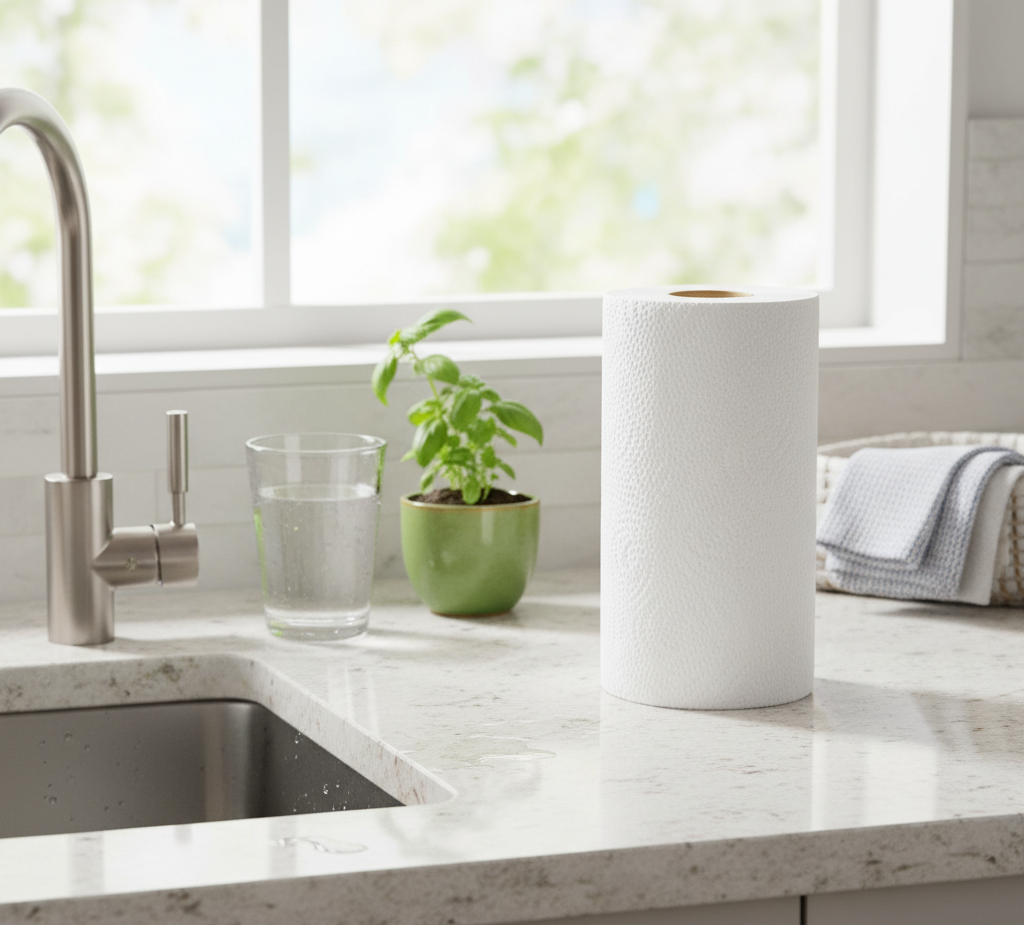
paper towels on a kitchen counter

The Right and Wrong Way to Use Paper Towels for Cleaning – 6 Best Tips

Paper Towels: When the Roll Is Right and When It Is Dead Wrong The paper towel is a cornerstone of modern cleaning, so embedded in daily life that we grab it without thinking: sudden spill on the counter, smudge on the window, greasy stovetop. Its virtues are real. No hunting for a clean cloth, no laundry burden, no hesitation with unpleasant messes before it hits the bin. One fresh sheet guarantees a clean slate and rules out spreading yesterday’s germs on today’s surfaces. But convenience is not the same as correctness, and most homes reach for the roll far too often. These six tips put paper towels back in their proper role. Tip 1: Blot Spills, Never Wipe Them Paper towels are engineered to absorb: cellulose fibers, usually from wood pulp, wick liquid and hold it, while texture, thickness, and quilting add scrubbing grip. That engineering only pays off if you work with it. Lay a sheet over a fresh spill and let capillary action pull the liquid up and out of the surface. An aggressive wiping motion does the opposite, pushing moisture over a wider footprint and driving it into porous wood or grout where it becomes a real stain. For large spills, layer several sheets so the pile soaks through instead of smearing. Tip 2: Use One as a Disposable Applicator Beyond mopping up liquids, the roll is a superb delivery system. Sprayed with glass cleaner, a paper towel polishes windows and mirrors streak-free precisely because it is new: a reusable cloth can carry residual oils or fabric softener from the last wash, and those residues are what leave glass hazing. Sprayed with disinfectant, a fresh sheet spreads the product evenly across counters and sinks, then leaves the house carrying whatever germs it collected. That matters more than it sounds, because a damp sponge or cloth that skips regular sanitizing becomes a breeding ground for bacteria and a vehicle for cross-contamination, the exact risk the CDC’s home cleaning and disinfection guidance warns about. Tip 3: Hit Heavy Grease Dry First Grease and oil are where paper genuinely shines. It wipes greasy cooktops, cleans microwave splatter, and blots excess oil off fried food, trapping grease in fibers destined for the trash. A reusable cloth takes that same oil into your laundry, where it lingers and transfers. For thick, heavy grease, run the dry towel first to pull up the bulk, then follow with your cleaning solution. Two steps stop the smear and make the actual cleaning dramatically shorter. Tip 4: Know the Real Downsides The disposability that makes paper towels lovable creates their two genuine weaknesses. The first is cost in every currency. Making them consumes trees, water, and energy, and seconds later the sheet heads to landfill, while the recurring purchase adds up to far more than one-time reusable alternatives. The second is performance limits: a standard sheet lacks durability for heavy scrubbing. Faced with dried-on food or textured surfaces it shreds, leaving lint and pulp behind, painfully visible on dark surfaces and screens. Any job that needs friction belongs to a scrub brush or a good cloth, not paper. Tip 5: Default to Microfiber Instead For most everyday tasks, microfiber is simply the better tool. These cloths weave extremely fine synthetic fibers, typically a polyester and polyamide blend, split during manufacturing to create huge surface area and a positive electrostatic charge that pulls dust, dirt, and microbes into the cloth instead of shuffling them around. Dry, they are exceptional dusters. Damp, their capillary action absorbs remarkable water and lifts grime with little effort, often with plain water alone. They scrub without falling apart, polish glass without lint, and survive hundreds of washes, which makes them cheaper and greener over any realistic timeline. Care is the catch: wash them apart from other laundry and skip fabric softener, which clogs the fibers and kills both the static cling and the absorbency. Tip 6: Save the Roll for Hazardous Messes Hygienic disposal is the paper towel’s trump card, and some messes should never touch reusable laundry. The list is short and specific: Raw meat juices from poultry or beef packaging Pet accidents, vomit, and illness-related fluids Litter box spills and tracked-in mud bombs Anything you would rather incinerate than launder With biological hazards, containing and discarding immediately is the responsible move against pathogens like salmonella or E. coli, since scrubbing a cloth clean enough to be safe is often impractical mid-crisis. If you finish with a bleach-based sanitizing wipe, handle it per Health Canada’s rules for household chemicals, which stress dilution accuracy and never mixing products. Paper Towel vs Microfiber by Task Task Better tool Why Fresh liquid spill Paper towel Blots and contains, then disappears Windows and mirrors Either Paper never carries softener haze; microfiber must be lint-clean Raw chicken juices Paper towel Single-use stops cross-contamination Dusting shelves Microfiber Static charge traps dust instead of airborne-izing it Stovetop grease film Paper first, cloth after Dry towel pulls bulk; washable cloth finishes Scrubbing dried messes Brush and cloth Paper shreds and leaves pulp Drying hands Cloth or paper, your call Cloth wins cost, paper wins when hands are filthy Paper Towel FAQ Are paper towels more hygienic than reusable cloths? For hazardous messes, yes, because the towel exits with the contamination instead of returning to a laundry pile. For routine wiping, a microfiber cloth washed regularly and used damp is equally sanitary and far cheaper. Why does my paper towel leave lint on dark surfaces? Cheap towels shed pulp and lint, especially when wet or when dragged across texture. Dab instead of dragging, use two layers for wet jobs, or switch to a lint-free microfiber pass for the final polish on screens and dark finishes. Can I compost used paper towels? Only if they absorbed food scraps or water. Towels dirty with cleaning chemicals, grease, or biological waste belong in the trash, since compost is meant for untreated organics. How much does the roll habit really cost? A household

The Right and Wrong Way to Use Paper Towels for Cleaning – 6 Best Tips Read More »