Kitchen Cleaning

robot vacuum cleaner

Are Robotic Vacuums Worth It? A Deep Dive into Modern Floor Care

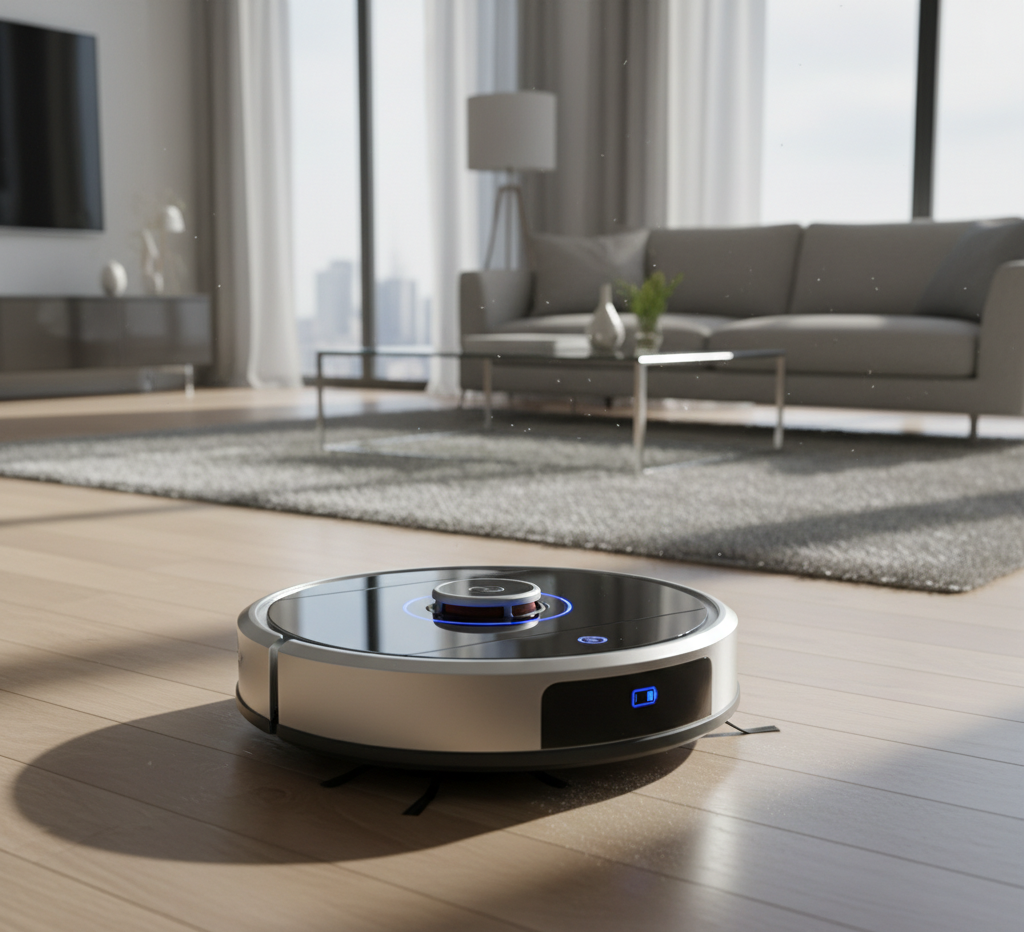
 The robotic vacuum cleaner, when it first arrived on the consumer market, was a clunky, often comical interpretation of this dream. Early models were infamous for their random, pinball-like navigation, their tendency to get stuck under the sofa, and their habit of missing entire sections of a room. They were novelties, interesting gadgets for early adopters, but hardly a serious replacement for the traditional vacuum. Today, that landscape has changed so dramatically that it is almost unrecognizable. The robotic vacuum cleaner has come of age. Fueled by staggering advancements in navigation, artificial intelligence, and cleaning technology, these machines have evolved from clumsy gimmicks into sophisticated, powerful, and indispensable tools for home maintenance. They are no longer just vacuuming; they are mapping, strategizing, and, in the most advanced models, even mopping and cleaning themselves. Understanding the technology behind these modern marvels is the first step to appreciating their profound impact on the modern clean home. Revolution The single greatest leap in robotic vacuum technology has been in navigation. This is what separates a frustrating toy from a reliable cleaning partner. The Old Guard: Random Navigation: The earliest and most basic models use a “bump-and-go” system. They travel in a straight line until they hit an obstacle, at which point they turn in a random direction and continue. While this method can eventually cover most of a simple, square room, it is incredibly inefficient, misses spots, and takes a frustratingly long time to complete a job. This technology is now found only on the most budget-friendly models. The Smarter Path: Gyroscopic Navigation: A significant step up, these robots use a gyroscope and other sensors to travel in more deliberate, parallel lines, creating a more systematic and efficient cleaning path. They have a better sense of where they have been, resulting in more complete coverage. However, they can still become disoriented if they are picked up or get stuck, as they don’t create a persistent map of the home. The Gold Standard: LiDAR (Light Detection and Ranging): This is where robotic vacuums became truly intelligent. A LiDAR-equipped robot has a spinning laser turret on top that continuously scans its surroundings, measuring distances and creating a highly accurate, detailed map of your home in real-time. This is the same core technology used in self-driving cars. This map allows the robot to know exactly where it is, where it has been, and where it needs to go. It cleans in precise, methodical rows, navigates around furniture with grace, and can be sent to clean specific rooms or areas on command via a smartphone app. It works flawlessly in complete darkness and is the foundation for the most advanced smart features. The Visual Approach: vSLAM (Visual Simultaneous Localization and Mapping): Another high-end navigation method, vSLAM uses a camera to view its surroundings, identifying landmarks like furniture, doorways, and walls to build a map. As it cleans, it is constantly comparing what it sees to the map it has created, allowing it to navigate systematically. Modern vSLAM robots often use advanced AI to recognize and avoid specific obstacles, like shoes or power cords. The main drawback is that, like a person, they need a reasonable amount of light to “see” and navigate effectively. These advanced navigation systems are supported by a suite of other sensors. Cliff sensors prevent the robot from tumbling down stairs, wall sensors allow it to clean tightly along baseboards without constantly bumping them, and dirt detect sensors (on some models) can identify areas with a higher concentration of debris and command the robot to spend extra time cleaning there. Key Features of a Modern Robotic Vacuum A robot’s intelligence is its brain, but its features are what truly define its capabilities and convenience. Interactive Smart Maps: The maps created by LiDAR or vSLAM systems are not just for the robot’s benefit; they are for yours. Through a companion app on your phone, you can view the map and interact with it. You can name rooms, draw virtual “no-go zones” to keep the robot away from pet bowls or delicate furniture, and create “clean zones” to send it for a quick cleanup of a specific spill. This level of control is a game-changer. Suction Power: Measured in Pascals (Pa), this is the raw cleaning force of the vacuum. An entry-level model might have around 1,500 Pa, while a high-end model can exceed 4,000 Pa. Higher suction is particularly important for homes with carpets, as it is needed to pull dirt and pet hair from deep within the fibers. Many models now feature an automatic carpet boost, where they intelligently increase suction power the moment they detect they are on a carpet. Battery Life and “Recharge & Resume”: A long battery life is crucial for cleaning larger homes in a single run. However, the most important feature in this category is “Recharge & Resume.” An intelligent robot knows the status of its own battery. When it runs low on charge before a job is finished, it will automatically return to its dock, recharge just enough to complete the remaining area, and then go back out to finish the job exactly where it left off. AI-Powered Object Avoidance: This is a cutting-edge feature found on premium models. It goes beyond simple obstacle detection. Using a front-mounted camera and artificial intelligence, these robots can identify specific objects and navigate around them. This is the technology that allows a robot to avoid a stray sock, a child’s toy, or the most dreaded of household obstacles: pet waste. For pet owners, this feature alone can be worth the price of admission. The Convenience Revolution: Self-Emptying Bins: One of the most significant recent innovations is the auto-empty dock. After each cleaning run, the robot returns to its charging base, which contains a powerful vacuum of its own. This vacuum sucks all the debris from the robot’s small internal dustbin into a large, sealed bag or canister within the dock. This means that instead of having to empty the robot’s bin after every one or two cleanings, you only

Are Robotic Vacuums Worth It? A Deep Dive into Modern Floor Care Read More »

The Benefits of Hiring a Professional

Post-Construction Cleaning: 3 The Benefits of Hiring a Professional

The end of a construction or renovation project is a moment of pure anticipation. The final nail has been hammered, the last coat of paint has dried, and the blueprint that once existed only on paper has been transformed into a tangible, three-dimensional space. But in the quiet aftermath, after the contractors have packed up their tools and driven away, the dream space remains just out of reach, separated from reality by a formidable, often underestimated barrier: the post-construction mess. This is not the familiar, everyday dirt of a lived-in home. Post-construction cleaning is a specialized, intensive discipline, a top-to-bottom reclamation project that deals with a unique and pervasive type of grime. It is the final, essential bridge that transforms a hazardous, dusty worksite into a clean, breathable, and truly livable home. 1.The Anatomy of a Construction Mess To appreciate the scope of a post-construction clean, one must first understand the nature of the debris left behind. It is a class of dirt all its own, requiring a specific strategy and a different set of tools than your weekly cleaning routine. The undisputed villain of any construction project is the dust. This is not the soft, fluffy dust that gathers on bookshelves. Construction dust is a fine, gritty, and abrasive particulate matter composed of a cocktail of materials: drywall compound (gypsum), plaster, sawdust, cement powder, silica, and more. Its particles are so fine that they become airborne with the slightest disturbance, traveling through HVAC systems and settling in a uniform, ghostly layer on every single conceivable surface. It’s not just on the floors and countertops; it’s inside cabinets, on top of door frames, within light fixtures, coating the blades of a ceiling fan, and settled deep within the fibers of any existing carpet. This dust is more than an eyesore; it can be a significant respiratory irritant, making its complete and total removal a matter of health and safety, not just aesthetics. Beyond the all-encompassing dust, a construction site is littered with other forms of debris. You will find stray nails, orphaned screws, small chunks of wood and drywall, plastic shavings from plumbing work, and hardened blobs of caulk or adhesive. New windows, appliances, and fixtures are typically covered in protective plastic films and manufacturer’s stickers, which often leave behind a stubborn, sticky residue when removed. There are almost always errant paint splatters on hinges, glass panes, or flooring, and scuff marks on newly installed baseboards from ladders and equipment. Attempting to tackle this complex mess with a household all-purpose cleaner and a roll of paper towels will result in frustration, smeared grime, and potentially permanent damage to brand-new, expensive surfaces. 2.Professional Post-Construction Clean A truly effective post-construction clean is not a single, chaotic event. It is a systematic, multi-phase process where each stage builds upon the last, ensuring that every corner is addressed and no detail is overlooked. Phase 1: The Rough Clean This initial phase is about clearing the battlefield. It often takes place during the final days of construction or immediately after the contractors have departed. The primary objective of the rough clean is to remove the bulk of the large-scale debris, making the space safe and accessible for the meticulous, detailed cleaning to follow. A standard rough clean includes: The collection, removal, and proper disposal of all large trash and debris. This includes wood scraps, leftover materials, hardware packaging, and cardboard boxes. Scraping and sweeping up large piles of drywall dust, sawdust, and other major accumulations from the floors. Peeling off all protective plastic films from windows, doors, appliances, and fixtures. A preliminary pass with a heavy-duty shop-vac over all surfaces to remove the thickest, most obvious layers of dust. At the conclusion of the rough clean, the space will still be visibly dirty, but it will be free of major hazards and clutter. This crucial first step clears the way for the much more intensive and detailed work of the deep clean. Phase 2: The Deep Clean  This is the heart and soul of the post-construction cleaning process. It is a methodical, top-to-bottom cleaning of every single surface in the renovated area. The guiding principle is universal to all serious cleaning: start high and work your way down. This ensures that any dust or debris you dislodge from a high surface falls onto a surface you have yet to clean, preventing you from having to re-clean areas. A comprehensive deep clean checklist is exhaustive: Ceilings, Walls, and High Fixtures: Wiping down ceilings and walls to remove the fine layer of settled dust. This may involve dry dusting or using a damp microfiber cloth, depending on the paint finish. Cleaning all light fixtures, ceiling fans, and recessed lighting, both inside and out. Wiping down the tops of all door frames, window casings, and any high-up molding. Doors and Windows: Cleaning both sides of every window and glass door. This critical step includes carefully scraping off any paint splatters, caulk, or sticker residue with a professional razor scraper. Thoroughly cleaning window sills and tracks. These areas are notorious collection points for a surprising amount of sawdust and drywall debris. Wiping down every part of the doors, including the hinges, doorknobs, and the often-forgotten top edge where dust loves to settle. Trim, Baseboards, and Cabinetry: Wiping down every inch of trim, molding, baseboards, and any built-in shelving. This is often a detailed, hands-and-knees job that requires patience. Cleaning the inside and outside of all cabinets, cupboards, and drawers. This is especially vital for kitchens and bathrooms. You must ensure these storage spaces are completely free of sawdust and drywall dust before storing clean dishes, food, or linens. Kitchen and Bathrooms: Cleaning, disinfecting, and polishing all countertops. Scrubbing and shining sinks and faucets, making sure to remove any plumber’s putty or installation residue. Cleaning the exteriors and interiors of all new appliances. Thoroughly cleaning showers, bathtubs, and toilets to remove the fine film of dust that has inevitably settled on them. Polishing all fixtures, mirrors, and chrome to

Post-Construction Cleaning: 3 The Benefits of Hiring a Professional Read More »

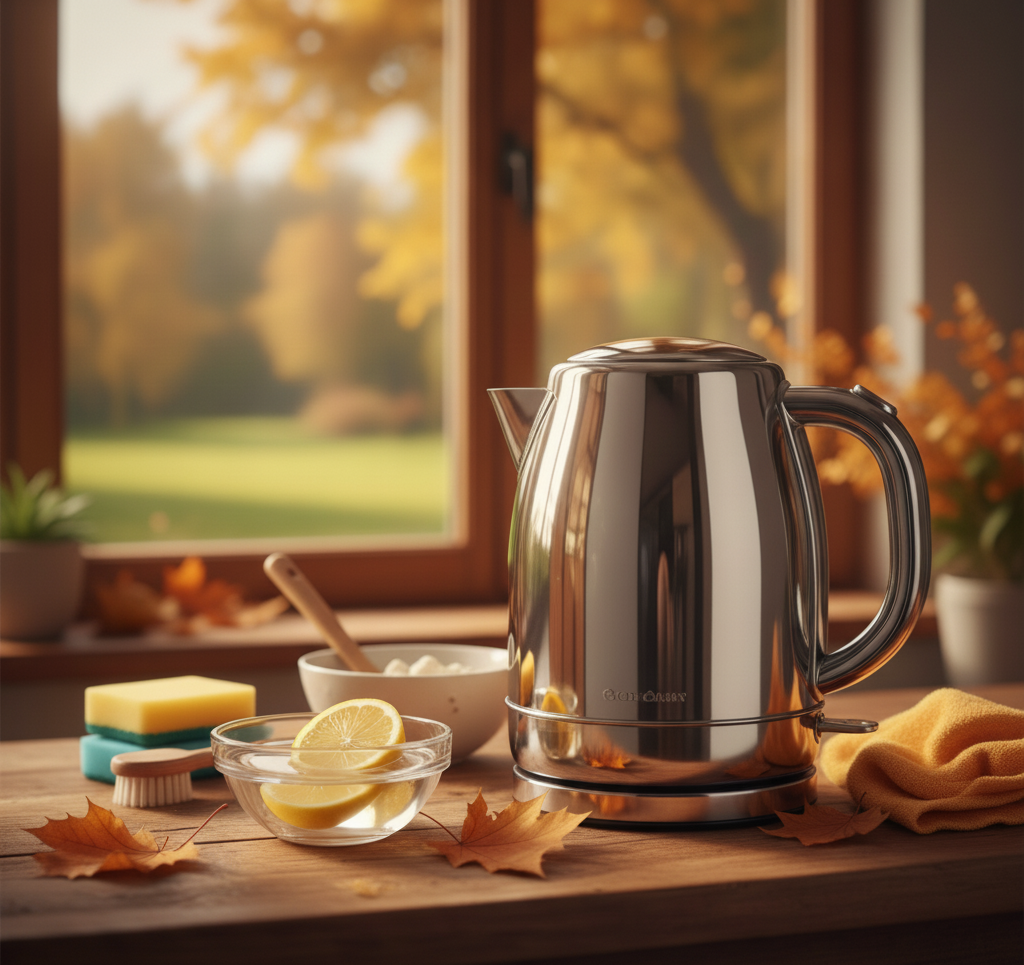
Kettle Maintenance: A Step-by-Step Cleaning Guide Get Your Kettle Sparkling Clean for the Autumn Season

The electric kettle is the unsung hero of the modern kitchen. It is an appliance of profound simplicity and efficiency, dedicated to the singular, noble task of boiling water quickly. It facilitates our morning coffee rituals, our afternoon tea breaks, and countless culinary preparations. Yet, for all its utility, the kettle is often subject to a slow, creeping form of internal decay that compromises its performance and the quality of the water it boils. This internal affliction is limescale, and dealing with it is the most critical aspect of kettle maintenance. Understanding Limescale If you live in an area with hard water, limescale is an inevitability. Hard water is simply water that has a high concentration of dissolved minerals, primarily calcium carbonate and magnesium. These minerals are harmless to drink, but when the water is repeatedly heated, they precipitate out of the solution and form a hard, chalky, off-white deposit on surfaces. In a kettle, this deposit builds up layer by layer on the heating element and the interior walls. At first, this buildup might seem like a purely cosmetic issue, but it has several significant and detrimental effects: Impaired Performance and Wasted Energy: Limescale acts as an insulator. The crusty layer on the heating element forces it to work harder and longer to transfer heat to the water. This means your kettle takes noticeably longer to reach a boil, and in doing so, consumes more electricity. A kettle caked in limescale is an inefficient kettle, wasting both time and money. Altered Taste: The minerals in the limescale can leach back into the water, imparting a faint, chalky, or metallic taste. This can ruin the delicate flavors of a high-quality tea or coffee. You might also notice a gritty texture or floating white flakes in your cup, which are small pieces of the scale that have broken off. Potential for Bacterial Growth: The rough, porous surface of thick limescale deposits can create a habitat for bacteria to colonize. While the boiling process will kill most active bacteria in the water, the surface of the scale itself can harbor microorganisms that you do not want in your daily beverage. Reduced Lifespan: Forcing the heating element to consistently overheat to penetrate the limescale can cause it to burn out prematurely, shortening the functional life of your appliance. The Deep Clean Cleaning the inside of a kettle is not about scrubbing. It is about chemistry. You need to use a mild acid to dissolve the alkaline mineral deposits. This process, known as descaling, is simple, effective, and can be done with basic household products. It should be performed regularly, anywhere from once a month to every few months, depending on the hardness of your water. The moment you see a visible white film forming on the bottom, it is time to descale. Method 1: The White Vinegar Method  This is the classic, most effective, and cheapest way to descale a kettle. Step 1: Create the Solution. Fill the kettle with a solution of equal parts distilled white vinegar and water. Do not fill it past the maximum fill line. A 50/50 mix is a strong and effective starting point. Step 2: Let it Soak (Optional but Recommended). For very heavy buildup, let the solution sit in the kettle for an hour before proceeding. This gives the acetic acid in the vinegar time to begin breaking down the limescale. Step 3: Bring to a Boil. Turn the kettle on and let it run through a full boiling cycle. The combination of heat and acidity will accelerate the chemical reaction that dissolves the mineral deposits. As it heats up, you may see the limescale begin to fizz and flake off. Step 4: The Big Soak. Once the kettle has boiled and switched off, leave the hot solution inside to sit for at least 20-30 minutes. For extremely stubborn scale, you can leave it for several hours or even overnight. Step 5: Empty and Inspect. Pour the vinegar solution down the sink. You should see that most, if not all, of the limescale is gone. If some stubborn patches remain, you can use a non-abrasive sponge or cloth to wipe them away. Step 6: Rinse Thoroughly. This is a critical step. Rinse the inside of the kettle with clean, cool water several times to remove any lingering scale and, most importantly, the smell and taste of vinegar. Fill it with fresh water, boil it again, and discard that water. This final boil will remove any final traces of the vinegar. Method 2: The Lemon or Citric Acid Method  For those who dislike the potent smell of vinegar, lemon juice or citric acid provides a more fragrant but equally effective alternative. Step 1: Create the Solution. You can use the juice of one or two fresh lemons or two tablespoons of citric acid powder (available in the baking or canning aisle of most grocery stores). Add this to a kettle filled with water up to the max line. Step 2: Soak and Boil. As with the vinegar method, let the solution sit for about an hour, then bring the kettle to a full boil. Step 3: Sit and Wait. Once boiled, let the hot solution sit for 20-30 minutes to finish its work. Step 4: Rinse and Repeat. Empty the kettle and rinse it thoroughly. Perform a final boil with fresh water and discard it to ensure no lemony taste remains. Cleaning the Exterior While the interior is the functional priority, the exterior also deserves attention. Always unplug the kettle before cleaning the outside. Stainless Steel: The best way to clean a stainless steel exterior is with a damp microfiber cloth and a drop of dish soap. Wipe in the direction of the grain of the steel. To remove fingerprints and add shine, you can put a small amount of white vinegar or a dab of olive oil on a clean, dry cloth and buff the surface, again, following the grain. Plastic: A simple wipe with a damp, soapy cloth is usually sufficient for a plastic kettle. Avoid using abrasive scrubbers, which

Kettle Maintenance: A Step-by-Step Cleaning Guide Get Your Kettle Sparkling Clean for the Autumn Season Read More »

green cleaning products

4 Incredible Tips On How To Use Non-toxic Cleaning Products

The promise of a clean home is often sold in the form of brightly colored liquids in spray bottles, promising to disinfect, degrease, and deodorize with unparalleled power. We associate the sharp, chemical scent of these products with the very idea of cleanliness. Yet, there is a fundamental paradox in this approach: we often use harsh, potentially hazardous chemicals in an effort to make our living spaces healthier. The truth is, a truly clean home is not one that has been sterilized with a barrage of synthetic compounds, but one that is free of both dirt and harmful residues. Transitioning to non-toxic cleaning products is not about sacrificing effectiveness for the sake of “green” ideals. It is about returning to a simpler, smarter, and safer way of cleaning. It is about understanding that the most powerful cleaning agents are often the most basic ones, the ones that have been used for generations, long before the advent of the modern chemical industry. These are the products that clean our homes without compromising the air we breathe, the surfaces our children and pets touch, or the environment beyond our walls.   1.Non-Toxic Approach The argument against conventional cleaning products is threefold, touching on our health, the environment, and our wallets. Many commercial cleaners release Volatile Organic Compounds (VOCs) into the air. When you spray an all-purpose cleaner or a glass cleaner, these compounds become airborne and can be inhaled. VOCs have been linked to a range of health issues, from headaches and dizziness to respiratory problems and long-term organ damage. The ubiquitous “fragrance” listed on many labels is often a proprietary blend of dozens of chemicals, including phthalates, which are known endocrine disruptors. For those with asthma, allergies, or chemical sensitivities, these products can be immediate triggers for adverse reactions. From an environmental perspective, the journey of these chemicals does not end when you wipe them off your counter. They are washed down the drain and enter our waterways. Ingredients like phosphates can contribute to algal blooms that disrupt aquatic ecosystems, and many other synthetic compounds are not readily biodegradable, persisting in the environment for years. At the end, there is the economic argument. A walk down the cleaning aisle reveals a hyper-specialized market: a cleaner for glass, one for countertops, another for the floor, a separate one for the bathroom, and a special degreaser for the stove. This is a marketing triumph, not a cleaning necessity. A handful of basic, non-toxic ingredients can perform all of these tasks, and more, for a fraction of the cost. 2.Non-Toxic Cleaning Toolkit Building a powerful, non-toxic cleaning arsenal is surprisingly simple and inexpensive. The following ingredients form the foundation of nearly every cleaning task in the home. Distilled White Vinegar: How it Works: Vinegar is a mild acid (acetic acid), which makes it a powerhouse for dissolving mineral deposits (like hard water stains and limescale), cutting through grease, and acting as a natural disinfectant and deodorizer. Its acidic nature disrupts the cell structure of many types of bacteria and mold. Best Uses: All-purpose surface cleaner, glass and mirror cleaner, floor cleaner, descaling coffee pots and showerheads, fabric softener substitute, and drain deodorizer. How to Use: For an all-purpose cleaner, mix a solution of 50% white vinegar and 50% water in a spray bottle. For glass, the same solution works perfectly. Caution: Never use vinegar on natural stone surfaces like marble, granite, or travertine. Its acidic properties will etch and dull the finish. Also, avoid using it on waxed surfaces or cast iron. Baking Soda  How it Works: Baking soda is a mild alkali and a gentle abrasive. It is excellent at absorbing and neutralizing odors, rather than just masking them. Its fine, crystalline structure makes it perfect for scrubbing away grime without scratching most surfaces. When combined with an acid like vinegar, it creates a fizzy reaction that can help dislodge clogs and lift stubborn dirt. Best Uses: Scouring sinks, tubs, and toilets; deodorizing refrigerators, carpets, and drains; making a soft-scrubbing paste for stovetops and tile grout; boosting laundry detergent. How to Use: Sprinkle it directly onto a damp surface and scrub, or create a paste by mixing it with a small amount of water or dish soap. Caution: While it is very gentle, be cautious when using it as a paste on delicate, high-gloss finishes, and test in an inconspicuous area first. Hydrogen Peroxide  How it Works: Hydrogen peroxide is a powerful disinfectant and a natural bleaching agent that breaks down into just oxygen and water, making it incredibly safe for the environment. It is effective at killing mold, mildew, and bacteria. Best Uses: Disinfecting countertops and cutting boards, removing stains from tile grout, whitening laundry (as a bleach alternative), and killing mold on bathroom surfaces. How to Use: Use it directly from the bottle, often by attaching a spray nozzle to the top. Spray it on a surface, let it bubble and sit for 5-10 minutes to disinfect, and then wipe clean. Caution: Store hydrogen peroxide in its original dark bottle, as light will cause it to break down and lose its effectiveness. It can have a mild bleaching effect, so test it on colored fabrics and surfaces before widespread use. Castile Soap: How it Works: Castile soap is a vegetable-based soap, traditionally made from olive oil. It is a true soap, not a synthetic detergent, and it is completely biodegradable. It is a surfactant, which means it breaks the surface tension of water, allowing it to bind with dirt and grease and wash them away. Best Uses: A gentle all-purpose cleaner, dish soap, floor cleaner, and a base for creating foaming hand soaps and DIY scrubbing pastes. How to Use: It is highly concentrated, so a little goes a long way. A few drops in a spray bottle of water or a teaspoon in a bucket of mop water is often sufficient. Caution: Do not mix Castile soap directly with vinegar. The acidic vinegar will react with the alkaline soap, causing the soap to “unsaponify” and leaving behind a white, filmy residue that is difficult to

4 Incredible Tips On How To Use Non-toxic Cleaning Products Read More »

Maintaining a Clean Bin

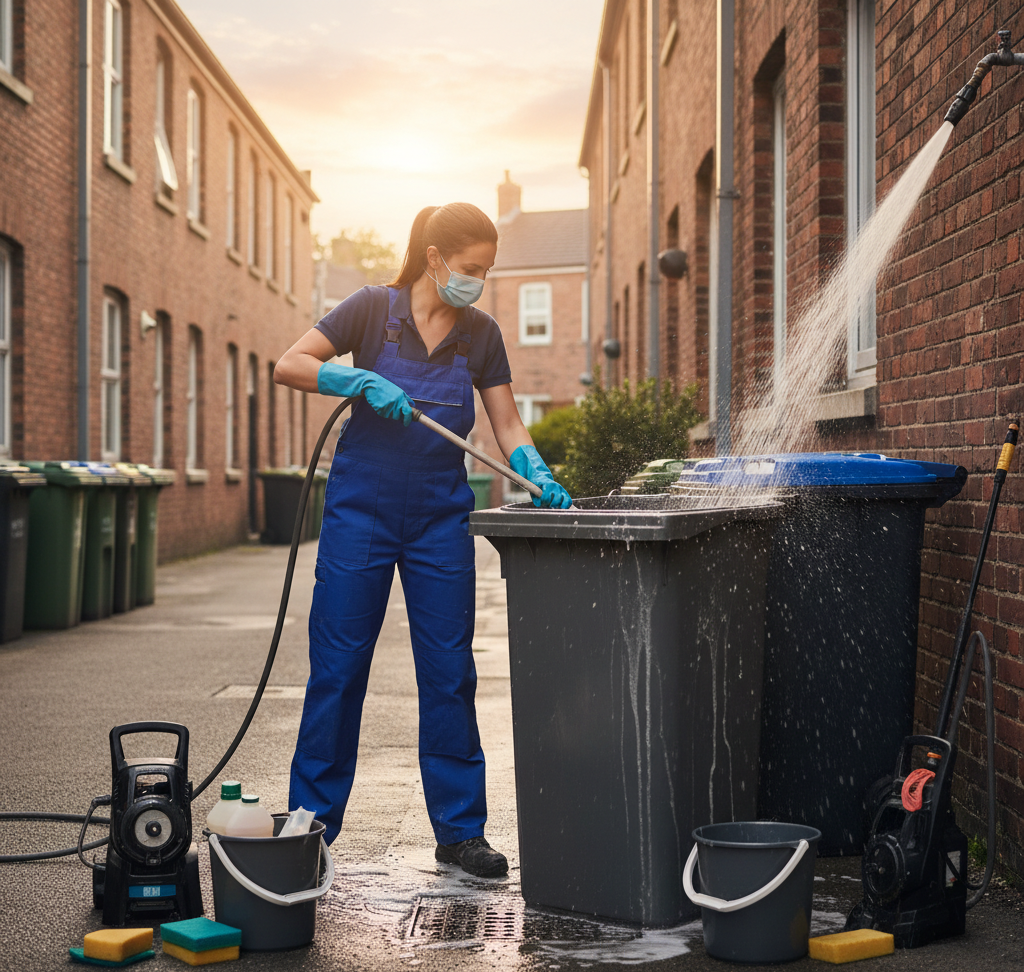
Garbage Bin cleaning: 4 Tricks To Eliminate Odors And Leave It Looking Like New

The garbage bin is the most thankless and hardworking fixture in any home. It is a vessel of necessity, the silent recipient of our daily waste, and the frontline in the constant battle against dirt, decay, and disorder. It is a tool so fundamental to household hygiene that it is often completely overlooked, left to its own devices in a corner of the kitchen or at the side of the house until the moment its presence becomes unavoidable, usually through a foul odor or an unpleasant discovery. Cleaning a garbage bin is not a glamorous task. There is no satisfying “before and after” reveal that you will be eager to show off. Yet, the proper maintenance and regular, thorough cleaning of your garbage bins are among the most critical cleaning routines for a healthy, pest-free, and pleasant-smelling home. To neglect the bin is to invite problems that are far more difficult and disgusting to solve than the cleaning task itself.   1.The Anatomy of a Filthy Bin To understand how to clean a garbage bin effectively, you must first understand why it gets so profoundly dirty. The problem is a combination of three factors: organic matter, moisture, and time. Every scrap of food, every used paper towel soaked in meat juice, and every discarded vegetable peeling is organic matter. Once inside the dark, contained environment of a garbage bag, this matter begins to decompose. This process is driven by bacteria, which break down the food waste and, in doing so, release a cocktail of volatile organic compounds. These compounds are what we perceive as the smell of garbage, gases like hydrogen sulfide (rotten eggs) and methane. Moisture is the accelerator for this entire process. A dry environment slows bacterial growth significantly. However, garbage is rarely dry. Leaky food containers, wet food scraps, and condensation create the perfect humid breeding ground for bacteria to thrive and multiply exponentially. This is why a small tear or leak in a garbage bag is so catastrophic. The liquid that seeps out, a substance often referred to as “leachate” or “garbage juice,” is a highly concentrated bacterial soup. It soaks into the bottom of the bin, and even after the bag is removed, that residue remains, providing the seed for the next cycle of odor and grime. Time simply allows these processes to fester. The longer the organic matter and moisture are left to interact, the more intense the decomposition, the stronger the smell, and the more stubborn the resulting grime will be. This sticky, foul-smelling film that coats the bottom and sides of a neglected bin is a biofilm—a complex community of microorganisms that have attached themselves to the surface and to each other. It is not just dirt; it is a living, stinking ecosystem. This environment is also the perfect nursery for pests. Flies are drawn to the smell of decay to lay their eggs. In the warm, protected, and nutrient-rich environment of a garbage bin, these eggs hatch into maggots in as little as eight hours. Rodents and other scavengers are also attracted by the scent, and a bin without a secure lid is an open invitation for a nightly buffet. 2.The Tools for the Task Cleaning a garbage bin is a heavy-duty job that requires more than a simple sponge and some soap. You need to be prepared for a wet, messy, and smelly process. Assembling the right tools beforehand will make the job faster, more effective, and more tolerable. Protective Gear: This is non-negotiable. Wear heavy-duty rubber gloves to protect your hands from bacteria and harsh cleaning agents. Safety glasses are also highly recommended to protect your eyes from splashes of dirty water and chemicals. A Hose with a High-Pressure Nozzle: The ability to spray down the bin from a distance is a significant advantage. A high-pressure nozzle will help dislodge caked-on grime and rinse the bin effectively. If you don’t have a hose, a few large buckets of hot water will work, but it will require more effort. A Long-Handled, Stiff-Bristled Brush: This is your primary scrubbing tool. A long handle is crucial, as it allows you to reach the bottom of the bin without having to stick your head and shoulders inside. A deck brush or a toilet brush reserved exclusively for this purpose works perfectly. Degreasing Dish Soap: The sticky, greasy nature of the biofilm requires a strong degreaser. A quality dish soap is designed to cut through grease and is an excellent first-line cleaner. A Disinfectant: After cleaning, you need to sanitize. There are several options. A diluted bleach solution (about one cup of bleach per gallon of water) is highly effective at killing bacteria, mold, and viruses. For a less harsh alternative, a solution of equal parts white vinegar and water can be used. Vinegar is a natural disinfectant and deodorizer. Baking Soda: This is an excellent deodorizer and a mild abrasive that can help with scrubbing. 3.The Deep Cleaning Method The best place to perform this task is outdoors, on a lawn or a patch of gravel where the dirty water can drain away without staining a driveway. Empty the Bin Completely: Make sure there is no loose debris left inside. The Pre-Rinse: Using your hose, give the entire interior of the bin a thorough spray-down. Use the highest pressure setting to blast off as much of the loose dirt and grime as possible. Pour out the dirty water. The Degreasing Scrub: Pour a generous amount of dish soap into the bottom of the bin and add a few inches of the hottest water you can safely handle. Take your long-handled brush and begin scrubbing. Start with the bottom and work your way up the sides. Apply firm pressure and focus on the corners and any visible patches of caked-on grime. Don’t be afraid to put some effort into it; you are physically breaking apart that stubborn biofilm. Once you have scrubbed the entire interior, pour out the soapy, dirty water. The Disinfecting Soak: Now it is time to sanitize and deodorize. If

Garbage Bin cleaning: 4 Tricks To Eliminate Odors And Leave It Looking Like New Read More »

essential window cleaning tools

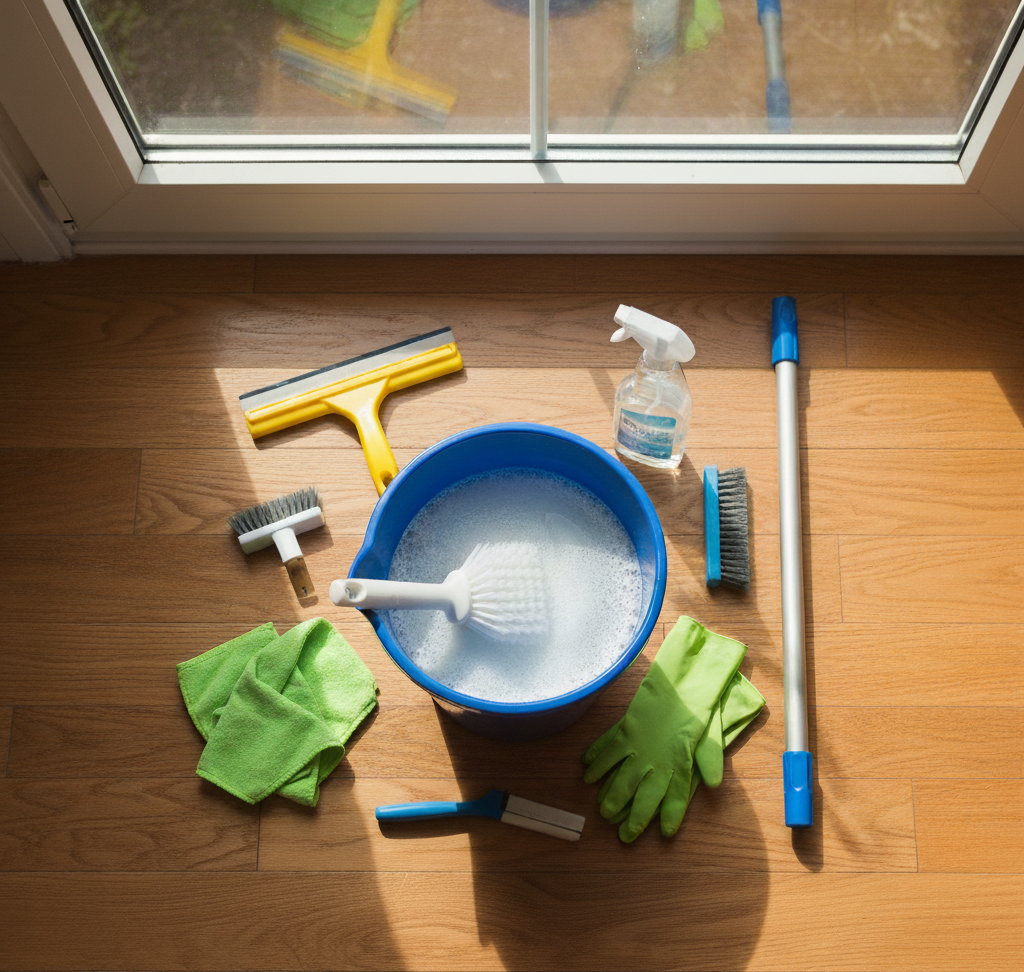
7 Essential Window Cleaning Tools Every Home Needs

Achieving a perfectly clean, streak-free window is the result of a specific system, and that system is the right set of window cleaning tools. The common approach of using a spray bottle of blue liquid and a roll of paper towels is fundamentally flawed; it primarily moves dirt around, leaves behind a static-attracting residue, and deposits lint on the glass. To achieve a professional level of clean, you must leave those consumer products behind and embrace the purpose-built equipment that professionals rely on. These professional window cleaning tools are not complicated, but they are designed to work together to remove dirt and water from a glass surface completely and efficiently. 1.Squeegee The most critical component in any kit is the squeegee. This is the heart of the entire operation and the single most important of all window cleaning tools. A professional squeegee is a precision instrument, consisting of a comfortable handle, a metal channel, and a high-quality rubber blade. The handle provides control, the channel holds the blade perfectly straight, and the rubber blade does the real work. The quality of this rubber cannot be overstated. It must be soft and pliable with a perfectly sharp, square edge. A nicked or rounded blade will leave behind streaks and lines of water, no matter how good your technique is. This is why a proper squeegee is one of the most vital window cleaning tools you can own. The channels come in various sizes, but a 10 or 12-inch squeegee is a versatile starting point for most homes, capable of handling a variety of window panes. 2.Scrubber or T-bar Before the squeegee can be used, the window must be thoroughly scrubbed. This is the job of the applicator, also known as a scrubber or T-bar. It consists of a T-shaped handle that holds a removable, absorbent sleeve, usually made of microfiber. This sleeve is designed to hold a significant amount of cleaning solution, allowing you to wet and scrub the entire glass surface quickly. Its texture agitates and lifts away grime, dust, and other debris without scratching the glass. The applicator is one of the foundational window cleaning tools because it does the heavy lifting of dirt removal, preparing a perfectly clean, wet surface for the squeegee to dry. A proper kit of window cleaning tools should always include a scrubber that is a couple of inches wider than the squeegee to ensure full coverage. 3.Bucket Of course, you need somewhere to hold your cleaning solution. While any bucket can work, professionals use a rectangular bucket designed specifically for this task. Its shape is a key feature, as it is wide enough to fit the entire scrubber and squeegee. This allows you to fully submerge and wet your tools evenly. These specialized buckets are surprisingly important and efficient additions to your collection of window cleaning tools. Many have clips on the side for holding your tools, keeping them out of the dirty water and ready for use. This simple design feature improves workflow and keeps the entire process cleaner and more organized. 4.Soap The cleaning solution itself is a lesson in simplicity. The goal is not to create a mountain of suds, which will be difficult to remove and leave a film. Professionals use highly concentrated, biodegradable soaps that add “slip” to the water, allowing the squeegee to glide smoothly. For home use, a few drops of basic, clear dish soap in a gallon of cool water is more than sufficient. You want just enough to break the surface tension and help lift grease. Too much soap will work against you and your other window cleaning tools, causing streaks. The water does the cleaning; the soap is just there to help. 5.Microfiber Cloth Even with perfect technique, you will need cloths for detailing. This is where microfiber cloths become essential window cleaning tools. They are incredibly absorbent and, most importantly, lint-free. You will need at least two: one for wiping down the window frames and sills before you start, and a completely dry one for wiping your squeegee blade between strokes and for detailing the edges of the glass after you finish. This final wipe around the perimeter of the pane is what separates a good job from a perfect one. For this task, nothing beats the performance of high-quality microfiber cloths. 6.Scraper For more stubborn debris like paint overspray, dried bug residue, or adhesive, a scraper is a necessary tool. This is not a generic putty knife. A proper window scraper holds a single-edge razor blade at a safe angle. The absolute rule of using a scraper is that the glass must be wet. Using a scraper on dry glass will guarantee scratches. When used correctly on a wet, lubricated surface, the scraper can remove the most resilient grime without leaving a mark. It is a powerful, but potentially damaging, item in a set of window cleaning tools, and it must be used with care. 7.Extension Pole To handle windows that are out of reach, an extension pole is a much safer alternative to a ladder. Professional squeegee and scrubber handles are designed to securely attach to these poles, allowing you to clean second-story windows from the ground. This not only improves safety but also speeds up the job significantly. An extension pole transforms your standard window cleaning tools into a high-reach system. To keep everything organized and within reach, a tool belt with holsters for your squeegee and scrubber is invaluable. It allows you to have your hands free and your equipment ready, streamlining the process. These organizational window cleaning tools are what truly elevate the efficiency of the entire system. The entire process is a systematic application of these window cleaning tools. You wet the glass with the scrubber, scrub away the dirt, and then methodically remove the dirty water with the squeegee, wiping the blade after each pass. At the end, you detail the edges and wipe the sill with a microfiber cloth. Every tool has its purpose, and when used together, they create a result that is impossible to achieve with inferior methods. The

7 Essential Window Cleaning Tools Every Home Needs Read More »

laminate floor cleaning

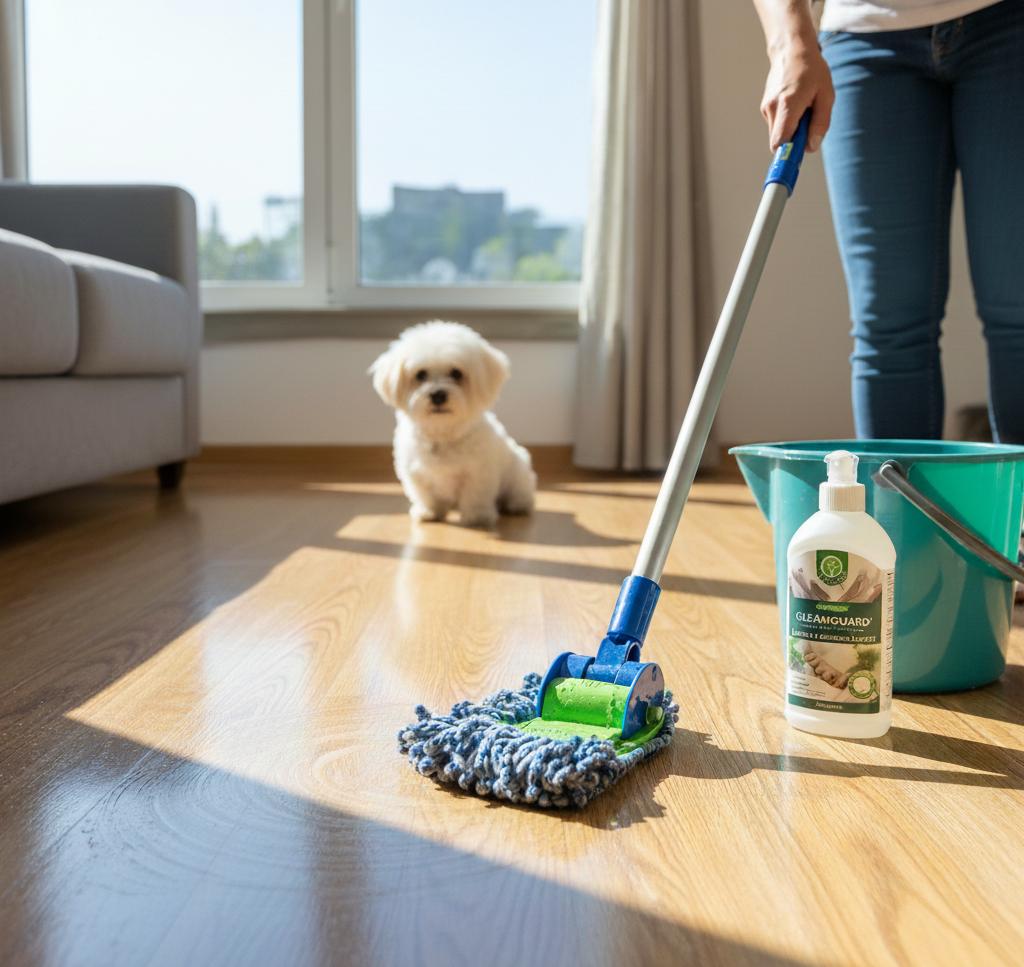
Best Ways To Clean Laminate Flooring Without Damage

Laminate flooring is a triumph of modern engineering, offering the sophisticated look of hardwood, stone, or tile without the high cost and demanding maintenance. Its popularity in homes across the world is a testament to its durability, versatility, and ease of care. Composed of multiple layers fused together through a lamination process, this flooring is designed to withstand the rigors of a busy household. The top layer is a tough, transparent wear layer that protects the decorative, high-resolution image layer beneath it. Below that, a dense inner core of fiberboard provides stability and impact resistance, and a final backing layer adds moisture resistance. This multi-layered construction is what gives laminate its strength, but it also dictates a very specific set of cleaning and maintenance rules. The greatest vulnerability of laminate flooring lies in its core and seams. While the top wear layer is highly water-resistant, the fiberboard core is not. Excessive moisture that seeps between the planks can cause the core to swell, warp, and buckle, leading to irreparable damage. Therefore, the cardinal rule of laminate floor care is simple: water is the enemy. Understanding how to clean your laminate floors effectively is not about soaking and scrubbing, but about using the right tools and techniques to remove dirt and grime while using the absolute minimum amount of liquid. The Foundation of Laminate Care The best way to keep your laminate floors looking their best is through consistent, preventative cleaning. The goal is to remove the daily accumulation of dust, dirt, and grit before it has a chance to damage the floor’s surface. Small particles of sand and dirt act like fine-grit sandpaper underfoot, creating microscopic scratches in the wear layer that will, over time, dull the floor’s finish. Your Essential Toolkit: A Soft-Bristled Broom or a Dust Mop: This is your first line of defense. A dust mop with a microfiber head is superior to a traditional broom, as it traps dust and pet hair using a static charge rather than just pushing it around. A Vacuum Cleaner with a Hard Floor Setting: A vacuum is excellent for picking up debris from between the planks. Crucially, you must use a vacuum that either has a dedicated hard floor head (with soft bristles) or allows you to turn off the beater bar/brush roll. A stiff, rotating beater bar designed for carpet can scratch and damage the surface of your laminate. A High-Quality Microfiber Mop: This is the most important tool for actually “washing” your laminate floors. Its absorbent pads are designed to clean effectively with very little water. A pH-Neutral Floor Cleaner (or a DIY solution): You need a cleaner that won’t leave a hazy residue or damage the floor’s protective layer. Daily Maintenance The most effective daily habit you can adopt is a quick sweep with a dust mop or a soft-bristled broom. This takes only a few minutes and is the single best thing you can do to prevent long-term wear and tear. Place high-quality doormats at every entrance to your home to trap a significant amount of dirt, grit, and moisture before it even reaches your floors. Weekly Cleaning Once a week, a more thorough cleaning is in order. Dry Clean First: Always begin by thoroughly removing all loose dust and debris. Use your dust mop or vacuum (with the beater bar turned off) to clean the entire floor. This step is crucial; if you start mopping a dirty floor, you are essentially just pushing around a slurry of abrasive grit, which can cause scratches. Spot-Treat Stains: Inspect the floor for any spots or spills and treat them individually before you mop. For most common spots, a damp microfiber cloth is sufficient. For tougher marks like scuffs or ink, you can use a small amount of isopropyl (rubbing) alcohol on a cloth. Prepare Your Mopping Solution: This is where the “less is more” principle is vital. You have several options for a safe and effective cleaning solution: Commercial Laminate Floor Cleaner: This is often the safest bet. Choose a pH-neutral, water-based cleaner specifically formulated for laminate. Always follow the dilution instructions on the bottle. DIY Vinegar Solution: For a simple, inexpensive option, mix a solution of one part white vinegar to ten parts warm water in a spray bottle. The vinegar helps to dissolve grime and won’t leave a residue. (For a very large area, you can use a ratio of a half-cup of vinegar to a gallon of water). DIY Alcohol Solution: For a quick-drying, streak-free clean, mix equal parts water, isopropyl alcohol, and white vinegar in a spray bottle.Important: Never use oil-based soaps (like Murphy Oil Soap), wax, or any product that promises to add a “shine” to your floor. These products will leave a dull, streaky film that is very difficult to remove and can create a dangerously slippery surface. The Damp-Mop Technique: This is the most critical part of the process. Never flood your laminate floor with water. Your microfiber mop pad should be damp, not wet. If you are using a mop and bucket, submerge the mop head in your cleaning solution and then wring it out until it is almost dry to the touch. The superior method is to use a spray bottle. Lightly mist a small section of the floor with your chosen cleaning solution and then immediately wipe it up with your dry microfiber mop. Work in small, manageable sections, misting and wiping as you go. This technique ensures that no standing water is left on the floor to seep between the seams. Dry If Necessary: A properly damp-mopped floor should air-dry in a minute or two. If you see any areas that are still wet, wipe them with a clean, dry microfiber cloth to prevent water spots. Tackling Common Spills and Stains The protective wear layer on laminate flooring makes it highly resistant to stains, but quick action is always the best policy. Liquid Spills (Water, Juice, Soda): Wipe up immediately with a clean, dry cloth. For sticky spills, use a cloth dampened with your regular cleaning solution, then wipe with a clean, water-dampened

Best Ways To Clean Laminate Flooring Without Damage Read More »

Cleaning Quartz Countertops: How to Clean Efficiently and Quickly

Quartz countertops have become a hallmark of the modern kitchen and bathroom, celebrated for their stunning aesthetics, vast range of colours, and remarkable durability. But what truly sets quartz apart from natural stones like granite or marble is its engineering. A quartz countertop is a composite material, typically made of about 90-95% ground natural quartz crystals bound together with a polymer resin and pigments. This manufacturing process creates a surface that is non-porous, a crucial feature that lies at the heart of its easy maintenance and superior hygiene. Unlike natural stone, which has microscopic pores that can absorb liquids and harbor bacteria, the resin in quartz seals the surface completely. This means spills are less likely to cause permanent stains, and germs have nowhere to hide. However, this engineered perfection does not mean quartz is indestructible. The very resin that provides its non-porous shield is also the component most vulnerable to damage from improper cleaning methods. Understanding how to care for your quartz countertops is essential to preserving their beauty and ensuring they last a lifetime. The Golden Rules of Quartz Care Before diving into specific cleaning methods, it’s vital to internalize a few fundamental principles. These rules are designed to protect the resin that binds the quartz together, which is the key to its longevity. Be Gentle: Your primary cleaning tools should be soft. Abrasive scrubbers and harsh chemicals are the enemies of a quartz surface. Act Fast: The non-porous nature of quartz gives you a grace period, but it’s not infinite. Wiping up spills, especially acidic or highly pigmented ones, as soon as they happen is the best way to prevent potential staining. Use a Simple Solution: For the vast majority of cleaning tasks, a simple solution of mild dish soap and warm water is all you will ever need. Avoid Extreme Heat: The resin used in quartz countertops can be damaged by sudden and extreme temperature changes (thermal shock). Always use trivets or hot pads for pots and pans coming directly from the stove or oven. Your Daily Cleaning Routine The beauty of quartz is that its daily maintenance is incredibly straightforward. A few minutes each day is all it takes to keep your countertops looking pristine. You Will Need: A soft sponge or microfiber cloth Mild dish soap A spray bottle with warm water A clean, dry microfiber cloth The Process: Clear the Surface: Remove any crumbs, food particles, and debris from the countertop with a soft, dry cloth or a soft-bristled brush. Create Your Cleaning Solution: In your spray bottle, mix warm water with a few drops of a gentle, pH-neutral dish soap. You don’t need a lot of soap; too much will leave a hazy film. Spray and Wipe: Lightly mist the entire surface of the countertop with the soap and water solution. Using your soft sponge or microfiber cloth, wipe down the entire area in gentle, circular motions. Rinse (If Necessary): If you used a bit too much soap, you may need to rinse the surface. Wipe the countertop with a separate cloth dampened with plain water to remove any soap residue. Dry and Buff: This is a crucial step that many people skip. Using your clean, dry microfiber cloth, thoroughly dry the entire countertop. This not only prevents water spots and streaks but also buffs the surface to a beautiful, lustrous shine. Tackling Tougher Spills and Stains Even with diligent daily cleaning, stubborn spots and spills are bound to happen. The non-porous surface of quartz gives you an advantage, but some substances require a bit more effort. Dried-On Food: If you encounter hardened food, resist the urge to scrape it off with a metal knife or scour pad. Instead, spray the spot with your water and soap solution and let it sit for 5-10 minutes to soften the residue. Then, gently lift the food away using a flexible plastic putty knife or a plastic pan scraper. Once the gunk is removed, clean the area as usual. Grease and Oil: Quartz is highly resistant to grease stains, but splatters can leave a film. For greasy spots, a good degreasing dish soap is your best friend. Apply a small amount directly to the greasy area, add a little water, and work it into a lather with a soft sponge. Wipe away the residue and rinse thoroughly to ensure no soap film is left behind. Stubborn Stains (Wine, Coffee, Tea, Permanent Marker): For more persistent stains that don’t lift with soap and water, you have a few safe options. Isopropyl Alcohol: Dampen a soft cloth with isopropyl (rubbing) alcohol and apply it to the stain. Let it sit for a minute, then rub gently in a circular motion. The alcohol acts as a solvent that can break down many stubborn pigments. Once the stain is gone, rinse the area with plain water and dry. Baking Soda Paste: For a gentle abrasive option, create a paste of baking soda and a small amount of water. Apply the paste to the stain and let it sit for a few minutes. Using a soft sponge, gently scrub the area. The baking soda provides a very fine grit that can help lift stains without scratching the resin. Rinse thoroughly and dry. Hard Water Stains: If you live in an area with hard water, you may notice a chalky film or mineral deposits, especially around the faucet. For this, white vinegar can be used—but with extreme caution. While quartz is generally resistant to acid, prolonged exposure can potentially dull the finish of the resin. Spray a small amount of a 50/50 vinegar and water solution onto the hard water spot, let it sit for no more than one minute, then immediately rinse the area thoroughly with plain water and dry completely. What to AVOID Protecting your investment is just as much about what you don’t do as what you do. Using the wrong product can cause irreversible damage to the resin, leading to discoloration, dulling, and a breakdown of the surface. NEVER Use Harsh or Abrasive Chemicals: This is the most important rule. Keep the following far

Cleaning Quartz Countertops: How to Clean Efficiently and Quickly Read More »

Autumn Allergy

Autumn Allergy: 4 Essential Cleaning Plan For a Healthy Home

September brings a welcome stunning display of autumn colours. But this seasonal shift also signals the start of the miserable autumn allergy season, a time of sneezing, itchy eyes, and respiratory discomfort. While the beauty of fall is enjoyed outdoors, inside our homes, a battle against invisible intruders begins. The primary culprits of a Canadian autumn allergy are ragweed pollen, which can travel for hundreds of kilometers on the wind, and mold spores, which thrive in the damp conditions of early fall. These allergens infiltrate our homes, settling on surfaces, embedding in fabrics, and circulating through the air we breathe. Creating a healthy indoor environment is the most effective strategy for finding relief from a persistent autumn allergy. An essential, targeted cleaning plan can dramatically reduce the presence of these allergens, transforming your home from a source of misery into a true sanctuary. This is not about a simple tidy-up; it’s a strategic deep clean focused on eliminating the triggers of your autumn allergy where they live and breed. 1.The Bedroom We spend roughly a third of our lives in the bedroom, making it the most critical area to address for allergy relief. Soft furnishings like bedding, curtains, and mattresses are magnets for allergens. Bedding: Your sheets, pillowcases, and duvet covers accumulate a nightly collection of dust mites, their waste, pet dander, and pollen brought in on your hair and clothes. To combat this, all bedding must be washed weekly. The key is to use hot water, at least 130°F (54°C), as this temperature is required to kill dust mites. If your fabrics are too delicate for hot water, a warm wash followed by a cycle in a hot dryer for at least 15 minutes can achieve a similar result. Don’t forget your pillows and duvets themselves; wash them every few months. Using allergen-proof covers for your mattress and pillows is also a highly effective solution that creates an impermeable barrier against the triggers of an autumn allergy. Curtains and Window Treatments: Curtains act like large filters, trapping airborne dust and pollen that can make allergy symptoms worse. In the fall, take down all curtains and launder them. For non-washable window treatments like blinds, a thorough cleaning is necessary. Use a damp microfiber cloth to meticulously wipe down each slat. This simple step removes a significant amount of settled pollen that would otherwise aggravate your allergies every time you open or close them. Mattresses: Your mattress can harbor millions of dust mites, a year-round problem that exacerbates any autumn allergy. A deep clean in September is essential. Use the upholstery attachment on your vacuum cleaner to go over the entire surface of the mattress. This process is fundamental to creating a low-allergen sleeping environment and finding significant relief. 2.Floors and Air Quality Carpets and rugs can hold up to eight times their weight in dust, dirt, and allergens. Your cleaning method here is crucial for improving the air you breathe and managing your seasonal allergies. Vacuuming with a HEPA Filter: The single most important tool in your allergy-fighting arsenal is a vacuum cleaner equipped with a High-Efficiency Particulate Air (HEPA) filter. Standard vacuums often just stir up fine particles like pollen, making allergy symptoms worse. A HEPA filter, by contrast, is designed to capture 99.97% of tiny particles, ensuring that allergens are trapped and removed from your home. This is non-negotiable for anyone suffering from a severe autumn allergy. Proper Vacuuming Technique: Move slowly and methodically, making multiple overlapping passes over your carpets. This gives the vacuum enough time to pull up allergens from deep within the carpet fibers. Aim to vacuum high-traffic areas at least twice a week during the peak autumn allergy season. 3.Controlling Moisture and Eliminating Mold Mold is a major autumn allergy trigger, and its growth is directly linked to moisture. The cooler, damper weather of early fall can create ideal conditions for mold to thrive. Bathrooms: The bathroom is a prime location for mold growth. Use an exhaust fan during and for at least 20 minutes after every shower to vent moisture outside. Regularly clean tile grout with a mixture of vinegar and water to kill any emerging spores. Controlling moisture here is a critical step in managing mold-related allergies. Basements and Crawl Spaces: These below-ground areas are naturally prone to dampness. Invest in a good dehumidifier to keep the humidity level below 50%. The musty smell often found in basements is a clear sign of a problem that can significantly worsen allergy symptoms. Kitchens: Always use the exhaust fan over your stove when cooking. Regularly check under the sink and around the dishwasher for any leaks. Preventing mold growth is a proactive way to fight these allergies before they start. 4.General Household Cleaning for Autumn Allergy Relief Pollen and dust settle on every surface. A comprehensive cleaning plan must include these often-overlooked areas to provide true allergy relief. Dusting Technique: Dry dusting merely displaces allergens. The most effective method is to use a damp microfiber cloth, which traps dust particles instead of sending them airborne and triggering allergy symptoms. Always work from the top of a room down to the bottom. HVAC System Maintenance: Your home’s HVAC system can either help or hinder your fight against allergies. Before you turn on your furnace for the first time in the fall, replace the filter. Consider upgrading to a high-efficiency filter designed to capture smaller particles like pollen and mold spores. Upholstery and Soft Furnishings: Sofas and armchairs are just as susceptible to allergen buildup as carpets. Vacuum them weekly using the upholstery attachment to minimize allergen buildup. A proactive and thorough cleaning plan is your best defense against the onslaught of the autumn allergy season. By systematically targeting the areas where pollen, mold, and dust mites accumulate, you can significantly improve your home’s indoor air quality and create a healthier, more comfortable living space for your family during the fall season in Canada. A comprehensive cleaning plan is your best defense against the misery of an autumn allergy. To ensure every allergen is thoroughly removed from your home, from washing textiles to deep vacuuming and controlling moisture, consider the expert

Autumn Allergy: 4 Essential Cleaning Plan For a Healthy Home Read More »

scale buildup in an espresso machine

Descaling Agent: Essential Tips On How To Use This Cleaning Product

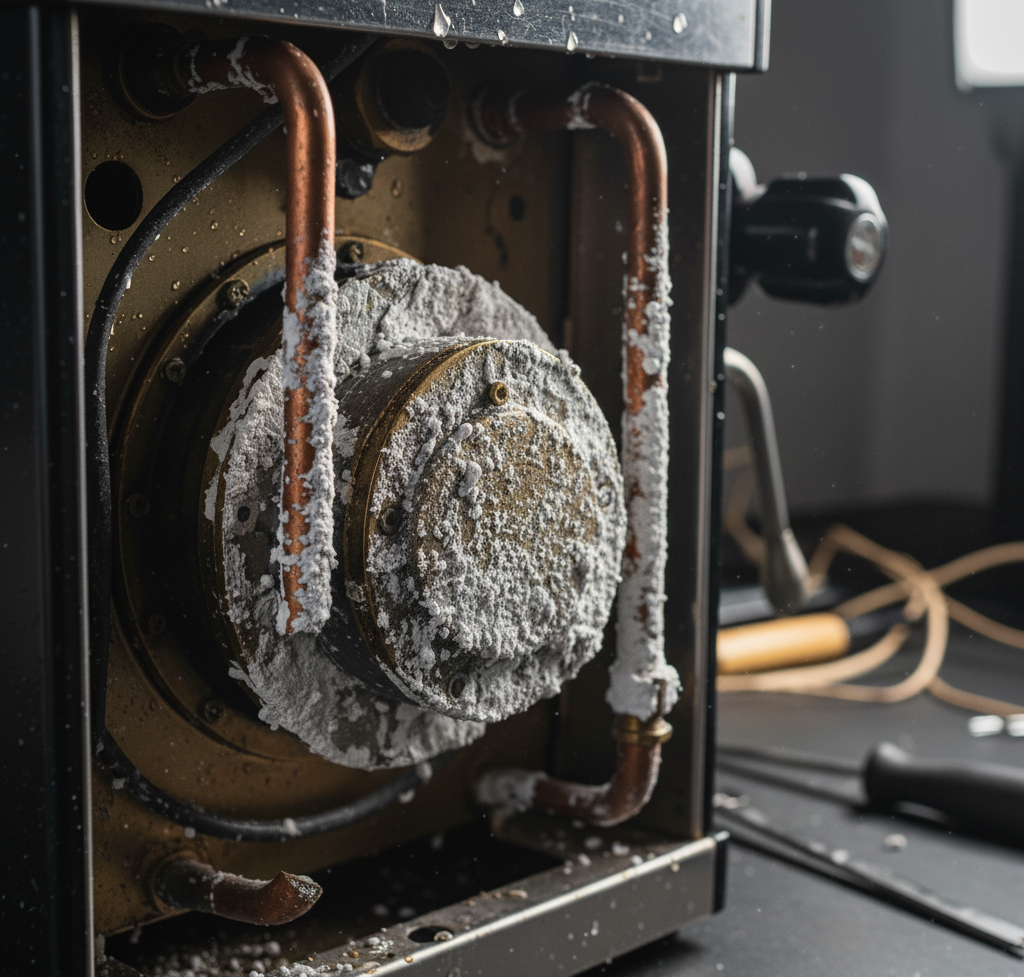
The silent buildup of limescale that infiltrates our appliances is a common household problem, but don’t underestimate the descaling agent. This is limescale, the mineral residue left behind by hard water. As water evaporates, it leaves behind deposits of calcium carbonate and magnesium, which harden over time into a stubborn, crusty layer. This scale doesn’t just look unsightly; it is an active threat to the efficiency, longevity, and even the hygiene of some of our most-used appliances. To combat this, a specific type of cleaning product is required: the descaling agent. Understanding the role of a descaling agent is understanding basic chemistry. Limescale is an alkaline substance. The most effective way to break it down is with an acid. A descaling agent is, at its core, an acidic solution formulated to dissolve these mineral deposits safely and effectively. When the acid comes into contact with the calcium carbonate, a chemical reaction occurs that breaks the scale down into water-soluble substances that can be easily flushed away. This process is essential for maintaining a healthy and functional home. Neglecting it leads to appliances that work harder, consume more energy, and ultimately fail sooner. The most critical application for descaling agents is in appliances that heat water. Heating elements are magnets for limescale. As water is heated, the minerals precipitate out of the solution more rapidly, causing them to coat the heating element in a thick, insulating layer. This forces the appliance to use significantly more energy to achieve the same temperature, driving up electricity bills. Over time, the constant overheating can cause the element to burn out completely. This is true for electric kettles, coffee makers, washing machines, and dishwashers. Descaling is not just a cleaning task; it’s preventative maintenance that saves money and extends the life of your investments. There are two primary categories of descaling agents: those you can find in your pantry and those formulated commercially. Both have their place in a comprehensive cleaning routine. Household Descaling Agents For many common descaling tasks, simple, non-toxic household acids are perfectly effective. White Vinegar (Acetic Acid): This is the most well-known and accessible descaling agent. Its acetic acid is strong enough to dissolve light to moderate limescale buildup. It’s inexpensive, readily available, and multi-purpose. However, it has a strong, lingering odor that requires thorough rinsing, and its potency may not be sufficient for very heavy, long-term scale. It is the ideal choice for routine maintenance of kettles, drip coffee makers, and showerheads. Citric Acid: Often sold in powder form in grocery or bulk food stores, citric acid is a step up from vinegar. It is a more powerful acid, allowing it to work faster and more effectively on tougher scale. Its biggest advantage is that it is completely odorless, making it a far superior choice for coffee machines and kettles where a vinegar aftertaste would be unpleasant. Many commercial “eco-friendly” descalers are primarily citric acid-based. It is a highly effective and safe option for most applications. Lemon Juice: Containing a weaker form of citric acid, lemon juice can be used for very light descaling tasks, such as removing water spots and light film from faucets and fixtures. While not powerful enough for heavy buildup inside appliances, it is useful for surface cleaning and leaves a fresh, pleasant scent. Commercial Descaling Agents For more serious buildup or for delicate, high-end appliances, a commercial descaler is often the recommended choice. These products are specifically formulated to work quickly and safely on particular materials. Formic Acid or Sulfamic Acid-Based Descalers: These are more powerful, industrial-strength acids that are common in descalers designed for high-performance espresso machines and other specialized equipment. They work very quickly and are extremely effective at removing heavy scale. However, they are more potent and must be handled with care, strictly following the manufacturer’s instructions regarding dilution, contact time, and safety precautions like wearing gloves. Lactic Acid-Based Descalers: Often marketed as a gentler, plant-derived, and biodegradable option, lactic acid is still highly effective. It is less corrosive than stronger acids, making it a safe choice for a wide range of appliances while still providing excellent descaling power. Practical Descaling Applying the right descaling agent correctly is key to success. Electric Kettles: This is one of the easiest and most satisfying descaling tasks. Fill the kettle about halfway with a solution of equal parts white vinegar and water. Bring it to a boil, then turn it off and let it sit for an hour. Pour out the solution and rinse thoroughly. For an odorless clean, use citric acid: add one to two tablespoons of citric acid powder to a kettle half-full of water, boil, let it sit, and rinse. The scale will have dissolved completely. Drip Coffee Makers: Limescale buildup in a coffee maker slows down the brewing process, affects the water temperature, and can impart a bitter, chalky taste to your coffee. To descale, fill the water reservoir with a solution of equal parts white vinegar and water. Place a clean filter in the basket and run a full brewing cycle. Discard the hot vinegar solution. Run two to three more cycles with plain fresh water to completely rinse out any vinegar residue and taste. Espresso Machines (Single-Serve Pod and Traditional): This is where using the right product is critical. Always consult your user manual. Many manufacturers advise against using vinegar, as its strong acidity can damage sensitive internal components like aluminum parts and rubber seals over time. They will recommend a specific commercial descaler. The process generally involves running the descaling solution through the machine via the water reservoir, followed by extensive rinsing cycles to ensure all traces of the agent are flushed out. Regular descaling is non-negotiable for preserving the taste of your espresso and the health of the machine. Washing Machines and Dishwashers: Hard water affects these appliances by coating the heating elements and leaving a chalky film on the interior drum and spray arms. To descale, run an empty machine on the hottest, longest cycle. For washing machines, add two cups of white vinegar or a

Descaling Agent: Essential Tips On How To Use This Cleaning Product Read More »