










March is the month of muddy optimism. It occupies a liminal space in the calendar, acting as the volatile bridge between the bitter endurance of winter and the true renewal of spring. In many northern regions, the landscape is a chaotic mix of melting snow, exposing the grime of the past four months, and the first tentative buds of life. Psychologically, homeowners are ready to throw open the windows; physically, the weather often forces them to keep them shut a little longer. This tension makes March the critical month for preparation. It is not yet time for the full-blown “Spring Clean”—the ground is too wet, the air too cold—but it is the time for the “Pre-Spring Assessment.” The March checklist is about transitioning the home from defense mode, where the goal was keeping heat in and snow out, to operational mode, where the goal is airflow, light, and efficiency. Executing a strategic checklist now ensures that when the first true warm day arrives, you are free to enjoy it rather than being bogged down by a winter’s worth of deferred maintenance.
1. Safety Protocol
The second Sunday in March usually marks the beginning of Daylight Saving Time. While we grumble about the lost hour of sleep, this date serves as the universal trigger for home safety maintenance. The mnemonic “change your clocks, change your batteries” is a life-saving habit. Smoke detectors and carbon monoxide detectors rely on fresh batteries to function. Even if they are hardwired into your electrical system, they almost certainly have a battery backup for power outages. Testing these units and replacing the batteries now is non-negotiable.
However, the safety check should extend beyond batteries. Check the manufacturing date on the back of the detectors. Smoke alarms typically have a lifespan of ten years, and CO detectors often expire after seven. If they are out of date, the sensors may have degraded, rendering them useless. Furthermore, take a vacuum hose to the units. Over the winter, dust can accumulate inside the sensing chamber, leading to false alarms or delayed reactions. This simple act of maintenance ensures your family is protected as you head into the new season.

2. Mudroom
March is the muddiest month of the year. The frozen ground thaws, turning the perimeter of your home into a swamp. Consequently, the entryway becomes a high-conflict zone. The heavy-duty winter strategy—thick rubber mats and boot trays—needs to be cleaned and potentially reconfigured. The boot trays are likely filled with a crusty, dried residue of road salt and gravel. Take them to a laundry tub or outside on a mild day and scrub them out. If you leave this salt sitting, it will eventually turn into airborne dust that settles on your furniture.
This is also the time to audit the footwear. The heavy, rated-for-Arctic-tundra boots can likely be cleaned, conditioned, and moved to the back of the closet or down to the basement. In their place, bring out the rain boots and the “mud shoes.” Rotating the wardrobe now prevents the entryway from becoming overcrowded. Inspect the floor itself; the salt tracked in during February has likely created a haze on the hardwood or tile. A neutralizing wash with a vinegar solution removes this alkaline buildup before the humidity of spring sets in and makes the salt sticky.
3. Furnace Filter and Vent Reset
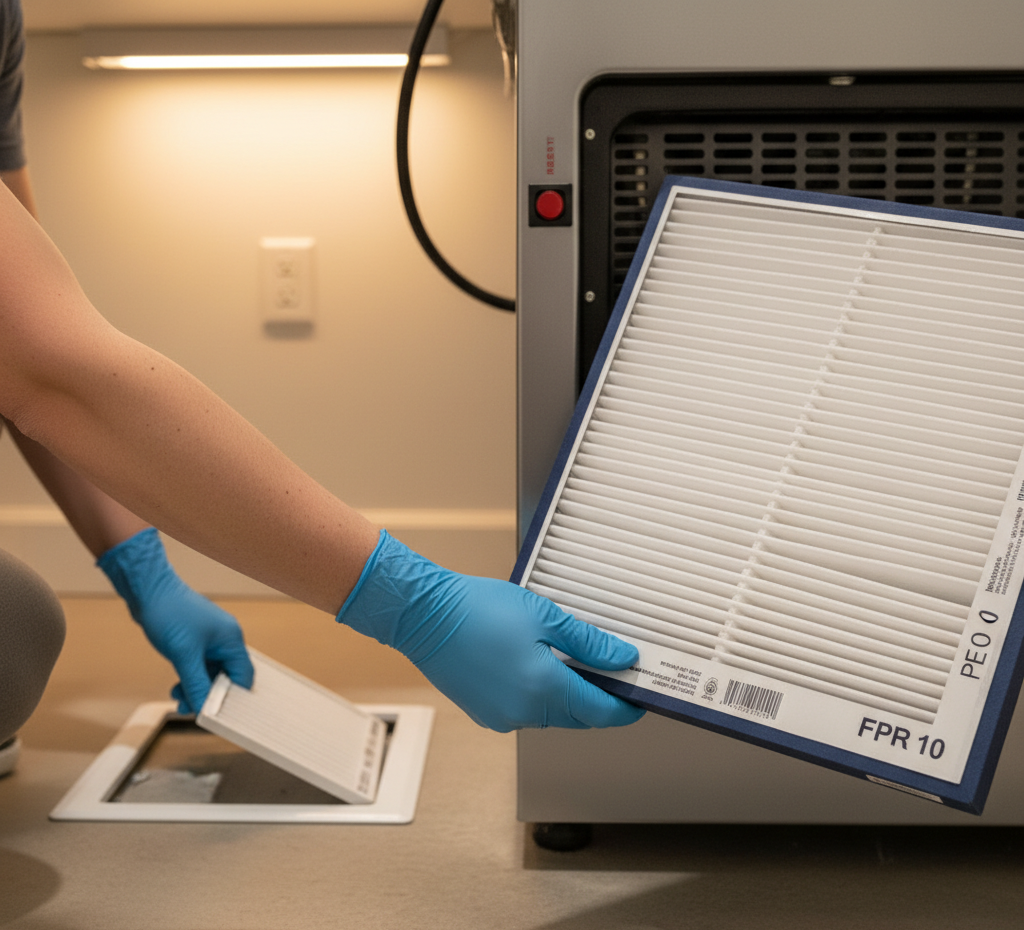
Your HVAC system has been the MVP of the winter, running almost non-stop to combat the freeze. By March, the furnace filter is exhausted. It is choked with three months of dead skin, pet dander, and fabric lint. A clogged filter in March is dangerous because the fluctuating temperatures mean the furnace is cycling on and off frequently; restricted airflow can cause the heat exchanger to overheat. Changing the filter now lowers your energy bills immediately and improves the air quality for the remaining weeks of heating.
Simultaneously, look at the cold air return vents. These grilles, usually located near the floor, act as vacuums, pulling dust and hair into the ductwork. Over the winter, they accumulate a thick felt-like layer of debris. Vacuuming these grilles allows the system to breathe. If you have floor registers, lift them out and vacuum as far down the duct as your hose will reach. You want to remove the winter dust before you eventually switch the system over to air conditioning, which would otherwise blow that dust back into the room.
4. Interior Glass
While cleaning the exterior windows might still be a gamble due to sudden freezes or rain, March is the month to perfect the interior glass. The angle of the sun changes in March, shining directly into rooms that were dim in winter. This “truth lighting” reveals the haze of candle soot, cooking grease, and condensation marks on the inside of the panes. Cleaning the interior glass now maximizes the light intake, which is crucial for mental health and waking up the home.
More importantly, tackle the window tracks. During winter, condensation often runs down the glass and pools in the tracks, mixing with dust to form a black sludge that promotes mold growth. Use an old toothbrush and a vacuum crevice tool to dig this gunk out. If you wait until you want to open the windows for fresh air, you will be blowing mold spores into your home. Cleaning the tracks now ensures that your windows glide open smoothly when the temperature finally breaks.
5. Refrigerator Coils and Kitchen Zone
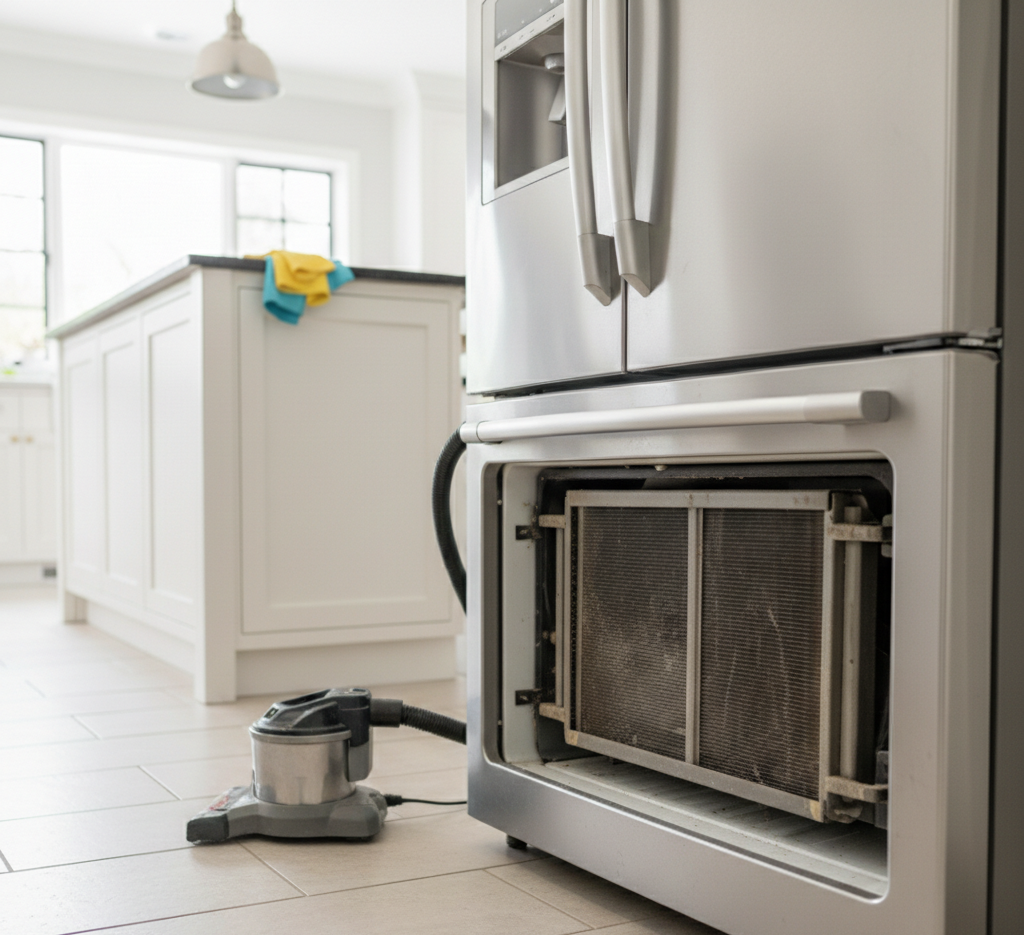
The kitchen is about to undergo a shift. We move from the heavy stews of winter to lighter fare. Prepare the appliances for this shift. The most critical, yet ignored, task is vacuuming the refrigerator coils. Located either behind or beneath the fridge, these coils release the heat removed from the interior. In a house full of winter dust and pet hair, these coils get blanketed in fuzz. This insulation forces the compressor to run longer and hotter to keep your food cold. Cleaning them takes ten minutes and can extend the life of your refrigerator by years.
March is also the time to defrost the freezer if you have ice buildup. You likely stocked up on frozen foods for winter; now is the time to eat through that stock or organize it. A packed freezer is efficient, but a freezer packed with frost-bitten, unidentified items is a waste of energy. Wipe down the gaskets (the rubber seals) of the doors with warm soapy water. Sticky spills on the gasket can cause it to tear, breaking the seal and letting cold air escape.
6. “Soft Goods”
During winter, our homes are sealed tight. We live on our sofas, wrap ourselves in blankets, and walk on our carpets. These soft surfaces act as giant filters, trapping biological oils and odors. By March, the upholstery often smells “stale.” While you might not be able to air the rugs outside yet, you can deodorize them. Sprinkle baking soda over the carpets and the fabric sofa, let it sit for an hour to absorb the oils and odors, and then vacuum it up slowly.
Launder the heavy throw blankets and pillow covers. If you have heavy velvet or wool curtains that insulated the windows, vacuum them thoroughly. They have been catching the dust from the convection currents of the heaters all winter. Removing this dust load significantly reduces the allergens in the air, helping you navigate the incoming allergy season with less congestion.
7. Exterior Perimeter
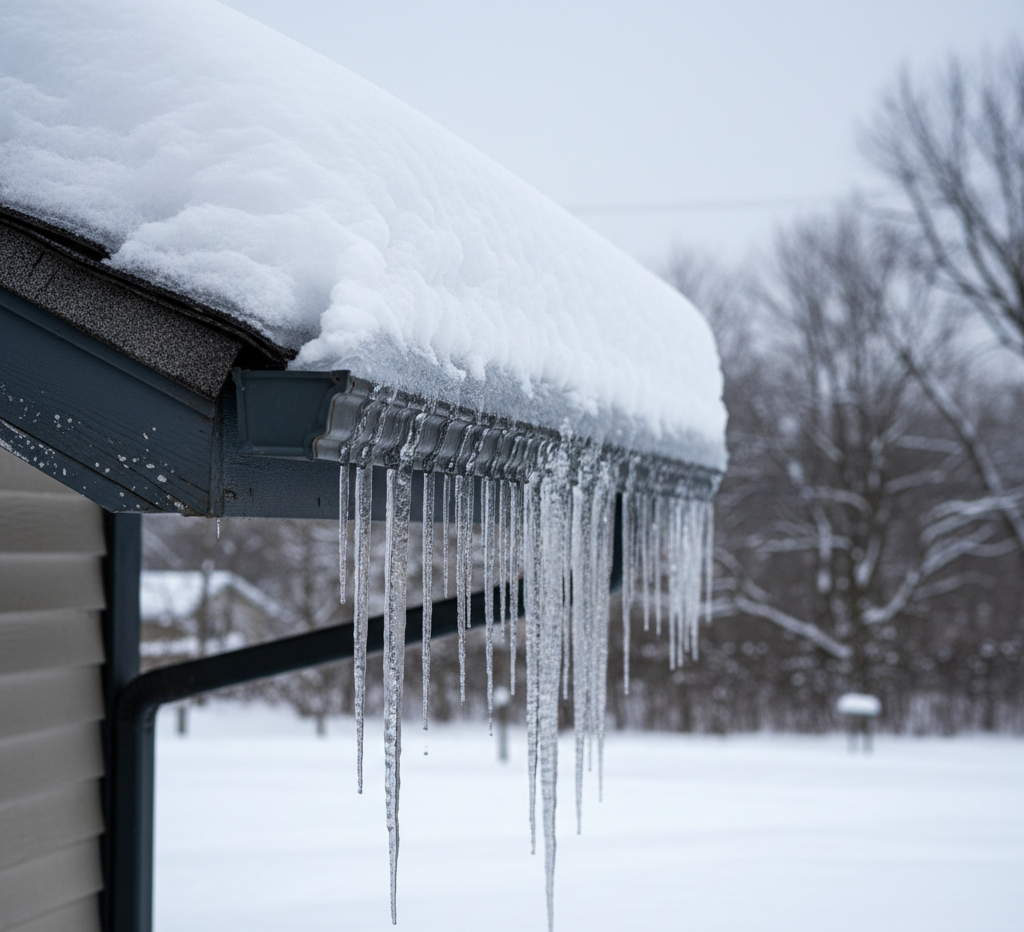
March weather is unpredictable, but on a clear day, a perimeter walk is essential. You are looking for damage caused by the freeze-thaw cycle. Check the gutters. Are they hanging loose? Is there debris blocking the downspout? April showers are coming, and if the water cannot escape the roof, it will end up in your basement. Ensure the downspout extensions are attached and pointing away from the foundation.
Inspect the foundation itself. Snow piled against the house can hide cracks. As the snow melts, ensure the water is draining away from the walls. If you have a sump pump, March is the time to test it. Pour a bucket of water into the sump pit to trigger the float switch. You need to know it works before the spring rains cause the water table to rise. This is the single most important task for preventing a flooded basement.
8. The Pantry
Winter often leads to a “stockpiling” mentality. We buy extra cans, baking supplies, and comfort foods. March is the time to audit the pantry. Check for expiration dates on the items pushed to the back of the shelf. Inspect flour and grains for any signs of pests that might have hatched in the warmth of the kitchen. Consolidate open boxes of crackers or cereal. This clears space and allows you to see what you actually have, preventing overbuying. Wipe down the shelves to remove crumbs, which are a beacon for ants that will begin scouting as the ground warms up.
Conclusion
The March checklist is less about deep scrubbing and more about mechanical readiness. It is about checking the systems—safety, HVAC, drainage—that keep the home functioning. It is about removing the visible residues of winter (salt and mud) and the invisible burdens (dust and stale air). Completing this list provides a sense of control. It signals that you are no longer just enduring the cold; you are actively preparing for the warmth.
However, the transition from hibernation to activity can be exhausting. The list of tasks—moving fridges, scrubbing boot trays, climbing ladders to check smoke detectors—requires physical energy that might be in short supply after a long winter. The dust accumulation from a sealed house can be overwhelming to tackle alone.

This is where Toronto Shine Cleaning serves as your bridge to spring. We understand that March is the hardest month to clean because the dirt is heavy and the motivation is often low. Our professional team can handle the labor-intensive parts of your checklist. We have the tools to deep clean your carpets, removing the winter stagnation. We can degrease your kitchen and sanitize your bathrooms, resetting the hygiene baseline of your home. Whether you need a specific service to handle the post-winter grime or a comprehensive clean to prepare for the new season, Toronto Shine Cleaning provides the expertise and the elbow grease. Let us handle the dust and the details, so you can focus on the first signs of spring outside your window.