









The entryway of a home is a transitional space. It is the architectural threshold where the controlled, comfortable environment of the interior meets the chaotic, elemental reality of the outdoors. In regions subject to distinct seasons—particularly the wet springs, muddy autumns, and salt-laden winters of the north—this threshold is under constant siege. Every person who steps through the door acts as a carrier, transporting water, grit, chemical de-icers, and organic decay on the soles of their footwear. If left unchecked, this debris migrates. It moves from the foyer to the living room rug, scratching hardwood finishes and embedding allergens into carpets. In this battle for household hygiene, the single most effective line of defense is often the most overlooked: the boot tray.
Road Salt
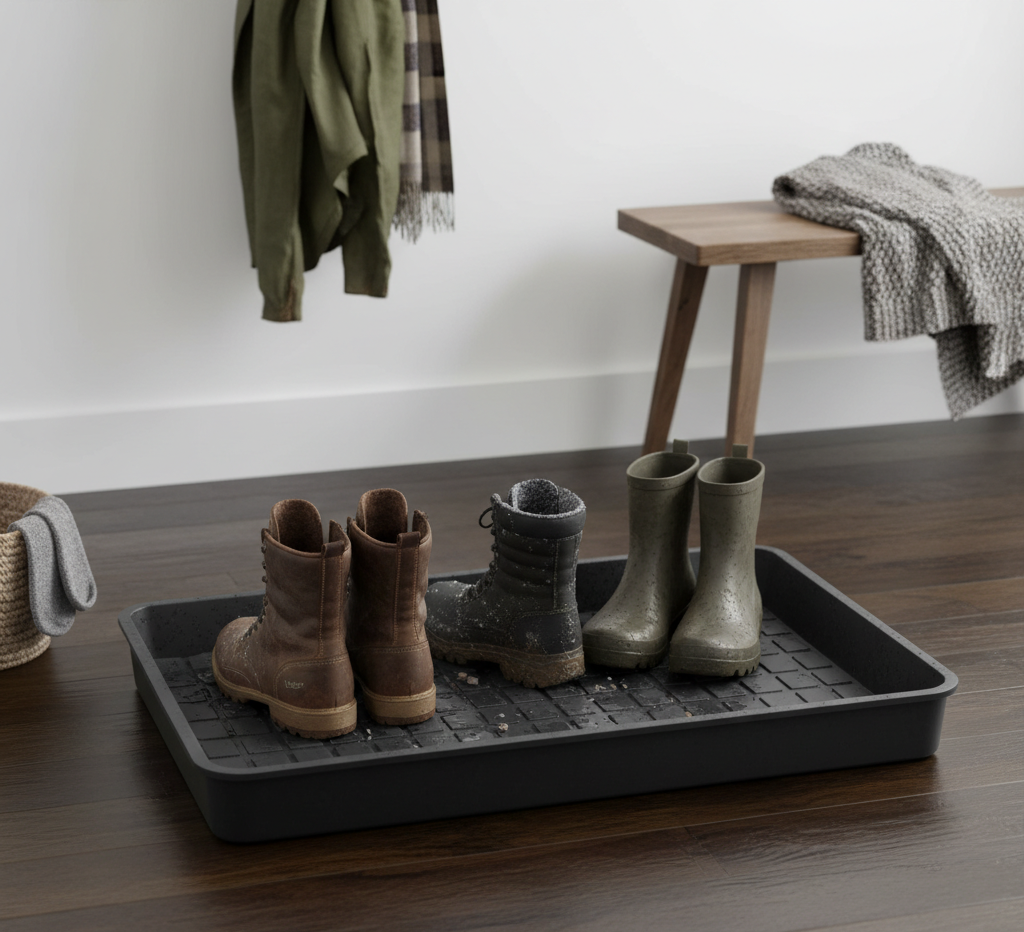
While often dismissed as a utilitarian slab of black plastic, the boot tray is, in reality, a piece of critical home infrastructure. It serves a specific physical function: containment. To understand the necessity of a high-quality boot tray, one must first understand the chemistry of the mess it is designed to hold. Winter slush is not merely melted snow. It is a brine solution containing calcium chloride or sodium chloride (road salt), sand, oil residues from asphalt, and dirt. This mixture is highly corrosive. If allowed to drip onto a hardwood floor, the water can seep between the boards, causing cupping and warping. As the water evaporates, it leaves behind the salt, which crystallizes into a white, alkaline crust. This crust eats into the polyurethane finish of the wood and degrades the sealants used on stone or tile grout. A boot tray acts as a moat, physically isolating this corrosive slurry from the vulnerable surfaces of the home.

Tray
Not all boot trays are created equal, and selecting the right vessel is key to its efficacy. The market is flooded with flimsy, low-walled plastic mats that crack under the weight of heavy winter boots or warp when exposed to temperature fluctuations. A functional tray requires rigidity and depth. The walls of the tray must be high enough—typically at least an inch—to contain a significant volume of meltwater without spilling over when the tray is nudged. The material must be impervious to salt and water. Heavy-duty rubber is the gold standard for high-traffic utility. It provides friction, preventing the tray from sliding across the floor, and it is durable enough to withstand the abrasive grit of boot soles.
However, aesthetics play a significant role in the entryway. A rubber mat can look industrial and uninviting in a formal foyer. This has led to the rise of metal boot trays, typically crafted from galvanized steel, copper, or antique brass. These trays offer the same containment properties but elevate the visual tone of the space. Copper, in particular, develops a living patina over time, turning the storage of dirty shoes into a design statement. The trade-off with metal is noise (boots clanking on the surface) and the potential for corrosion if the metal is not properly sealed against the salt.
River Rock
One of the most persistent issues with a standard boot tray is the “soggy sole” phenomenon. When snow melts off a boot, it pools in the bottom of the tray. The boot then sits in this puddle of dirty water. This prevents the leather or fabric of the boot from drying effectively and can lead to the growth of mold or mildew on the footwear. Furthermore, if the boot is not waterproof, the water can soak back into the interior, resulting in wet socks the next morning.
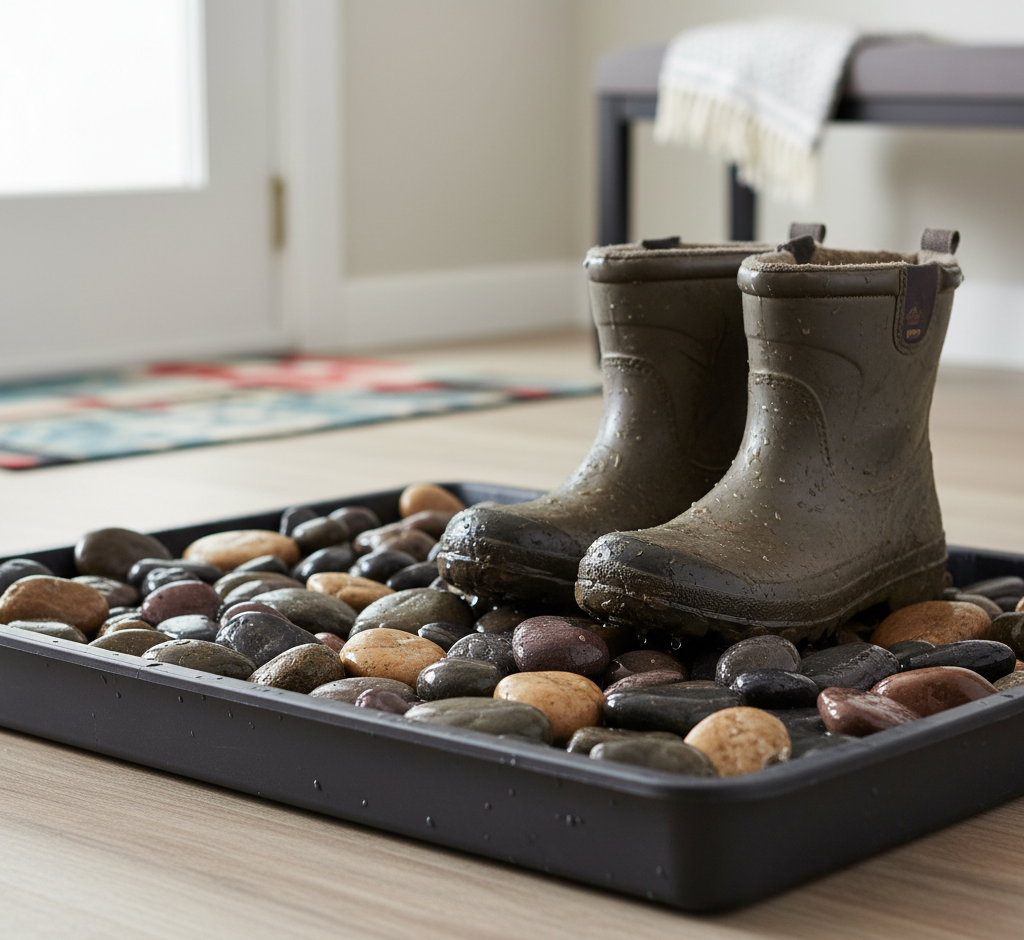
The solution to this is a design intervention often referred to as the river rock hack. By filling the boot tray with smooth, polished stones or river rocks, you create a drainage layer. The boots sit on top of the stones, elevated above the base of the tray. As the snow melts, the water trickles down through the gaps in the rocks and pools at the bottom, physically separated from the sole of the shoe. This allows air to circulate around the boot, speeding up the drying process. Visually, the rocks add a spa-like, organic texture to the entryway, masking the dirty water that collects beneath them. It turns a messy necessity into a decorative feature.
Maintenance
A common misconception is that a boot tray is a “set it and forget it” item. In reality, a neglected boot tray becomes a hazard in itself. As the water evaporates from the tray, the salt concentration increases. Eventually, you are left with a tray coated in a thick layer of toxic sludge. If this dries, it becomes airborne dust. If it overflows, it releases a concentrated brine onto the floor.
Cleaning the boot tray should be a regular part of the monthly cleaning cycle, particularly in winter. This is not a task for a paper towel. The tray needs to be carefully carried to a utility sink, a bathtub, or outdoors (weather permitting). It should be emptied and scrubbed. If there is heavy salt buildup, a solution of white vinegar and warm water is required to dissolve the white mineral crust. If river rocks are used, the maintenance load increases, as the rocks themselves must be rinsed periodically to remove the slime and silt that accumulates on them. Neglecting this maintenance turns the entryway into a source of odors and humidity.
Placement and Organization
The effectiveness of a boot tray is entirely dependent on its placement and the behavior of the household. A tray placed three feet away from the door is useless because the user must step onto the unprotected floor to reach it. The tray must be positioned immediately adjacent to the swing of the door, creating a landing pad.
Furthermore, capacity is a critical logistical calculation. A standard tray holds perhaps three pairs of adult boots. If a household has four members, or if guests frequent the home, a single tray leads to overflow. Shoes get placed on the edge of the tray or directly on the floor next to it, defeating the purpose. In busy households, a “zone” approach is superior. Multiple trays, or extra-long runners, ensure that there is always a designated spot for wet gear. Implementing a strict “no shoes past the tray” rule establishes a boundary that protects the rest of the house.
The Versatility of the Tray
While designed for shoes, the raised-edge architecture of the boot tray makes it an invaluable tool for organizing other areas of the home. It is, fundamentally, a spill containment system.
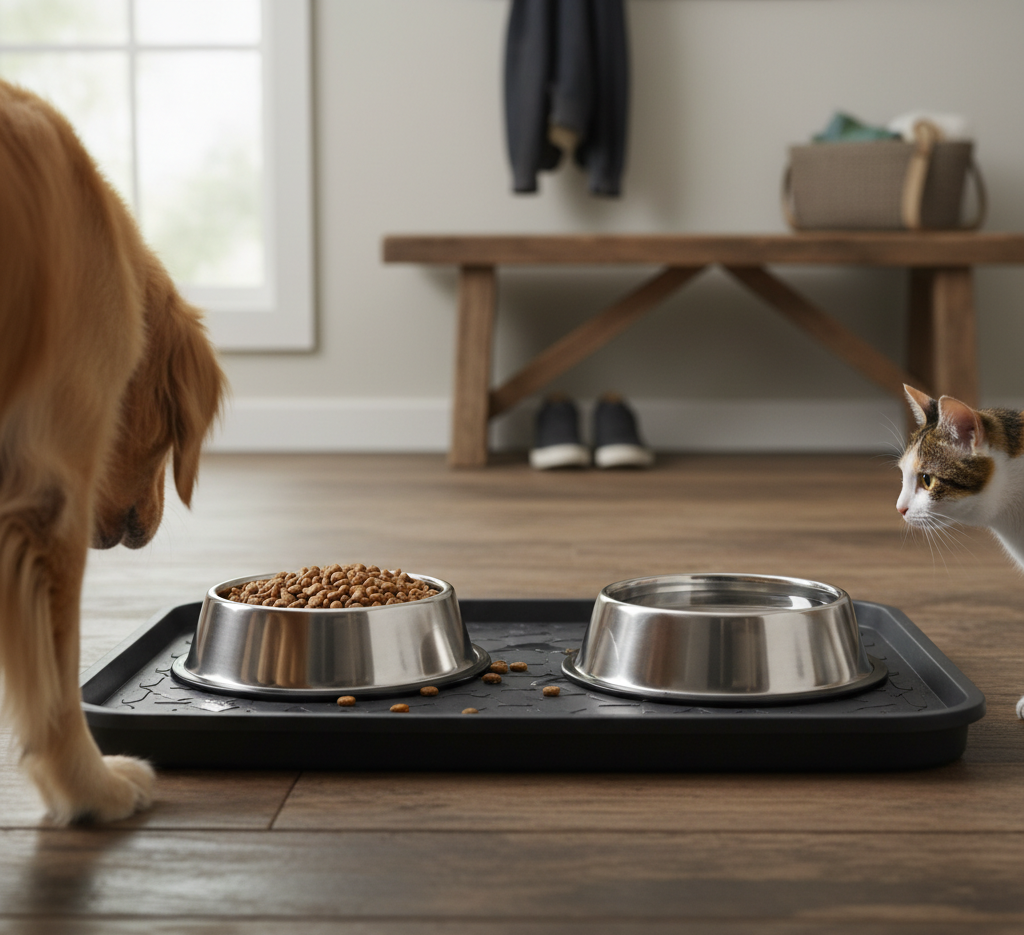
Pet Stations: Placing pet food and water bowls inside a boot tray protects the floor from the inevitable splashes and kibble scatter. It is far easier to wash a plastic tray than to scrub dried dog food out of grout lines.
Plant Care: For indoor gardeners, boot trays serve as excellent humidity trays or watering stations. Grouping potted plants on a tray allows you to water them freely without worrying about overflow ruining the windowsill or furniture.
The Car Trunk: A rubber boot tray placed in the trunk of a car provides a secure, waterproof spot for transporting groceries, muddy sports gear, or leaking plant nursery pots. It protects the car’s upholstery from stains and is easily removed for hosing down.
Cleaning Supply Storage: Under the sink, a boot tray can hold bottles of bleach, detergents, and sprays. If a bottle leaks, the chemical is contained within the rim of the tray rather than soaking into the cabinetry wood.

Entryway
There is a psychological component to the presence of a boot tray. In the principles of home organization, visual cues dictate behavior. An entryway with a clearly defined place for shoes signals to both residents and guests that the home is cared for. It creates a subconscious prompt to remove shoes without the host having to ask. A disorganized entryway with shoes piled haphazardly creates “visual noise” and stress the moment one walks in the door. A boot tray imposes order on this chaos. It aligns the shoes. It confines the mess to a specific rectangle. This sense of order is the first step in transitioning from the stress of the outside world to the sanctuary of the home.
Conclusion
The boot tray is a humble hero. It requires no electricity, has no moving parts, and costs relatively little. Yet, its absence is felt immediately in the form of damaged floors and increased cleaning labor. It is a barrier against the entropy of the seasons. By selecting the right material, maintaining it properly, and perhaps elevating it with a drainage layer of rocks, the homeowner transforms a simple plastic mat into a vital component of asset protection. It preserves the investment made in flooring and reduces the workload of daily housekeeping.
However, even with the best containment systems in place, the fine dust of winter and the tracking of daily life eventually escape the tray. Salt dust becomes airborne; grit migrates to the corners of the hall. Maintaining a pristine home requires more than just containment; it requires deep, restorative cleaning that addresses the dirt that slips past the defenses.
This is where Toronto Shine Cleaning becomes your partner in home maintenance. We understand that a boot tray is just the first line of defense. Our professional team provides the reinforcements. We have the industrial vacuums to extract the grit from your rugs, the expertise to neutralize salt haze on your hardwood without damaging the finish, and the attention to detail to ensure your entryway is not just organized, but deeply sanitized. Whether you need a seasonal reset to clear away the winter residue or regular maintenance to keep your home sparkling, Toronto Shine Cleaning offers the expertise to protect your living space. Let us handle the heavy lifting, so you can step into a home that is as clean as it is welcoming.