









Laundry Room Cleaning 101: The Ultimate Guide to a Sparkling Space
A laundry room only works well when it is clean, decluttered, and logically arranged. The fastest route to that goal is a full reset: empty the room, deep clean every surface, and rebuild the space around the way you actually do laundry. This guide walks through the whole process so the room stops being a chore and starts being a calm, efficient workspace.
Step 1: Empty the Room Completely
Pull out every bottle of detergent, every box of dryer sheets, every hamper, and every stray sock. Move furniture aside until the room is bare. Only then can you see the space you truly have and break the habits that created the clutter. Sort everything into three groups as you go: keep, donate or discard, and relocate. That half-empty fabric softener you never reach for? Pour it out and recycle the bottle. The pile of wire hangers from the dry cleaner? Recycle them. Tools that wandered in by accident? Return them to the garage or toolbox. This ruthless purge is the foundation of every later step.
Step 2: Deep Clean From the Top Down
With the room empty, clean it properly, starting high and working low. Dust ceiling corners and light fixtures, then wash walls and baseboards with warm water and an all-purpose cleaner. Pay special attention behind the washer and dryer, where lint, dust, and lost items accumulate. Then tackle the appliances:
- Pull the machines away from the wall and vacuum the dryer vent hose and wall opening with a long attachment or vent brush; impacted lint here is a fire hazard, not just an eyesore
- Wipe down the exterior of both machines
- Run an empty cleaning cycle in the washer with a washing machine cleaner or a vinegar and baking soda mix to remove soap scum and mildew odours
- Wash the dryer lint trap with soap and water to clear the fabric softener film that restricts airflow
- Scrub the now-accessible floor, reaching the corners behind the machines
Moisture control matters in this room: Health Canada’s mould and humidity guidance explains why damp, poorly ventilated spaces grow mould, and its dust mite advice notes how regular hot washing of bedding and towels keeps allergens down. A vented dryer, an open window, or a small dehumidifier keeps the room dry between loads.
Step 3: Plan Zones That Follow the Workflow
Think of laundry as a production line: dirty clothes arrive and get sorted, move to the washer, pass through the dryer, land on a clear folding surface, and finally leave the room. Arrange the room to follow that flow so clean items never mix with dirty ones and you never backtrack. Every laundry room benefits from four zones: sorting, washing and drying, folding and stain treatment, and supply storage.
| Zone | Purpose | Key items |
|---|---|---|
| Sorting | Separate loads as they come in | Multi-bin hamper on wheels, labelled bins |
| Washing and drying | Run the machines | Detergent, softener, stain remover within reach |
| Folding | Clear surface for warm laundry | Countertop over front-loaders or a sturdy table |
| Supply storage | Keep products tidy and visible | Uniform containers, shelves, labelled baskets |
Step 4: Use Vertical Space and the Walls
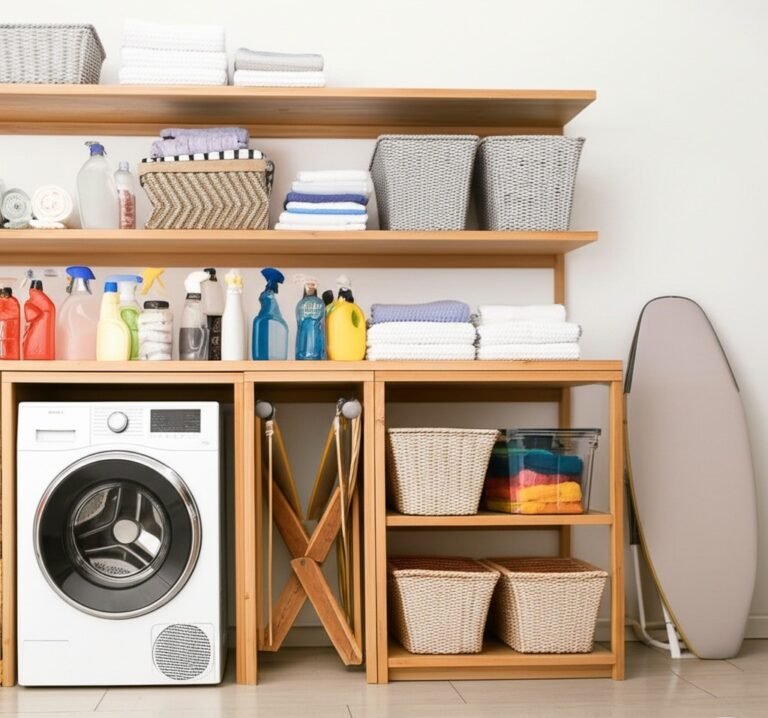
Most laundry rooms are compact, so build upward. Wall-mounted shelving positioned over the pair of machines holds daily-use products in clear containers or uniform baskets, while closed cabinets hide less attractive stock. If you have front-loading machines, a countertop across them creates the single most useful surface in the room: a dedicated spot for sorting, treating stains, and folding straight from the dryer, which prevents the mountain of clean laundry that lives in a basket for days. A freestanding table works just as well when a built-in counter is not possible. Wall-mounted, collapsible drying racks fold flat for delicates and athletic wear, a pegboard holds small baskets, hooks, and a lint roller in endlessly adjustable arrangements, and a wall-mounted ironing board holder frees a corner completely.
Step 5: Tame the Supplies and the Sorting
Mismatched, brightly coloured bottles make any room feel chaotic. Decant detergents, softeners, and stain removers into a matching set of clear containers with waterproof labels; glass beverage dispensers suit liquids, while large canisters with scoops work for powders. You see at a glance when a product is running low, and the shelves instantly look calmer. Group like items together, all stain treatments in one tray, all wash products in another, so nothing is ever hunted for. For dirty clothes, replace the single hamper with a three-bin sorter on wheels, one bin each for whites, darks, and colours, or add a fourth for delicates and heavily soiled workwear. Labelling the bins means clothes are pre-sorted as they are dropped in, and wash day becomes simply grabbing a full bin.
Step 6: Add the Finishing Details
Small systems prevent the room from sliding back into chaos. Keep a lidded trash can beside the dryer for lint and used dryer sheets. Set a visible dish or basket as a lost-and-found for pocket finds and the inevitable lone sock. Mount a small whiteboard for the shopping list or a stain removal cheat sheet. Good lighting is worth the upgrade, too: a brighter LED fixture or under-cabinet strip over the folding surface makes stains easier to spot and the room feel larger. Finally, build a five-minute reset into the end of every laundry day: put supplies back, wipe the folding surface, empty the lint trap and trash, and return lost-and-found items. That small routine is what keeps the system working for years.
Laundry Room Cleaning FAQs
How often should I clean my washing machine? Run a cleaning cycle once a month, or more often in hard water areas or homes with heavy use. Leave the door ajar between loads so the drum dries out and never smells musty.
Why is dryer vent cleaning so important? Lint is highly flammable, and a blocked vent traps heat inside the dryer, raising the risk of fire. Vacuum the hose and vent opening at least once a year and clean the lint filter after every single load.
Do I really need to decant my detergent? You do not have to, but uniform clear containers remove visual chaos, protect products from humidity, and make low stock obvious at a glance. Label everything so family members put products back correctly.
What is the fastest way to keep a laundry room organized? End every laundry session with a five-minute reset: return supplies to their homes, wipe down the folding surface, clear the lint trap and trash can, and put stray items in the lost-and-found basket before clutter can accumulate.
Let the Pros Handle the Big Jobs
An organized laundry room is a pleasure to use, and the same systematic thinking applies to the rest of your home. Toronto Shine Cleaning’s deep cleaning service refreshes every room top to bottom, regular maid visits keep it that way, and clear pricing for every home size is on the pricing page. Call (647) 424-0355 to schedule yours.