









Why Natural Fragrance Beats Synthetic Air Fresheners
The scent of a home is arguably its most defining characteristic. We obsess over wall colors and furniture placement, yet smell is what hits us first and lingers longest in memory. The decades-old answer has been chemical warfare: plug-in warmers promising ocean breeze, aerosols burying odors under heavy perfume, and paraffin candles releasing soot into the air you breathe. Such products coat the nasal passages with volatile organic compounds and read flat and manufactured.
Scent plugs straight into the brain: the olfactory bulb links directly to the limbic system, the ancient seat of emotion and memory, so the smell of pine can transport you to a winter forest and lavender can trigger real relaxation. Synthetics mimic pieces of those molecules but miss the nuance: a real lemon holds hundreds of chemical compounds behind its zest where a synthetic stand-in may hold only a handful, and the brain notices the gap. Botanical scent drawn from essential oils, herbs, fruits, and spices evolves as it evaporates, building an atmosphere that feels grounding instead of overpowering.
Six Natural Ways to Scent Your Home
1. Simmer Pots
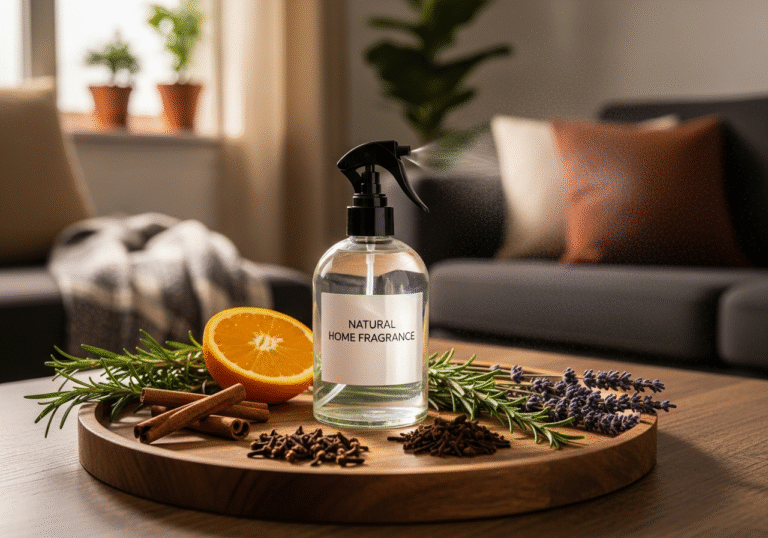
The stovetop method rides simple physics: bubbling water carries aromatic plant oils into the air on steam, fixing two winter problems at once: dry air and stale odors. Its genius is that it runs on scraps. Citrus peels headed for the compost are packed with limonene, so simmer them in a small saucepan alongside a broken cinnamon stick, some cloves, and a rosemary sprig. Heat breaks open the plants’ cellular structures, releasing a warm, spicy scent, and steam follows the home’s airflow into corners and up to higher floors, which a candle burning in one spot never manages.
- Citrus peels with cinnamon and cloves for a warm winter blend
- Apple cores with fresh ginger for a bright autumn note
- Pine or fir sprigs with rosemary for a woody clean scent
- Lemon slices with mint and a splash of vanilla
2. Homemade Reed Diffusers
Commercial versions often run on mineral oils and synthetic solvents; a DIY jar puts intensity and purity in your hands. The mechanism is capillary action: porous reeds wick liquid up microscopic channels and release it at the tips. Choose a light, nearly odorless carrier such as safflower or sweet almond oil, blend in a generous load of essential oils (eucalyptus with peppermint for a bathroom, bergamot with cedarwood for a living area), and add a splash of vodka to thin the oil and aid evaporation. The result is a subtle signature scent, not an assault on the nose.
3. Linen Sprays
Curtains, sofas, and rugs trap odors that fresheners alone cannot touch, and oil and water refuse to mix, so drops of essential oil in a water bottle just float and clog the nozzle. High-proof alcohol or witch hazel emulsifies the oil into tiny droplets; misted onto fabric, the alcohol evaporates almost instantly, leaving the oil on fibers. Lavender with chamomile turns a pillow mist into a sensory cue for sleep, while lemon with tea tree, both valued for antibacterial properties, neutralizes a pet-worn sofa at the source.
4. Baking Soda for True Deodorizing
Adding scent is only half the battle: garbage, compost, and sweat smells are largely acidic, and sodium bicarbonate is a base, so contact neutralizes them into inert, odorless salts. A small jar of baking soda spiked with a few drops of lemon essential oil acts as a continuous odor sponge at the bottom of a trash can or in a musty closet. For carpets, giant filters that hold dust and smells, sprinkle baking soda mixed with dried herbs like rosemary or lavender buds, wait about twenty minutes, then vacuum; the process itself releases the herbal scent and leaves the room earthy and clean.
5. Houseplants and Botanicals
Houseplants are the original air fresheners. Beyond their reputation for filtering toxins like formaldehyde and benzene, some are serious perfumers. A blooming jasmine fills the air with a sweet, heady fragrance that intensifies in the evening, and mint, basil, or lemon balm on a windowsill give bursts of scent whenever a leaf is brushed, a tactile fragrance that rewards interaction. In the bathroom, hang a bundle of fresh eucalyptus from the showerhead and let the hot steam activate its oils for a mentholated, clearing lift.
6. Fresh Air First
Marketing conditioned us to believe clean smells like bleach, pine chemicals, or heavy florals, but true cleanliness carries no odor at all: it means dust, mold, and decay are simply gone. Natural fragrance should sit as a top note over that neutral base, and the best freshener is the window. Ten minutes of open windows even in midwinter swaps the air volume, flushing built-up carbon dioxide and indoor pollutants, so any scent introduced afterward reads crisp and distinct.
Scents That Follow the Seasons
Synthetic pumpkin spice in April feels jarring; botanical notes follow the calendar intuitively.
| Season | Natural notes that fit |
|---|---|
| Spring | Light florals and greens such as geranium and vetiver |
| Summer | Bright citrus and cooling peppermint |
| Autumn | Grounding woodsy notes: cedar, sandalwood, patchouli |
| Winter | Warming spices like clove, cinnamon, and ginger, plus frankincense or pine |
Presentation and Honest Safety Notes
A plastic plug-in is an eyesore; a ceramic bowl of pinecones and cinnamon sticks works as visual potpourri, an amber glass bottle reads apothecary rather than cleaning-supply aisle, and star anise in a simmer pot turns scenting into intentional, visible beauty. Still, natural does not mean harmless. Essential oils are highly concentrated plant extracts. Tea tree and wintergreen can be toxic to pets if ingested or dispersed in high concentrations, and cinnamon bark or clove can irritate skin on direct contact. Respect the potency: aim for a hint you notice on entry that fades into the background, never a wall of smell.
Natural Home Fragrance FAQ
Why do sprays and candles stop covering my odors? Because they rarely remove anything; perfume just layers over odors and dust. The CDC’s guide to cleaning and disinfecting your home makes the priority clear, cleaning comes first, and baking soda neutralization plus real scrubbing finishes what no aerosol can.
Is mustiness just something I can scent over? No. Mustiness often signals mold, and the CDC notes that mold thrives wherever water collects, so address the growth and moisture before any diffuser gets a turn.
What is the easiest starter method? A simmer pot of scraps: citrus peels, cinnamon, cloves, and rosemary in gently bubbling water. No heavy handling of concentrated oils, dry winter air gets humidified, and the steam carries scent into every corner it reaches.
Freshness Begins With a Deep Clean
No fragrance in the world can mask a dirty home. Scent is the polish, not the diamond: dust on the baseboards, grime in the kitchen grout, and staleness in the carpets mean fragrance just layers noise over chaos. A restorative deep clean supplies the foundation, removing dust that traps odors, degreasing surfaces that hold cooking smells, and sanitizing background funk, while a regular maid visit keeps the canvas clear, as our reviews confirm. Call (647) 424-0355 and let the eucalyptus steam be the strongest scent in your rooms.