Maid Service

Storage Ornaments: 8 Amazing Tips For Storing Christmas Decorations Efficiently

The period immediately following the holiday season is marked by a specific kind of melancholy. The anticipation is gone, the guests have departed, and the house, once glittering with magic and light, now just looks cluttered. The task of taking down Christmas decorations is universally regarded as a chore, a stark contrast to the joy of putting them up. Consequently, many homeowners rush through the process, shoving lights into plastic bags, forcing wreaths into undersized boxes, and piling everything haphazardly into the corner of the basement. This procrastination of effort comes with a steep price tag: frustration. When next December arrives, the joy of the season is immediately dampened by the discovery of crushed ornaments, tangled lights that refuse to unravel, and a flattened artificial tree. Storing Christmas decorations efficiently is not merely about tidiness; it is an act of kindness toward your future self. It is a preservation strategy that protects your financial investment in your decor and ensures that the magic of the holidays remains accessible rather than becoming a source of stress. 1.Assessment The process of efficient storage begins before a single box is packed. It starts with a ruthless audit. As you remove ornaments from the tree and take down garlands from the banister, you must assess the condition of every item. The “post-season” is the ideal time to purge. If a string of lights flickered constantly or had a burnt-out section, do not store it. Do not tell yourself you will fix it next year; you won’t. Throw it out or recycle it now. If there are ornaments that have broken caps, shattered glass, or simply no longer fit your aesthetic, donate or discard them. Storing broken or unwanted items takes up valuable real estate and adds to the mental load of sorting next year. The goal is to store only the best, fully functional items that bring you joy. 2.Christmas Tree The artificial tree is often the largest and most cumbersome item to store. The cardboard box it came in is rarely designed for long-term survival. After one season, the cardboard weakens, tears, and becomes susceptible to moisture and pests. Trying to wrestle a fluffy tree back into its original factory-compressed box is a battle you will lose. Investing in a dedicated canvas tree bag is essential. These bags are durable, moisture-resistant, and spacious enough to accommodate the tree sections without crushing the needles. For even better efficiency, consider using cinch straps or old belts to bind the branches of each section before bagging. This reduces the volume of the tree significantly, making it easier to maneuver into the attic or storage locker. If you have the vertical space, upright storage bags allow you to store the tree standing up, eliminating the need to fluff the branches next year completely. 3.Delicate Ornaments Ornaments require a strategy that balances protection with space management. The “dump and pray” method—throwing everything into a large plastic bin—is a recipe for heartbreak. Fragile glass and ceramic baubles need individual isolation. While you can buy expensive specialty dividers, you can also engineer efficient solutions with household items. Plastic cups glued to a sheet of cardboard create perfect, crush-proof cells for round ornaments. Egg cartons are ideal for smaller, delicate baubles. For the irregular, sentimental ornaments made of macaroni or heavy metal, bubble wrap is non-negotiable. However, the true efficiency hack lies in categorization. Do not store ornaments randomly. Group them by color, theme, or room. If you have a specific set of “blue and silver” ornaments for the dining room tree, they should have their own labeled box. This allows you to decorate methodically next year without having to unpack everything at once. 4.Christmas Lights Christmas lights are the nemesis of holiday organization. They obey the laws of entropy, tangling themselves into impossible knots if left unsupervised. The mistake most people make is winding them around their arm and tossing the coil into a box. As the coil relaxes, it intertwines with its neighbors. To solve this, you need a structure. A flat piece of cardboard, cut with a notch at each end, serves as a perfect spool. Wind the lights tautly around the cardboard, plugging the male end into the female end to secure it. Alternatively, winding the lights into a ball—as you would with yarn—prevents tangling, though it takes up more volume. Labeling each strand is a critical step often skipped. A small piece of masking tape on the plug indicating “Mantel” or “Tree Bottom” saves hours of testing and measuring next year. 5.Wreaths and Garlands Wreaths and garlands present a volume problem. They are bulky, airy, and prone to being crushed. If you stack heavy boxes on top of a wreath, it will look like a flat tire next season. Hard-shell wreath containers are the best protection, allowing the wreath to retain its fluffiness. If shelf space is at a premium, utilize vertical storage. A simple nail or hook on the wall of a garage or basement allows wreaths to hang safely out of the way. For garlands, the challenge is preventing them from becoming a matted mess. Coiling them neatly into a clear plastic bin is effective, but wrapping them around a coat hanger and hanging them in a closet can also work if you have the rod space. The key is to avoid compression. 6.Textiles Textiles—stockings, tree skirts, holiday pillows, and table runners—face a different threat: biology. Fabric attracts dust mites, moths, and mildew. Storing these items in unsealed cardboard boxes in a damp basement is risky. They should be laundered or dry-cleaned before storage to remove any food crumbs or stains that might attract pests. Once clean, vacuum-seal bags are a game-changer for textiles. They compress bulky pillows and blankets down to a fraction of their size, saving immense amounts of space, and they provide an airtight seal against moisture and insects. If vacuum bags are not an option, latching plastic bins with a silica gel packet thrown inside to absorb moisture is

Storage Ornaments: 8 Amazing Tips For Storing Christmas Decorations Efficiently Read More »

Woman making a to-do list for January after the holiday season.

The January Reset: 8 Essential Tasks to Recover from the Holidays

January in Canada is a month of stark transition. The festive lights have dimmed, the adrenaline of the holiday season has evaporated, and we are left facing the reality of deep winter. It is often the coldest, darkest month of the year, a time when the Canadian climate tests the structural integrity of our homes and the resilience of our patience. While the instinct is to hibernate under a duvet and wait for spring, the homeowner cannot afford to be passive. January is a critical month for home maintenance. It is the time to shift from “hosting mode” to “defense mode,” protecting your property from the ravages of dry air, road salt, and thermal inefficiency. This to-do list is not just about cleaning; it is a strategic plan to maintain the health of your home during its most vulnerable season. 1.Post-Holidays The first priority on the January docket is the Post-Holiday Takedown and Recovery. This goes beyond simply putting ornaments in a box. If you had a real Christmas tree, by the first week of January, it has likely transformed from a festive centerpiece into a dehydrated fire hazard. The needles are dry, brittle, and coated in resin. Moving the tree often results in a trail of debris that embeds itself into carpets and scratches hardwood. The removal must be surgical. Use a dedicated disposal bag to wrap the tree before moving it. Once it is gone, the vacuuming strategy is crucial. Do not use the upright vacuum with the beater bar spinning; the needles will jam the brush roll and burn out the motor. Use the hose attachment to extract needles from baseboards, heating vents, and the deep pile of the rug. As for the decorations, January is the time to organize, not just store. Labeling boxes by room rather than by category saves immense stress next December. If a string of lights flickered or failed this year, throw it out now. Do not store broken equipment for your future self to deal with. 2.Salt Once the decorations are cleared, the War on Road Salt begins in earnest. January is when the municipal salting trucks are most active, and consequently, it is when your entryway floors suffer the most. The white crust that forms on boots and floors is calcium chloride or sodium chloride. It is highly alkaline and abrasive. If left to sit on hardwood, it will chemically eat through the polyurethane finish and stain the wood fibers grey. If left on tile, it will degrade the grout. A standard wet mop often just spreads this salty brine around. You must neutralize it. A mixture of one cup of vinegar to a gallon of warm water provides the acidity needed to dissolve the salt bonds. January is also the time to inspect and clean your boot trays. These often become pools of salty sludge. Rinse them out in a utility sink or bathtub to prevent them from overflowing onto the floor. Implementing a strict “no shoes past the mat” policy is the single most effective way to preserve your flooring this month. 3. Air Quality The next battlefront is Indoor Air Quality and Humidity Management. In January, Canadian homes are sealed tight. The furnace is running almost 24/7, circulating air that becomes progressively drier and dustier. This creates a specific set of problems. First, check your humidity levels. The ideal indoor humidity in winter is between 30% and 40%. If it drops lower, hardwood floors can shrink and crack, and static electricity builds up (which attracts dust to surfaces). If it is too high, you will see condensation or ice forming on the inside of your windows, which leads to mold growth on the sills. You likely need to run a humidifier, but that humidifier needs to be cleaned weekly to prevent it from spewing bacteria into the air. Simultaneously, the furnace filter must be changed. In January, the system is under maximum load. A clogged filter restricts airflow, forcing the furnace to work harder and potentially overheat, while recirculating dust and allergens. A fresh filter is the cheapest insurance policy for your HVAC system. 4.Dust With the furnace blasting, Dust Management becomes a different game. Convection currents created by baseboard heaters or forced-air vents move dust differently than in the summer. Dust settles heavily on the tops of door frames, ceiling fan blades (which should be stationary or reversed to push warm air down), and the coils of the refrigerator. The refrigerator coils, often located at the bottom or back of the unit, need to be vacuumed in January. When these coils are coated in dust, the fridge cannot release heat efficiently, meaning the compressor has to run longer to keep your food cold. This not only wastes energy but shortens the life of the appliance. Furthermore, clean your bathroom exhaust fans. In a sealed winter house, effective ventilation is the only way to remove moisture from showers. If the fan grille is clogged with gray fuzz, the humidity stays in the bathroom, inviting mildew to grow on the cold exterior walls. 5.Kitchen Detox  Kitchen Detox and Reset is the next major task. December is a month of excess, and the kitchen bears the scars. The refrigerator is likely packed with jars of half-eaten holiday condiments, stale leftovers, and produce that has seen better days. A ruthless purge is necessary. Check expiration dates and discard anything suspicious. Wipe down the shelves with hot soapy water to remove sticky spills that harbor bacteria. This is also the time to address the oven. If you didn’t clean it before the turkey went in, it is definitely dirty now. However, if your house is tightly sealed against the cold, running the high-heat self-clean cycle can fill the home with fumes that have nowhere to go. A manual clean with a paste of baking soda and water is safer for indoor air quality in January. Don’t forget the dishwasher filter; it likely processed a lot of grease and gravy in December and needs to be scrubbed to

The January Reset: 8 Essential Tasks to Recover from the Holidays Read More »

The house needs cleaning after the Christmas party.

Removing Glitter from Upholstery: The Best Hacks for a Sparkle-Free Sofa

The silence that descends upon a home on the morning of December 26th is distinct. It is a quietude born of exhaustion and satisfaction, a heavy, peaceful stillness that follows weeks of frenetic activity. The wrapping paper has been torn, the carols have been sung, and the guests have departed. However, as the adrenaline of the season fades and the winter sun streams through the window, it illuminates the aftermath of the festivities. The floor is no longer a surface for walking but a mosaic of fallen pine needles. The sofa glitters with the remnants of a shattered ornament or a festive card. The tablecloth bears the crimson map of a spilled Merlot, and the rug near the dining table hides a solidified patch of turkey gravy. This is the post-Christmas reality. It is a scene of beautiful chaos, but chaos nonetheless. To restore your home to livable order without succumbing to overwhelm, you must approach the cleanup not as a general chore, but as a triage operation, prioritizing the messes that cause permanent damage and tackling the debris that threatens the very mechanics of your household. Christmas Tree The first adversary in this battle is the Christmas tree itself. Whether you chopped it down at a farm or bought it from a lot, a real evergreen is a shedding organism. By the time Christmas Day has passed, the tree is likely drying out, dropping thousands of needles that act like tiny, resin-coated daggers. The instinct is often to grab a broom, but this is a tactical error. Sweeping pine needles on a hard floor or a carpet is largely ineffective; the bristles of the broom tend to flick the lightweight needles into the air or, worse, drive them deeper into the grout lines of tile and the weave of the rug. Furthermore, pine needles are coated in sap, which can smear across hardwood if dragged by a broom, leaving sticky streaks that attract dirt. The correct weapon for pine needle removal is a vacuum, but specifically the hose attachment. Do not run the upright vacuum with the beater bar (the rotating brush) over a pile of needles. The needles are tough and can easily jam the rotation mechanism or clog the intake valve, burning out the belt of your machine. Instead, get on your hands and knees with the hose and the crevice tool. This allows you to suck up the needles directly without grinding them into the fibers. For upholstery where needles have embedded themselves like splinters, duct tape is surprisingly effective. Wrap a length of tape around your hand, sticky side out, and pat the cushions. The adhesive lifts the needles that the vacuum misses. If you encounter sap on your hardwood floors, do not scrub it with water, which does nothing against resin. A small amount of rubbing alcohol or hand sanitizer on a microfiber cloth will dissolve the sap instantly, protecting the finish of the floor. Glittler Once the organic debris is managed, you must face the inorganic invader: glitter. It is often jokingly referred to as the permanent guest of the craft world because once it enters a home, it seems impossible to remove. Glitter adheres to surfaces via static electricity, making it resistant to simple dusting. Trying to wipe glitter with a dry cloth simply charges the particles further, causing them to jump to the nearest vertical surface or stick to your clothes. To conquer glitter, you must break the static bond. On hard surfaces like tables and floors, a damp microfiber cloth is essential. The moisture increases the weight of the particles and neutralizes the static charge, allowing you to wipe them up rather than push them around. For carpets and fabric, where glitter embeds deep into the pile, a vacuum often fails to extract the particles trapped at the base. Here, the “play-dough” method is incredibly effective. Take a ball of children’s play dough—or a wad of masking tape—and press it into the glitter-infested area. The glitter will stick to the compound more readily than the carpet fibers. This is a tedious process, but it is the only way to ensure you aren’t finding sparkles on your socks in July. For larger areas, a lint roller is a faster, though slightly less precise, alternative. It is crucial to tackle glitter immediately; if it is allowed to disperse, it will migrate into the HVAC vents and circulate through the house for months. Food Stains While needles and glitter are annoyances, food stains represent a structural threat to your textiles. The holiday meal is a minefield of potential disasters, with gravy being a primary culprit. Gravy is a combination stain, consisting of protein from the meat juices, pigments from browning agents, and a high concentration of fat. When a drop of gravy hits the carpet, the fat begins to solidify as it cools, binding the pigments to the fiber. The worst thing you can do is scrub it with hot water. Heat will cook the protein in the gravy, setting the stain permanently, while scrubbing will spread the grease outward. The triage for gravy involves patience and chemistry. First, use a dull knife or a spoon to lift away any solid residue. Do not rub. Once the excess is gone, you need to draw the oil out of the fiber. Cover the stain with a generous mound of baking soda, cornstarch, or salt. These powders are absorbent and will pull the liquid fat up from the carpet backing. Let it sit for at least fifteen minutes, or until the powder looks greasy, then vacuum it up. Now you are left with just the protein and pigment. Mix a solution of lukewarm water and a clear, bleach-free dish soap. Dish soap is a degreaser and a surfactant. Blot the stain gently with this solution until the color transfers to your cloth. Rinse by blotting with clear water. If you skip the powder step and go straight to water, you risk turning the oil

Removing Glitter from Upholstery: The Best Hacks for a Sparkle-Free Sofa Read More »

Dangerous to Your Health: 5 Common Products That are Dangerous For Your Daily Life

What would be dangerous to your health? The modern home is often viewed as a sanctuary, a controlled environment where we retreat from the pollution and chaos of the outside world. We scrub, spray, and polish surfaces with the intention of creating a safe, hygienic space for our families. However, there is a profound irony hidden within the cabinets under our sinks. In our aggressive pursuit of cleanliness, we have introduced a chemical arsenal that often makes the air inside our homes significantly more toxic than the air outside. The products we trust to sanitize our countertops and brighten our floors are frequently composed of volatile compounds that are potentially dangerous to your health. Understanding the chemistry of these common household items is the first step in dismantling the dangerous myth that a strong chemical smell equates to a clean home, when in reality, it often signals the presence of toxins. 1.Sodium Hypochlorite The most ubiquitous and perhaps most misunderstood chemical in the cleaning arsenal is sodium hypochlorite, commonly known as bleach. It is the default weapon for many when tackling mold, mildew, or bathroom grime. The risk of bleach lies not just in its corrosive nature, which can burn skin and eyes upon contact, but in its respiratory impact. Bleach is highly volatile. When used in a confined space like a shower or a small bathroom, the fumes react with organic matter to create chlorinated volatile organic compounds that are dangerous to your health, especially if you suffer from respiratory issues. inhaling these fumes causes immediate irritation to the mucous membranes of the throat and lungs. Furthermore, the chemical instability of bleach leads to one of the most common and deadly household accidents: the mixing of cleaners. If bleach is mixed with ammonia—which is found in urine and many glass cleaners—it produces chloramine gas. If mixed with acidic cleaners, it releases chlorine gas. Both of these reactions create an immediate atmospheric condition that is acutely dangerous to your health, leading to hospitalization or worse. 2.Ammonia Ammonia itself is another staple that warrants extreme caution. It is the primary active ingredient in many glass and window cleaners due to its ability to evaporate quickly without streaking. However, ammonia is a powerful irritant. Upon inhalation, it seeks out moisture, meaning it aggressively attacks the eyes, the throat, and the lungs. High concentrations of ammonia are dangerous to your health, causing chemical burns to the respiratory tract and exacerbating chronic conditions like asthma. The risk is compounded by the method of application. Most ammonia products are sold in spray bottles. When the trigger is pulled, the chemical is aerosolized into a fine mist. This mist hangs in the breathing zone, ensuring that the person cleaning inhales a significant dose with every breath. The distinct, sharp odor of ammonia is a warning signal from the body that the environment has become dangerous to your health, yet many push through the discomfort under the false impression that the pain is necessary for cleanliness. 3.Fragrance or Parfum Beyond the obvious corrosives, there is a silent and pervasive threat hiding in almost every bottle: fragrance. The word “fragrance” or “parfum” on an ingredient label represents a regulatory loophole. It is considered a trade secret, meaning manufacturers are not required to list the hundreds of specific chemicals that make up their signature scent. Within this chemical cocktail, one often finds phthalates. Phthalates are a group of chemicals used to make scents last longer, but they are also known endocrine disruptors. They mimic hormones in the body, potentially interfering with reproductive development, making them subtly but profoundly dangerous to your health over the long term. When you spray a lemon-scented counter spray or plug in a floral air freshener, you are releasing these compounds into the air. They settle on surfaces, are absorbed through the skin, and are inhaled into the bloodstream. 4.Air Fresheners and Fabric Deodorizers Air fresheners and fabric deodorizers are particularly egregious offenders in this category. These products do not clean; they coat. Many air fresheners work by releasing a nerve-deadening agent that temporarily interferes with your ability to smell, or by coating the nasal passages with an oily film. Others simply overload the air with volatile organic compounds (VOCs) to mask the underlying odor. These VOCs contribute to poor indoor air quality, leading to headaches, dizziness, and fatigue. The use of aerosol sprays adds another layer of risk, as the propellants themselves can be flammable and irritating to the lungs, making the very act of freshening the room dangerous to your health. Using these products is essentially solving a hygiene problem with a pollution problem, replacing a bad smell with a toxic chemical cloud. 5.Oven Cleaners and Drain Openers The heavy artillery of kitchen cleaning, oven cleaners and drain openers, represents the most immediate physical danger. Oven cleaners are typically formulated with lye (sodium hydroxide), a caustic substance that dissolves baked-on grease by turning it into soap. This chemical is so corrosive that it can cause permanent blindness if it splashes into the eyes and severe chemical burns on the skin. The fumes generated when spraying a cold oven are bad enough, but many people make the mistake of spraying the cleaner onto a warm oven. This vaporizes the lye, creating a toxic cloud that fills the kitchen and is immediately dangerous to your health upon inhalation. Similarly, drain openers rely on concentrated sulfuric acid or lye to burn through hair and grease clogs. These chemicals generate intense heat and can damage old pipes, but the health risk to the user is paramount. If the product fails to clear the clog and a plumber later tries to snake the drain, the splashing backwash creates a scenario that is physically dangerous to your health. 6.Quats In the post-pandemic world, the use of quaternary ammonium compounds, or “quats,” has exploded. These are the active ingredients in most disinfectant wipes and sprays. While effective at killing bacteria and viruses, quats are powerful lung irritants. There is growing evidence to suggest that frequent exposure to quats

Dangerous to Your Health: 5 Common Products That are Dangerous For Your Daily Life Read More »

Washroom Cleaning

Beyond the Surface: Why Washroom Cleaning Requires a Different Strategy

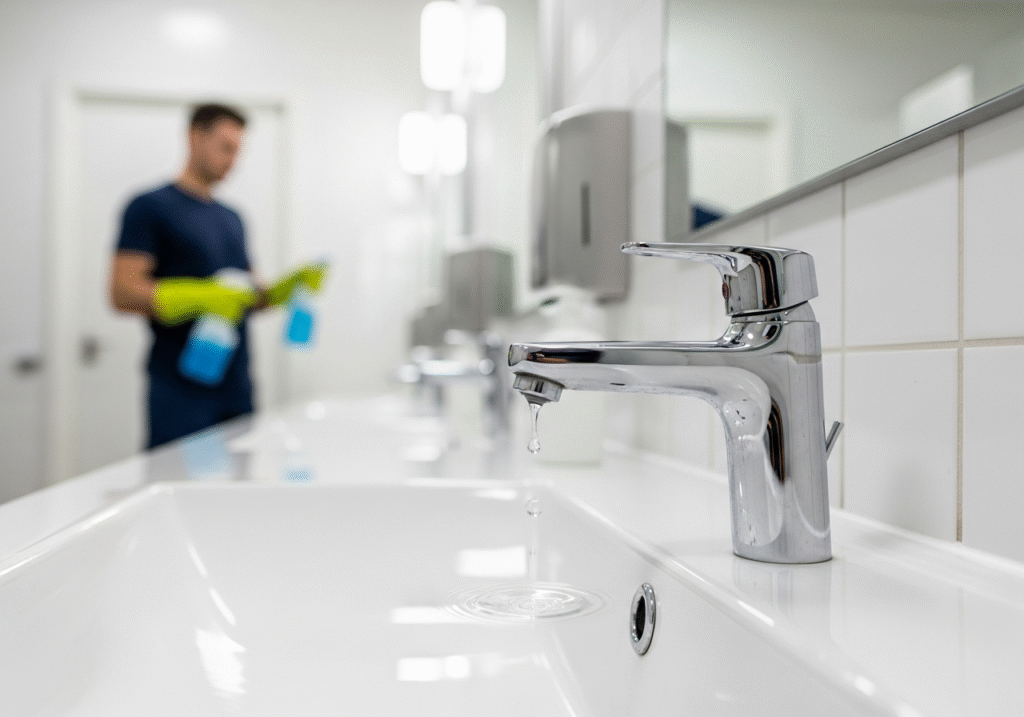
The washroom is undeniably the most functionally demanding environment within any architectural structure. It is a dedicated zone where the biological realities of human life intersect with the rigid requirements of sanitation. Unlike a living room or a bedroom, where cleaning is largely a matter of aesthetics and dust management, washroom cleaning is a constant battle against microbiology and chemistry. Every surface in a bathroom is subjected to a relentless cycle of wetting and drying, a process that creates distinct layers of mineral deposits, soap scum, and bacterial colonies known as biofilm. To clean a washroom effectively, one must move beyond the superficial act of wiping surfaces and understand the microscopic warfare taking place on the tile, the porcelain, and the grout. 1.Soap Residue The foundation of effective washroom hygiene lies in understanding the nature of the dirt you are fighting. In the shower and bathtub, the primary enemy is calcium stearate, commonly known as soap scum. This substance acts as a binding agent for filth, formed when the fatty acids in bar soap react with the minerals in hard water. This reaction creates a waxy, insoluble precipitate that clings tenaciously to fiberglass, glass, and tile. Trying to remove this substance with a standard all-purpose cleaner is often an exercise in futility because most general cleaners are pH-neutral. To break down the alkaline mineral bonds of soap scum, you need an acidic cleaner. This is why professional cleaners often rely on products containing phosphoric or citric acid. However, this chemical warfare requires caution; acid can etch natural stone like marble or travertine, destroying the finish permanently. 2.Mold Biofilm presents a different, more insidious challenge than simple dirt. This slime layer is a complex colony of bacteria that adheres to surfaces and secretes a protective, glue-like substance. In the washroom, this often manifests as the pink or orange discoloration seen in the corners of the shower. While it wipes away easily, it returns rapidly because the colony is resilient. True mold, typically black or dark green, is a fungus that roots into porous surfaces. The grout lines between your tiles are the most vulnerable points in the room. Grout is essentially cement, a porous material that absorbs water and organic matter like a sponge. When mold establishes itself in grout, surface scrubbing is often insufficient because the root structure lies deep within the pores. Effective remediation requires penetrating cleaners that can reach the sub-surface level to kill the root, followed by a sealer to lock moisture out. 3.Toilet The toilet, often viewed as the centerpiece of washroom cleaning, is frequently cleaned incorrectly due to a focus on the visible bowl rather than the invisible hygiene hazards. The mechanics of the flush create what is known as an aerosol plume. When a toilet is flushed with the lid up, microscopic droplets of water mixed with waste are ejected into the air, settling on nearby surfaces. Cleaning the toilet requires a top-down approach that addresses this spread. The most neglected area is the intersection between the toilet base and the floor. This area often accumulates a mix of condensation, dust, and stray urine, creating a persistent odor that no amount of air freshener can mask. Furthermore, the siphon jets—the small holes under the rim where water enters the bowl—often become clogged with mineral deposits and mold, reducing flush power and harboring bacteria. A bent brush is necessary to physically dislodge this buildup. 4.Faucet Aerator The sink and vanity area suffer from a unique cocktail of toothpaste splatters, hair, and makeup residues. The faucet aerator, the small mesh screen at the tip of the spout, is a hidden trap. It filters sediment from the water lines, but it also creates a damp environment where bacteria can grow. If the water flow seems irregular, it is likely because the aerator is calcified. Unscrewing this piece and soaking it in vinegar is a maintenance step that ensures the water you use to brush your teeth is actually clean. The sink drain, specifically the overflow hole near the top of the basin, is a dark, damp cave that rarely gets cleaned. It creates a perfect breeding ground for biofilm, which releases a musty, sewer-like odor. Pouring a cleaning solution down the overflow and using a small brush to agitate the interior walls is necessary to eliminate this phantom smell. 5.Mirrors and Glass Surfaces Mirrors and glass surfaces in the washroom are unforgiving of poor technique. The high humidity of the room often causes dust to stick to the glass, creating a muddy streak when wiped with a damp cloth. The secret to streak-free glass is not the chemical, but the tool. Traditional cotton cloths often leave lint or residues that cause streaking. A high-quality microfiber cloth, specifically woven for glass, uses microscopic hooks to lift oils and dust without the need for heavy detergents. Furthermore, the edges of the mirror, where the glass meets the frame, are often prone to corrosion caused by harsh ammonia-based cleaners seeping behind the glass. Cleaners should always be sprayed onto the cloth, never directly onto the mirror. 6.Floor The floor of the washroom is the final resting place for everything that falls or settles in the room. Because of the high moisture levels, dust on a bathroom floor does not sweep up easily; it smears. This mud-like dust packs into the corners and the grout lines. Mopping is often ineffective because it simply pushes this dirty water around, filling the low-lying grout lines with a slurry of gray filth. True floor hygiene in a washroom requires hand-cleaning the perimeter and the corners where the mop cannot reach. The area behind the toilet, often cramped and difficult to access, is a prime location for dust bunnies to collect moisture and begin to rot. This area should always be cleaned by hand to ensure that the source of potential odors is physically removed. 7. Exhaust Fan Ventilation is the invisible cleaner of the washroom. The exhaust fan is the single most important

Beyond the Surface: Why Washroom Cleaning Requires a Different Strategy Read More »

5 Reasons Why Hiring a Cleaning Service is the Best Form of Self-Care

Why hire a specialized cleaning service? The modern home is a hub of activity, a place of work, rest, and family life. Yet, maintaining its cleanliness can feel like a relentless, never-ending task. The dust settles almost as soon as it’s wiped away, the floors seem to attract dirt, and the kitchen and bathrooms demand constant attention. For many, the weekend, which should be a time for relaxation and recharging, is instead consumed by a long list of chores. This constant cycle of cleaning can become a significant source of stress and a drain on our most valuable resource: time. It is in this gap between the desire for a clean, peaceful environment and the reality of a busy life that a residential house cleaning service finds its purpose, offering not just a service, but a solution to a pervasive modern problem. 1.Quality of Life Hiring a professional cleaning service is often viewed as a luxury, but it is more accurately described as an investment in your quality of life. Consider the hours spent each week sweeping, mopping, scrubbing, and dusting. For a moderately sized home, this can easily add up to four, five, or even more hours. A professional service reclaims those hours for you, handing them back to be spent on what truly matters. This could mean more time with family, pursuing a hobby, exercising, or simply enjoying a well-deserved rest. The cumulative effect of this reclaimed time is profound, reducing burnout and allowing for a better work-life balance. It transforms the home from a place of constant obligation into a true sanctuary, a space you can enter after a long day and immediately feel at ease, rather than being confronted with a list of tasks that need doing. 2.Quality of Cleanliness Beyond the gift of time, there is the undeniable difference in the quality of the clean itself. A professional cleaner brings a level of expertise and efficiency that is difficult for the average homeowner to replicate. They are trained in the most effective methods and understand the specific needs of different surfaces. They know which products to use on natural stone versus laminate, how to clean stainless steel without leaving streaks, and the best techniques for removing stubborn soap scum from glass shower doors. This knowledge prevents costly damage that can result from using the wrong chemical or an abrasive sponge on a delicate surface. Furthermore, professional services come equipped with commercial-grade tools and supplies that are often more powerful and effective than standard consumer products. Their high-powered vacuums with HEPA filters can capture a significantly higher percentage of dust, allergens, and pet dander, leading to improved indoor air quality. This is particularly beneficial for households with allergy sufferers, asthmatics, children, or pets. The result is not just a home that looks clean, but one that feels and is, on a microscopic level, healthier. The process of a professional clean is systematic and thorough. Cleaners typically work with a detailed checklist, ensuring that no area is overlooked. They employ methodical strategies, such as cleaning from top to bottom to ensure dust and debris fall downwards before the floors are addressed, and working from one side of a room to the other. This structured approach guarantees consistency and completeness. A standard recurring clean will typically involve a comprehensive dusting of all surfaces, including furniture, shelves, and window sills; cleaning and disinfecting kitchen countertops, sinks, and appliance exteriors; scrubbing toilets, showers, tubs, and bathroom vanities; and vacuuming carpets and mopping hard floors. This regular maintenance keeps the home at a consistent level of cleanliness, preventing the deep buildup of grime. 3.Deep Cleaning For homes that have gone some time without a thorough cleaning or for clients new to a service, a deep clean is often recommended. This is a far more intensive and detailed service that addresses the areas often missed in a regular routine. A deep clean will include all the tasks of a standard clean but will go much further. It can involve washing baseboards and trim, cleaning light fixtures and ceiling fans, wiping down doors and door frames, cleaning behind and underneath furniture and appliances, scrubbing grout lines, and cleaning the interior of windows. This is the reset button for your home, tackling the accumulated dirt and dust in every nook and cranny, and establishing a new baseline of clean that makes subsequent maintenance easier. Specialized services like move-in and move-out cleanings are another critical offering. Preparing a home for sale or ensuring a new home is pristine before you unpack is an enormous task on top of the already stressful process of moving. A move-out clean is designed to leave the property in immaculate condition for the next occupants, often a requirement for retrieving a security deposit. This is the most exhaustive clean of all, performed on an empty home. Every interior surface is addressed, including the inside of all cabinets, drawers, closets, the oven, and the refrigerator. It ensures the home is presented in its best possible light, which can be a significant factor for real estate agents and potential buyers. Conversely, a move-in clean provides immense peace of mind, sanitizing the space and ensuring you are starting your new chapter in a fresh, thoroughly cleaned environment. 4.Trust and Security One of the most significant barriers for people considering a cleaning service is the idea of trust and security. Inviting someone into your personal space requires confidence in their professionalism and integrity. This is why reputable cleaning companies place such a high emphasis on their hiring and training processes. They conduct background checks on their employees and ensure they are thoroughly vetted. Furthermore, professional services are bonded and insured. Bonding provides protection against theft, while insurance covers any accidental damage that might occur to your property during the cleaning process. This comprehensive protection offers homeowners the peace of mind that they are working with a trustworthy organization that stands behind its work and its people. The relationship with a cleaning service is

5 Reasons Why Hiring a Cleaning Service is the Best Form of Self-Care Read More »

woman giving her friend a cleaning gift card

Cleaning Gift: The Most Thoughtful Thanksgiving Gift You Can Give

Thanksgiving is a holiday centered on the beautiful, simple act of gathering. It’s about the warmth of a crowded table, gifts, the familiar comfort of shared recipes, and the expression of gratitude for the people in our lives. We plan menus, we brine turkeys, and we coordinate who will bring which dessert. But beneath this joyful preparation lies a silent, often stressful, and monumental task that almost always falls on the host: the pre-Thanksgiving deep clean. We have all felt it. The week before the guests arrive is a frantic race against the clock. It is a period of scrubbing, dusting, and mopping, driven by the quiet but intense pressure to present a home that is not just tidy, but impeccably clean. It is a labor of love, but it is labor nonetheless. It is hours spent on hands and knees, wiping baseboards and scrubbing floors, when that time could be spent perfecting a pie crust or simply taking a moment to breathe before the happy chaos begins. This year, consider a different kind of contribution. Instead of offering to bring another side dish that will crowd the refrigerator, think about giving a gift that truly serves the person you are thankful for. Consider giving the gift of a clean home. It may sound unconventional, but a pre-Thanksgiving cleaning, whether performed by you or a professional service, is one of the most thoughtful, practical, and profoundly impactful gifts you can possibly give a friend who is hosting. It is a gesture that transcends a simple present; it is a gift of time, of peace of mind, and of genuine, functional support. The Gift of Time In our busy lives, time is the most precious and non-renewable resource we have. During the holiday season, this becomes acutely apparent. The host of a Thanksgiving dinner is not just cooking a single meal; they are orchestrating a major event. Their to-do list is a marathon of planning, shopping, chopping, and baking. The last thing they have is a surplus of free hours. Let’s be honest about what a true guest-ready clean entails. It is not a quick wipe of the counters. It is a comprehensive, top-to-bottom effort. The Dusting: This means getting not just the coffee table, but the tops of the door frames, the ceiling fan blades, the baseboards, and the window sills. It is a detailed, meticulous job that can easily take an hour or more. The Kitchen Deep Clean: The kitchen is the heart of Thanksgiving, and it needs the most intensive work. This involves scrubbing the stovetop, wiping down the fronts of all appliances, cleaning the microwave, disinfecting the countertops, and making sure the sink is sparkling. This is a solid hour of focused work, at minimum. The Bathroom Scrub: The guest bathroom needs to be pristine. This means scrubbing the toilet, cleaning the sink and faucet, wiping down the mirror until it is streak-free, and washing the floor. The Floors: Every hard-surface floor in the main living areas needs to be thoroughly swept and mopped. Every carpet needs to be vacuumed, including moving furniture to get the dust bunnies hiding underneath. This can easily consume another hour or two, depending on the size of the home. The Final Touches: Cleaning entryway glass, tidying up clutter, and giving everything a final polish. When you add it all up, a proper pre-hosting deep clean can easily take five to eight hours of hard, physical work. By giving the gift of a cleaning, you are handing your friend an entire day of their life back. That is a day they can now use to finalize their menu, to bake a dessert without rushing, to spend time with their children who are excited for the holiday, or, most importantly, to simply sit down with a cup of tea and mentally prepare for the joy of hosting, rather than the stress of it. You are not just saving them a chore; you are giving them the space to enjoy the process. The Gift of Peace of Mind The physical labor of cleaning is only half the battle. For any host, the mental load can be even more exhausting. The pressure to have a “perfect” home is a real and often unspoken source of anxiety. Every dust bunny in the corner, every smudge on the window, and every crumb under the dining table can feel like a personal failing when you are about to welcome people into your home. This “hosting anxiety” creates a mental checklist that runs on a constant loop in a host’s mind. Did I remember to dust the lampshades? Is the guest bathroom clean enough? Does the house smell fresh? This internal monologue is a significant source of stress that detracts from the true spirit of the holiday. When you give the gift of a clean home, you are silencing that nagging voice. You are taking a huge, stressful item off their mental checklist and completely erasing it. Imagine the profound sense of relief your friend will feel, walking into their home a day or two before Thanksgiving to find that it is already done. The floors are gleaming. The kitchen is sanitized and ready for the culinary marathon. The bathroom is sparkling. This gift allows your friend to transition their focus from the presentation of their home to the purpose of the gathering. They can channel all their energy into what truly matters: the food, the conversation, and the connection with their loved ones. They can be a present, relaxed, and joyful host, not a frazzled, exhausted one who is secretly worrying about whether a guest noticed the dust on the baseboards. You are not just cleaning their house; you are clearing their mind. A Foundation for the Entire Holiday Season Thanksgiving in many ways is the official kick-off to the entire winter holiday season. The festivities of November flow directly into the preparations for December. A deep clean for Thanksgiving is therefore not just a gift for a single day; it is a foundational gift that keeps on

Cleaning Gift: The Most Thoughtful Thanksgiving Gift You Can Give Read More »

The Benefits of Hiring a Professional

Post-Construction Cleaning: 3 The Benefits of Hiring a Professional

The end of a construction or renovation project is a moment of pure anticipation. The final nail has been hammered, the last coat of paint has dried, and the blueprint that once existed only on paper has been transformed into a tangible, three-dimensional space. But in the quiet aftermath, after the contractors have packed up their tools and driven away, the dream space remains just out of reach, separated from reality by a formidable, often underestimated barrier: the post-construction mess. This is not the familiar, everyday dirt of a lived-in home. Post-construction cleaning is a specialized, intensive discipline, a top-to-bottom reclamation project that deals with a unique and pervasive type of grime. It is the final, essential bridge that transforms a hazardous, dusty worksite into a clean, breathable, and truly livable home. 1.The Anatomy of a Construction Mess To appreciate the scope of a post-construction clean, one must first understand the nature of the debris left behind. It is a class of dirt all its own, requiring a specific strategy and a different set of tools than your weekly cleaning routine. The undisputed villain of any construction project is the dust. This is not the soft, fluffy dust that gathers on bookshelves. Construction dust is a fine, gritty, and abrasive particulate matter composed of a cocktail of materials: drywall compound (gypsum), plaster, sawdust, cement powder, silica, and more. Its particles are so fine that they become airborne with the slightest disturbance, traveling through HVAC systems and settling in a uniform, ghostly layer on every single conceivable surface. It’s not just on the floors and countertops; it’s inside cabinets, on top of door frames, within light fixtures, coating the blades of a ceiling fan, and settled deep within the fibers of any existing carpet. This dust is more than an eyesore; it can be a significant respiratory irritant, making its complete and total removal a matter of health and safety, not just aesthetics. Beyond the all-encompassing dust, a construction site is littered with other forms of debris. You will find stray nails, orphaned screws, small chunks of wood and drywall, plastic shavings from plumbing work, and hardened blobs of caulk or adhesive. New windows, appliances, and fixtures are typically covered in protective plastic films and manufacturer’s stickers, which often leave behind a stubborn, sticky residue when removed. There are almost always errant paint splatters on hinges, glass panes, or flooring, and scuff marks on newly installed baseboards from ladders and equipment. Attempting to tackle this complex mess with a household all-purpose cleaner and a roll of paper towels will result in frustration, smeared grime, and potentially permanent damage to brand-new, expensive surfaces. 2.Professional Post-Construction Clean A truly effective post-construction clean is not a single, chaotic event. It is a systematic, multi-phase process where each stage builds upon the last, ensuring that every corner is addressed and no detail is overlooked. Phase 1: The Rough Clean This initial phase is about clearing the battlefield. It often takes place during the final days of construction or immediately after the contractors have departed. The primary objective of the rough clean is to remove the bulk of the large-scale debris, making the space safe and accessible for the meticulous, detailed cleaning to follow. A standard rough clean includes: The collection, removal, and proper disposal of all large trash and debris. This includes wood scraps, leftover materials, hardware packaging, and cardboard boxes. Scraping and sweeping up large piles of drywall dust, sawdust, and other major accumulations from the floors. Peeling off all protective plastic films from windows, doors, appliances, and fixtures. A preliminary pass with a heavy-duty shop-vac over all surfaces to remove the thickest, most obvious layers of dust. At the conclusion of the rough clean, the space will still be visibly dirty, but it will be free of major hazards and clutter. This crucial first step clears the way for the much more intensive and detailed work of the deep clean. Phase 2: The Deep Clean  This is the heart and soul of the post-construction cleaning process. It is a methodical, top-to-bottom cleaning of every single surface in the renovated area. The guiding principle is universal to all serious cleaning: start high and work your way down. This ensures that any dust or debris you dislodge from a high surface falls onto a surface you have yet to clean, preventing you from having to re-clean areas. A comprehensive deep clean checklist is exhaustive: Ceilings, Walls, and High Fixtures: Wiping down ceilings and walls to remove the fine layer of settled dust. This may involve dry dusting or using a damp microfiber cloth, depending on the paint finish. Cleaning all light fixtures, ceiling fans, and recessed lighting, both inside and out. Wiping down the tops of all door frames, window casings, and any high-up molding. Doors and Windows: Cleaning both sides of every window and glass door. This critical step includes carefully scraping off any paint splatters, caulk, or sticker residue with a professional razor scraper. Thoroughly cleaning window sills and tracks. These areas are notorious collection points for a surprising amount of sawdust and drywall debris. Wiping down every part of the doors, including the hinges, doorknobs, and the often-forgotten top edge where dust loves to settle. Trim, Baseboards, and Cabinetry: Wiping down every inch of trim, molding, baseboards, and any built-in shelving. This is often a detailed, hands-and-knees job that requires patience. Cleaning the inside and outside of all cabinets, cupboards, and drawers. This is especially vital for kitchens and bathrooms. You must ensure these storage spaces are completely free of sawdust and drywall dust before storing clean dishes, food, or linens. Kitchen and Bathrooms: Cleaning, disinfecting, and polishing all countertops. Scrubbing and shining sinks and faucets, making sure to remove any plumber’s putty or installation residue. Cleaning the exteriors and interiors of all new appliances. Thoroughly cleaning showers, bathtubs, and toilets to remove the fine film of dust that has inevitably settled on them. Polishing all fixtures, mirrors, and chrome to

Post-Construction Cleaning: 3 The Benefits of Hiring a Professional Read More »

House Cleaning Services Calgary

House Cleaning Services Calgary: Have a Spotless Home Today

Modern life in Calgary, with its demands and opportunities, often leaves little time for essential household chores. Residents of the city, whether busy professionals, parents with packed schedules, or outdoor enthusiasts, frequently find themselves seeking solutions to optimize their time and enhance their quality of life. In this scenario, house cleaning services Calgary emerge as a practical and increasingly popular answer. Maintaining a clean and organized home is fundamental for well-being, providing a tranquil and healthy refuge amidst daily hustle. For many in Calgary, delegating cleaning to specialists is not a luxury, but a necessity that allows them to focus on personal and professional priorities, or simply to enjoy more of what the city offers. Professional Cleaning Services The scope of professional cleaning services extends far beyond a simple tidy-up. Specialized companies in Calgary offer a diverse range of options, designed to meet the specific needs of each residence and lifestyle. Regular maintenance cleaning forms the basis for many, including essential tasks like dusting surfaces, vacuuming carpets and floors, mopping, and cleaning countertops and mirrors. The focus here is consistency, ensuring the home always remains in a pleasant and hygienic state, preventing the accumulation of dirt and clutter that could become overwhelming. Many choose house cleaning services Calgary for this consistent upkeep. For times when dirt accumulates or the house needs deeper care, deep cleaning is the solution. This service is more intensive and detailed, targeting areas often neglected in daily routines. This can include interior cleaning of appliances like ovens and refrigerators, scrubbing grout in bathrooms and kitchens, thorough disinfection of toilets and showers, and meticulous attention to baseboards and corners. Deep cleaning revitalizes the environment, eliminating dirt and germs that can compromise the health and comfort of the home. Move-in/move-out Beyond routine and deep cleaning, there are specialized services for transitional moments. Move-in/move-out cleaning is essential for those relocating. For those moving out, it ensures the property is returned in impeccable condition, which can be crucial for security deposit recovery. For those moving in, it prepares the new home for fresh and hygienic occupancy, allowing new residents to start on the right foot. This type of cleaning is exhaustive, covering every inch of the house from top to bottom. The demand for house cleaning services Calgary during moves is significant. Post-renovation cleaning is another vital service in a city where property renovation is common. Renovations leave behind a considerable amount of construction dust and debris, which require specific equipment and techniques for effective and safe removal. Cleaning professionals are equipped to handle this challenge, ensuring the renovated space is ready to be enjoyed without any remnants of the work. Additionally, many service providers in Calgary offer special cleanings such as window washing, steam carpet cleaning, and upholstery cleaning, which can be contracted separately or as complements to standard cleaning packages. Flexibility is a key feature, allowing house cleaning services Calgary to be tailored to meet the individual needs of each client and the particularities of each home. The benefits of hiring professional cleaning services are numerous and positively impact the quality of life. The most evident is recovering time. Instead of spending hours cleaning, Calgary residents can dedicate that time to more enjoyable activities, work, family, hobbies, or simply rest. This freedom is one of the biggest attractions of house cleaning services Calgary. Another significant benefit is consistent cleanliness and hygiene. Professionals are trained to maintain high cleaning standards, using effective products and methods to remove dust, allergens, bacteria, and viruses. This contributes to a healthier home environment, reducing the spread of illnesses and improving indoor air quality, which is especially important for people with allergies or respiratory problems. Professional house cleaning services Calgary ensure this level of consistency. The reduction of stress is an often underestimated impact. The sight of a dirty or disorganized home can generate anxiety and guilt. By delegating this task, residents alleviate this mental burden, fostering a sense of calm and well-being. The home becomes a true sanctuary, free from the worries of daily maintenance, thanks to dedicated house cleaning services Calgary. Trained Team Professional expertise and equipment are also clear advantages. Cleaning companies invest in high-quality industrial tools and effective, safe cleaning products, often unavailable to the average consumer. Furthermore, staff are trained in efficient cleaning techniques, ensuring the work is done thoroughly and without damage to surfaces. This level of professionalism is a hallmark of top house cleaning services Calgary. At the end, the longevity of the home benefits. Regular and proper cleaning protects the materials, surfaces, and appliances in the house. Removing dirt and dust before they become ingrained helps prevent wear and tear and extends the lifespan of floors, furniture, and finishes, representing a form of preventive property maintenance. This is an often-overlooked advantage of house cleaning services Calgary. Calgary itself presents characteristics that make cleaning services particularly relevant. Busy lifestyles are a constant, with many Calgarians engaged in demanding careers, which limits the time available for household chores. As a family-oriented city, Calgary has many families who need to balance work, school, and children’s extracurricular activities, where house cleaning time is often the first to be sacrificed. Moreover, a passion for outdoor activities is a hallmark of Calgary, given its proximity to the Rocky Mountains and numerous parks. This means mud, dust, snow, and other natural elements are frequently tracked indoors, requiring more frequent and robust cleaning. House cleaning services Calgary are well-equipped to manage this. Seasonal Changes Seasonal changes in Calgary also pose specific cleaning challenges. In winter, salt and slush from snow and ice are tracked indoors, demanding constant attention to floors. Spring brings pollen and accumulated winter grime. Summer, with more outdoor activities, increases foot traffic and, consequently, general dirt. Autumn, in turn, introduces leaves and debris. Professional house cleaning services Calgary are equipped to handle these seasonal challenges, offering tailored solutions for each period of the year. All these factors converge to make professional cleaning a practical necessity for many Calgarian homes. When choosing a cleaning service in Calgary, it is crucial to consider several factors to ensure a satisfactory and safe experience. Reputation and reliability are the starting point. Researching online reviews on platforms

House Cleaning Services Calgary: Have a Spotless Home Today Read More »

Best Ways To Clean Window Screens And Make Them Look Like New

To begin cleaning your window screens, assemble your equipment. Professional results depend on having the right tools on hand. You will need a pair of buckets, a high-quality squeegee fitted with a sharp, flexible rubber blade, a strip applicator, several clean microfiber cloths, a soft-bristled brush, a garden hose with an adjustable spray nozzle, and your preferred cleaning solution. A simple yet highly effective solution can be made by mixing a gallon of cool water with just a few drops of dish soap in one bucket. The aim is for a slightly soapy mixture, not a foam; excessive soap will leave a residue on the glass that proves difficult to remove and subsequently attracts more dirt. The second bucket should contain only clean water for rinsing your tools. For interior work, a spray bottle filled with the same solution is more practical. For stubborn stains like mineral deposits, you might also require distilled white vinegar or a pad of fine #0000 grade steel wool. 1.Remove The Screen The most crucial first step, one that is fundamental to a lasting clean, is to address the window screens. Cleaning the glass first is a futile effort, as reinstalling dirty window screens will instantly coat your pristine windows with a fresh layer of dust and grime. Begin by carefully removing all the window screens from their frames. Take note of their fastening mechanisms; some utilize plunger bolts, while others have tension springs or clips. It is a good practice to label each of the window screens with a small piece of masking tape indicating its specific location (e.g., “Dining Room, Right”) to prevent confusion during reinstallation, as sizes can vary subtly. For window screens that have only a light coating of dust and loose debris, a dry cleaning method is often sufficient. Lay the screen on a flat, protected surface like a drop cloth or lean it securely against a wall. Use a soft-bristled brush or the brush attachment of your vacuum cleaner to gently go over the entire surface. This action will dislodge loose particles from the mesh of the window screens without the need for water. This is the fastest way to refresh window screens that are not heavily soiled. For window screens burdened with caked-on dirt, pollen, or greasy buildup, a wet cleaning is unavoidable. Move the window screens to a suitable outdoor location like a driveway or lawn. Start with a gentle pre-rinse using the garden hose on a low-pressure setting. A powerful jet of water can easily stretch, tear, or otherwise damage the delicate mesh material or even dent the frames of the window screens. In a bucket, mix a solution of warm water and a small amount of mild dish soap. Submerge a soft-bristled brush in this soapy water and gently scrub both sides of the screen. Use light, consistent pressure and work in systematic, overlapping motions. Pay close attention to the frames surrounding the mesh, as these channels are notorious for trapping dirt. After you have thoroughly scrubbed the window screens, rinse them completely with the hose. It is vital to wash away all soap residue, as any lingering film will act as a magnet for new dirt. To check, run a clean finger across the mesh; it should not feel slippery. 2.Dry Completely Once cleaned, the window screens must be dried completely. Lean them against a wall, fence, or outdoor furniture in a location that gets good air circulation and, ideally, some sun. Do not rush this step. Allowing the window screens to air dry thoroughly is critical. Reinstalling damp or wet window screens can trap moisture within the window frame and track, creating an ideal environment for mold and mildew to grow, which can cause damage and potential health issues. The time it takes for your window screens to dry is the perfect opportunity to clean the rest of the window assembly. With the window screens set aside to dry, direct your attention to the window tracks, sills, and frames. This often-neglected area makes a significant impact on the final look and functionality of your windows. Open the window fully to expose the tracks. Use a vacuum cleaner with a crevice tool attachment to suction out all the loose dirt, cobwebs, dead insects, and other accumulated debris. For stubborn, compacted dirt, use a stiff, dry brush or a putty knife to loosen it from the corners and channels before vacuuming. Following the dry removal, perform a wet cleaning. Dip a small, firm brush, like an old toothbrush, into your cleaning solution and scrub the tracks meticulously. Use a microfiber cloth to wipe out the loosened grime and suds. To reach into tight corners, you can wrap the cloth around the tip of a flathead screwdriver. Wipe down the entire window frame and sill, both inside and out, with a damp cloth, and then dry everything thoroughly with a clean, dry cloth.   3.Cleaning The Windows Now, you can proceed to clean the exterior glass. If the windows are exceptionally dirty, a quick rinse with the hose will remove the outermost layer of grit, preventing you from scratching the glass with your applicator. Submerge your strip applicator in the soapy water, wring out the excess, and wash the entire glass surface. Be methodical, working from edge to edge to ensure the entire pane is wet and scrubbed, loosening all the dirt. The squeegee is your tool for a streak-free finish. Before your first pull, use a microfiber cloth to wipe a narrow, one-inch vertical strip down one side of the pane. This “dry edge” allows the squeegee to start on a dry surface, preventing it from skipping. Place the squeegee at the top of the window, overlapping onto this dry strip. Angle the blade at about 30 degrees to the glass, apply light, even pressure, and pull it straight down in one continuous, smooth motion. After every single pull, wipe the rubber blade clean with a cloth. This is not optional; a dirty blade

Best Ways To Clean Window Screens And Make Them Look Like New Read More »