









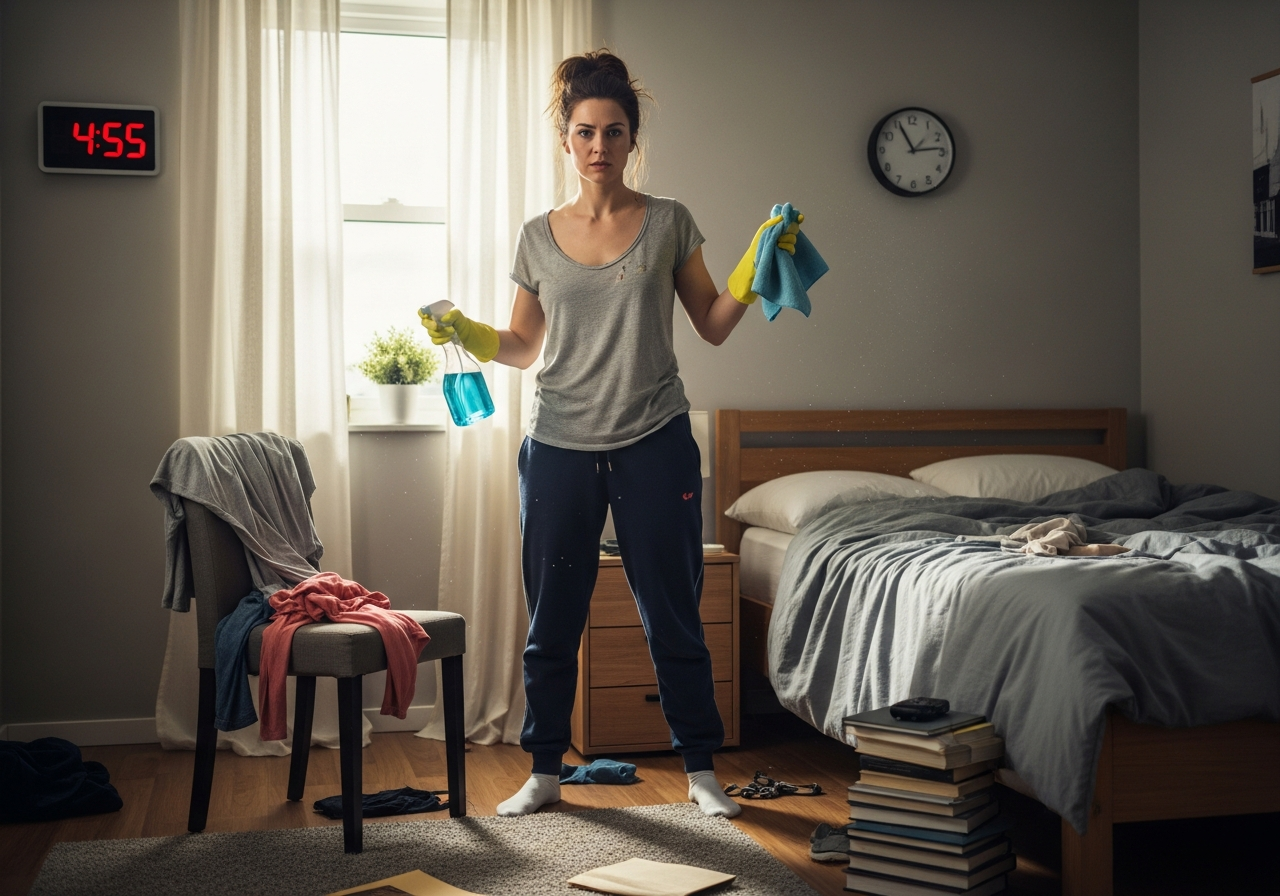
How to clean a room in 5 minutes? The state of a bedroom is often a direct reflection of the state of the mind inhabiting it. When life becomes frantic, deadlines loom, and fatigue sets in, the room is usually the first casualty. Clothes pile up on the chair that was meant for reading, water glasses accumulate on the nightstand like a glass menagerie, and the bed becomes a tangled nest of unmade linens. This chaos creates a feedback loop of stress. You retreat to your room for rest, but the visual noise of the clutter signals your brain that there is still work to be done, preventing true relaxation. The common assumption is that rectifying this disaster zone requires a dedicated afternoon of scrubbing and organizing. This belief leads to procrastination, allowing the mess to grow until it feels insurmountable. However, the trajectory of a room can be completely altered in a remarkably short window of time. A five-minute rapid reset is not about deep cleaning; it is about functional triage. It is a strategic strike against entropy that restores order, clear floor space, and mental calm without requiring a significant investment of energy.
Perfectionist
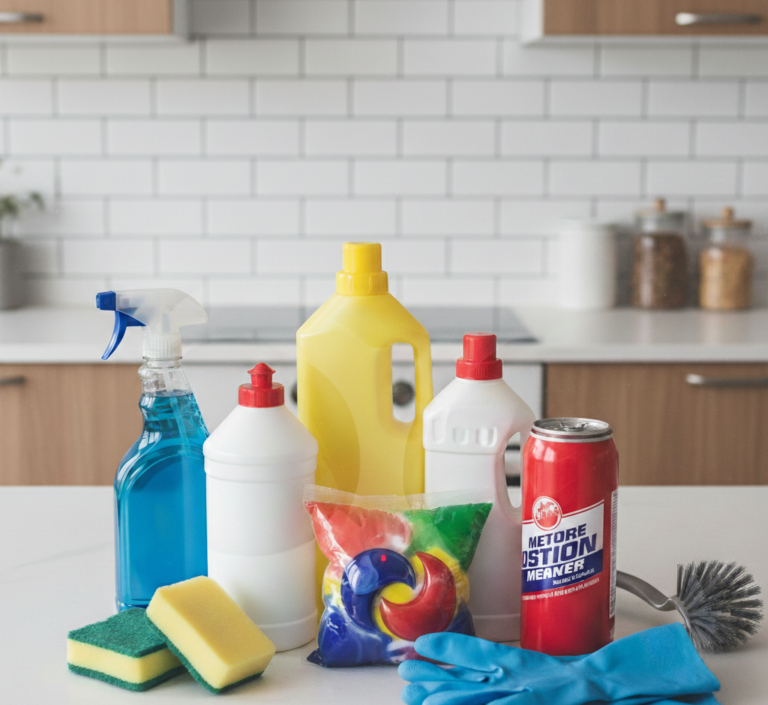
To execute a five-minute cleanup effectively, one must abandon the perfectionist mindset that demands every item be returned to its specific, color-coded home. That is organization, and organization takes time. This is a rescue mission. The goal is to clear the horizontal surfaces—the floor, the bed, and the desk—to reduce the visual burden. To achieve this, you need the right tools before the clock starts. Entering the battle without a plan will result in you wandering aimlessly, picking up a single sock and staring at it. You need a large trash bag and a laundry hamper. If you already have a hamper in the room, ensure it is empty enough to receive a heavy load. You also need a “relocation basket”—any box or bin that will serve as a temporary holding cell for items that belong in other rooms. Once you have these three vessels, you are ready to move with speed and purpose.
1.Trash
The first minute is dedicated strictly to garbage. This is the easiest decision-making process for the brain because there is no sentimental attachment to trash. Scan the room specifically for rubbish. This includes the obvious items like snack wrappers, tissues, and tags from new clothes, but it also includes the insidious clutter of daily life like empty water bottles and receipts. Be ruthless. If a magazine is tattered and unread, it goes. If a cardboard box from an online order is sitting in the corner, break it down immediately. Removing the garbage instantly elevates the hygiene of the room. It removes the elements that suggest decay or neglect. By the time sixty seconds have passed, you should have cleared the bulk of the “gross” items, leaving only the things that actually have value.

2.Floordrobe
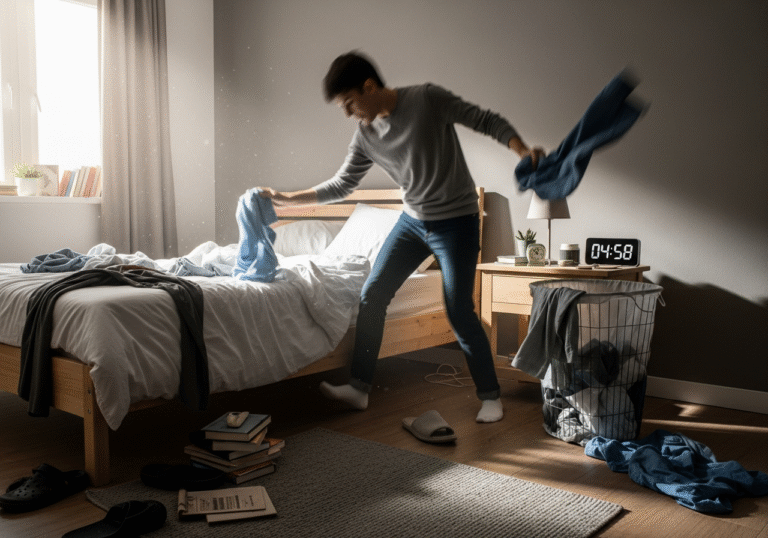
The second and third minutes are for the floor, specifically focusing on textiles. The “floordrobe” is a universal phenomenon where clothes that are not quite dirty but not quite clean end up in a purgatory on the rug. In a five-minute speed clean, you do not have the luxury of sniffing shirts to determine their freshness. If it is on the floor, it goes in the hamper. The priority is a clear floor, not a perfectly sorted laundry load. Grab everything—towels, jeans, socks, and sweaters—and deposit them into the hamper. If the hamper is overflowing, press it down or move it into the hallway. Seeing the floorboards or the carpet again is a massive psychological win. It expands the perceived size of the room and removes the obstacle course that makes navigating your own space stressful. If there are clean clothes in a pile that you haven’t put away, do not try to hang them up now. Fold the pile once, neatly, and place it on the chair or the foot of the bed. A neat stack reads as “intentional,” whereas a sprawled pile reads as “messy.”

3.Making the bed
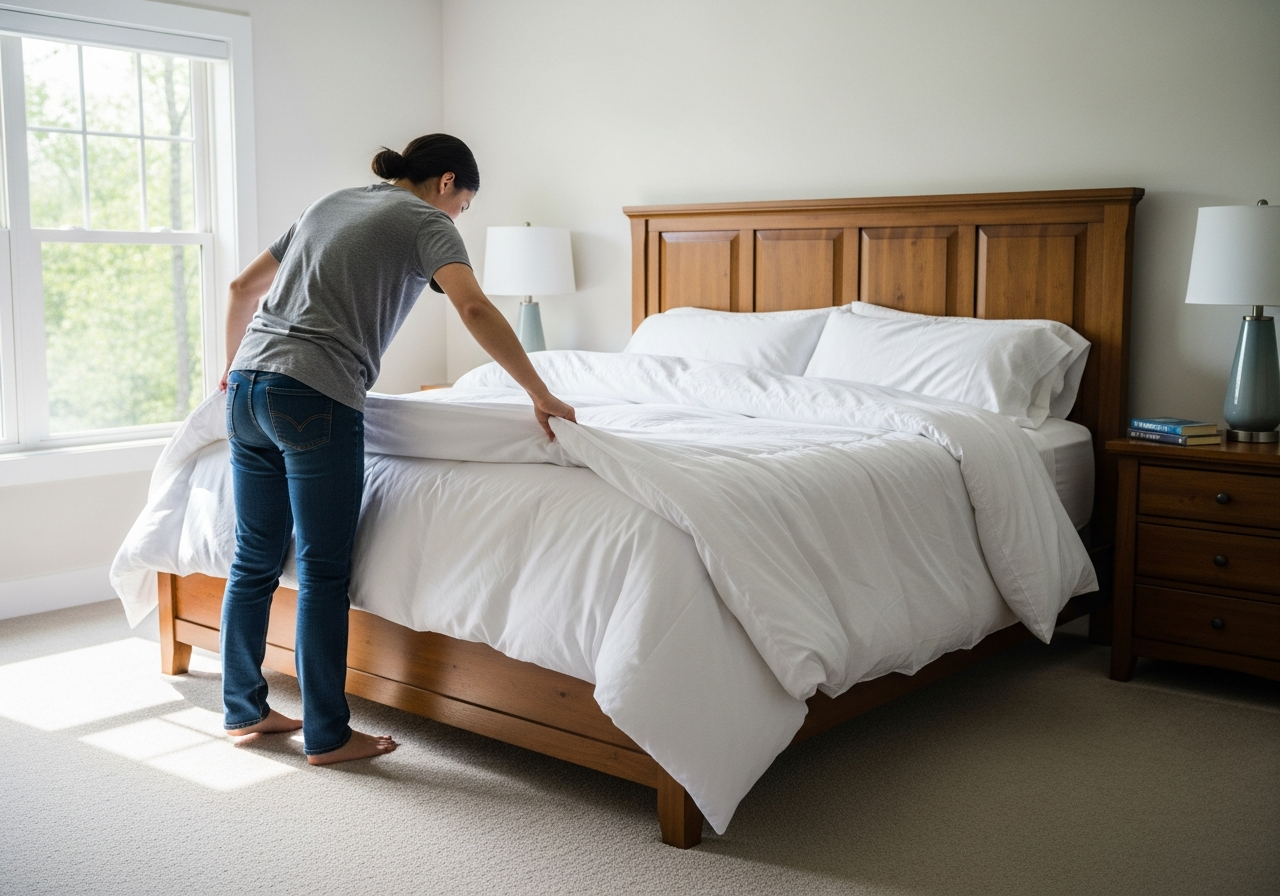
The fourth minute is the pivot point where the room begins to look habitable: making the bed. The bed is the focal point of the bedroom. It occupies the largest surface area and dictates the aesthetic of the space. A messy room with a made bed looks like a room in transition; a clean room with an unmade bed still looks messy. You do not need to perform a military-grade tuck with hospital corners. Simply pull the duvet or comforter up to the pillows and smooth it out. Fluff the pillows and stack them upright. This single action, which takes perhaps forty-five seconds, instantly anchors the room in a state of order. It provides a large, calm, flat surface that counteracts the busyness of the rest of the space. Even if the nightstand is still a little cluttered, a smooth bed suggests that the room is under control.
4.Surface Triage
The final minute is for surface triage using the relocation basket. Look at the nightstand, the dresser, and the desk. These areas attract “migratory clutter”—coffee mugs from the kitchen, mail from the hallway, a screwdriver from the garage. Do not leave the room to put these things away. Leaving the room is the death of the five-minute clean. You will get distracted by the dishwasher or the television. Instead, sweep all these foreign objects into your relocation basket. Clear the surfaces until only the essential items remain—a lamp, a book, a clock. Place the basket outside the door to be dealt with later. At the end, open the curtains or blinds. Letting in natural light (or turning on a warm lamp if it is night) changes the atmosphere. Stale, dark air makes a room feel dirtier than it is. Light and airflow serve as the finishing polish that makes the space feel fresh.
This method works because it prioritizes visual impact over detailed sanitation. It does not address the dust bunnies under the bed or the fingerprints on the mirror. However, it addresses the human need for order. It transforms a space that induces anxiety into a space that invites rest. It proves that you are not powerless against the mess; you can reclaim your sanctuary in the time it takes to brew a cup of coffee.

However, while a five-minute reset can save your sanity, it cannot save your upholstery or your carpets from the slow accumulation of life’s grime. The dust that settles on the ceiling fan, the allergens trapped in the mattress, and the grime in the window tracks require a different kind of time and attention. When the quick fixes are no longer enough and you crave a deep, restorative transformation of your living space, professional assistance is the answer. Toronto Shine Cleaning offers the deep-dive service that goes where the five-minute clean cannot. We handle the heavy lifting, the scrubbing, and the detailed sanitization that restores your home to a state of pristine cleanliness. While you manage the daily clutter, let Toronto Shine Cleaning manage the health and hygiene of your home, ensuring that your sanctuary is not just tidy, but truly, deeply clean.