









The Chemistry Sitting in Your Laundry Room
Detergent is the unsung workhorse of household chores, a chemical marvel used several times a week and given almost no thought. It squats in a bottle, box, or tub while supermarket promises claim brighter whites and tougher stain fighting than the next brand. Most of our interaction with it is unmeasurement ritual: a capful, a scoop, or a tossed-in pod, then a button press. Yet the right detergent used correctly preserves garments, saves money, and delivers a level of clean you may have assumed was commercial magic. The wrong one, or the right one misused, leaves clothes dingy, irritates skin, and can even damage the machine. Mastering laundry starts with understanding the tool at the center of it.
First, Detergent Is Not Soap
For millennia, soap was the world’s cleaning agent: natural fats and oils combined with an alkali. It works beautifully in the right conditions but has one fatal flaw. Soap reacts poorly with the calcium and magnesium minerals in hard water, binding with them into an insoluble waxy precipitate. That is bathtub ring, and in laundry it deposits a graying film on clothes and builds up inside the machine. Modern laundry detergents were invented specifically to dodge this problem. They are synthetic compounds engineered so their molecules refuse to bond with water minerals, letting them focus entirely on lifting dirt. This is why no bar of soap belongs in a wash cycle.
How a Detergent Molecule Actually Cleans
The magic sits in surfactants, short for surface active agents. Picture each molecule as a tadpole. The head is hydrophilic and loves water. The tail is hydrophobic, repels water, and is strongly attracted to oil, grease, and dirt. In the wash, millions of tails burrow into the grime on your fabric while the heads strain to stay in the water. Agitation and the pull of water molecules then literally yank the dirt loose. Surfactants wrap the freed particles into tiny spheres called micelles, tails inward trapping grease, heads outward, keeping the soil suspended in the water so it cannot redeposit on your clean clothes before the rinse carries it away.
Modern formulas add specialists around that surfactant core:
| Ingredient | What it does |
|---|---|
| Enzymes | Biological catalysts with targets: protease breaks down protein stains like grass and blood, amylase handles starches, lipase attacks fats and oils |
| Builders | Soften wash water by binding hardness minerals so surfactants work even harder |
| Optical brighteners | Absorb ultraviolet light and re-emit it as visible blue light, tricking eyes into seeing whiter whites without removing any stain |
| Polymers | Trap dirt in suspension or lay a protective layer on fabric so future stains resist setting |
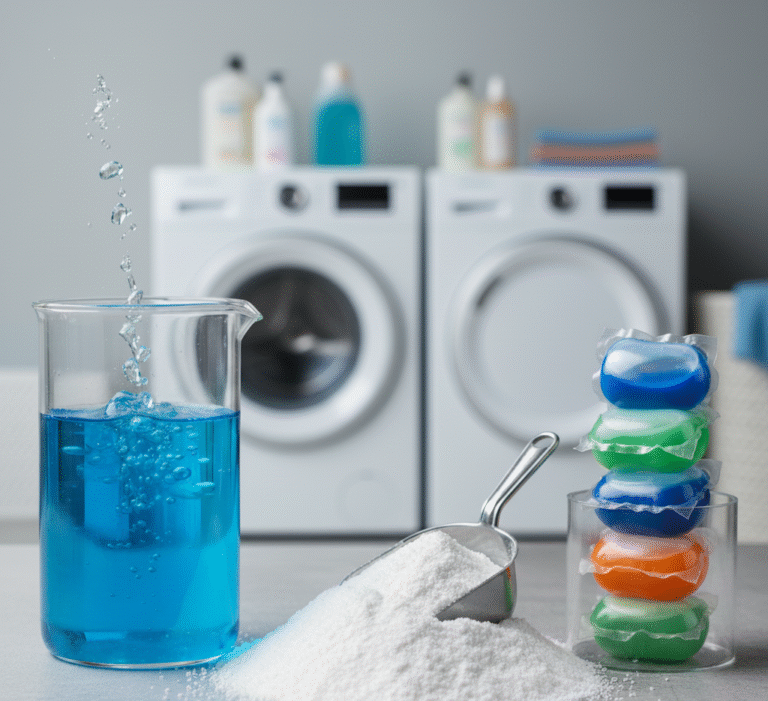
Liquid vs. Powder vs. Pods
Choosing a formula gets simple once you compare the three formats honestly.
- Liquid: the most popular form in much of the world, and deservedly. It measures easily, dissolves well in every temperature including cold, and shines on greasy, oily stains, especially when rubbed on directly as a pre-treater. The trade-offs are heavy, plastic-intensive packaging and the tendency for people to pour with a heavy hand.
- Powder: the classic budget champion. Per load it is almost always the cheapest option, and it excels at lifting mud and ground-in dirt, ideal for kids’ clothing and workwear. Cardboard packaging is friendlier to the planet. Downsides: it can fail to dissolve in very cold water, leaving a chalky residue, and scooping is messy.
- Pods and packs: peak convenience. Perfectly pre-measured, no mess, no guesswork, and a good guard against over-pouring. But they are by far the most expensive option per load, the dose is fixed so you cannot trim it for a small or lightly soiled load, and their small, colorful look can be dangerously appealing to children and pets.
HE or Standard: This One Is Not Optional
If your machine carries the HE symbol, which covers most front-loaders and many newer top-loaders, you must use HE detergent. High-efficiency machines wash with far less water, so HE formulas are built low-sudsing. A standard high-sudsing detergent in an HE machine produces a foam mountain the rinse cycle cannot tame: dirt stays trapped, residue settles on clothes, and the excess suds can damage sensors and the pump over time. For a fuller picture of how laundry hygiene fits into a healthy home, the CDC cleaning and disinfecting guidance is worth a read.
Specialty Formulas Worth Knowing
Beyond format, four specialty lanes solve specific problems:
- Sensitive skin: Free and Clear versions skip dyes and perfumes, the two most common irritants, making them the pick for babies and allergy-prone households.
- Delicates: milder detergents gentle on silk and wool.
- Athletic wear: engineered to fight odors trapped in synthetic, moisture-wicking fabrics.
- Eco-friendly: plant-derived, biodegradable surfactants with sustainable packaging and a smaller footprint.
The Single Biggest Laundry Mistake
The instinct says if a little detergent cleans, a lot must clean better. Completely false. Using too much is the most common and most counterproductive error in laundry, because the machine cannot rinse away the excess, and the consequences cascade:
- A sticky residue that magnets dirt and bacteria, leaving clothes stiff and sometimes musty.
- Dingy look: trapped soil grays whites and dulls colors.
- Skin irritation from chemicals left sitting on the fibers.
- Slime: a biofilm inside the machine that breeds odors, invites mold (see the CDC’s mold health page), and stresses the pump.
The rule is blunt: read the instructions. Caps and scoops carry measurement lines, so use the lowest recommended amount for a normal load and nudge up only for very large or heavily soiled ones. More is not better; more is worse.
Once the chemistry is under control, the routine frees up real time. Our regular housekeeping plans keep laundry rooms, machines, and everything else on schedule, and you can compare service lanes and bases on the pricing page or see what neighbours say in our client reviews. If a musty washer deserves a reset, our deep cleaning team handles it. Call (647) 424-0355 to book.
Frequently Asked Questions
Which format is actually the best? For oily, everyday stains and cold washes, liquid. For mud, workwear, and the lowest cost per load, powder. For households that consistently over-pour, pods, provided they stay locked away from children and pets. Many homes keep one liquid and one powder on hand and switch by load type.
Do pods dissolve properly in cold water? Their film is designed to, and modern liquids and pods handle cold cycles far better than powders do. If you regularly wash in the coldest setting and see residue, pods or liquid are the safer formats than powder.
What happens if I use non-HE detergent once by accident? One load is unlikely to break anything, but expect longer rinsing and possible residue. Run a rinse or short cycle without detergent to clear the suds, then return to an HE formula to protect the sensors and pump.
Are scented detergents unsafe? For most people, no. Fragrances and dyes are simply the two most common irritants, which is why Free and Clear options exist for babies, sensitive skin, and allergy sufferers. If nobody in your house reacts, a lightly scented formula is fine; just resist the urge to overdose it.