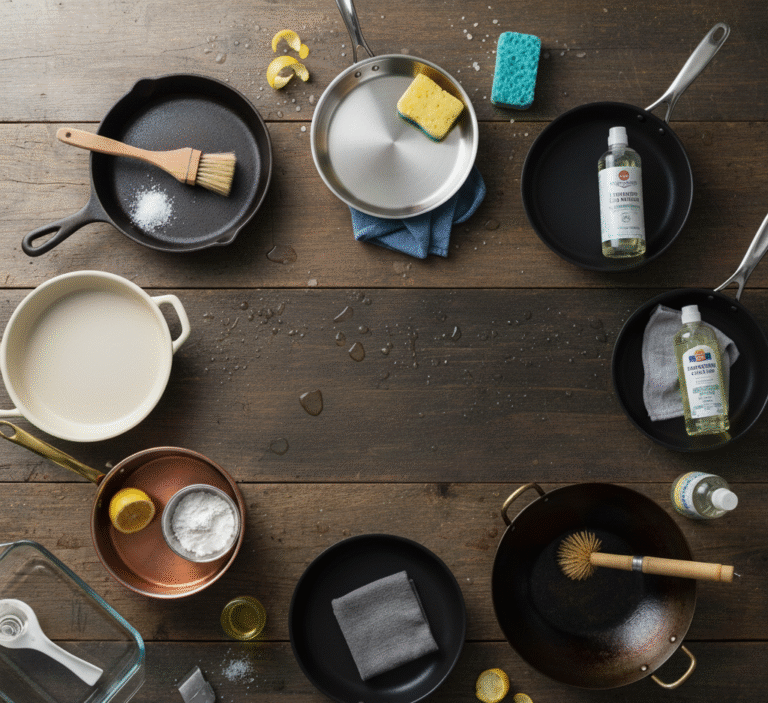










Why Pan Care Depends on the Material
A well-cared-for pan earns its place in your kitchen, but the right cleaning method varies by material. The wrong technique scratches surfaces, strips seasoning, or leaves permanent stains. This guide covers seven common pan types with the daily care and stain-fighting tricks each one needs to perform and last.
Whatever the material, a few rules apply to every pan:
- Let cookware cool before washing to avoid thermal shock.
- Match the scrubber to the surface, from soft sponges to chainmail.
- Dry everything thoroughly, especially iron and carbon steel.
- Follow the manufacturer’s care instructions when in doubt.
Non-Stick and Stainless Steel Pans
Non-Stick: Gentle Cleaning Only
The guiding principle for any non-stick pan, PTFE-based or ceramic, is gentleness. Let the pan cool for a few minutes before washing; plunging a hot pan into cold water causes thermal shock that can warp the base and degrade the coating. Wash with a soft sponge, mild dish soap, and warm water, and skip steel wool, abrasive scouring pads, and harsh cleansers entirely, since they destroy the non-stick surface. For stuck-on food, pour in roughly an inch of water with a drop of dish soap and warm the pan on low until the residue releases. A brownish film from cooking oils lifts with a baking soda and water paste left on for twenty minutes. Use wooden, silicone, or nylon utensils, avoid very high heat, and hand-wash even dishwasher-safe pans, since dishwasher heat shortens the coating’s life.
Stainless Steel: Tough but Prone to Tints
Stainless steel pans handle more vigorous cleaning. For daily use, soap, water, and a standard sponge are enough. Deglaze a hot pan with a splash of water or broth right after cooking to lift browned bits. For burnt-on messes, cover the grime with water, add a tablespoon of baking soda, and boil for several minutes, then cool and scrape with a wooden spoon. Blackened carbon responds to a paste of powdered cleanser such as Bar Keepers Friend, whose oxalic acid breaks down tough stains. Rainbow-like heat tint is harmless oxidation from overheating: pour white vinegar over the bottom, wait ten to fifteen minutes (or heat it gently), then wash as usual.
Cast Iron and Carbon Steel Skillets
Cast Iron: Protect the Seasoning
Cast iron care is about maintaining seasoning, the baked-on oil layer that makes the pan naturally non-stick and rust-resistant. Clean the pan while it is still warm with hot water and a stiff-bristled brush or pan scraper, using a chainmail scrubber for stubborn bits. A tiny drop of mild soap is acceptable on a well-seasoned pan, though purists skip it. Never let it air dry: rust follows. Dry it on the stove over low heat, rub in half a teaspoon of neutral oil such as canola or flaxseed, and heat until the oil just smokes. If rust appears, scrub down to bare metal with steel wool and soapy water, then re-season by coating the pan with a thin layer of oil and baking it for an hour, upside down, in a hot oven.
Carbon Steel: Same Ritual, Lighter Pan
Carbon steel behaves like cast iron: clean with hot water and a brush, skip harsh soaps, and dry it over the burner right after washing. Finish by wiping on a micro-thin coat of oil to protect the patina. Rust is the primary enemy, so immediate, thorough drying is your best defense.
Enameled Cast Iron, Copper, and Aluminum
Enameled Cast Iron: No Seasoning Needed
Enameled cast iron, like a classic Dutch oven, has a glass-like coating fused to the iron, so there is no seasoning or rust to manage. Mild dish soap, warm water, and a soft sponge handle daily cleaning, but metal utensils and scouring pads can chip the enamel. Tomato sauce or red wine stains lift when you simmer water with two tablespoons of baking soda for about ten minutes, or apply a baking soda paste for an hour on stubborn spots. Always cool the pot before washing; extreme temperature shifts can craze the enamel.
Copper: Two Surfaces, Two Routines
Copper pans have an interior lining, usually stainless steel or tin, cleaned like the material itself. The exterior is the showpiece, and tarnish lifts with a paste of lemon juice and salt or baking soda, rubbed on gently and rinsed with warm water after a few minutes. Ketchup works too, and commercial copper cleaners are effective.
Aluminum: Reactive but Restorable
Aluminum is lightweight and conducts heat well, but alkaline foods and minerals in water darken it over time. Simmer a quart of water with about two teaspoons of cream of tartar or a splash of lemon juice for ten to fifteen minutes to restore brightness. Never use the dishwasher: harsh detergents cause permanent darkening and pitting. Anodized aluminum is harder and less reactive but still deserves hand-washing.
Material matters beyond cleaning: Health Canada’s safe use of cookware and bakeware guidance notes that worn or pitted pans can transfer substances into food, and CDC food safety basics cover keeping kitchen surfaces free of germs.
| Pan type | Everyday clean | Stubborn stain fix | Never |
|---|---|---|---|
| Non-stick | Soft sponge, mild soap | Baking soda paste | Abrasive pads, high heat, dishwasher |
| Stainless steel | Soap and water | Boiling baking soda, Bar Keepers Friend | None; vinegar cures heat tint |
| Cast iron | Hot water and brush | Chainmail scrubber, re-season | Air drying, harsh soaps |
| Carbon steel | Hot water and brush | Stovetop drying and oiling | Air drying, harsh soaps |
| Enameled cast iron | Mild soap, soft sponge | Baking soda simmer | Metal utensils and scouring pads |
| Copper | Soap and water inside | Lemon-salt paste on exterior | Scouring the lining |
| Aluminum | Soap and water | Cream of tartar simmer | Dishwasher |
Frequently Asked Questions About Cleaning Pans
Is it okay to put non-stick pans in the dishwasher? Even pans labeled dishwasher safe last longer when hand-washed. Dishwasher heat and harsh detergents break down non-stick coatings over time.
How do I fix a rusted cast iron skillet? Scrub the rust away with steel wool and soapy water down to bare metal, then re-season with a thin coat of oil baked in a hot oven for an hour, positioned upside down.
What removes the rainbow tint from stainless steel? That iridescent pattern is a harmless oxidation layer from overheating. White vinegar left in the pan for ten to fifteen minutes removes it, and a regular soap-and-water wash follows.
Can soap ruin cast iron seasoning? On a pan with solid seasoning, a single drop of mild dish soap rarely hurts, though purists avoid it. What matters is thorough drying and re-oiling every time.
Why did my aluminum pan turn dark? Aluminum reacts with alkaline foods and minerals in water. A ten to fifteen minute simmer with cream of tartar or lemon juice brightens it again.
A Clean Kitchen Starts With the Right Habits
A few minutes of proper care after each use keeps pans performing for years. When the rest of the kitchen needs the same attention, our regular cleaning service keeps countertops and floors spotless between cooks, and our deep cleaning service tackles buildup behind appliances. Call (647) 424-0355 or check our pricing.