









3 Amazing Homemade Mixes: Effective and Economical
A genuinely clean home rarely depends on the number of specialty bottles under the sink. It depends on knowing a few fundamental ingredients and how their chemistry behaves. Households ran on pantry items long before shelves filled with task-specific sprays, and that approach still gets powerful results for less.
1. White Vinegar and Lemon Juice
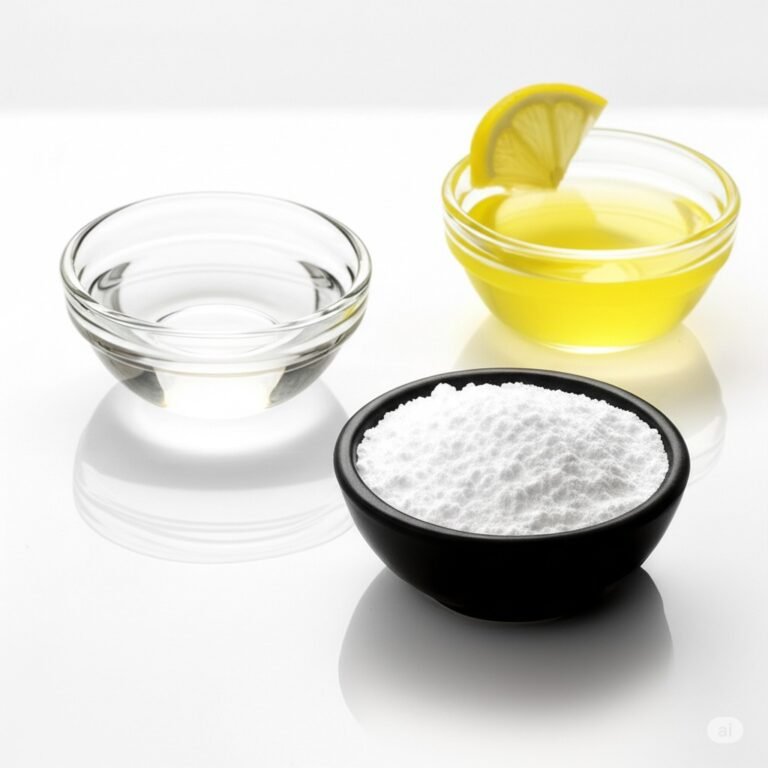
White vinegar leads the acidic team thanks to its acetic acid, which gives it the low pH needed to dissolve mineral deposits. That makes it the champion against limescale on faucets, showerheads, and the inside of kettles. The most useful formula is a 50/50 blend of white vinegar and water in a reusable spray bottle, which handles kitchen counters (never natural stone), appliance exteriors, and sinks that need a shine. For stubborn grease, add a teaspoon of plain, non-moisturizing dish soap so the acid can get underneath it.
Stronger jobs call for stronger concentrations. To descale a coffee maker, run a cycle with half vinegar and half water, then two or three plain water cycles to flush the system. A showerhead clogged with scale can soak in undiluted vinegar overnight, with a toothbrush scrub in the morning. A small bowl of vinegar on the dishwasher’s top rack also acts as a natural rinse aid.
Lemon juice brings citric acid and adds degreasing power plus a fresh scent. For a grimy microwave, slice a lemon into a bowl of water, run it on high for three to five minutes, and let the steam sit for ten minutes. Baked-on food then wipes away with almost no effort.
Acid has hard limits. Vinegar and lemon juice etch natural stone such as marble, granite, travertine, or soapstone, leaving dull patches and weakening the sealant. They also strip the finish from waxed wood and destroy the seasoning that protects cast iron.
2. Baking Soda (Sodium Bicarbonate)
At the other end of the pH scale, baking soda is a mild alkali that dissolves organic soil and grease, and its fine crystals make it a gentle abrasive that will not scratch most surfaces. Mixed with a little water into a thick paste, it becomes one of the hardest-working mixes in the house. Spread it on sinks, tubs, and tile, let it sit about twenty minutes, then scrub.
- For stained tile grout, scrub with the paste first, then spray hydrogen peroxide over it for a fizzing reaction that lifts deep-set marks.
- For a fume-free oven clean, coat the cool interior while avoiding the heating elements, leave the paste overnight, then scrape and wipe it away with a vinegar spray.
- As a deodorizer, sprinkle a generous layer over carpets, let it sit an hour, and vacuum it up to pull out stale smells.
An open box in the fridge or a pour down a smelly drain followed by hot vinegar shows how well this one powder neutralizes odors instead of masking them.
3. Rubbing Alcohol, Hydrogen Peroxide, and Helpers
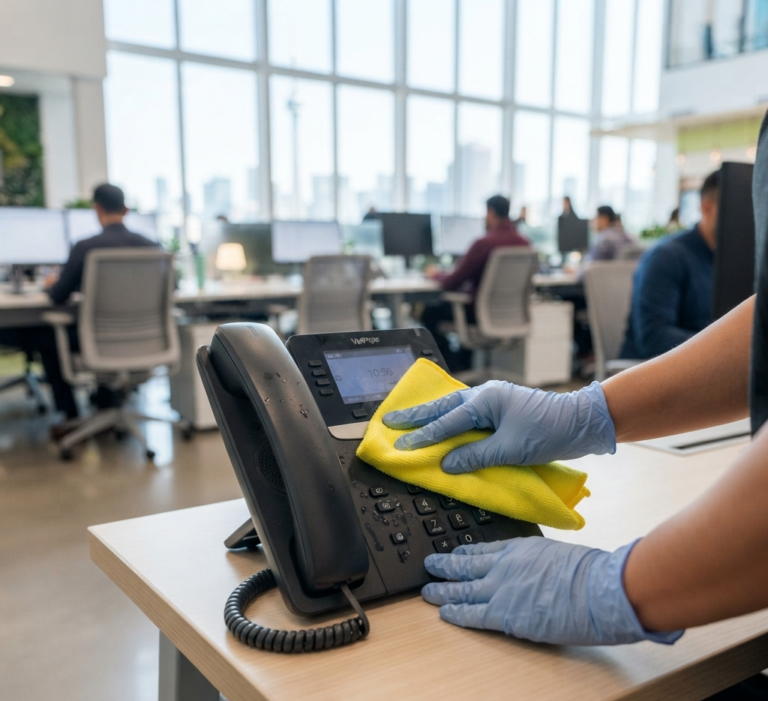
Isopropyl alcohol is a fast-evaporating solvent that leaves nothing behind, which makes it essential for shiny, streak-free surfaces. Mix equal parts water and 70 percent isopropyl alcohol with a few drops of mineral or olive oil, and you have a stainless steel cleaner that buffs to a shine and resists fingerprints. Rapid evaporation is also the secret to streak-free windows and to disinfecting high-touch points.
Hydrogen peroxide, the common 3 percent solution, disinfects through oxidation and acts as a mild bleach. Keep it in its original opaque bottle, because light breaks it down. Sprayed on a countertop and left to bubble for several minutes before wiping, it makes a safe disinfectant, and it lifts stains from white laundry fabric. Spot-test first, since its gentle bleaching action can affect some dyes.
Sequencing matters more than mixing. Peroxide and vinegar work as a duo one after the other, but they must never be combined and stored in one bottle, because the reaction produces peracetic acid, a corrosive compound. The same caution applies to bleach: never mix it with vinegar, ammonia, or other cleaners, as the CDC bleach safety guidance makes clear. Wear gloves, ventilate the room, and wash your hands afterwards, or use a sanitizer with at least 60 percent alcohol when soap is unavailable, as the CDC hand hygiene guidance describes.
A few supporting ingredients stretch this kit further. Coarse salt is a strong abrasive for cast iron pans with a little oil, or wooden cutting boards with half a lemon. Cornstarch absorbs fresh grease stains from fabric before they set, and cream of tartar polishes stainless steel as a paste. Castile soap forms the base of many non-toxic floor cleaners at about a teaspoon per gallon of warm water, and a dozen drops of tea tree oil adds antimicrobial strength to a spray.
Mixes, Uses, and Cautions at a Glance
| Mix | Best use | Watch out for |
|---|---|---|
| Vinegar and water, 50/50 | Counters, appliance exteriors, limescale | Never on natural stone, and never mixed with bleach. |
| Baking soda paste | Sinks, tubs, tile, grout, carpets | Rinse well; residue can leave a film on some finishes. |
| Alcohol, water, and a drop of oil | Stainless steel, glass, high-touch points | Keep away from flames and ventilate the room. |
| Hydrogen peroxide, 3 percent | Countertops, grout, white fabric | Store in the original opaque bottle and spot-test dyes. |
For the routines that keep those surfaces hygienic day to day, the CDC guide to cleaning and disinfecting your home explains which areas collect germs fastest.
Frequently Asked Questions
Can I mix vinegar and baking soda in one bottle? You can combine them for a short fizzing reaction, but do not store the mixture. The two neutralize each other into water and a salt, so a stored bottle loses both the acid and the abrasive. Use them one after the other instead.
Is vinegar safe on every surface? No. Its acidity dissolves minerals, which is why it works so well on limescale and so badly on marble, granite, travertine, and soapstone, where it etches the surface and damages the sealant. It also strips wax finishes and cast iron seasoning, so test a hidden spot first.
How should I store homemade cleaners? Keep them in clearly labeled bottles, out of reach of children and pets, and away from heat and direct sunlight. Hydrogen peroxide belongs in its original opaque container because light degrades it. Never store vinegar and hydrogen peroxide together, since the mix forms peracetic acid.
Do homemade mixes disinfect as well as commercial products? Some do when used correctly. Hydrogen peroxide at 3 percent and isopropyl alcohol at 70 percent both disinfect when left on a surface long enough, while vinegar handles mineral scale and light grease rather than germs. For high-risk areas, follow public health guidance.
Matching the right mix to the right problem is a skill rather than a shortcut, and it is the same approach our team brings to every home. Our deep cleaning service covers the buildup these mixes cannot handle alone, our regular maid service keeps things that way, and you can read our client reviews or check our service locations. Call (647) 424-0355 when you are ready to book.