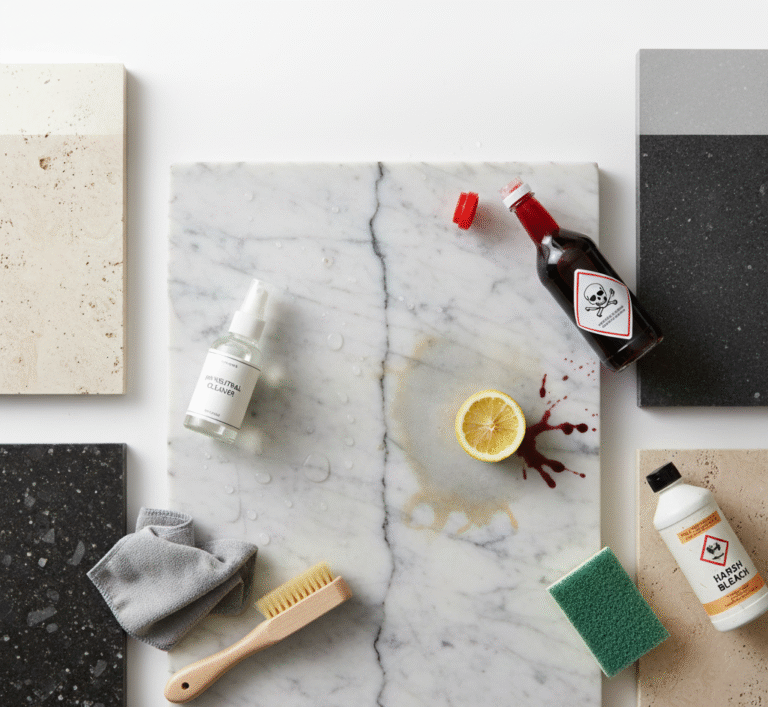










Natural Stone Demands Different Chemistry
Granite, marble, travertine, and limestone bring elegance and long service to a home, but their porous nature demands a mindful approach. Using the wrong products can cause irreversible damage: dulling, etching, and staining. The cornerstone of proper care is consistent use of pH-neutral cleaners, because harsh acidic or alkaline chemicals react with the minerals in the stone and compromise both its integrity and its finish. This guide covers what to use, what to banish, and how to handle spills, stains, and sealing.
The Safest Daily Cleaner Is Probably Under Your Sink
For everyday cleaning of any natural stone surface, the most trusted everyday method is a simple blend of lukewarm water with a few drops of gentle, pH-neutral dish soap. That gentle combination lifts ordinary dirt, grease, and grime without harming the stone or its sealer. Apply it with a soft microfiber cloth, then flush the spot with clean water and towel it fully dry with a second soft cloth. Both follow-up steps matter: leftover soap leaves a dull film over time, and standing water leaves spots.
When a more potent clean is required, especially disinfection on countertops where food is prepared, use a solution of equal parts water and 70 percent isopropyl alcohol. It kills bacteria and germs without abrasion or acid. Spray the surface, let it sit for a few minutes, wipe clean with a damp cloth, and dry thoroughly.
Products to Keep Away From Stone
- Anything acidic, including vinegar, lemon juice, and citrus-based cleaners. These are the primary adversary of calcareous stone.
- Bleach and ammonia, which degrade the sealer and dull the surface over time. Even on tough surfaces, the CDC’s bleach safety guidance makes clear why harsh chemicals deserve caution.
- Abrasive powders and creams, which scratch the polish.
Marble, travertine, and limestone consist largely of calcium carbonate, which reacts vigorously with acids. The result is etching, a chemical burn that shows up as a dull spot no amount of buffing removes. Granite, a siliceous stone, resists acids better, but repeated exposure still weakens its sealer and eventually damages the surface, so pH-neutral habits are the right long-term practice for granite too. For general household routines, the CDC overview of cleaning and disinfecting your home is a useful reminder that gentle consistency beats aggressive one-off scrubbing.
Spill Response and Stain Poultices
Marble is particularly vulnerable because it is soft and porous. Blot spills, especially wine, coffee, and fruit juice, immediately with a soft cloth rather than wiping, which spreads the liquid wider. Then clean the area with mild soap and water, rinse, and dry. For stubborn organic stains on light-colored marble, a poultice of hydrogen peroxide and an absorbent material such as baking soda draws the discoloration out.
For stains that have already penetrated, build the poultice around the stain type:
- Oil-based stains: baking soda mixed with acetone or a commercial degreaser to a peanut butter-like consistency, applied thick, covered with plastic wrap, and taped at the edges.
- Organic stains like coffee or wine on light stone: hydrogen peroxide with an absorbent powder such as unscented baby powder or diatomaceous earth.
- Rust on limestone: a non-acidic rust remover, the safest route for avoiding fresh etching.
Let the poultice sit 24 to 48 hours; it works as it dries, pulling the stain from the stone. Scrape it off gently with a plastic or wooden scraper, rinse with clean water, and dry thoroughly. Deep-set marks often need multiple applications.
Caring for Textured Stone
Travertine and limestone share marble’s composition and need comparable care, with one extra wrinkle: their surfaces carry small pits and fissures that trap dirt. Dust regularly with a dry microfiber cloth so abrasive particles never accumulate. Clean with a pH-neutral product, then rinse and dry so water cannot settle in the pores. For a deep clean of pitted travertine, an alkaline-based product is often the only way to draw out stubborn grime. If you see efflorescence, the white powdery salt deposit that can bloom to the surface, treat it with a non-acidic cleaner so the residue lifts without harming the stone.
Sealing: The Real Shield
Beyond daily cleaning, sealing is the most critical aspect of stone care. A sealer penetrates the pores to inhibit liquid absorption and prevent staining, and the two families behave very differently.
| Sealer type | How it works | Strengths | Trade-offs |
|---|---|---|---|
| Impregnating (penetrating) | Absorbs into the stone, filling pores from within | Keeps the natural look; lets water vapor escape, vital outdoors and in wet rooms | Must be renewed on schedule |
| Topical | Forms a film on the surface | Adds gloss and some scratch protection | Wears visibly and can trap moisture, causing discoloration |
For most homes, a penetrating impregnating sealer is the smart pick: it lasts longer and keeps the stone’s natural look. How often? Let a simple water test decide: sprinkle a few drops on the surface. Water that beads means the sealer is still effective; water that absorbs and leaves a dark spot means it is time to reapply. As a general guideline, highly porous, heavily used stone such as marble in a busy kitchen may need sealing every six to twelve months, while denser granite can often go one to two years or longer.
Build the Routine That Protects the Investment
The formula for pristine stone is unglamorous and reliable: gentle cleaning on a consistent schedule, prompt attention to spills, and regular sealing checked by the water test. Understand your specific stone and match products to it, and these surfaces stay a stunning feature for a lifetime. If you would rather hand the nuance to professionals, Toronto Shine Cleaning works with granite, marble, travertine, and limestone using appropriate products and techniques, whether you book a deep cleaning reset or regular housekeeping. See where we serve or read client reviews, then call (647) 424-0355 for advice on your surface.
Natural Stone Questions, Answered
Can I use vinegar on granite countertops? Reserve a firm no for marble, travertine, and limestone, and use it sparingly if at all on granite. Acid weakens sealers and, on calcareous stone, etches the surface permanently. Warm water with a drop of pH-neutral dish soap handles daily messes safely.
How do I know when my stone needs resealing? Place a few drops of water on the surface. Beading means the sealer is intact; absorption leaving a dark patch means it is time to reapply, with busy marble typically every six to twelve months and denser granite every one to two years or more.
What removes an oil stain that has soaked in? A poultice. Combine baking soda with acetone or a commercial degreaser into a peanut butter-like paste, layer it over the stain, cover with plastic wrap, tape the edges, and let it dry for 24 to 48 hours before gently scraping it off. Repeat for deep stains.
Is a topical sealer ever the right call? Sometimes, when added gloss and light scratch protection matter more than longevity. Just know the film wears with use, can trap moisture and discolor, and is why impregnating formulas are preferred for most homes.