










Organization is essential during winter to prevent us from going crazy. During the warmer months, the boundaries between the interior and exterior are fluid; windows are open, traffic flows freely, and the gear required to leave the house is minimal. As the temperature drops and the snow begins to accumulate, however, the home undergoes a functional contraction. We seal ourselves in against the elements, and in doing so, we trap a significant amount of life inside a finite square footage. The result is often a rapid accumulation of clutter. Heavy coats, salt-stained boots, layers of wool, and the general debris of hibernation mode can quickly overwhelm a household that does not have a robust organizational strategy in place. Keeping a house organized in winter is not merely about tidiness; it is a logistical operation designed to manage the heavy influx of gear and the increased occupancy hours that define the season.
Sturdy Coat Stand
The epicenter of the winter organization battle is, without question, the entryway. In summer, this space is a breezeway; in winter, it is a decontamination zone. The primary challenge is the bulk. Winter clothing occupies three times the volume of summer clothing. A closet that comfortably holds ten windbreakers will be bursting at the seams with ten down parkas. The first step in organizing this space is recognizing that the standard coat closet is rarely sufficient for active daily use. Opening a door and fighting with hangers while wearing thick gloves is a friction point that leads to coats being thrown on the nearest chair or banister. To maintain order, you need an accessible, external expansion of your storage. A heavy-duty wall-mounted rack or a sturdy coat stand is essential for the items currently in rotation. This separates the “active” gear from the “storage” gear, preventing the closet from becoming a black hole.

Boot Tray
Beneath the coats lies the issue of footwear. Winter boots are substantial, wet, and often coated in a slurry of road salt and grit. If these are left on the bare floor, they create puddles that damage the flooring and spread dirt throughout the house. The organizational solution is the boot tray. This is not optional equipment. A high-walled rubber or copper tray creates a designated boundary for wet items. It signals exactly where the shoes stop. To elevate this system, consider filling the tray with river stones. This allows the melting snow to drain away from the soles of the boots, helping them dry faster and preventing them from sitting in a puddle of dirty water. This simple addition preserves the lifespan of the leather and keeps the entryway looking intentional rather than accidental.
Baskets or Storage Box
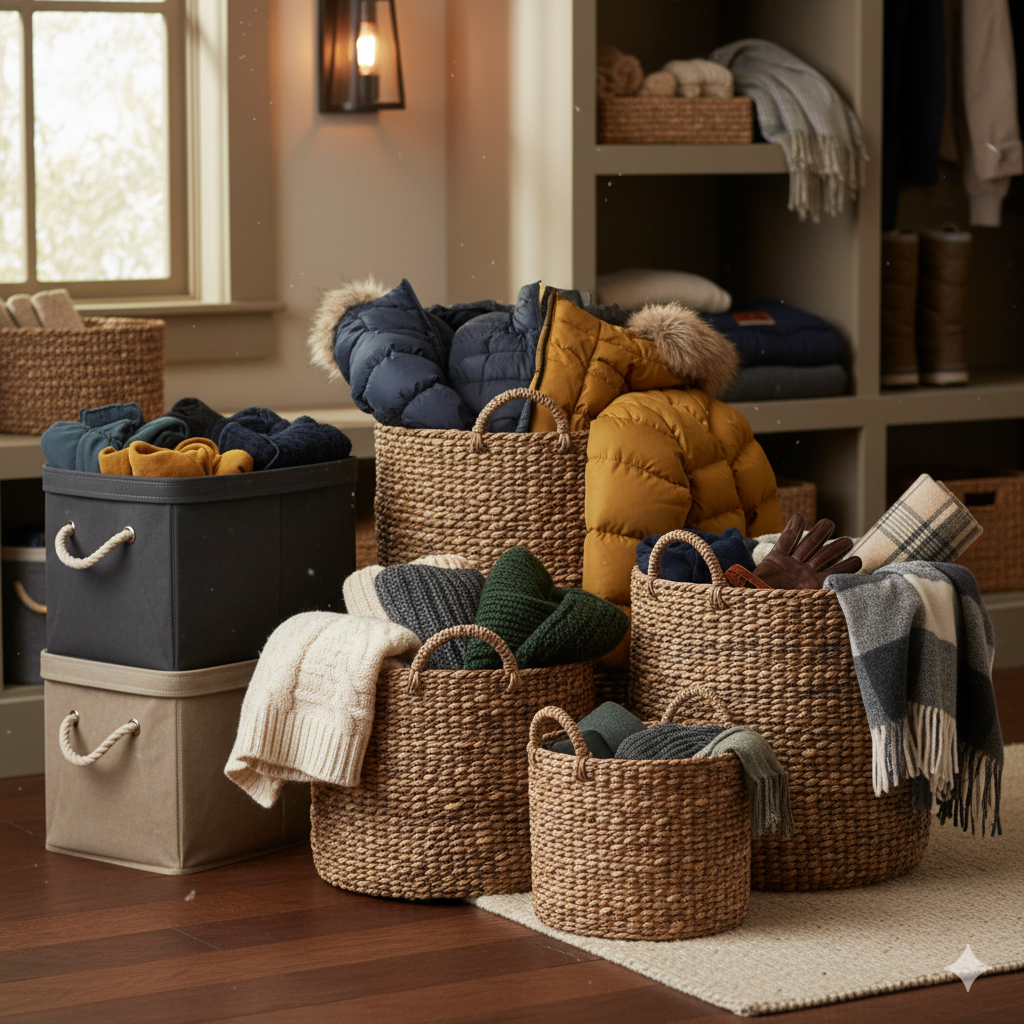
Accessories present a unique micro-clutter problem. Winter requires a multitude of small, separable items: left mittens, right mittens, scarves, thick hats, and liners. These items have a tendency to migrate. They end up under the sofa, in the kitchen, or lost in the depths of a jacket pocket. The most effective way to corral this chaos is through a dedicated basket or bin system. Ideally, each member of the family should have their own designated bin on a shelf or under a bench. When you walk in the door, the hat and gloves go immediately into the bin. This “drop zone” philosophy eliminates the frantic morning search for a matching pair of gloves. It compartmentalizes the mess, keeping the visual noise of the entryway to a minimum.
Moving inward, the living areas require a shift in strategy. Winter is the season of “cocooning.” We bring out heavy throws, extra pillows, and thick duvets to create warmth. While these items increase comfort, they also increase visual density. A living room covered in draped blankets looks chaotic. To maintain organization without sacrificing comfort, you need designated storage for these soft goods. A large wicker basket, a storage ottoman, or a blanket ladder provides a home for these items when they are not in use. The rule must be that when you leave the room, the blanket goes back to its station. This resets the room, maintaining the balance between cozy and cluttered.
The kitchen, too, faces specific winter pressures. We tend to cook differently in the cold months. The salad spinner is retired in favor of the slow cooker, the roasting pan, and the Dutch oven. These are large, heavy appliances and vessels. Organizing the kitchen for winter means rotating your stock. Move the barbecue tools and the picnic ware to the high, hard-to-reach shelves or the basement. Bring the heavy pots and the appliances you use for soups and stews to the prime real estate at waist level. This rotation reduces the friction of cooking. Furthermore, winter is often a time of stocking up. The pantry can easily become overcrowded with canned goods and comfort foods. Using tiered shelf risers and clear bins to categorize these items prevents the “pantry burial” where food is pushed to the back and forgotten until it expires.
Clean Surfaces
There is also a psychological component to winter organization. The lack of natural light and the grey skies can contribute to a sense of lethargy and low mood. A cluttered environment exacerbates this. Visual noise—piles of paper, scattered toys, disorganized shelves—increases cortisol levels. In winter, when we cannot easily escape outdoors, we are forced to stare at our clutter. Therefore, keeping surfaces clear is a mental health intervention. Adopting a “clean surfaces” policy, where countertops, dining tables, and desks are cleared off every evening, maximizes the reflection of the limited natural light available. It makes the rooms feel larger and airier, counteracting the claustrophobia of the season.
Closet
The closet requires a ruthless audit. We often hang onto winter clothes that we do not wear because they are expensive or “might be useful” in a blizzard. However, a crammed closet leads to wrinkled clothes and frustration. If a coat has not been worn in two winters, it is taking up valuable space. If a sweater is itchy or pilled, it should be donated or recycled. Utilizing vacuum-seal bags for the off-season summer wardrobe is a crucial space-saving tactic. Compressing the beach towels and sundresses allows you to store them under the bed or on a high shelf, liberating the main hanging rod for the bulky sweaters and trousers that you actually need right now.

Humidity management is an invisible form of organization. Winter air is dry, leading to static electricity. Static makes dust cling to vertical surfaces, baseboards, and electronics. An organized home is a clean home, and fighting dust in winter requires managing humidity. Running a humidifier helps to settle the dust, making it easier to vacuum up rather than having it float in the air. Conversely, near the windows, condensation can form, leading to mold on the sills. Keeping the window areas clear of heavy drapes or furniture allows for airflow, organizing the space to prevent biological growth.
Rug and Table
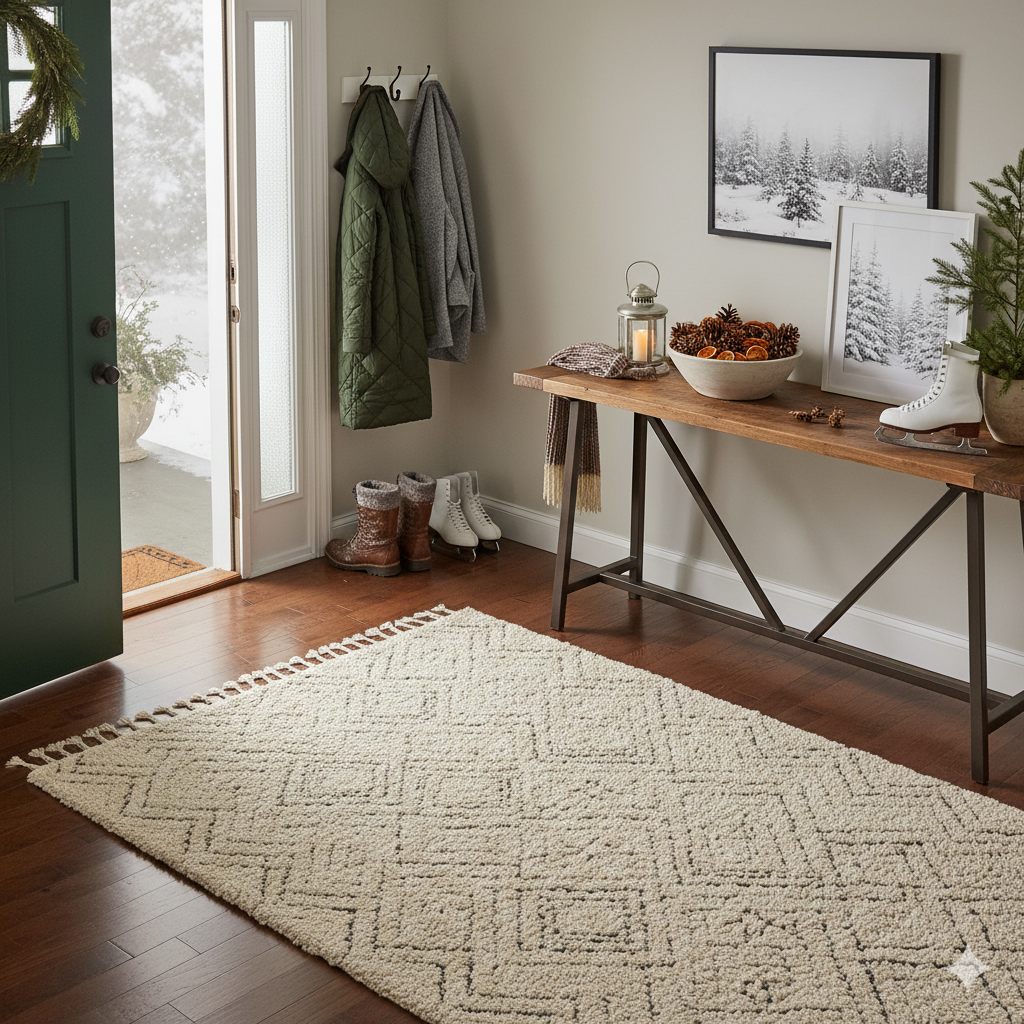
The “mudroom” concept must be applied even if you do not have a dedicated room. If your entry opens directly into the living room, you must manufacture a transition zone. This can be done with the placement of a runner rug and a console table. The rug captures the grit; the table captures the keys and mail. Without this artificial boundary, the winter mess bleeds into the living space. The salt that is tracked in on boots turns into a white dust that settles on hardwood floors and upholstery. Establishing a strict “no shoes past the mat” rule is the single most effective organizational tool for preserving the cleanliness of the rest of the house. It stops the migration of the mess at the source.
At the end, winter organization requires a maintenance schedule. The volume of debris brought into the house is higher than in any other season. Sand, salt, and slush accumulate daily. A weekly cleaning routine is often insufficient. A daily “reset” is required. This involves five minutes each evening to return boots to the tray, hang up coats, and wipe down the entryway floor. This preventative maintenance stops the compounding effect of clutter. It prevents the entryway from becoming a bottleneck that stresses the family every time they try to leave or enter the house.
Ultimately, organizing a home for winter is about adaptation. It is an acknowledgement that the way we live changes when the temperature drops. We wear more, we stay in more, and we cook more. The house must evolve to support these behaviors. By creating robust systems for the entryway, rotating the kitchen inventory, and managing the soft goods in the living areas, we transform the home from a storage unit for winter gear into a sanctuary against the cold. A well-organized winter home feels warm and enveloping, rather than stifling and chaotic.
Maintenance
However, maintaining this level of organization requires a foundation of deep cleanliness. It is difficult to organize a closet that is dusty, or to feel good about an entryway where the floor is stained with salt. The grit of winter settles into the corners, the heating vents circulate dust, and the windows accumulate a film of grime. When the physical act of scrubbing and maintaining the home becomes too much to handle alongside the daily logistics of winter life, professional assistance is the solution.
Toronto Shine Cleaning understands the specific challenges of the Canadian winter. We know that salt residue requires specific neutralization to protect your floors. We know that the furnace circulates fine dust that settles on your baseboards and blinds. Our professional team provides the deep, restorative cleaning that supports your organizational efforts. We can handle the heavy lifting—scrubbing the mudroom, sanitizing the kitchen, and removing the deep-seated dust—so that your systems can work effectively. A clean house is easier to keep organized. By partnering with Toronto Shine Cleaning, you ensure that your home remains a pristine, functional, and welcoming fortress, no matter how harsh the weather becomes outside.