









Why Washing Walls Is the Missing Step in Your Spring Clean
Most cleaning routines look down: floors, carpets, and grout get all the attention, while the largest surface area in every room stays ignored. Walls, doors, and baseboards escape foot traffic, but they suffer their own assault during a sealed winter. Dry furnace air creates static charges on painted drywall, and convection currents carry dust, pet dander, cooking oils, and soot past those charged surfaces, where the particles bond into a grey film that dulls paint and absorbs light. Faint dark streaks above baseboard heaters and vents, sometimes called thermal tracking or ghosting, are this buildup made visible. Worse, the walls become a reservoir for allergens that drift back into the breathing zone every time a door slams. Washing them is a real health task, but five common mistakes turn the job into a disaster.
Mistake 1: Washing From the Top Down
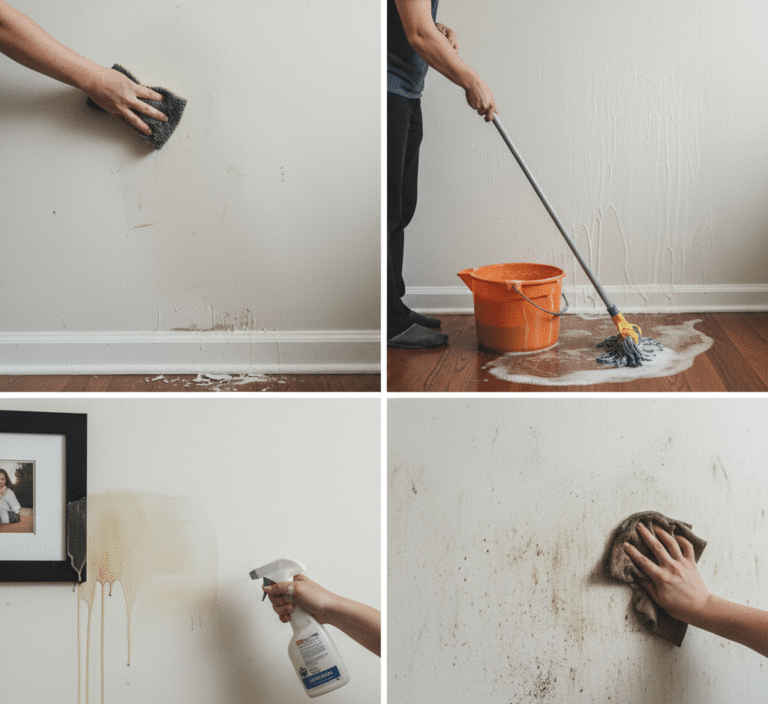
Intuition says start at the top and let gravity help, but on painted walls gravity is the enemy. A wet sponge squeezed against a dry, dirty upper wall releases water that trickles down in rivulets, cutting clean streaks through the dust and soot layer. Dry porous paint absorbs that dirty water instantly, and the streaks become permanent stains; you have essentially stained the wall with cleanliness. Use the professional bottom up technique instead: start at the baseboard and work toward the ceiling. Drips from the sponge land on an already wet, clean surface below, where they float on the film of water and wipe away without marking, leaving a uniform finish with no crying lines.
Mistake 2: Reaching for Harsh Cleaners
Strong chemicals do not equal clean walls. Painted walls need nothing harsher than warm water with a little dish soap or a pH neutral wall cleaner. Aggressive products strip the sheen from eggshell and satin paints, leaving dull patches that look as bad as the dirt they removed. Match the cleaner to the surface and test any product on a hidden corner first. Gentle and consistent beats strong and patchy every time.
Mistake 3: Wetting Dusty Baseboards First
Baseboards collect everything gravity drops, and in winter that dust mixes with bathroom and kitchen humidity into a grey, paste like sludge that clings to the molding profiles. The classic error is grabbing a wet rag immediately, which turns the dust into mud that gets pushed into corners and caulking lines, where it dries into dark, hard grout. Clean baseboards in two stages:
- Remove the loose dust first with a vacuum brush attachment or a dry microfiber duster.
- Follow with a damp cloth only once the dry debris is gone, to lift the adhered grime.
- Use extension handles, like a flat microfiber mop turned on its side, to save your back and knees.
Mistake 4: Skipping Doors and Switch Plates
While walls collect environmental dust, doors and switch plates collect biological evidence. Look closely at the halo around a light switch or door handle: it is a buildup of skin oils, hand lotion, and microscopic dirt transferred by fingertips thousands of times. That oily residue is sticky, traps dust, and forms the dark smudges that signal poor hygiene, and as flu and cold season winds down these touchpoints remain prime vectors for cross contamination. Clean them with a mild degreaser to break down the lipid bonds without damaging paint or hardware, then apply a disinfectant and respect its dwell time to neutralize lingering pathogens. Give extra attention to the front door handle and bathroom switches, which see the most traffic from the outside world. The CDC’s home cleaning guidance lists light switches among the hard surfaces that benefit from regular cleaning, with disinfecting recommended when someone in the home is sick.
Mistake 5: Waiting Until the Grime Is Visible
The winter film on walls is largely invisible until the low spring sun rakes across it, and by then the dust has had months to bond with the paint. Waiting costs more than looks: every draft and slammed door flicks allergen laden particles off the walls and back into the air you breathe. A seasonal wash, done before the sun exposes the damage, keeps the paint vibrant and resets the room’s air quality for allergy season. If the walls feel fine but condensation has left damp patches near windows or behind furniture, deal with the moisture quickly, because Health Canada advises controlling humidity and fixing moisture problems to keep mold from taking hold on walls and fabrics.
Wall Washing Mistakes and the Fixes
| Mistake | What goes wrong | Correct approach |
|---|---|---|
| Top down washing | Dirty drips stain the paint permanently | Wash bottom up so drips land on wet surface |
| Harsh cleaners | Sheen stripped from eggshell and satin | Mild dish soap or pH neutral wall cleaner |
| Wet rag on dusty baseboards | Dust turns to mud that cakes in corners | Vacuum dry first, then damp cloth |
| Ignoring doors and switches | Oily germs spread from high touch spots | Degrease, then disinfect with dwell time |
| Waiting for visible grime | Allergen film bonds and dulls the paint | Seasonal bottom up wash before spring sun |
Frequently Asked Questions About Washing Walls
Why should walls be washed from the bottom up? Drips from the sponge land on an already wet, clean lower surface and wipe away without marking, while top down washing lets dirty water soak into dry paint and leave permanent streaks.
What is the safest cleaner for painted walls? Warm water with a scant amount of dish soap or a pH neutral wall cleaner; harsh chemicals strip the sheen from eggshell and satin paint and leave dull patches.
Can washing walls really help with allergies? Yes, winter dust, dander, and soot bond to statically charged walls and re enter the air when disturbed, so a seasonal wash removes the reservoir and lowers the particles you breathe.
What are the dark streaks above baseboard heaters? Called thermal tracking or ghosting, they are dust patterns created by temperature differences between wall studs and insulation; washing bottom up with a mild solution removes them.
When Wall Washing Is a Job for the Pros
A full vertical clean means moving furniture, climbing ladders, and scrubbing hundreds of feet of baseboard, easily consuming several weekends. Toronto Shine Cleaning brings the extension poles, flat mops, and technique to handle walls, ceilings, and trim efficiently, without streaks or residue, so your home is ready to reflect the spring sunshine. Book our deep cleaning service, or keep everything fresh with regular maid cleaning. Call (647) 424-0355 or browse our pricing page to get started.