









Why Your Kettle Needs a Proper Clean This Autumn
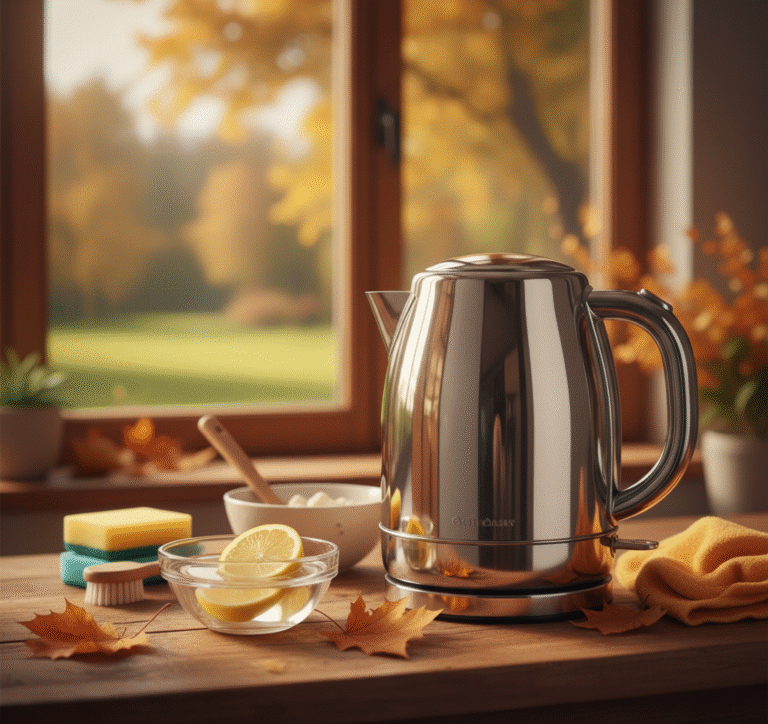
The electric kettle is one of the hardest-working appliances in any kitchen, boiling water for coffee, tea, and cooking without complaint. Yet most kettles quietly suffer a creeping internal problem: limescale. Left alone, mineral crust builds up inside, slowing the boil, wasting electricity, dulling the taste of your water, and shortening the appliance’s life. The fix is simple chemistry, not hard scrubbing: a few minutes of attention each month keeps your kettle performing like new all autumn.
What Limescale Is and Why It Matters
In hard-water country, limescale is not a question of if but when. Hard water carries a high concentration of dissolved minerals, mainly calcium carbonate and magnesium. Those minerals are harmless to drink, but each time the water is heated they precipitate out and form a hard, chalky, off-white crust on the heating element and interior walls. Four consequences make the buildup more than cosmetic:
- Wasted energy and time. Scale insulates the element, forcing it to work harder and longer. A scaly kettle boils noticeably slower and burns more electricity doing it.
- Altered taste. Minerals leach back into fresh water with a chalky or metallic note that can ruin good tea or coffee, and broken-off flakes add grit and white floaters to your cup.
- Bacterial habitat. Thick deposits are rough and porous, letting microorganisms colonize the surface. Boiling kills most active bacteria in the water, but the scale itself is a separate concern for your daily cup.
- Shortened lifespan. An element repeatedly overheating through an insulating crust can burn out early.
How to Descale a Kettle with White Vinegar
Descaling works because a mild acid dissolves the alkaline crust, and the classic vinegar method is the cheapest and most effective. Fill the kettle with a half-vinegar, half-water mix of distilled white vinegar and plain water, never past the maximum fill line. For heavy buildup, let the solution sit an hour before heating so the acetic acid starts working. Bring it to a full boil: heat plus acidity accelerates the reaction, and you may watch the scale fizz and flake. After it switches off, leave the hot solution inside for at least 20 to 30 minutes, or several hours or even overnight for extremely stubborn crust. Pour it out and inspect. Most of the scale should be gone, and a non-abrasive sponge handles any patches. Finish with several cool rinses, then fill with fresh water, boil, and discard that batch to clear every trace of vinegar taste and smell.
Descaling with Lemon or Citric Acid
If the vinegar smell puts you off, lemon is a fragrant, equally effective alternative. Squeeze up the juice from one or two fresh lemons into the kettle, or add two tablespoons of citric acid powder from the baking or canning aisle, then fill to the max line with water. Let it sit about an hour, bring it to a full boil, and leave the hot solution for another 20 to 30 minutes. Empty, rinse thoroughly, and run one final clean-water boil, discarding it so no lemony taste lingers. Put either method on a recurring calendar slot, spaced from monthly to quarterly based on your water’s hardness. The moment a visible white film coats the bottom, start.
Cleaning the Outside of the Kettle
The interior is the functional priority, but the exterior deserves care, and safety comes first: always unplug before wiping. For stainless steel, use a damp microfiber cloth with a drop of dish soap, wiping along the steel’s grain; to clear fingerprints and add shine, buff with a dry cloth carrying a little white vinegar or a dab of olive oil. Plastic bodies need only a soapy damp cloth, and abrasive scrubbers will scratch and dull them. Glass cleans well with the same 50/50 vinegar solution, sprayed on and wiped with microfiber until streak-free. These are ordinary cleaning chemicals, so Health Canada’s checklist for using household chemicals safely and its broader guide to household product safety are quick, worthwhile reads.
Choosing a Kettle That Stays Clean
Different designs suit different routines, and maintenance effort varies by type and material.
| Kettle type or material | What to know |
|---|---|
| Stovetop | The classic whistle kettle: nostalgic and simple, but slower and less energy-efficient than electric. |
| Electric | The modern standard: fast, automatic shut-off for safety, and efficient because heat applies directly to the water. |
| Variable temperature | Heats to a set point, which matters for brewing: green tea is best around 175 F (80 C), while black coffee wants water just off the boil near 205 F (96 C). |
| Gooseneck | The long, narrow spout gives the slow, controlled pour that proper coffee extraction requires; made for pour-over. |
| Stainless body | Durable, relatively light, taste-free, and easy to clean. The most popular choice, for good reason. |
| Glass body | Shows the water level and the scale buildup: a handy visual reminder to descale. |
| Plastic body | Most affordable and lightweight; generally BPA-free, but stains and holds odors more than glass or steel. |
| Ceramic body | Stylish and heat-retaining, but the heaviest and most fragile option. |
Daily Habits That Prevent Scale
Small habits slow the crust dramatically. In hard-water areas, use filtered water: a basic carbon filter pitcher removes a significant share of the minerals that cause scale, so you descale far less often. Do not let unused water sit; empty leftovers after each use so minerals cannot settle as the water cools. And descale proactively: a quick monthly treatment beats fighting a thick shell every six months. If you would rather have every appliance and limescale-prone surface handled in one visit, Toronto Shine Cleaning’s deep cleaning service resets the whole kitchen, and a regular cleaner keeps appliances on schedule between visits.
Kettle Cleaning FAQ
How often should I descale my kettle? Between once a month and every few months, depending on water hardness. Start the moment you see a white film or the boil time stretches.
Is water from a limescale-covered kettle safe to drink? The minerals are not harmful, but scale flavors water chalky, sheds flakes, and its porous surface can harbor microorganisms between boils, so prompt cleaning is the better habit.
Can I descale with baking soda? Skip it. Scale is alkaline, so it takes an acid such as vinegar, lemon juice, or citric acid. Baking soda is itself a mild alkali and will not dissolve the crust.
Why is my kettle boiling more slowly than when it was new? Insulating limescale on the element is the usual culprit. A full descaling cycle typically restores the original speed and cuts wasted electricity.
Sparkling Kettles, Sparkling Homes
A maintained kettle pays dividends in every cup. When you want the same fresh result across the whole kitchen, from appliance shells to faucets and shower glass, Toronto Shine Cleaning brings professional equipment to do it in one visit. Current rates are on our pricing page; book online or call (647) 424-0355 to schedule your autumn reset.