









Bathroom Cleaning Fails Because Most People Wipe the Wrong Things
A washroom is the most demanding room in any home. Living rooms gather dust; bathrooms cycle constantly between soaking wet and bone dry, and every cycle leaves mineral deposits, soap residue, and bacterial colonies clinging to tile, porcelain, and grout. Surface wiping hides the problem for a day, then the film returns. Real bathroom hygiene means identifying what is actually on the surfaces, choosing chemistry that attacks it, and giving products enough contact time to finish the job. Households that get this routine right stop fighting their bathrooms.
Soap Scum Is a Mineral Problem, So It Needs an Acid
The waxy film on shower walls and tub surrounds is calcium stearate: fatty acids from bar soap bonding with hard-water minerals into an insoluble precipitate. That bond is alkaline, which is why pH-neutral all-purpose sprays glide right over it. Professionals reach for acidic cleaners, typically phosphoric or citric acid, to dissolve the mineral lattice so the film releases. One serious exception: acid etches natural stone permanently, so marble and travertine must never meet these products.
Biofilm Versus Mold: Two Different Enemies
The pink or orange slime in shower corners is biofilm, a bacterial colony sealed to the surface with a glue-like matrix. It wipes away easily and returns fast, because you removed the outer layer, not the colony. Genuine mold is a fungus that sends roots into porous material, and grout is cement, a sponge for water and organic matter. Once mold establishes in grout, surface scrubbing fails; you need a cleaner that penetrates below the surface to kill the roots, then a sealer that locks moisture out so spores cannot re-establish. The CDC’s mold health overview explains why damp materials drive these growths.
The Toilet Is an Aerosol Problem Before It Is a Stain Problem
Flushing with the lid up fires a plume of microscopic droplets onto nearby surfaces, so close the lid and clean top down. The two most neglected areas are structural rather than cosmetic. The seam where the porcelain base meets the floor collects condensation, dust, and stray moisture. And the siphon jets, the small holes under the rim that release flush water, silently accumulate minerals and mold, weakening the flush and harboring bacteria. A bent bottle brush is the only tool that reaches inside them.
The Aerator, the Overflow Hole, and Other Hidden Traps
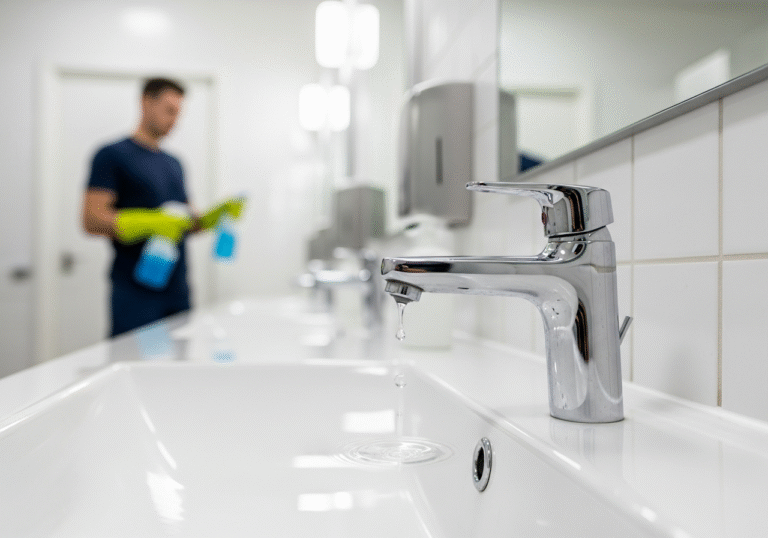
- The faucet aerator is a mesh screen straining sediment from supply water; when flow turns irregular, calcium has choked it. Unscrew the tip and soak it in vinegar.
- The overflow opening near the top of the basin is a dark, damp cave nobody scrubs. Biofilm grows inside and exhales a musty, sewer-like smell; pour cleaner into the hole and agitate the walls with a small brush.
- Bathroom glass hates humidity: dust sticks to mirrors and smears into streaks. A glass-grade microfiber cloth lifts oils with tiny hooks instead of heavy detergents, and ammonia-based sprays belong on the cloth, never the mirror, because liquid seeping behind the glass corrodes its edges.
Floors and the Exhaust Fan Matter More Than Any Countertop
Bathroom dust is damp, so it smears instead of sweeping and packs into corners and grout lines. Mopping mostly redistributes that grey slurry, so the perimeter needs hand work, including the cramped strip behind the toilet where dust bunnies absorb moisture and begin to rot. Up above, the exhaust fan is the room’s invisible cleaner: it pulls out humid air, and with it dust and hairspray, until the blades and grille are caked in sticky grey fuzz that strangles airflow and lets humidity linger on the walls. Vacuum the grille, remove the cover, and wipe the blades.
Tool Discipline and Dwell Time: The Two Free Upgrades
Cross-contamination is solved with laundry. A cloth that touched the toilet base must never reach the sink, counter, or door handle, so keep dedicated cloths per zone. Then change how you spray: almost every disinfectant needs the surface visibly wet for three to ten minutes before it kills germs, and CDC household cleaning guidance recommends removing soil first and letting products work for their labeled contact time. Spray-and-wipe lifts dirt but leaves pathogens standing, and dwell time also softens soap scum so you scrub less.
When Weekly Maintenance Stops Being Enough
Heat and moisture accelerate decay, so a washroom degrades faster than any other room, and weekly cleaning only reaches the surface layer. Reversing that takes restorative work: descaling shower glass, sanitizing grout, and reaching behind the toilet by hand. It is bending, scrubbing labor done close to strong cleaners, exactly what our deep cleaning service resets. Tenants heading out face the same hidden zones during move-out cleaning, where inspections look at grout and base seams, not countertops.
| Zone | Main enemy | What actually works |
|---|---|---|
| Shower and tub | Soap scum, biofilm | Acidic cleaner with dwell time; never on natural stone |
| Grout lines | Rooted mold | Penetrating treatment, then a moisture sealer |
| Toilet | Aerosol, clogged jets | Lid-down flush, bent brush under the rim, dried base seam |
| Sink and mirror | Aerator scale, smeared dust | Vinegar soak on the screen; microfiber sprayed on the cloth |
| Floor and fan | Damp slurry, humid air | Hand-clean corners; vacuum and wipe the fan grille |
Frequently Asked Questions
What removes soap scum from a bathtub fastest? An acidic product with phosphoric or citric acid, sprayed on and left wet for its labeled dwell time so the chemistry dissolves the mineral bonds. Wipe top to bottom, rinse, and squeegee the surface afterward to slow the next layer. Skip acids on marble or travertine, which they etch permanently.
Why does my bathroom smell clean for a day and then musty again? The odor source usually lives where the routine never touches: biofilm inside the sink overflow, the grime ring at the toilet base, or wet dust rotting behind the toilet. Each needs physical scrubbing rather than fragrance.
Do I really need separate cloths for the toilet? Yes. Transferring toilet bacteria to a sink or counter where you wash your face is the classic cross-contamination route. Use dedicated cloths per zone, launder them hot after each session, and let the toilet brush air-dry before it returns to its holder.
How long should disinfectant sit on a bathroom surface? Most products need the surface visibly wet for three to ten minutes, so read the label and reapply instead of wiping early. Clean visible soil with detergent first, because dirt shields germs from the chemical, and never mix bleach with other cleaners or acids.
Reset Your Bathroom Without a Weekend of Scrubbing
Patience over grout, acid on acrylic, respect for dwell time: bathroom cleaning rewards technique over effort. Toronto Shine Cleaning’s bonded and insured teams handle the full chemistry, and past clients rate the results on our review page. Call (647) 424-0355 for a free quote.