









Paper Towels: When the Roll Is Right and When It Is Dead Wrong
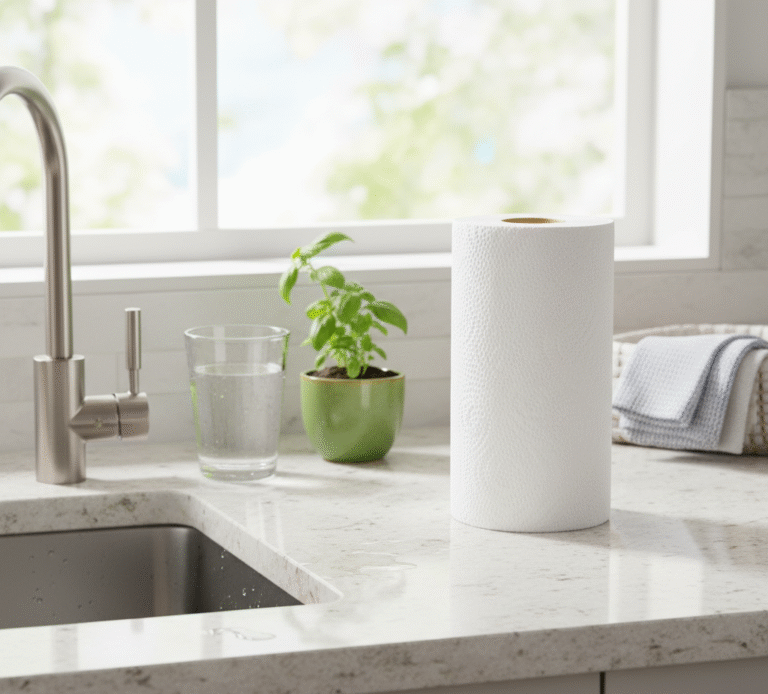
The paper towel is a cornerstone of modern cleaning, so embedded in daily life that we grab it without thinking: sudden spill on the counter, smudge on the window, greasy stovetop. Its virtues are real. No hunting for a clean cloth, no laundry burden, no hesitation with unpleasant messes before it hits the bin. One fresh sheet guarantees a clean slate and rules out spreading yesterday’s germs on today’s surfaces. But convenience is not the same as correctness, and most homes reach for the roll far too often. These six tips put paper towels back in their proper role.
Tip 1: Blot Spills, Never Wipe Them
Paper towels are engineered to absorb: cellulose fibers, usually from wood pulp, wick liquid and hold it, while texture, thickness, and quilting add scrubbing grip. That engineering only pays off if you work with it. Lay a sheet over a fresh spill and let capillary action pull the liquid up and out of the surface. An aggressive wiping motion does the opposite, pushing moisture over a wider footprint and driving it into porous wood or grout where it becomes a real stain. For large spills, layer several sheets so the pile soaks through instead of smearing.
Tip 2: Use One as a Disposable Applicator
Beyond mopping up liquids, the roll is a superb delivery system. Sprayed with glass cleaner, a paper towel polishes windows and mirrors streak-free precisely because it is new: a reusable cloth can carry residual oils or fabric softener from the last wash, and those residues are what leave glass hazing. Sprayed with disinfectant, a fresh sheet spreads the product evenly across counters and sinks, then leaves the house carrying whatever germs it collected. That matters more than it sounds, because a damp sponge or cloth that skips regular sanitizing becomes a breeding ground for bacteria and a vehicle for cross-contamination, the exact risk the CDC’s home cleaning and disinfection guidance warns about.
Tip 3: Hit Heavy Grease Dry First
Grease and oil are where paper genuinely shines. It wipes greasy cooktops, cleans microwave splatter, and blots excess oil off fried food, trapping grease in fibers destined for the trash. A reusable cloth takes that same oil into your laundry, where it lingers and transfers. For thick, heavy grease, run the dry towel first to pull up the bulk, then follow with your cleaning solution. Two steps stop the smear and make the actual cleaning dramatically shorter.
Tip 4: Know the Real Downsides
The disposability that makes paper towels lovable creates their two genuine weaknesses. The first is cost in every currency. Making them consumes trees, water, and energy, and seconds later the sheet heads to landfill, while the recurring purchase adds up to far more than one-time reusable alternatives. The second is performance limits: a standard sheet lacks durability for heavy scrubbing. Faced with dried-on food or textured surfaces it shreds, leaving lint and pulp behind, painfully visible on dark surfaces and screens. Any job that needs friction belongs to a scrub brush or a good cloth, not paper.
Tip 5: Default to Microfiber Instead
For most everyday tasks, microfiber is simply the better tool. These cloths weave extremely fine synthetic fibers, typically a polyester and polyamide blend, split during manufacturing to create huge surface area and a positive electrostatic charge that pulls dust, dirt, and microbes into the cloth instead of shuffling them around. Dry, they are exceptional dusters. Damp, their capillary action absorbs remarkable water and lifts grime with little effort, often with plain water alone. They scrub without falling apart, polish glass without lint, and survive hundreds of washes, which makes them cheaper and greener over any realistic timeline. Care is the catch: wash them apart from other laundry and skip fabric softener, which clogs the fibers and kills both the static cling and the absorbency.
Tip 6: Save the Roll for Hazardous Messes
Hygienic disposal is the paper towel’s trump card, and some messes should never touch reusable laundry. The list is short and specific:
- Raw meat juices from poultry or beef packaging
- Pet accidents, vomit, and illness-related fluids
- Litter box spills and tracked-in mud bombs
- Anything you would rather incinerate than launder
With biological hazards, containing and discarding immediately is the responsible move against pathogens like salmonella or E. coli, since scrubbing a cloth clean enough to be safe is often impractical mid-crisis. If you finish with a bleach-based sanitizing wipe, handle it per Health Canada’s rules for household chemicals, which stress dilution accuracy and never mixing products.
Paper Towel vs Microfiber by Task
| Task | Better tool | Why |
|---|---|---|
| Fresh liquid spill | Paper towel | Blots and contains, then disappears |
| Windows and mirrors | Either | Paper never carries softener haze; microfiber must be lint-clean |
| Raw chicken juices | Paper towel | Single-use stops cross-contamination |
| Dusting shelves | Microfiber | Static charge traps dust instead of airborne-izing it |
| Stovetop grease film | Paper first, cloth after | Dry towel pulls bulk; washable cloth finishes |
| Scrubbing dried messes | Brush and cloth | Paper shreds and leaves pulp |
| Drying hands | Cloth or paper, your call | Cloth wins cost, paper wins when hands are filthy |
Paper Towel FAQ
Are paper towels more hygienic than reusable cloths? For hazardous messes, yes, because the towel exits with the contamination instead of returning to a laundry pile. For routine wiping, a microfiber cloth washed regularly and used damp is equally sanitary and far cheaper.
Why does my paper towel leave lint on dark surfaces? Cheap towels shed pulp and lint, especially when wet or when dragged across texture. Dab instead of dragging, use two layers for wet jobs, or switch to a lint-free microfiber pass for the final polish on screens and dark finishes.
Can I compost used paper towels? Only if they absorbed food scraps or water. Towels dirty with cleaning chemicals, grease, or biological waste belong in the trash, since compost is meant for untreated organics.
How much does the roll habit really cost? A household burning through paper towels daily pays a recurring subscription that dwarfs the one-time cost of a microfiber set that outlives hundreds of rolls. Check the cleaning that replaces the whole debate in the client reviews before booking a team reset.
Paper towels are not a bad tool, just an overused one: specialists for hazardous, greasy, and one-and-done messes, while cloths handle the routine. When surface grime has outgrown your toolkit, Toronto Shine Cleaning’s deep cleaning service resets every room from appliance fronts to baseboards, or keep the baseline tidy with weekly maid service. Call (647) 424-0355 to book either.