









A clean sofa is fundamental to a clean home. Over time, this central piece of furniture accumulates dust, allergens, food crumbs, and body oils, which can degrade the fabric and impact the indoor air quality of your living space. Regular cleaning not only preserves the appearance of your sofa but also extends its lifespan and contributes to a healthier environment for you and your family. Before beginning any cleaning process, it is essential to identify the material of your sofa and understand the manufacturer’s cleaning instructions. Most sofas have a care tag, typically found under the cushions, with a cleaning code. The code ‘W’ means it is safe to use water-based cleaners. ‘S’ indicates that only a solvent-based, water-free cleaner should be used. ‘WS’ or ‘SW’ signifies that you can use either water-based or solvent-based cleaners. An ‘X’ code means the fabric should only be cleaned by vacuuming; no water or solvents should be applied. Adhering to these codes is crucial to prevent irreversible damage like discoloration or shrinkage. If you cannot find a tag, it is always best to perform a spot test with your chosen cleaning solution on a small, inconspicuous area of the sofa first.
1.Aspiration
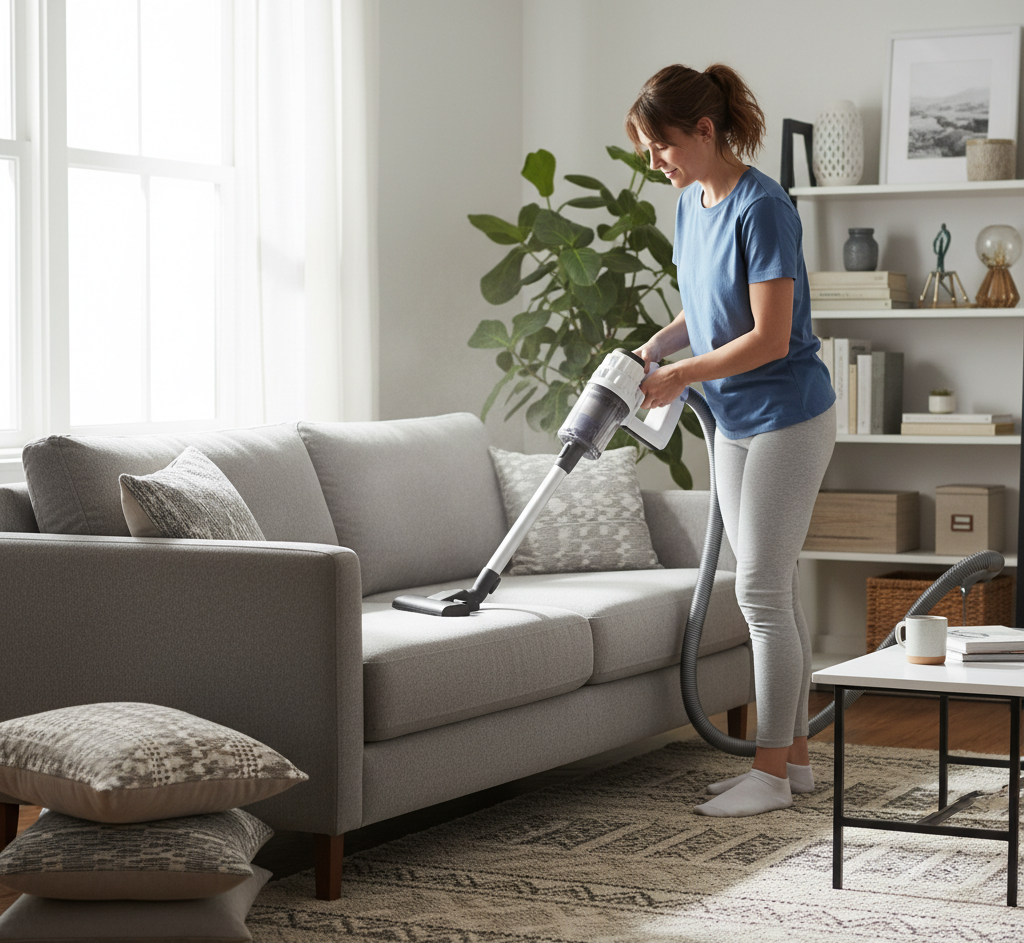
The first step in any sofa cleaning routine is a thorough vacuuming. This initial action removes all loose dirt, dust, pet hair, and other debris from the surface and crevices of the furniture. Using a vacuum cleaner with an upholstery attachment and a crevice tool will yield the best results. It is important to remove all cushions and vacuum the base of the sofa, paying close attention to the seams and corners where debris tends to gather. For fabric sofas, a stiff brush can be used beforehand to loosen any dried-on dirt or hair, making the vacuuming process more effective. This step is not just a precursor to deep cleaning; regular weekly vacuuming is a key maintenance practice that prevents the buildup of abrasive dirt particles that can wear down fabric fibers over time.
2.Natural Mixtures
For a general deep clean of a fabric sofa with a ‘W’ or ‘WS’ code, you can create a simple and effective cleaning solution at home. A common mixture involves a small amount of mild dish soap combined with warm water. Another popular natural cleaner can be made by mixing equal parts of white vinegar and water. Before applying any solution to the entire sofa, test it on a hidden spot to ensure it doesn’t cause any discoloration. Apply the solution sparingly with a microfiber cloth, gently blotting or scrubbing stained areas with a soft-bristled brush. It is important not to oversaturate the fabric, as excessive moisture can lead to water damage, mildew growth, or leave water marks, especially on certain materials. After cleaning, use a clean, damp cloth to wipe away any soap residue.
3.Baking Soda
Baking soda is another powerful tool for cleaning and deodorizing fabric upholstery. You can sprinkle a generous layer of baking soda over the entire sofa, letting it sit for at least 20 to 30 minutes, or even for a few hours, to absorb odors and help lift dirt. After it has had time to work, vacuum it up thoroughly using a brush attachment. For tougher stains, a paste can be made by mixing baking soda with a small amount of water. Apply this paste to the stain, let it sit for about 15 to 30 minutes, and then gently wipe it away with a damp cloth before blotting the area dry.
4.Steam Cleaning
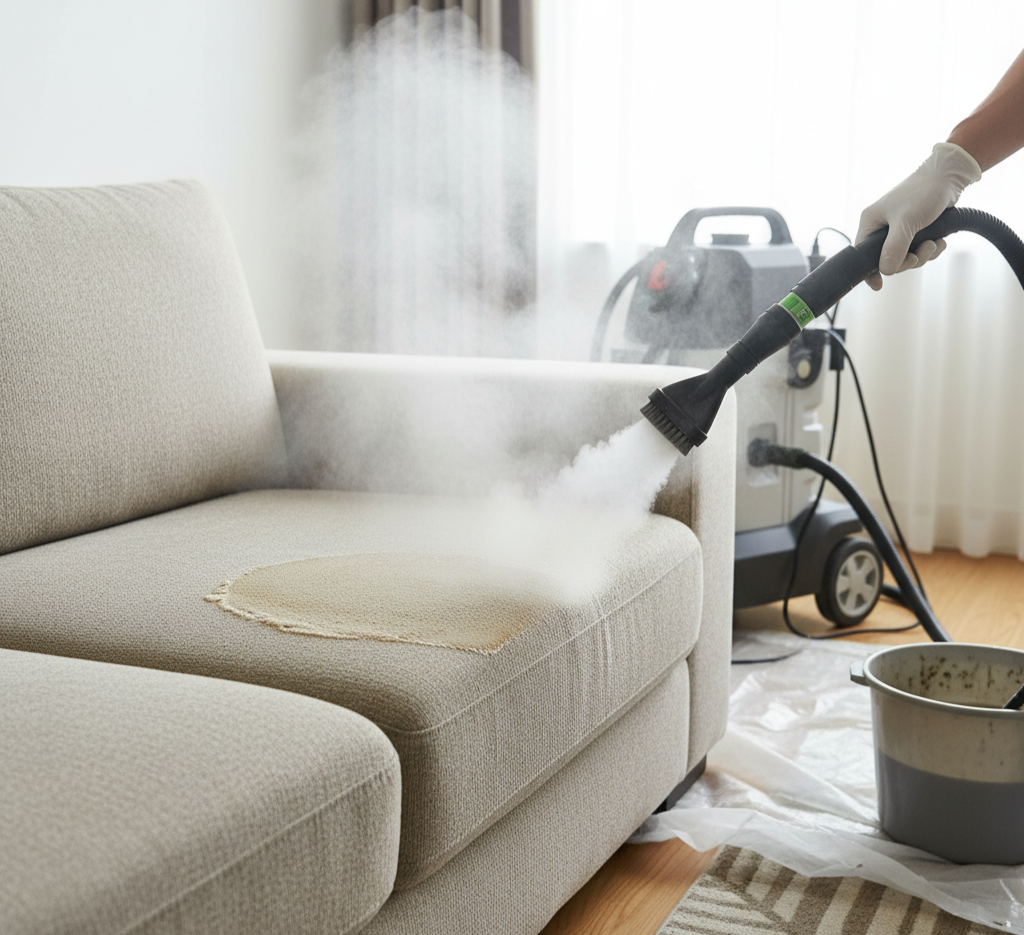
Steam cleaning, also known as hot water extraction, is a highly effective deep cleaning method for many types of fabric sofas. A steam cleaner injects hot water and a cleaning solution into the upholstery to dislodge dirt, dust mites, and allergens, and then immediately extracts the dirty water with a powerful vacuum. This method provides a deep sanitization that can be particularly beneficial for households with allergy sufferers, children, or pets. While you can rent or purchase a steam cleaner for home use, it’s vital to use it correctly to avoid over-wetting the fabric. Professional services often use more powerful equipment that extracts a higher percentage of the moisture, leading to faster drying times and reducing the risk of mold or mildew. Always check your sofa’s cleaning code before using a steam cleaner, and start with the lowest heat setting.
5.Act Quickly
Addressing spills and stains promptly is the most effective way to prevent them from becoming permanent. The golden rule is to blot, never rub. Rubbing a fresh spill can push the substance deeper into the fabric fibers and spread the stain. Use a clean, dry cloth or paper towel to gently absorb as much of the liquid as possible. For specific types of stains, different solutions may be required. A mixture of white vinegar and water can be effective against water stains. For grease stains, start by sprinkling cornstarch or baking soda on the spot to absorb the oil; let it sit for about 30 minutes before vacuuming it away. For tougher stains like wine or ink, you may need a commercial upholstery stain remover or a specific DIY solution. A paste of baking soda and water, or a mix of hydrogen peroxide and dish soap, can be effective on some stubborn stains, but always test these solutions on a hidden area first.
6.Attention
The cleaning process varies significantly for different upholstery materials. Leather sofas, for instance, should not be cleaned with water-based solutions unless specified by the manufacturer. Typically, they require a wipe-down with a microfiber cloth dampened with a specialized leather cleaner or a mild soap and water solution. After cleaning, it’s often recommended to apply a leather conditioner to restore moisture and prevent the material from drying out and cracking. Suede and other delicate materials like velvet require a more careful approach. A suede brush should be used to gently brush away surface dirt in the direction of the nap. For stains on suede, a solution of equal parts white vinegar and water can be blotted on gently. Velvet should be treated with care, using a soft brush to maintain the pile and avoiding harsh scrubbing. For deep-set stains or significant soiling on these delicate fabrics, professional cleaning is often the safest and most effective option.

7.Hire a service or do it yourself?
Deciding between cleaning your sofa yourself and hiring a professional service depends on several factors, including the type of fabric, the extent of the soiling, and your comfort level with the task. DIY cleaning can be a cost-effective option for routine maintenance and light stains. However, there are risks involved. Using the wrong cleaning product or technique can lead to permanent damage, such as discoloration, fabric shrinkage, or water rings. Household cleaning machines also lack the power of professional-grade equipment, potentially leaving behind cleaning residue that attracts more dirt or leaving the fabric overly wet, which can lead to mildew.
Professional sofa cleaning services offer expertise and advanced technology that typically yield superior results. Technicians are trained to identify different fabric types and select the safest and most effective cleaning method. They use industrial-strength equipment for a deeper clean, effectively removing embedded dirt, allergens, and bacteria. Professional hot water extraction machines use higher temperatures and stronger suction, which cleans more thoroughly and significantly reduces drying times. Professionals are also better equipped to handle stubborn stains and can offer treatments like fabric protectors to repel future spills and stains. While it is a greater initial investment, professional cleaning can extend the life of your furniture and is often recommended for deep cleaning at least once a year, or more frequently for homes with pets or heavy use.
8.Air Drying
After any deep cleaning, proper drying is crucial. Allow the sofa to air-dry completely before using it again. You can speed up the process by opening windows or using fans to improve air circulation. Avoid using direct heat, like a hairdryer, as it can damage some fabrics. Once dry, you can use a soft brush to fluff the fabric fibers and restore their texture. Maintaining your sofa’s cleanliness post-cleaning involves a few simple habits. Regular vacuuming is paramount. Flipping and rotating cushions periodically ensures even wear and helps them maintain their shape. Using sofa covers or throws can provide a protective barrier, especially in homes with children or pets. Positioning your furniture away from direct sunlight can also prevent the fabric from fading over time. By incorporating these practices, you can keep your sofa looking fresh and clean for longer.

A well-maintained sofa is key to a comfortable and hygienic living space. Understanding your sofa’s fabric and applying the correct cleaning methods, from regular vacuuming and prompt stain treatment to periodic deep cleaning, will preserve its beauty and longevity. For a guaranteed deep clean that revitalizes your upholstery and removes embedded dirt and allergens without risk, consider the expert services of Toronto Shine Cleaning.