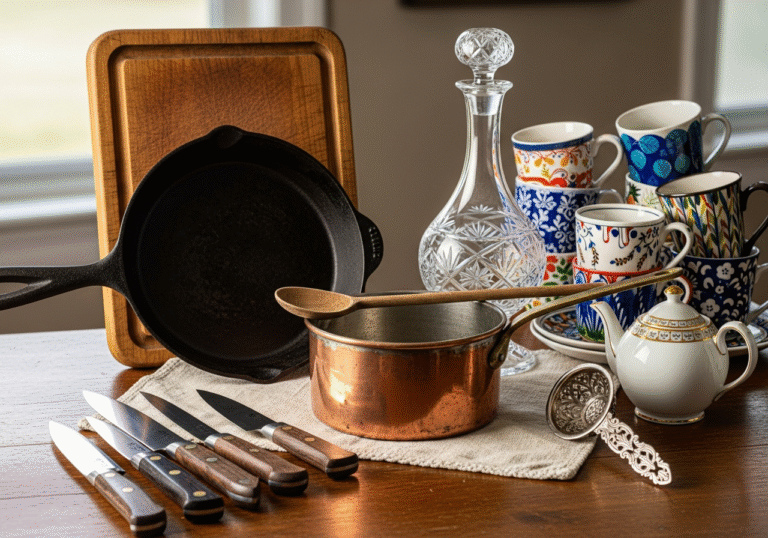










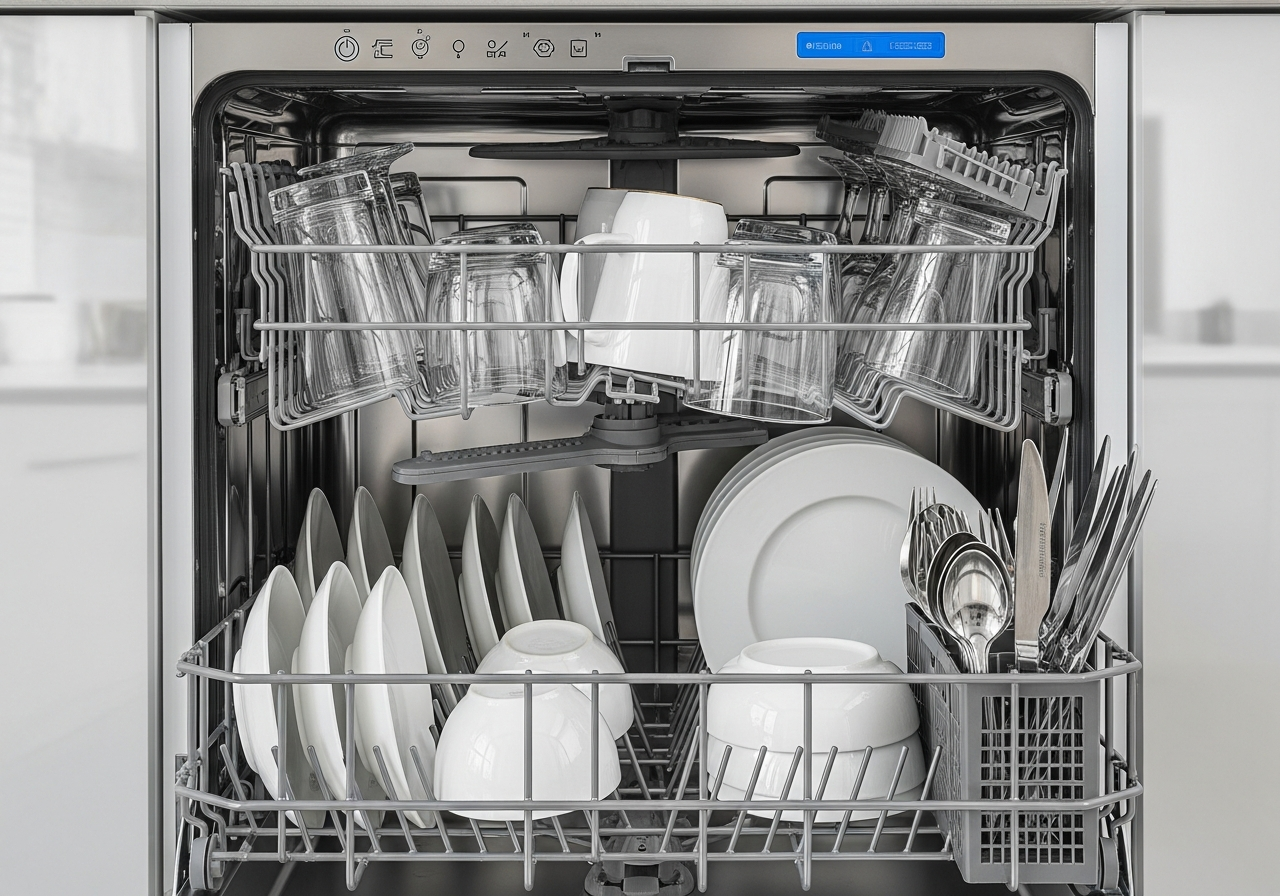
The dishwasher is arguably the greatest labor-saving device in the modern kitchen. It transforms a pile of greasy, tomato-stained chaos into sparkling order with the push of a button. It is a mechanical servant that saves us hundreds of hours a year, allowing us to retreat to the living room while the dirty work happens behind a sealed door. However, this convenience often breeds a dangerous complacency. We begin to view the dishwasher as a magical box capable of sanitizing anything that fits between the tines of the rack. This assumption is the primary cause of ruined heirlooms, dulled blades, and destroyed finishes.
To understand what cannot go into the dishwasher, one must first understand the environment inside that machine. It is not a gentle bath; it is a violent, caustic storm. The water jets strike dishes with significant force to dislodge food. The water temperature is often scalding, far hotter than human hands can tolerate, designed to melt fat. Most critically, the detergent is not soap; it is an abrasive, high-alkaline chemical cocktail designed to scour and dissolve biological matter. When you subject delicate or incompatible materials to this combination of high heat, hydraulic force, and chemical abrasion, you are essentially subjecting them to accelerated aging and structural failure. There are strict rules of engagement when loading the dishwasher, and ignoring them is a surefire way to destroy your kitchen investments.

1.Wooden
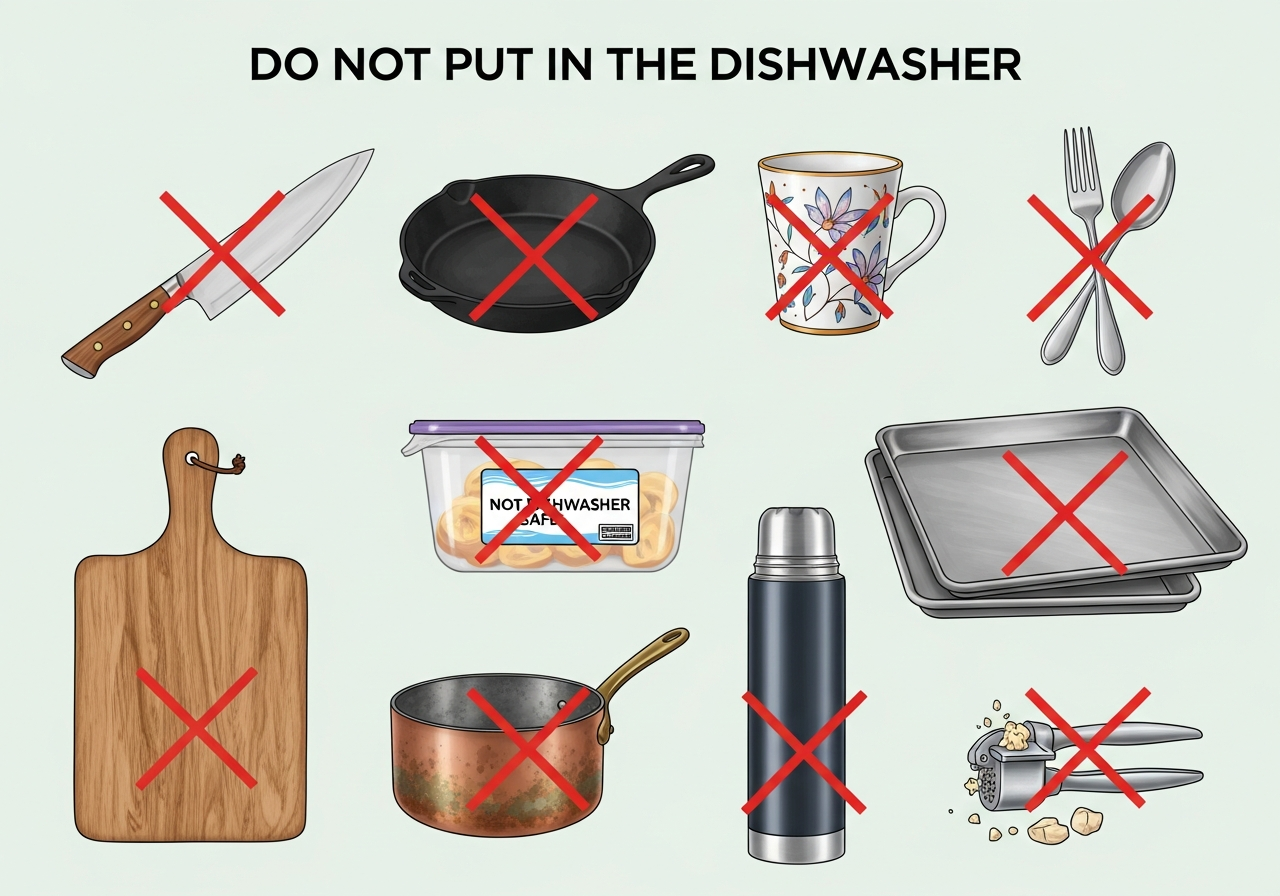
Wood is an organic, cellular material. It was once alive, and even shaped into a spoon or a cutting board, it remains reactive to its environment. Wood is hygroscopic, meaning it absorbs moisture. When you place a wooden cutting board, a salad bowl, or a spoon into the dishwasher, you are subjecting it to a cycle of extreme saturation followed by extreme heat drying.
During the wash cycle, the wood fibers swell as they absorb the hot, soapy water. Then, during the drying cycle, the intense heat forces that moisture out rapidly, causing the fibers to contract. This expansion and contraction creates stress fractures in the grain. Over time, a smooth cutting board will warp, cup, and eventually crack down the middle. Furthermore, the harsh detergents strip the natural oils from the wood, leaving it grey, furry, and brittle.
Composite bamboo items or laminated wood boards are at even greater risk. These are held together by food-safe glues. The heat of the dishwasher dissolves these adhesives, causing the board to delaminate and fall apart into its component strips. Once a crack forms in wood, it becomes a sanctuary for bacteria-specifically E. coli and Salmonella from raw meats-that the dishwasher cannot reach. To preserve wood, it must always be hand-washed, dried immediately, and periodically treated with mineral oil.
2.Knives
There is perhaps no greater sin in the culinary world than putting a high-quality chef’s knife in the dishwasher. A good knife is a precision instrument, often made of high-carbon steel or specialized stainless alloys tempered to hold a razor-edge. The dishwasher dulls this edge through two mechanisms: physical trauma and chemical corrosion.
During the cycle, water pressure can rattle the knife against the plastic basket or, worse, against other cutlery. Every time the blade hits a ceramic plate or a metal spoon, microscopic dings are created along the edge. This rolls the steel, turning a sharp blade into a dull saw that crushes tomatoes rather than slicing them. Chemically, the harsh detergents are corrosive to high-carbon steel. They can cause pitting and rust spots on the blade.
The damage extends to the handle as well. If the knife has a wooden handle, the issues mentioned above apply. If it has a riveted handle (where metal pins hold the handle scales to the tang), the heat causes the handle material to expand at a different rate than the metal steel. This eventually causes the handle to crack around the rivets, creating a gap where bacteria from raw chicken can hide and fester. A chef’s knife should be washed by hand with mild soap and dried immediately to prevent oxidation.

3.Cast Iron
Cast iron skillets are prized for their durability and their “seasoning”-a layer of polymerized oil that creates a natural non-stick surface. This seasoning is the result of hours of cooking and careful maintenance. Placing a cast iron skillet in the dishwasher is the fastest way to strip years of hard work down to bare, grey metal.
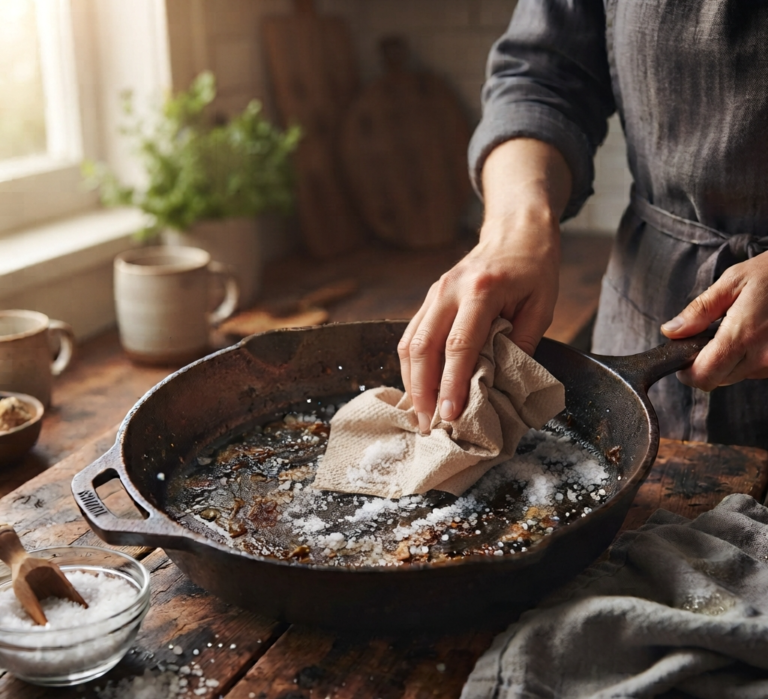
The combination of caustic detergent and long exposure to hot water breaks down the oil bonds of the seasoning. When the cycle finishes, you will not only have a pan that food sticks to, but you will almost certainly have a pan covered in bright orange rust. Cast iron is essentially a sponge for oxidation; without its protective oil barrier, it rusts within minutes of being wet. While a rusted pan can be restored, it requires aggressive scouring and re-seasoning, a laborious process that is entirely avoidable. Cast iron should be cleaned with hot water, a stiff brush, and perhaps a little coarse salt, but never the dishwasher.
4.Non-Stick
Non-stick pans (Teflon, PTFE) are often marketed as dishwasher safe, but this is a half-truth. While the pan won’t melt, the dishwasher significantly shortens its lifespan. The non-stick coating is a chemical layer applied to the metal. The high heat of the drying cycle and the abrasive nature of the detergent eventually dry out this coating. It begins to flake, peel, and lose its slick properties.
Once the coating is compromised, the pan is effectively garbage. Cooking with a flaking non-stick pan can release toxic particles into your food. Furthermore, many aluminum non-stick pans have an exposed metal base. The dishwasher detergent reacts with the aluminum, causing it to oxidize and turn a dark, charcoal grey that rubs off on your hands and dishtowels. To get the full three-to-five-year lifespan out of a non-stick pan, it needs the gentle touch of a soft sponge.
5.Copper and Aluminum
Copper pots and pans are the jewels of the kitchen, prized for their thermal conductivity and their aesthetic beauty. They are also incredibly reactive. The chemicals in dishwasher detergent are too harsh for copper. They will strip the shine instantly, leaving the pot with a dull, mottled, and tarnished finish that requires hours of polishing to restore. In severe cases, the pitting can be permanent.
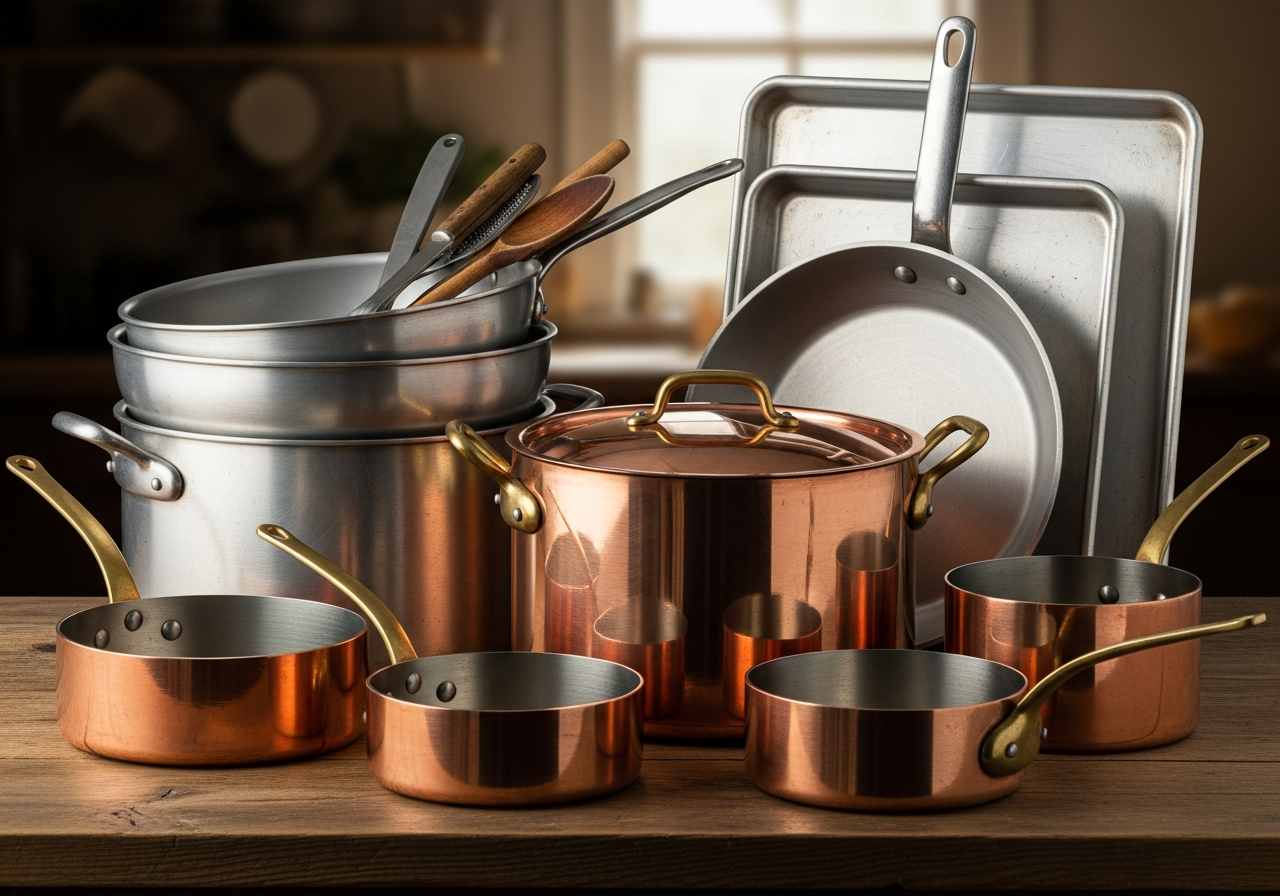
Aluminum suffers a similar fate. Disposable aluminum trays, baking sheets, and garlic presses are often made of untreated aluminum. In the dishwasher, these items undergo a chemical reaction that darkens the metal to a deep black. This oxidation layer is powdery and rubs off on everything it touches-your hands, your towel, and the other dishes in the load. If you put a shiny aluminum baking sheet in the washer, it will come out looking like a piece of industrial scrap metal.
6.Crystal and Porcelain
Heirloom china and fine lead crystal are from a different era, an era before the aggression of modern appliances. Fine china often features hand-painted details or gold and silver leaf rims. The dishwasher is an eraser for these details. The water pressure can chip the delicate ceramic, but the detergent is the real enemy. It will slowly scrub away the gold plating and fade the patterns until they are ghosts of their former selves.
Lead crystal is even more susceptible. It is softer than standard glass. Subjecting it to the high heat and alkaline environment of the dishwasher causes a phenomenon known as “etching.” This is not a film that can be wiped off; it is physical damage to the glass structure. The crystal becomes cloudy, milky, and permanently pitted. Once crystal is etched, it cannot be fixed. To keep your wine glasses sparkling and clear, hand washing is the only safe option.
7.Mugs and Thermal Bottles
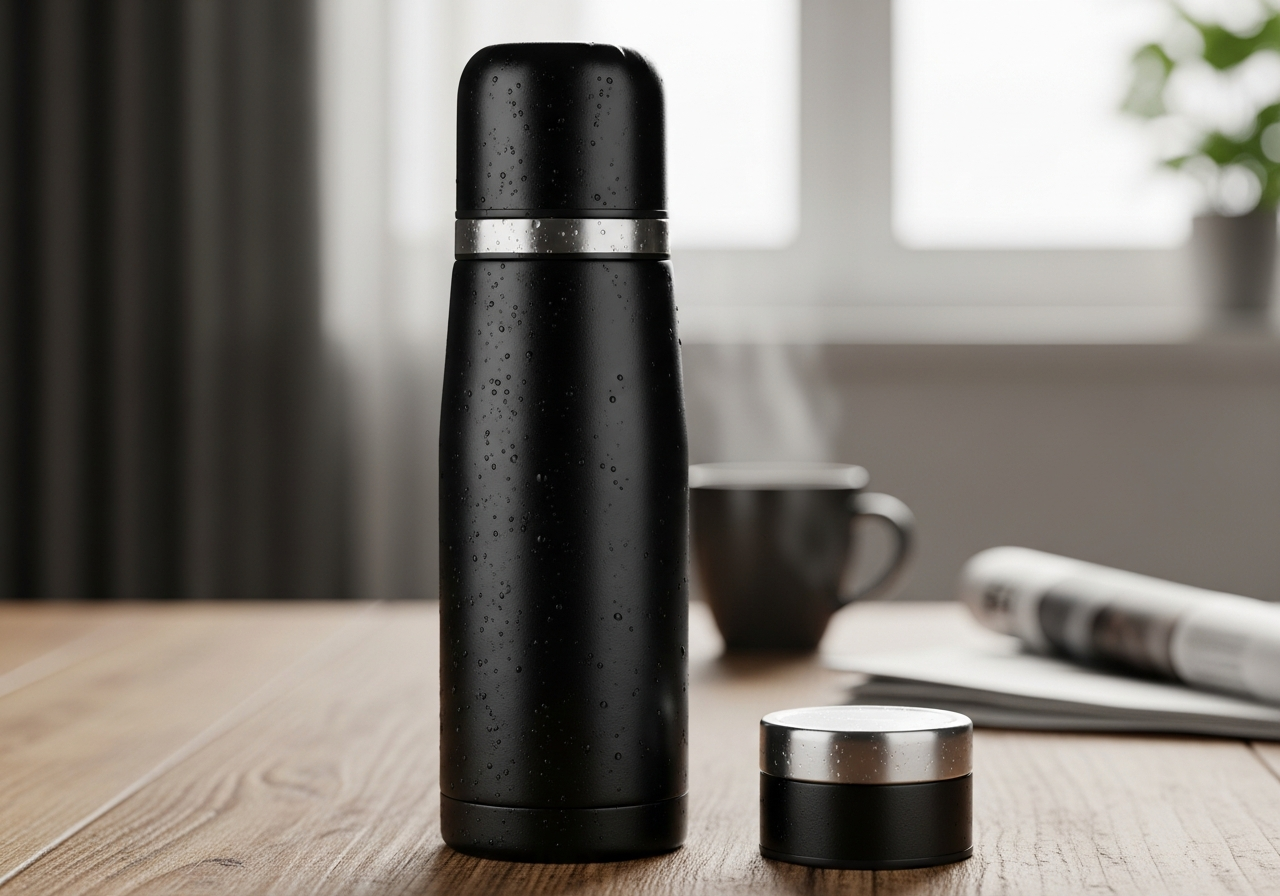
Travel mugs and insulated water bottles (like YETI or S’well) rely on a vacuum seal to keep drinks hot or cold. This is a double-walled construction where the air is sucked out between the layers to prevent heat transfer. The intense heat of the dishwasher, particularly the drying cycle, can ruin this vacuum seal. The heat causes the materials to expand, potentially breaking the weld or the seal point.
Once the vacuum is breached, the mug loses its insulating power. It becomes just a heavy cup. Furthermore, many of these mugs have exterior powder coatings for color and grip. The dishwasher can cause this coating to peel, chip, or fade. While some newer models claim to be dishwasher safe, the lid gaskets often trap water and soap, leading to a taste of detergent in your morning coffee.
8.Plastics
Plastic is a broad category, and while some are designed for the machine, many are not. Thin, disposable plastics (like takeout containers or margarine tubs) will melt or warp under the heat of the water and the drying element. If a plastic item falls from the top rack and lands on the heating coil at the bottom of the tub, it will melt, releasing toxic fumes and potentially ruining the heating element itself.
Even reusable rigid plastics, like certain food storage containers, can degrade over time. The heat causes the plastic to become brittle and crack. More concerning is the potential for chemical leaching. High heat can accelerate the release of BPA or phthalates from certain plastics, which is a health concern. If you must wash plastics, they belong strictly on the top rack, away from the heating element, and the “heated dry” setting should be turned off.
9.Adhesive
We often try to repurpose glass jars-jam jars, pasta sauce jars-for storage. This is a noble eco-friendly habit. However, putting a jar with a paper label still attached into the dishwasher is a disaster for the machine. The hot water and agitation will successfully strip the paper and glue off the glass.
The problem is where that paper goes. It turns into a wet, sticky pulp that circulates through the machine. It lodges in the spray arms, blocking the water jets. It coats the heating element, smelling like burning paper. Most critically, it clogs the drain filter. A filter clogged with paper pulp prevents the machine from draining properly, leading to standing water, leaks, and a burnt-out drain pump. Labels must be fully removed with oil or a scraper before the jar ever enters the machine.
10.Garlic Grater and Press
Some tools are mechanically incompatible with the dishwasher not because they will break, but because they simply won’t get clean. The cheese grater and the garlic press are prime examples.
A cheese grater has hundreds of tiny, sharp holes. When cheese melts and hardens into these crevices, the water spray of the dishwasher cannot penetrate them with enough direct force to dislodge the protein. The heat then bakes the cheese onto the metal, making it harder to clean than if you had just washed it immediately. The cheese stays there, molding until the next use.
Similarly, a garlic press mashes sticky garlic into a small chamber of tiny holes. The dishwasher spray acts on the outside of the press but rarely has the angle or pressure to blast out the plug of garlic fiber stuck inside. These tools require the mechanical friction of a scrubbing brush to be truly sanitary.
Conclusion
The dishwasher is a tool of mass sanitation, but it is a blunt instrument. It treats a delicate wine glass with the same aggression as a lasagna pan. The key to maintaining a well-equipped kitchen is knowing when to use technology and when to use manual labor. The minutes you “save” by throwing a good knife or a wooden board into the machine are eventually lost to the hours spent replacing them or repairing the damage.
Adopting a philosophy of selective hand-washing is not about drudgery; it is about respect for your tools. It is about understanding that the things we cook with and eat from have value beyond their immediate utility. By keeping the wood, the iron, the sharp steel, and the delicate glass out of the machine, you ensure that your kitchen remains functional and beautiful for years to come.
Maintaining a home involves hundreds of these small, technical decisions. From the chemistry of cleaning floors to the physics of dishwasher loading, managing a household is a complex operation. When the list of “hand-wash only” items piles up, or when the rest of the house needs the same level of detailed care, professional support can make all the difference. Toronto Shine Cleaning understands the nuances of home maintenance. We know the difference between a surface that needs a power scrub and one that needs a gentle touch. Our professional team is equipped to handle the deep cleaning of your home, ensuring that your appliances, your floors, and your surfaces are treated with the expertise they deserve. Whether you need a seasonal reset or regular maintenance to keep your home sparkling, Toronto Shine Cleaning provides the high-quality service that protects your investment and frees up your time. Let us handle the details, so you can enjoy your kitchen without the worry.