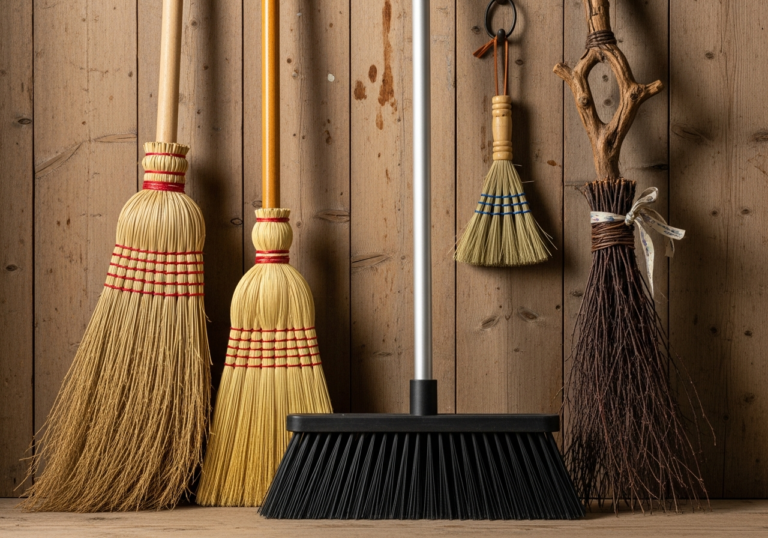










The humble broom is often the most underrated tool in the cleaning arsenal. To the uninitiated, it is simply a bundle of fibers attached to a stick, a primitive device designed to push debris from one location to another. However, this oversimplification is the primary cause of inefficient cleaning, damaged flooring, and unnecessary physical fatigue. The evolution of this implement has diverged into a complex taxonomy of shapes, materials, and specialized functions. Just as a carpenter would not use a sledgehammer to drive a finishing nail, a homeowner should not use a stiff straw sweeper to clean a polished hardwood floor. Understanding the mechanics of these tools—the stiffness of the bristle, the angle of the head, and the composition of the fibers—is essential for mastering the art of the sweep. Using the correct instrument transforms a chore into a seamless maintenance routine, ensuring that dirt is actually removed rather than simply redistributed into the air or the gaps between floorboards.
Corn Broom
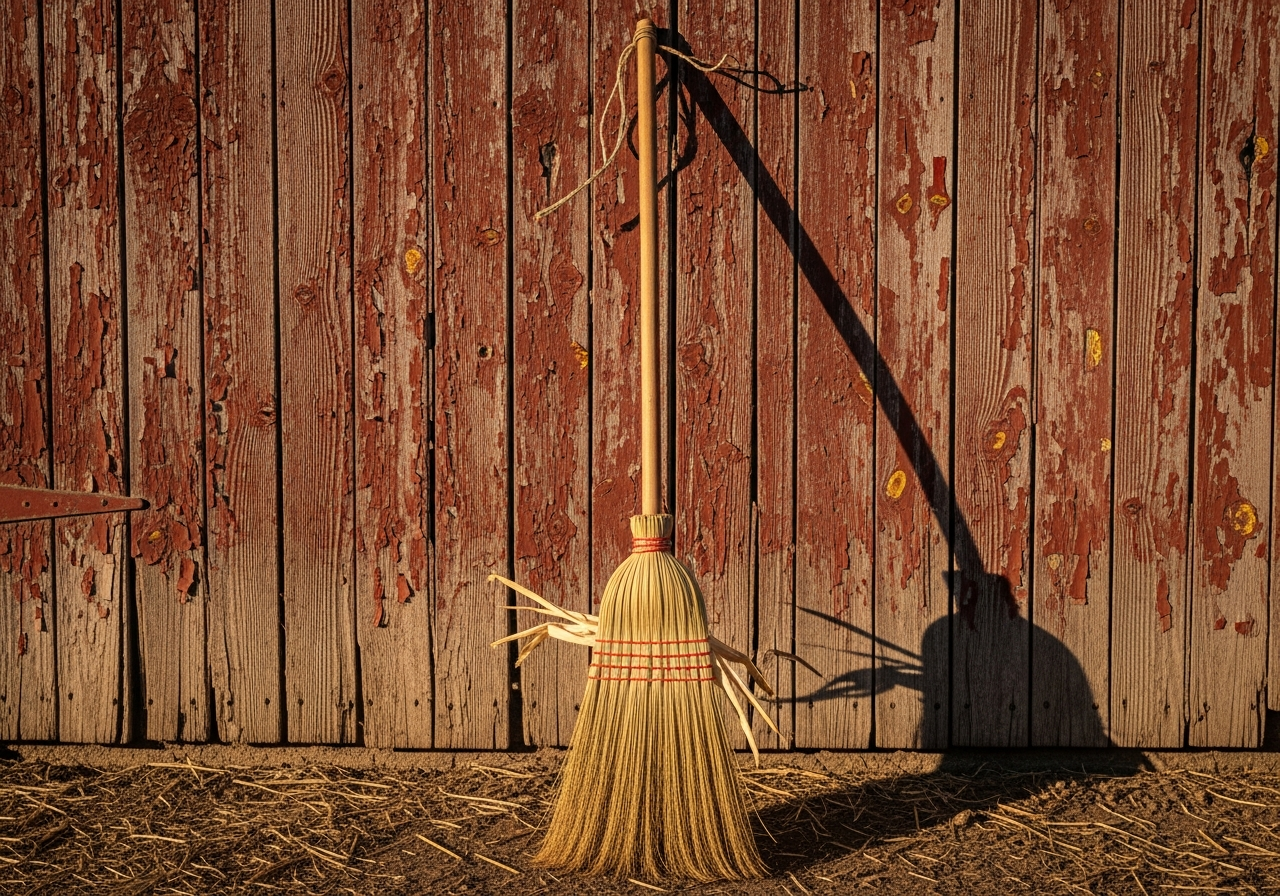
The most recognizable silhouette in the world of sweeping is the traditional corn broom. Crafted from the natural fibers of the sorghum plant, this tool is a relic of agricultural history that has survived into the modern era due to its sheer durability. It is characterized by its stiffness and its rough texture. It is a heavy-duty instrument designed for high-friction environments. Its domain is the outdoors—the concrete patio, the sidewalk, the garage floor, and the barn. The rigid, straw-like bristles are strong enough to move heavy debris like wet leaves, gravel, and snow. They act as a rake and a sweeper combined. However, bringing this natural fiber tool indoors is almost always a mistake. The stiff straws are too abrasive for delicate surfaces like laminate or polished hardwood, potentially leaving micro-scratches in the finish. Furthermore, they are notorious for shedding their own bristles, adding to the mess they are supposed to be cleaning. They lack the fine, split ends required to trap microscopic dust, meaning they push the big rocks while leaving the fine silt behind.
Synthetic Angle Broom
For the interior of the home, particularly the kitchen and the dining room, the synthetic angle broom is the superior choice. These are typically made from plastic or nylon fibers. The genius of this design lies in its geometry. The head is cut on a diagonal bias, creating a sharp point at one end. This design acknowledges the architectural reality of a room: corners exist. A flat-headed sweeper struggles to reach the dust bunnies trapped where the baseboard meets the cabinet, but an angled head can be maneuvered into tight crevices and under the lips of appliances with precision. The bristles on these tools are usually “flagged.” If you look closely at the tips of the plastic strands, you will see they are frayed or split into tiny hairs. This flagging increases the surface area exponentially, creating a dense web that traps fine flour, pet dander, and dust particles. This implement is designed for the “pull” stroke, gathering light debris gently without kicking it into the air.
Push broom
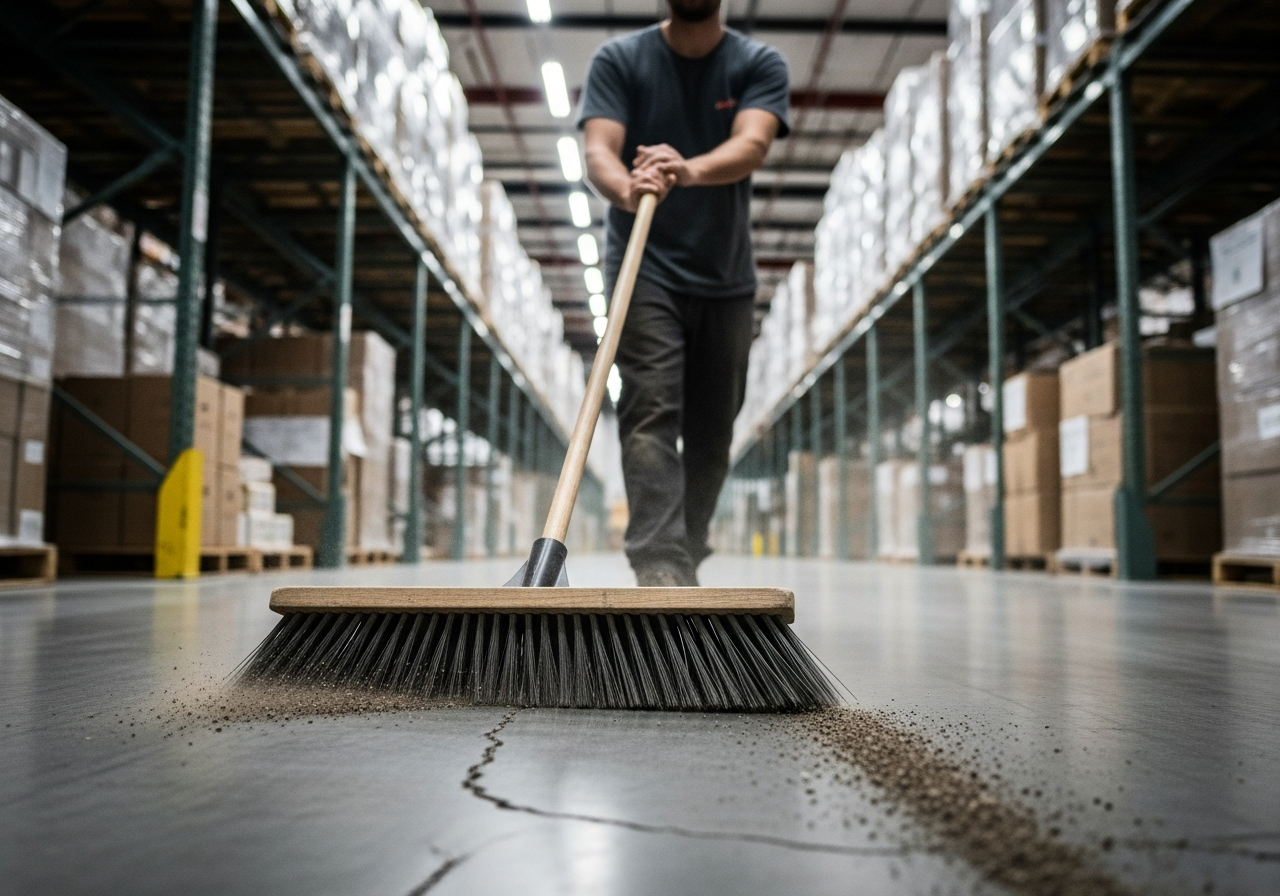
When the task involves large, open spaces such as basements, driveways, or warehouses, the standard upright broom becomes inefficient. The biomechanics of the sweeping motion—twisting the waist and pulling the arm across the body—is tiring over large areas. This is where the push brush dominates. This tool features a wide, rectangular block head, ranging from eighteen to thirty-six inches, attached to a handle at an angle. The motion is a forward thrust, utilizing the power of the legs and the body’s weight rather than the lower back. These wide sweepers come in a variety of bristle textures. “Fine” versions have soft, dense fibers for moving dust on smooth concrete. “Coarse” versions have thick, stiff bristles for moving heavy mulch or rocks on asphalt. Many modern iterations utilize a dual-bristle system: a stiff inner core to move heavy objects and a soft outer border to catch the fine dust, providing a comprehensive clean in a single pass.
Rubber Broom
A relatively modern innovation that addresses a specific biological nuisance is the rubber broom. For households with pets, this device is nothing short of miraculous. Traditional bristle tools are ineffective against pet hair; the static electricity generated by the sweeping motion causes the hair to fly away or float over the bristles. A rubber sweeper features a head made of molded rubber nubbins or thick, flexible fingers. When dragged across a carpet or a hard floor, the rubber creates friction and a static charge that acts as a magnet for fur. It pulls hair out of the weave of a rug that a vacuum cleaner might miss. Furthermore, the head often includes a squeegee edge, making it a dual-purpose tool for cleaning up liquid spills or scrubbing a tile floor with soapy water. It is a hygienic option as well, as the rubber head can be easily washed and sanitized, unlike a straw sweeper which absorbs bacteria.
Whisk Broom
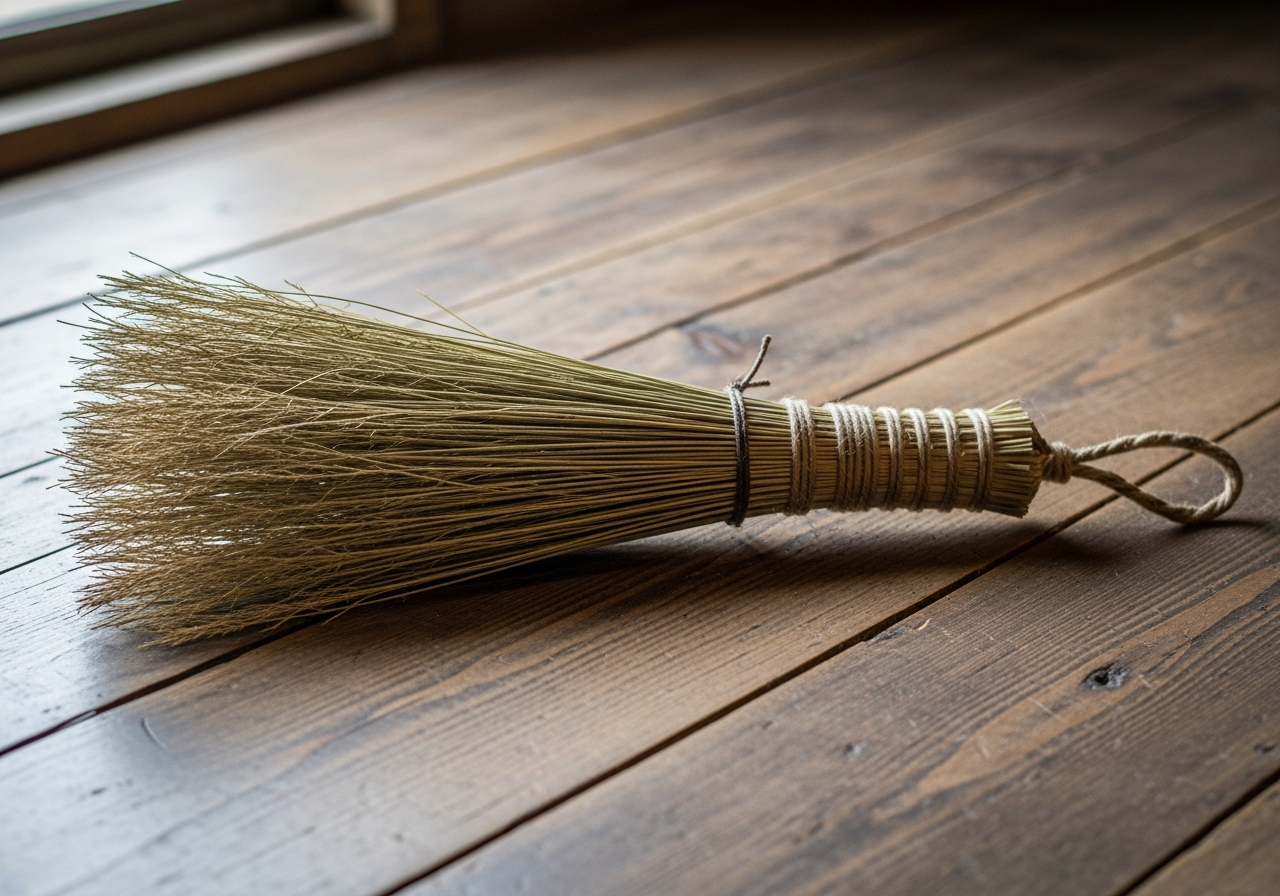
There is also the specialized category of the whisk broom. This is essentially a handheld version of the traditional corn sweeper or a stiff synthetic brush. It lacks a long handle, forcing the user to get close to the work. Its utility is found in the small, localized mess. It is the tool for the staircase, the upholstery of the car, or the spilled potting soil on a workbench. Because the user is closer to the debris, they can apply more directed pressure to dislodge stubborn dirt. This handheld device often pairs with a dustpan, forming a unit that is essential for “spot cleaning” rather than whole-room maintenance.
“Dust Mop”
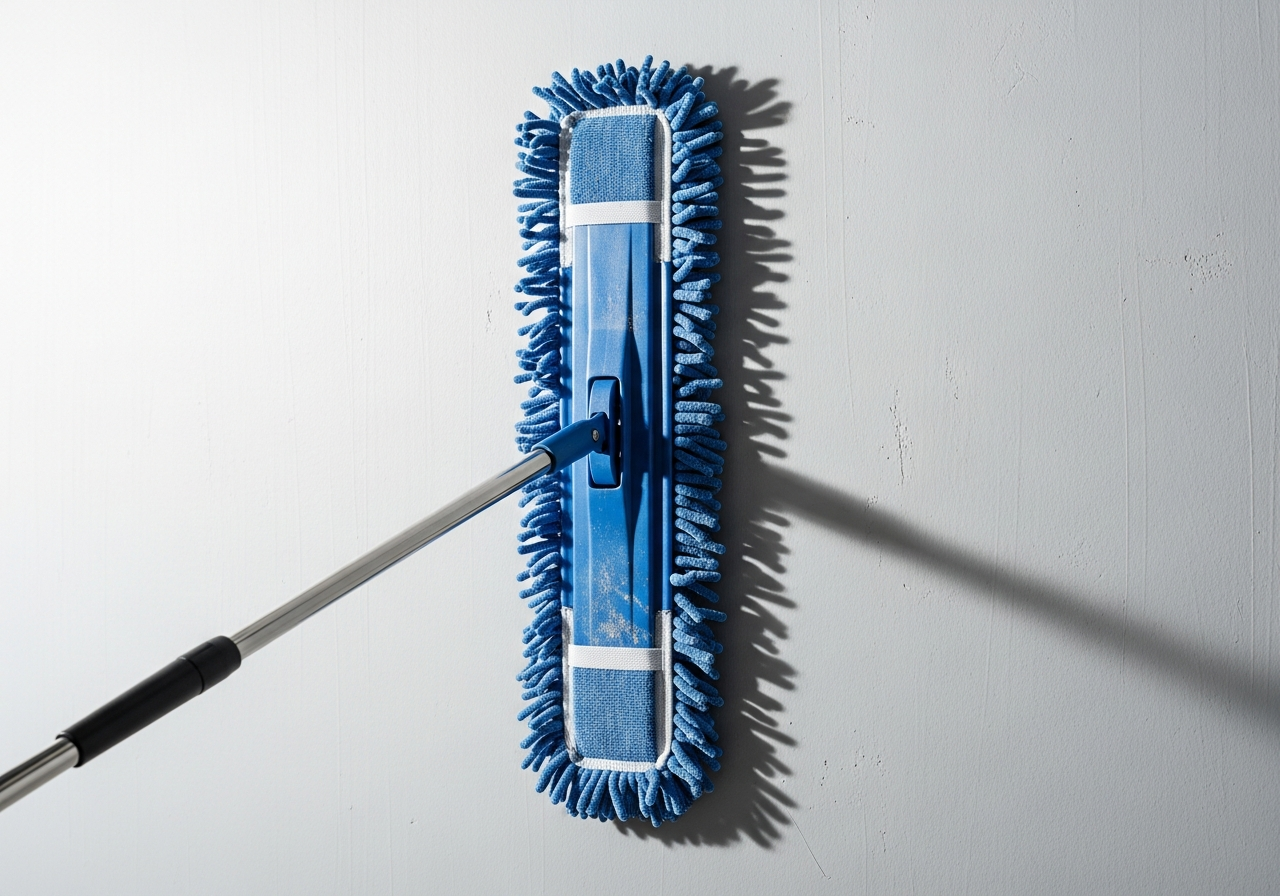
The “dust mop” is technically a cousin of the broom, but it deserves inclusion in the conversation regarding dry floor cleaning. Unlike a sweeper that uses bristles to flick dirt, a dust mop uses a flat head covered in cotton or microfiber loops to glide over the surface. This is the tool of choice for large expanses of gymnasium floors, hospitals, and long hallways. It does not lift heavy debris; its sole purpose is to attract and hold dust. In a home with extensive hardwood flooring, a wide microfiber dust mop is often more effective than a standard sweeper for daily maintenance. It traps the grit that scratches the wood finish, whereas bristles might just drag that grit across the floor.
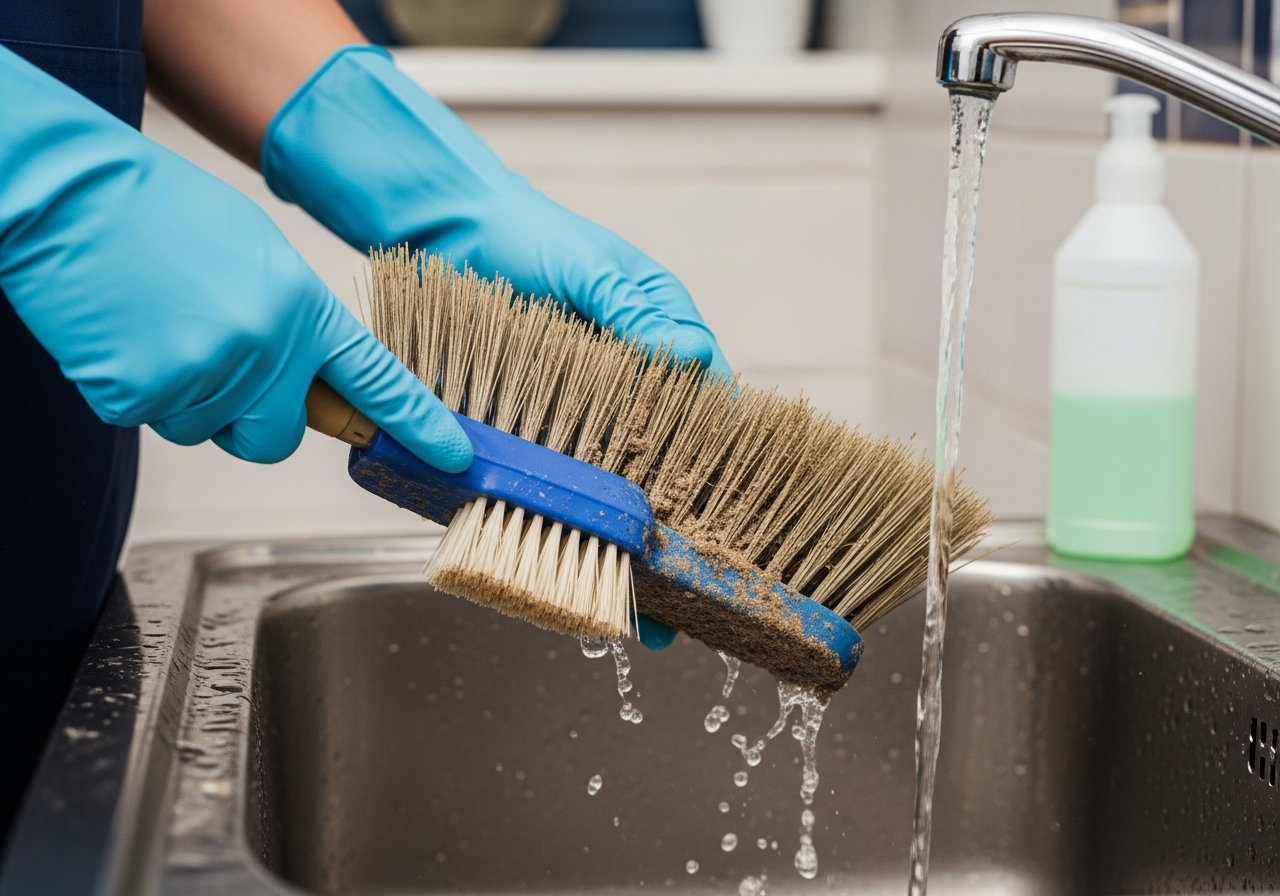
The maintenance of the tool itself is a critical aspect of cleaning that is frequently ignored. A dirty implement cannot clean a floor. Over time, the bristles of synthetic brushes become clogged with hair and dust “lint balls.” These must be manually removed or combed out; otherwise, the device simply redistributes the old dirt. Natural straw tools must be kept dry to prevent rot and mildew. Perhaps the most important rule of ownership is storage. A broom should never be stored resting on its bristles. The weight of the handle will eventually bend the fibers, curling them permanently to one side. A sweeper with curved bristles loses its flicking ability and becomes useless. These tools should always be hung up by the handle or stored with the head inverted to preserve the structural integrity of the fibers.
Maintenance
Choosing the right instrument is an exercise in matching the tool to the terrain. A concrete garage floor requires the stiff aggression of a corn sweeper or a coarse push brush. A delicate parquet floor demands the gentle touch of a flagged nylon angle brush or a microfiber dust mop. A house full of shedding golden retrievers necessitates the static power of rubber. Using the wrong broom is akin to trying to cut a steak with a spoon; it is physically possible, but the result will be messy and the effort will be disproportionate. By building a toolkit that includes a variety of these sweeping instruments, a homeowner ensures that every surface is treated with the appropriate level of care and aggression.
Ultimately, the broom is a tool of immediacy. It is faster than a vacuum, quieter, and requires no electricity. It is the first line of defense against the entropy of daily life. The crumbs under the table, the mud in the entryway, and the leaves on the porch are all conquered by the simple, rhythmic motion of the sweep. Understanding the nuances of these different types—from the flagged tips of the kitchen sweeper to the heavy block of the push brush—elevates the task from mindless labor to a skilled maintenance routine. It respects the materials of the home and ensures that the environment remains a sanctuary of order.
However, while the correct sweeping tool can significantly improve the efficiency of your daily maintenance, it cannot replace the deep, restorative clean that a home periodically requires. Sweeping removes the loose debris, but it does not extract the dust impacted in the corners, sanitize the floors, or remove the allergens trapped in the air. When the accumulation of life exceeds the capacity of your cleaning closet, or when you simply want to enjoy the feeling of a home that has been professionally detailed, Toronto Shine Cleaning is the solution. Our team understands the science of surfaces. We know exactly which tools to use on your hardwood, your tile, and your concrete to achieve a level of cleanliness that goes far beyond the sweep. Whether you need a seasonal deep clean to reset your home or regular service to maintain a pristine baseline, Toronto Shine Cleaning provides the expertise and the manpower to handle the heavy lifting. Put down the broom and let us bring the shine back to your living space.