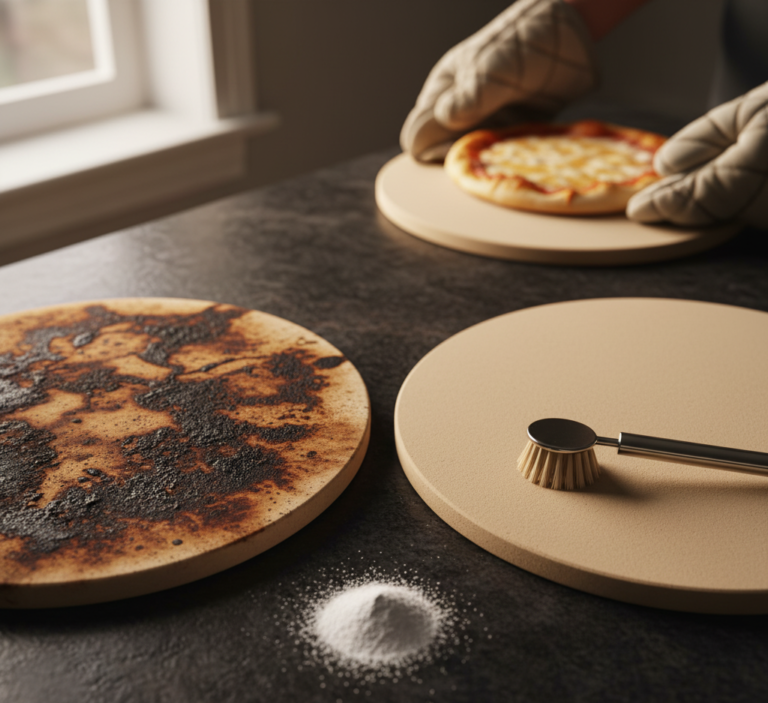










Pizza Stone Care: Make a Stained Stone Look and Cook Like New
A pizza stone delivers the crisp, pizzeria-quality crust that metal pans cannot match because its porous ceramic, cordierite, or clay body pulls moisture from the dough while spreading heat evenly. That same porosity makes cleaning counterintuitive: the wrong move can leave you with soapy-tasting pizza, a cracked stone, or a sticky, smoky mess. This guide covers what never to do, how to remove baked-on food safely, and why dark stains are a sign of a well-loved stone. If the rest of your kitchen needs the same level of care, Toronto Shine Cleaning offers professional deep cleaning for your home; call (647) 424-0355 to book.
Never Use Soap or Detergent on a Pizza Stone
The first rule of pizza stone care is absolute: keep soap and detergent away from the surface. The stone acts like a very hard sponge, so liquid soap seeps deep into its structure. The next time the stone reaches pizza temperature, that trapped soap heats up, releases fumes, and bakes an unpleasant chemical taste directly into the bottom of your crust. Rinsing cannot pull soap back out of the ceramic, which means a single wash can permanently ruin the stone. If the stone ever needs more than dry scraping, the gentle methods below are the only safe options.
Avoid Thermal Shock at All Costs
A pizza stone is one solid piece of ceramic. It expands when heated and contracts when cooled, and a rapid temperature swing creates stress that can crack it in half. Never plunge a hot stone into a sink of cool or lukewarm water, and never place a cold stone into a preheated oven. Always put the stone in a cold oven and let it preheat along with the oven itself. After baking, leave the stone inside, turn the oven off, and let everything cool gradually over several hours before you touch it.
How to Clean a Pizza Stone, Step by Step
Once the stone is completely cool, cleaning is mostly dry work. The goal is not a pristine beige surface: a well-used stone is supposed to be stained, much like the patina on a cast iron skillet. The goal is a smooth surface free of food debris. Scrape away every bit of burnt cheese, scorched sauce, and fused crust with a flat, rigid tool such as a bench scraper or metal spatula held at a low angle with firm pressure. A stiff-bristled grill brush or dedicated pizza stone brush works too. Then wipe the residue away with a dry cloth; for most cleanings, that is all you need. Routine removal of food debris keeps the stone hygienic between bakes, which mirrors the CDC’s advice that regular cleaning is the first step for surfaces in your home.
For stubborn spots, escalate carefully. Dampen a soft cloth or non-abrasive sponge with plain warm water, wring it out thoroughly, and scrub only the problem area. Never soak or submerge the stone, and dry the spot immediately with a clean cloth. For greasy, tacky marks, mix a few tablespoons of baking soda with only enough water to build a thick paste. Spread it over the stain, let it sit for ten to fifteen minutes, and scrub gently with a stiff brush or damp cloth. Wipe the area several times so no baking soda residue remains, since leftover paste can affect the flavor of your next pizza.
Your Pizza Stone Cleaning Toolkit
- Bench scraper or metal spatula: shears off baked-on food when held at a low angle.
- Grill brush or pizza stone brush: useful for loosening residue across the whole surface.
- Soft cloth or non-abrasive sponge: for careful spot cleaning with warm water only.
- Baking soda: makes a gentle paste that lifts greasy, sticky stains without scratching.
- Dry cloths: for wiping debris away and removing moisture immediately after wet cleaning.
Should You Try the Oven Self-Clean Cycle?
Some owners run the oven’s self-cleaning cycle with a cool, scraped stone inside. The cycle heats far beyond 900 F (480 C), incinerating every trace of residue into fine white ash that you wipe away with a dry cloth once the oven has fully cooled, which can take many hours. This is a high-risk, high-reward method: the intense heat can crack thinner stones or any stone with hairline fractures. Check with the stone’s manufacturer before attempting it.
Dry the Stone Completely Before the Next Bake
Moisture trapped inside a pizza stone is dangerous. In a hot oven, water held in the pores turns to steam and expands rapidly, creating internal pressure that can crack the stone or even shatter it. After any wet cleaning, air-dry the stone for at least 24 hours. For extra certainty, set the dry-looking stone in a cold oven, bring it up to about 250 F (120 C) for one hour, and let it cool completely to bake out any hidden moisture.
Pizza Stone Do’s and Don’ts at a Glance
| Do | Don’t |
|---|---|
| Scrape residue off a fully cooled stone | Use soap, detergent, or the dishwasher |
| Let the stone cool down inside the oven | Plunge a hot stone into cold water |
| Spot clean with a well-wrung damp cloth | Soak or submerge the stone |
| Air-dry for 24 hours after wet cleaning | Heat a stone that may hold moisture |
| Embrace the dark stains of seasoning | Scrub with abrasive pads or harsh chemicals |
Frequently Asked Questions
Is a stained pizza stone safe to cook on? Yes. Dark splotches are seasoning, not dirt, and they do not affect performance. What matters is that the surface is smooth and free of food debris after each use. The CDC’s food safety guidance puts keeping kitchen tools and surfaces clean first, which is exactly what scraping the stone after baking accomplishes.
Can I wash a pizza stone with dish soap if it smells? No. Soap will be absorbed into the pores and ruin future pizzas. For odors, bake the stone empty at a high temperature in a cold oven, or use the self-clean cycle with the manufacturer’s approval. Some smoke during the first high-heat bakes is normal as absorbed oils burn off.
What should I do if my pizza stone cracked? Replace it. A cracked stone can split apart during heating, and a break is usually caused by thermal shock or trapped moisture. Check for cracks before each use and retire the stone if you see one.
How often should I clean my pizza stone? Scrape it after every use while it is cool, and wipe it with a dry cloth. Reserve wet spot cleaning and baking soda paste for stubborn buildup, which most households only need a few times a year. Routine care keeps the stone performing like new for years.
Cool it completely, scrape it clean, skip the soap, and respect the heat, and your pizza stone will keep producing great crusts for years. When your kitchen needs a thorough reset, Toronto Shine Cleaning delivers deep cleaning services that cover every surface. Call (647) 424-0355, check our pricing, or read our client reviews to get started.