









In the world of household cleaning, especially in the demanding environment of the kitchen, we often ignore dwell time and fall into the trap of valuing speed and physical effort above all else. The common instinct when faced with a dirty surface is to spray and immediately wipe, putting faith in the power of “elbow grease” to muscle through the grime. This approach, however, fundamentally misunderstands the science of cleaning. It ignores the single most critical, yet often overlooked, factor in achieving a truly deep and sanitary clean: dwell time. Dwell time, also known as contact time, is the period that a cleaning or disinfecting product must remain wet on a surface to do its job effectively. It is a simple concept with profound implications, transforming cleaning from a battle of force into a strategic process of chemistry, saving time, effort, and ensuring a healthier home.
Disinfection and the Breakdown
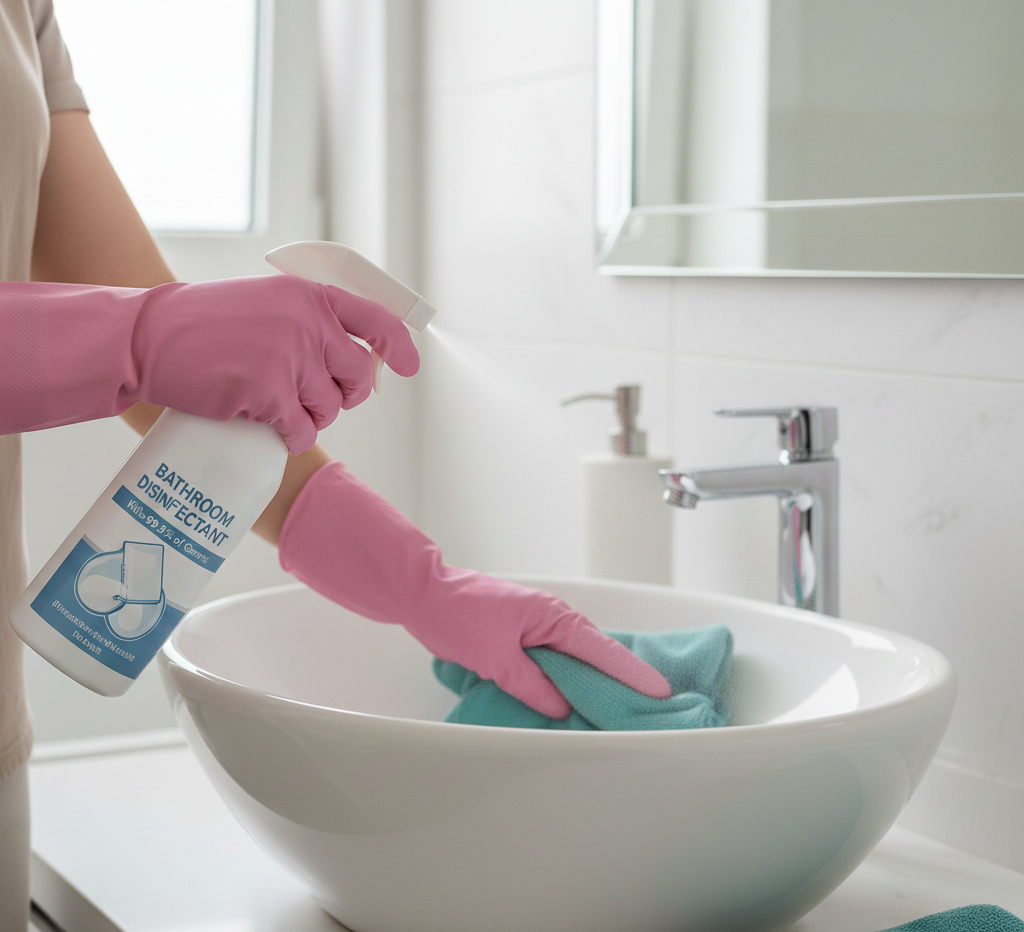
The importance of dwell time is rooted in two distinct chemical processes: disinfection and the breakdown of soils. Let’s first consider disinfection. A kitchen countertop can be a significant hub for bacteria like E. coli and Salmonella, especially after preparing raw meat. When we spray a disinfectant, our goal is not just to wipe away visible dirt, but to kill these unseen pathogens. This process is not instantaneous. Disinfectants work by chemically destroying the cell walls of bacteria and viruses. This chemical assault takes time. Every registered disinfectant product has a specific “kill claim” on its label, which states the amount of time the product must remain on a surface to kill a certain percentage of germs. This can range from thirty seconds to ten minutes or more. If you spray a disinfectant and immediately wipe it dry, you are essentially removing the active chemical agent before it has had the chance to complete its mission. You may have removed some of the germs through the physical act of wiping, but you have not truly disinfected the surface, leaving behind a false and potentially dangerous sense of security.
Stubborn and Sticky
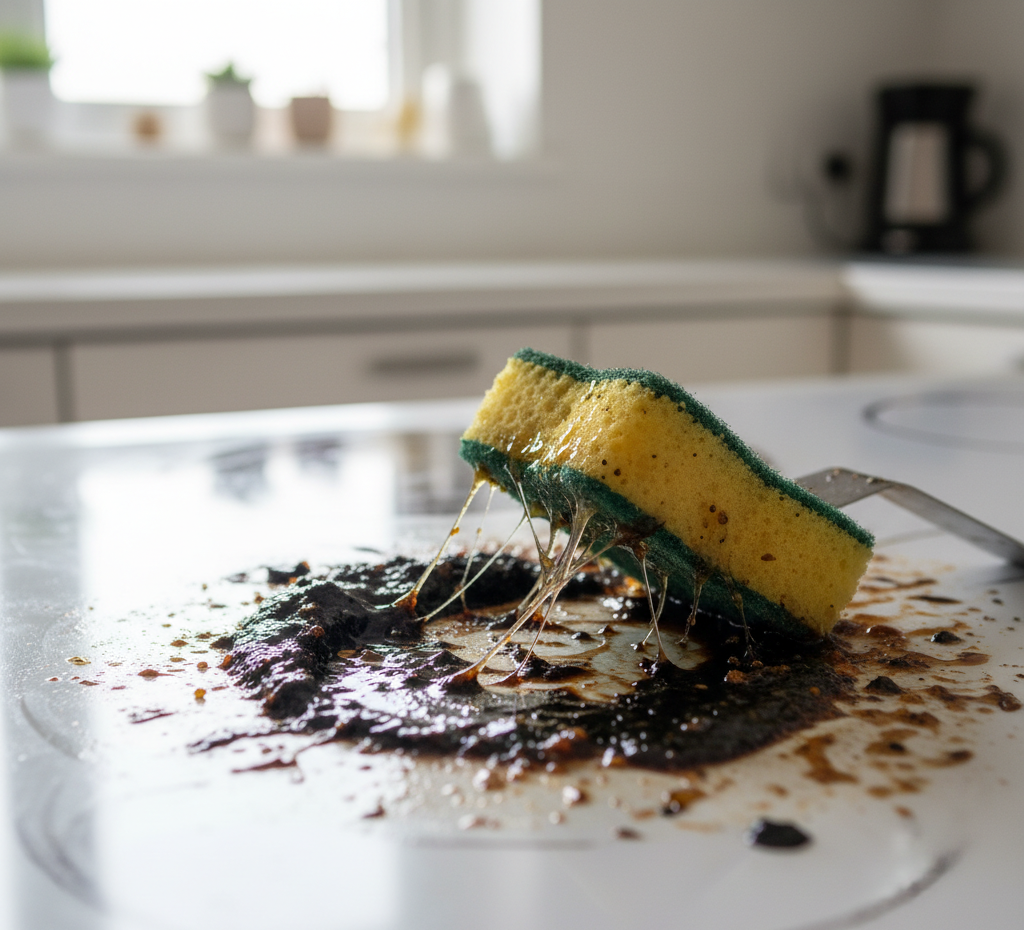
The second process is the chemical breakdown of grease, food residue, and mineral deposits. Kitchen grime is often stubborn and sticky. The grease that aerosolizes from a frying pan and settles on a stovetop or vent hood is a complex mixture of polymerized fats. The sugary sauce that has boiled over and carbonized onto a cooktop is a hardened, blackened mass. The chalky white film around your sink faucet is a layer of mineral deposits from hard water. Attacking these messes with brute force and scrubbing is an exhausting and often ineffective approach. The surfactants in a degreaser need time to penetrate the layers of grease and emulsify them, breaking them down into smaller, water-soluble droplets that can be easily wiped away. The mild acids in a descaling agent need time to react with and dissolve the alkaline mineral deposits. By spraying a cleaner and giving it a few minutes of dwell time, you are allowing the product’s chemical properties to do the heavy lifting for you, breaking the bonds of the grime so that a gentle wipe, rather than a frantic scrub, is all that is required to remove it.
Dwell Time
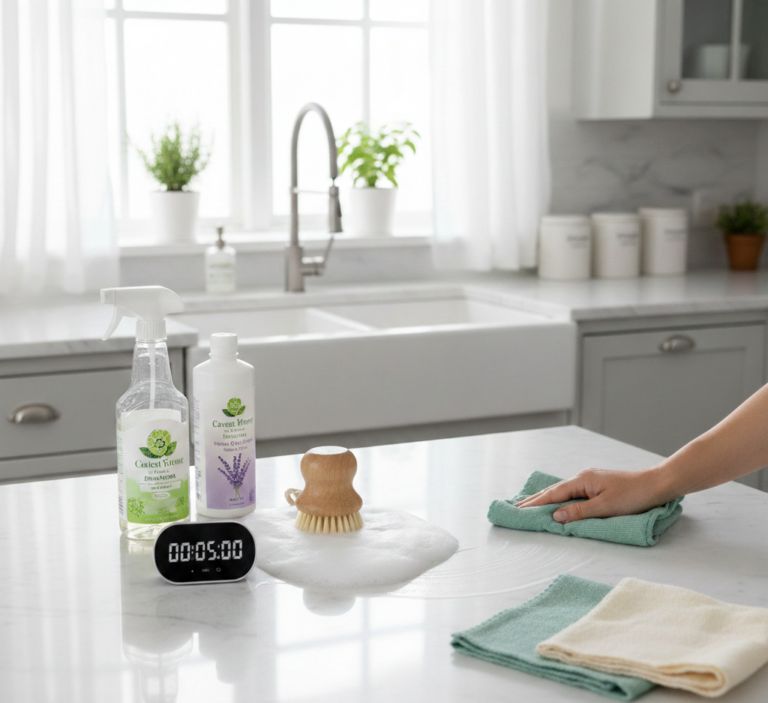
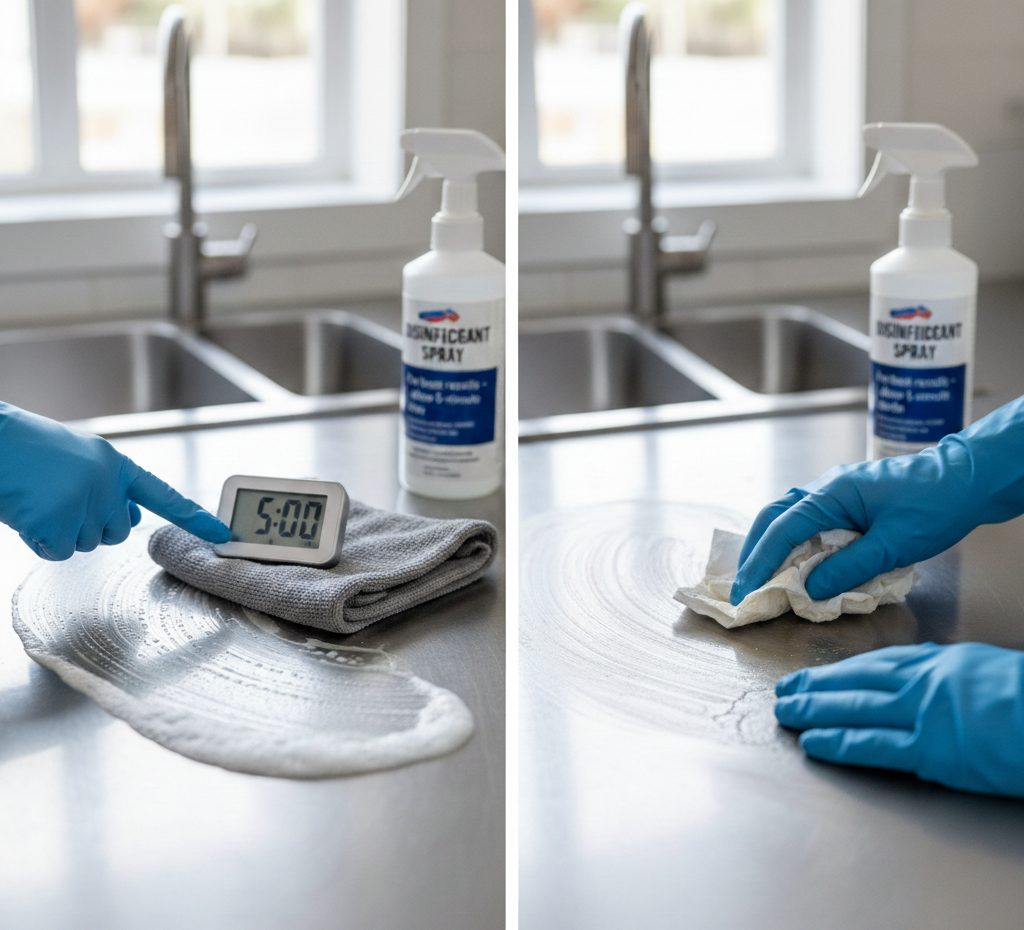
Nowhere is the practical application of dwell time more critical than in the kitchen. Let’s walk through the space to see this principle in action. Consider your countertops after preparing a meal. The correct procedure is a two-step process. First, clean the surface. Use a cloth with warm, soapy water to wipe away all the loose crumbs, food particles, and visible spills. This removes the physical debris that can shield germs from the disinfectant. The second step is to disinfect. Spray the surface with your chosen disinfectant—be it a commercial product or a simple solution of vinegar and water—until it is visibly wet. Then, walk away. Read the product label to determine the required dwell time. Let it sit for that prescribed period, whether it is three minutes or ten. Only after that time has elapsed should you return to wipe the surface dry with a clean cloth or rinse it with water if required. This patient approach is the only way to ensure your food preparation surfaces are hygienically clean.
The kitchen sink is often cited as having more bacteria than a toilet bowl, making it a prime candidate for proper disinfection. After scrubbing the basin to remove food particles, you can apply your disinfectant and let it dwell to sanitize the surface. To tackle the mineral buildup around the faucet, soak a few paper towels in white vinegar, wrap them around the base of the faucet and the nozzle, and let them sit for at least thirty minutes. This extended dwell time will allow the vinegar to dissolve the chalky white deposits, which can then be scrubbed away with an old toothbrush, restoring the fixture’s shine.
The Stovetop
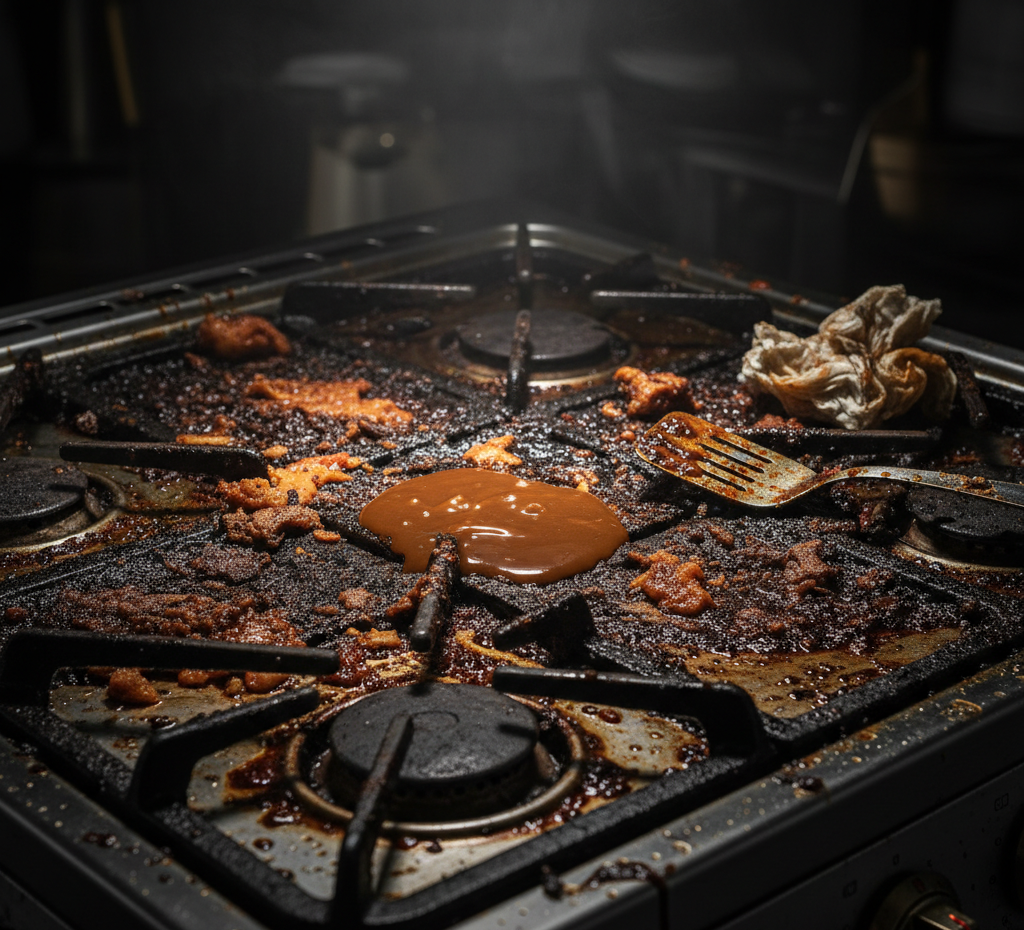
The stovetop is a theater of grease and burnt-on messes. Instead of immediately scrubbing a boil-over, spray it with a quality degreaser or an all-purpose cleaner and let it sit for five to ten minutes. You will often see the hardened mess begin to soften and liquefy as the cleaner penetrates it. A gentle wipe will then remove what would have previously required intense scraping. The same principle applies to the greasy, grimy filter of your range hood. Instead of trying to scrub it in the sink, submerge it in a basin of hot water and a strong degreasing solution and let it soak for at least thirty minutes. This extended dwell time is what allows the hot water and detergent to break down the years of accumulated grease, which will then rinse away with ease.
The ultimate testament to the power of dwell time is cleaning a dirty oven. Confronted with a blackened interior coated in carbonized grease, the instinct to scrub is entirely useless. The only effective, non-toxic method relies almost exclusively on an extremely long dwell time. By creating a thick paste of baking soda and water and spreading it over all the interior surfaces, you are applying a mild alkali that needs hours to work. By letting this paste sit overnight—a dwell time of eight to twelve hours—you give it the time it needs to slowly soften and break down the tough, carbonized layers. The next morning, the blackened grime that was once as hard as rock will have transformed into a soft, sludgy mess that can be wiped and scraped away with relative ease. It is a perfect demonstration of chemistry and patience triumphing over brute force.
Kitchen Floor
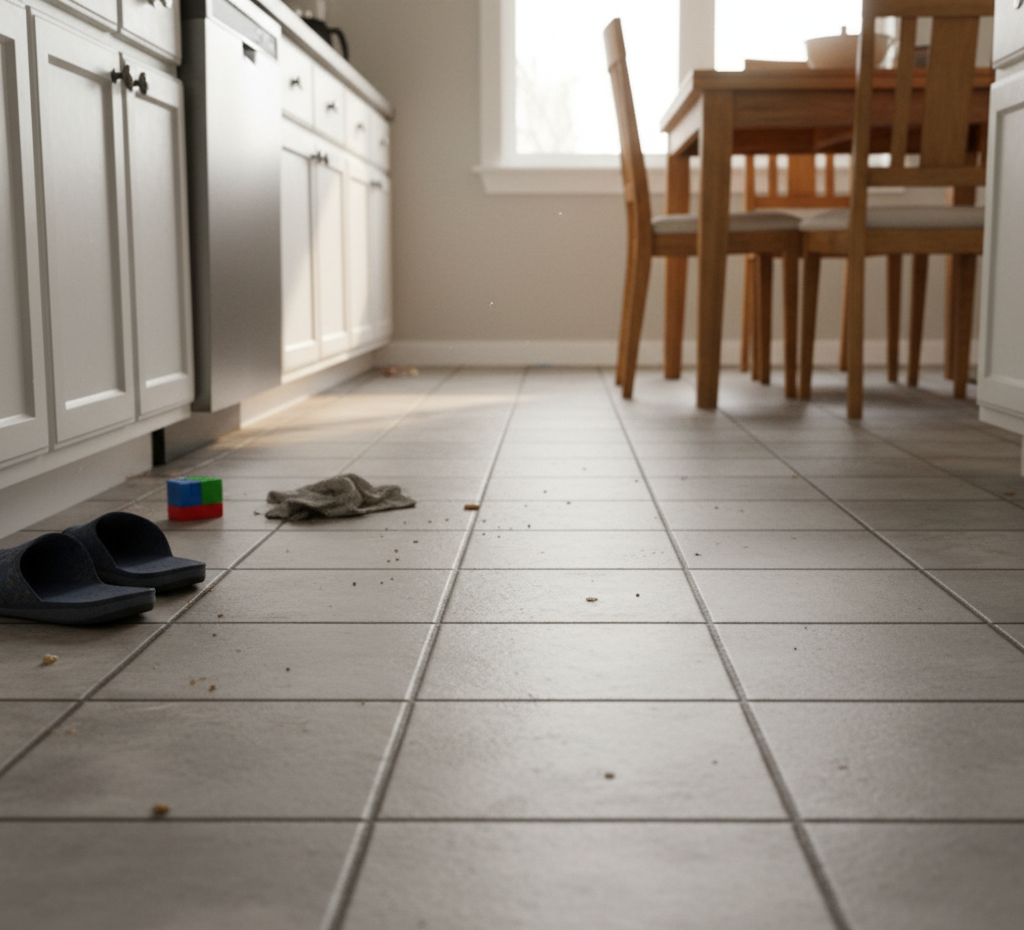
Even on the kitchen floor, dwell time has its place. When faced with a sticky spill of jam or a dried-on patch of sauce, instead of immediately mopping or scrubbing, spray the spot with a little cleaner and place a damp cloth over it. Let it sit for five minutes. This will rehydrate and dissolve the sugars, allowing you to wipe it up cleanly without smearing it across a larger area of the floor.
Ignoring dwell time leads to a host of negative consequences. It results in a tremendous amount of wasted physical effort, as you are forced to compensate for the cleaner’s lack of chemical action with your own scrubbing power. It leads to wasted product, as you spray and wipe away expensive chemicals before they have had a chance to work, often leading you to apply more and more product in a frustrating cycle. Most importantly, it creates a false sense of security, leading you to believe your kitchen is disinfected and safe when it may not be.
Embracing the principle of dwell time requires a fundamental shift in mindset. It is about working smarter, not harder. It is about understanding that cleaning is a partnership between physical action and chemical science. By giving your cleaning products the time they need to work, you will achieve a deeper, more effective, and more hygienic clean with a fraction of the effort, transforming a daily chore into a more efficient and satisfying process.
Just as understanding and utilizing dwell time transforms your cleaning from a forceful chore into an effective scientific process, Toronto Shine Cleaning applies expert knowledge and methodical techniques to every task. We understand that a true, deep clean relies on patience and the right application of professional-grade products, ensuring a sanitary, spotless result in your kitchen and throughout your entire home.