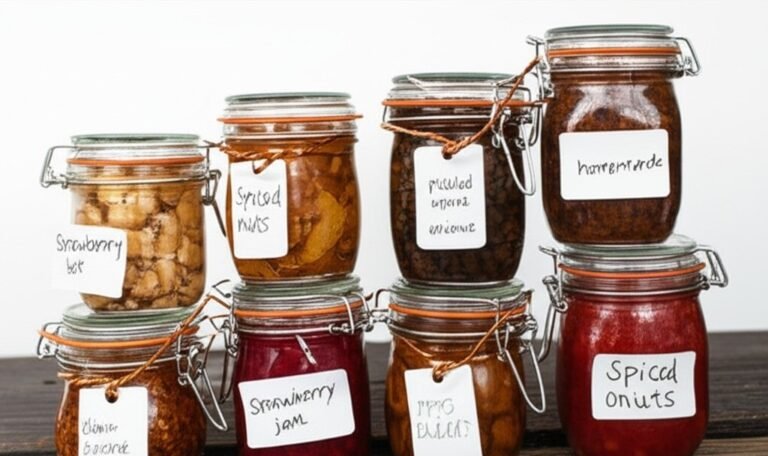










Labeling Kitchen Items: Four Fast Tips for a Safer, Faster Kitchen
A label looks like a small thing until its absence causes a big one. In any space where food is prepared, stored, or cleaned, the words on a container decide whether a meal is safe, whether groceries are used or binned, and whether a cleaner helps or harms. Without clear labeling, a kitchen drifts into guesswork, and guesswork is where allergies, spoilage, and chemical mistakes live. These four tips take minutes to set up and pay for themselves the first time someone grabs the right jar without opening it.
Tip 1: Label Every Container You Decant, Contents and Allergens Included
Packaging labels do the heavy lifting for you while a product is sealed: “contains” and “may contain” statements protect people with allergies to gluten, dairy, soy, peanuts, tree nuts, eggs, fish, and shellfish, and skipping that step can turn a safe meal into a medical emergency. The responsibility does not end when you open the package. Transfer flour into a pretty canister and the gluten question disappears for whoever cooks next. Every decanted container needs its contents named and any relevant allergen noted. Store regular flour and gluten-free flour apart, each labeled, and sugar and salt can never be confused again. For the rules behind those warnings, the CDC’s food safety basics explain how contamination and misidentification put people at risk.
Tip 2: Track Dates So Nothing Rots in the Back of the Pantry
Expiry and best-before dates are not decorative. Manufacturers set them from product stability data, and eating past an expiry date raises the odds of foodborne illness, from mild digestive upset to infections like salmonella or E. coli. On dairy, meats, and prepared foods, the date marks the window of safest consumption; on shelf-stable goods, a best-before signals peak quality, and ignoring it costs you taste, texture, and nutrients. The trouble is that dates vanish the moment you open the package, so write a fresh one. When you prep homemade sauces, stocks, or chopped vegetables, label them with the contents plus the preparation date. That habit makes a First-In, First-Out rotation possible: older items move forward, spoilage drops, and you stop guessing whether that jar is three weeks or three months old.
Bonus Tip: Storage Instructions Belong on the Label
“Refrigerate after opening” and “store in a cool, dry place away from direct sunlight” are not suggestions; they reflect how ingredients respond to temperature, light, and air. Copy those conditions onto your own labels so the next person does not have to find the original box.
Tip 3: Treat Every Cleaner Bottle Like a Mini Safety Manual
Kitchens double as chemical storage, and a cleaning label carries the active ingredients, hazard class (corrosive, irritant, flammable), first-aid steps, required gloves or eye protection, ventilation needs, and compatible surfaces. Mistaking a strong oven cleaner for dish soap can hurt a person and a countertop in the same stroke, and mixing incompatible chemicals can produce toxic fumes. Keep cleaners in their original, labeled containers. If you must decant, label the new bottle with the exact product name and dilution, store it away from food zones, and follow Health Canada’s advice on using household chemicals safely, which also covers storage and disposal. Their wider hub on household product safety lists hazards for common items from cookware to craft materials.
Tip 4: Read Nutrition Panels Before You Decide What Goes in the Cart
Labels earn their keep at the shopping stage. The nutrition facts panel breaks down calories, fats, carbohydrates, sugars, sodium, and protein, which matters when you manage diabetes, heart disease, or hypertension, and it lists vitamins and minerals that reveal nutrient-dense choices. Ingredient lists support vegans avoiding animal products and anyone dodging specific additives, preservatives, or artificial colors. Governments mandate this disclosure, and manufacturers face penalties and recalls for inaccuracies, so the information is legally enforced and dependable. Knowing the rules were checked for you turns a label into a trust signal.
What to Label, Zone by Zone
| Kitchen zone | What gets a label | Details to include |
|---|---|---|
| Pantry | Decanted dry goods: flours, grains, spices, baking soda and baking powder | Contents plus allergen note; keeps lookalikes apart |
| Fridge and freezer | Leftovers, prepped veg, stocks, sauces, opened packages | Contents, prep date, use-by window, storage condition |
| Cleaning cupboard | Any decanted cleaner or diluted mix | Exact product name, dilution ratio, keep-from-food warning |
| Countertop | Jars and canisters in daily use | Contents so anyone can grab the right one without opening |
Efficiency follows safety here. When every container states what it holds and when it was made, inventory checks take minutes, prep speeds up, and cross-contamination risks shrink: a baking soda and baking powder mix-up can collapse an entire cake. Clear labeling also spreads responsibility, since everyone in a busy family kitchen can find what they need and use it safely. The habit only takes four seconds per container, and the moments that demand it repeat themselves:
- Right after decanting a dry good into a new canister
- Whenever leftovers or prepped ingredients go into the fridge
- As soon as an opened package hides its printed date inside
- Every time a cleaner gets diluted into a spray bottle
A Well-Labelled Kitchen, Every Week, Without the Labor
Labels handle the knowing; cleaning still has to happen. Toronto Shine Cleaning pairs a tidy, labeled kitchen with surfaces that match, through our regular maid service or a seasonal deep clean, with rates on the pricing page. Call (647) 424-0355 to book, or read what other households say on our reviews.
Kitchen Labeling FAQ
What information should a homemade food label carry? Name the contents, add the preparation date, note any major allergen present, and include a storage instruction such as “refrigerate” or “use within 3 days.” For freezer items, add a best-by estimate so rotation stays honest. Four short lines on masking tape covers everything anyone in the house needs.
What is the difference between an expiry date and a best-before date? An expiry date marks the safety limit, after which the product should not be consumed, and it applies to items like nutritional supplements and certain perishables. A best-before date marks peak quality: after it, taste, texture, or nutrition may decline, but the food is not automatically dangerous. Keep both visible, and rewrite the date when you transfer contents.
Can I keep cleaning products under the sink with food items? It is better not to. Store chemicals separately, in labeled original containers with hazards visible, away from food prep and food storage zones. If space forces the same cabinet, use a lidded bin on the lowest shelf, keep everything upright, and make sure no decanted bottle shares a look with a beverage or ingredient container.
How quickly can a labeling habit be built? Start with one zone: spend twenty minutes on your pantry canisters this weekend, using masking tape and a marker. The moment you feel how much time wasted guesswork takes out of cooking, extend the habit to the fridge and the cleaning cupboard. Specialized label kits look nicer, but the tape version works exactly as well.